



Deckensysteme und Brandschutz: Was Architekten prüfen müssen
26. April 2026
-2 Minuten lesen
Das Brandverhalten ist eine unverzichtbare Anforderung an die Deckenkonstruktion. Hier erfahren Architekten, worauf sie bei der Auswahl von akustischen und textilen Deckensystemen für gewerbliche Gebäude achten müssen.
Die Brandschutzleistung ist eine grundlegende Anforderung an Deckensysteme in gewerblichen Gebäuden. In der Praxis ist sie zudem eines der Merkmale, bei denen die größten Unterschiede innerhalb dieser Kategorie bestehen – und eines der Merkmale, die in der Planungsphase am wenigsten systematisch überprüft werden.
Der Rechtsrahmen
In den meisten Ländern schreiben die Bauvorschriften vor, dass Deckenmaterialien Mindestanforderungen an die Brandklasse erfüllen müssen, die sich nach der Nutzungsart des Gebäudes und der Lage innerhalb des Gebäudes richten. Das europäische Klassifizierungssystem (Euroklasse, EN 13501-1) reicht von A1 (nicht brennbar) bis F (keine Leistung bestimmt). Die britischen Bauvorschriften beziehen sich auf Brandverhaltensklassen aus demselben Rahmenwerk. Bei Projekten in den USA wird in der Regel auf die Oberflächenbrenncharakteristika gemäß ASTM E84 oder UL 723 Bezug genommen.
Architekten, die Deckensysteme spezifizieren, sind beruflich verpflichtet, zu überprüfen, ob das spezifizierte Produkt die gesetzlichen Anforderungen für die jeweilige Anwendung erfüllt. Diese Aufgabe sollte nicht an den Bauunternehmer delegiert werden.
Werkstoffeigenschaften
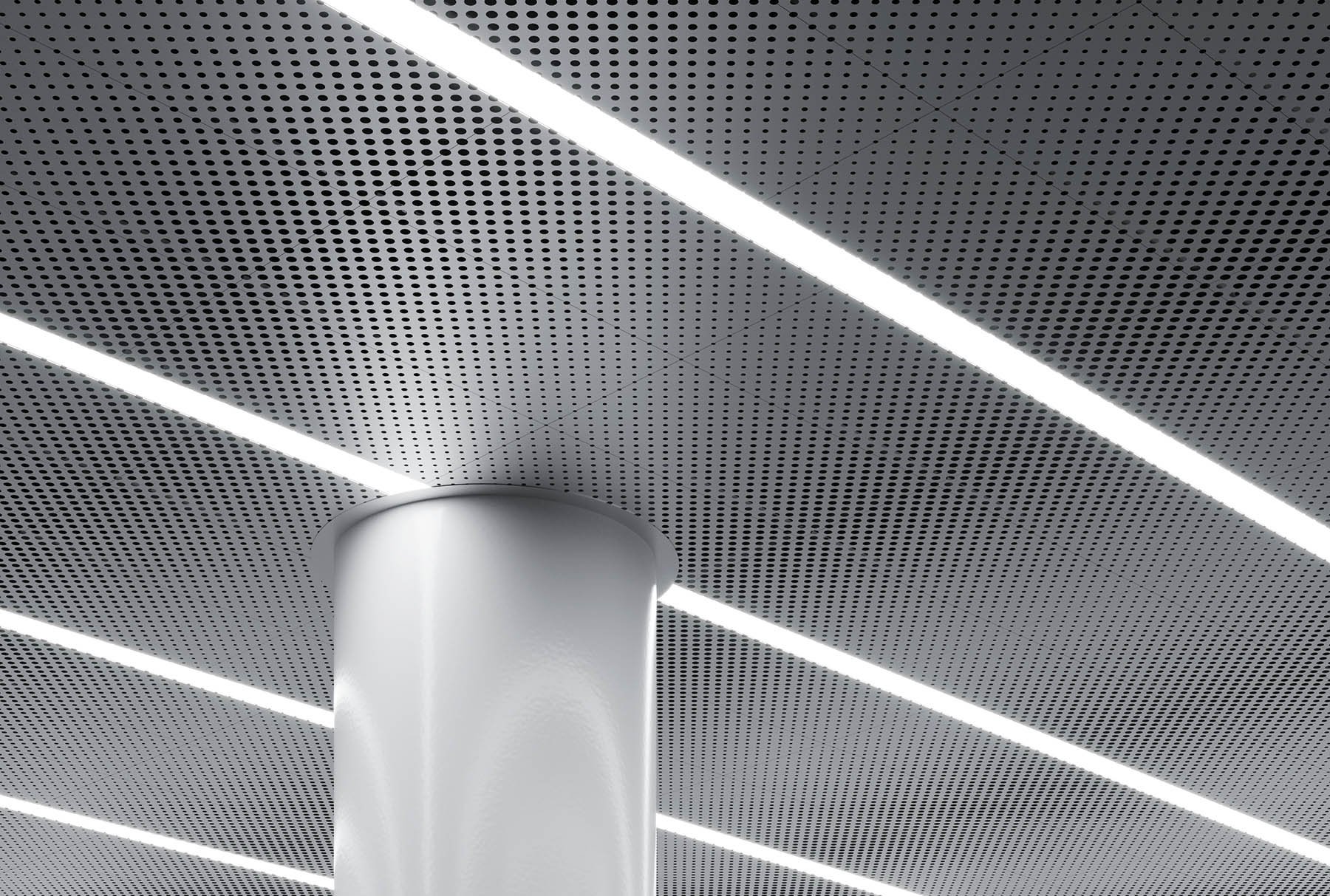
Aluminium-Deckensysteme – wie beispielsweise die von NOWN CircuLUM™. Produkte auf dieser Basis – erreichen aufgrund des Metallträgers in der Regel hohe Brandschutzklassen nach Euroklasse. Pulverbeschichtete Aluminiumprodukte erreichen gemäß EN 13501-1 in der Regel die Brandschutzklasse A2-s1,d0 oder besser.
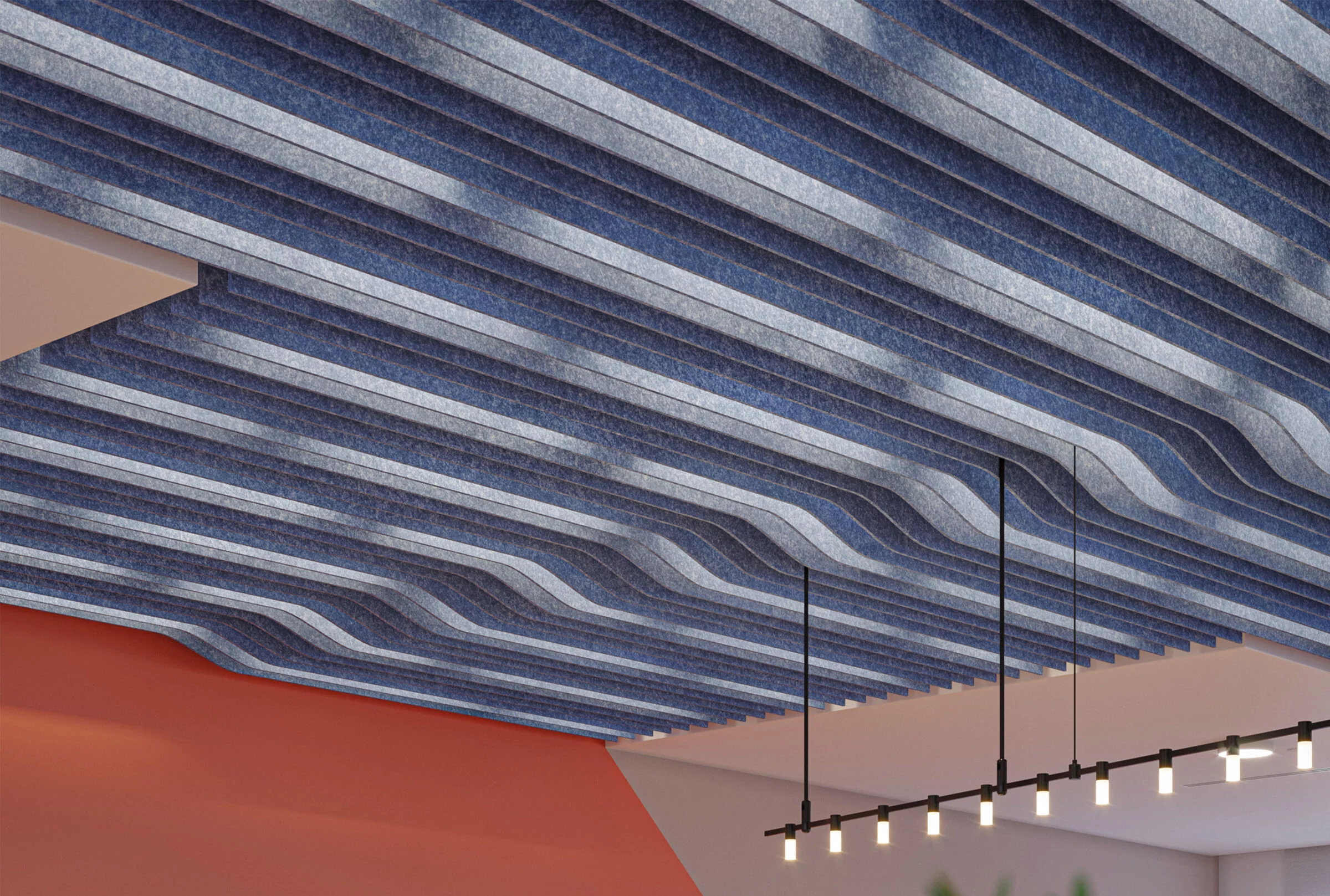
Akustische Textilmaterialien, darunter auch PET-Filz, erfordern eine sorgfältige Prüfung. Die von NOWN aSOFT™ Die Leistungsdaten der Materialien sollten für die jeweilige Anwendung überprüft werden – Brandschutzdaten sind bei NOWN erhältlich und sollten in der Planungsphase zusammen mit den akustischen Leistungsdaten geprüft werden.
InfiKnit™ Textilsysteme sind mit dokumentierten Brandverhaltensdaten für die Verwendung in Ausschreibungen erhältlich.
Abstimmung mit den Dienststellen
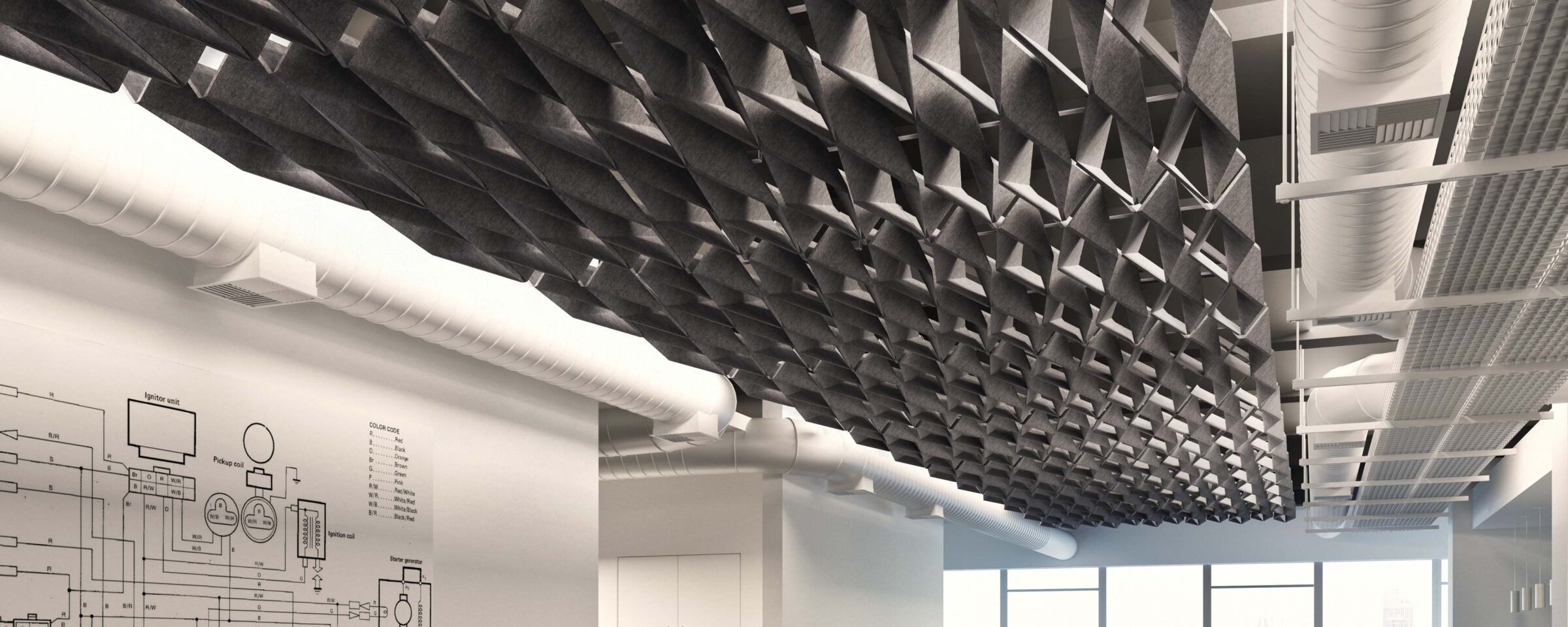
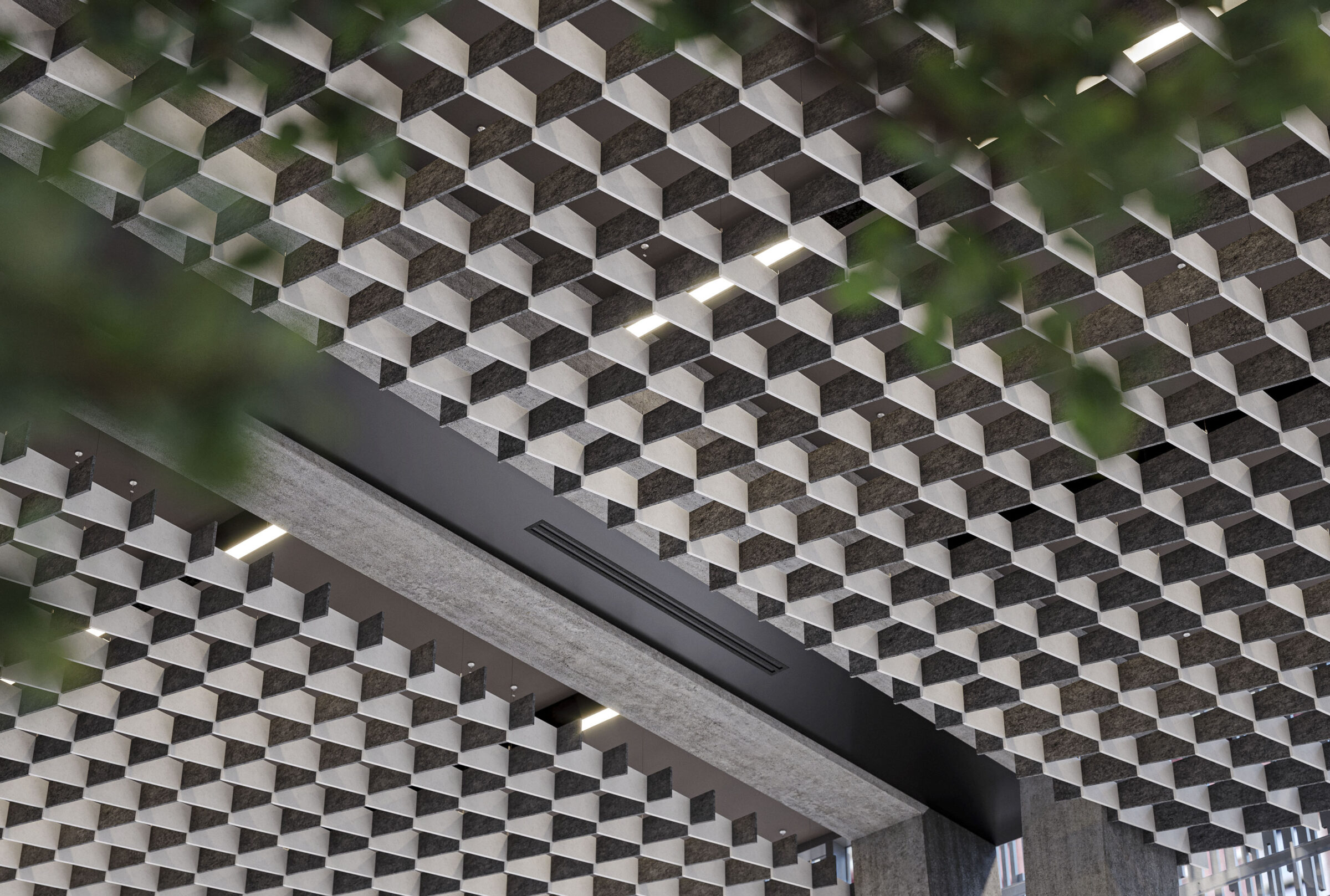
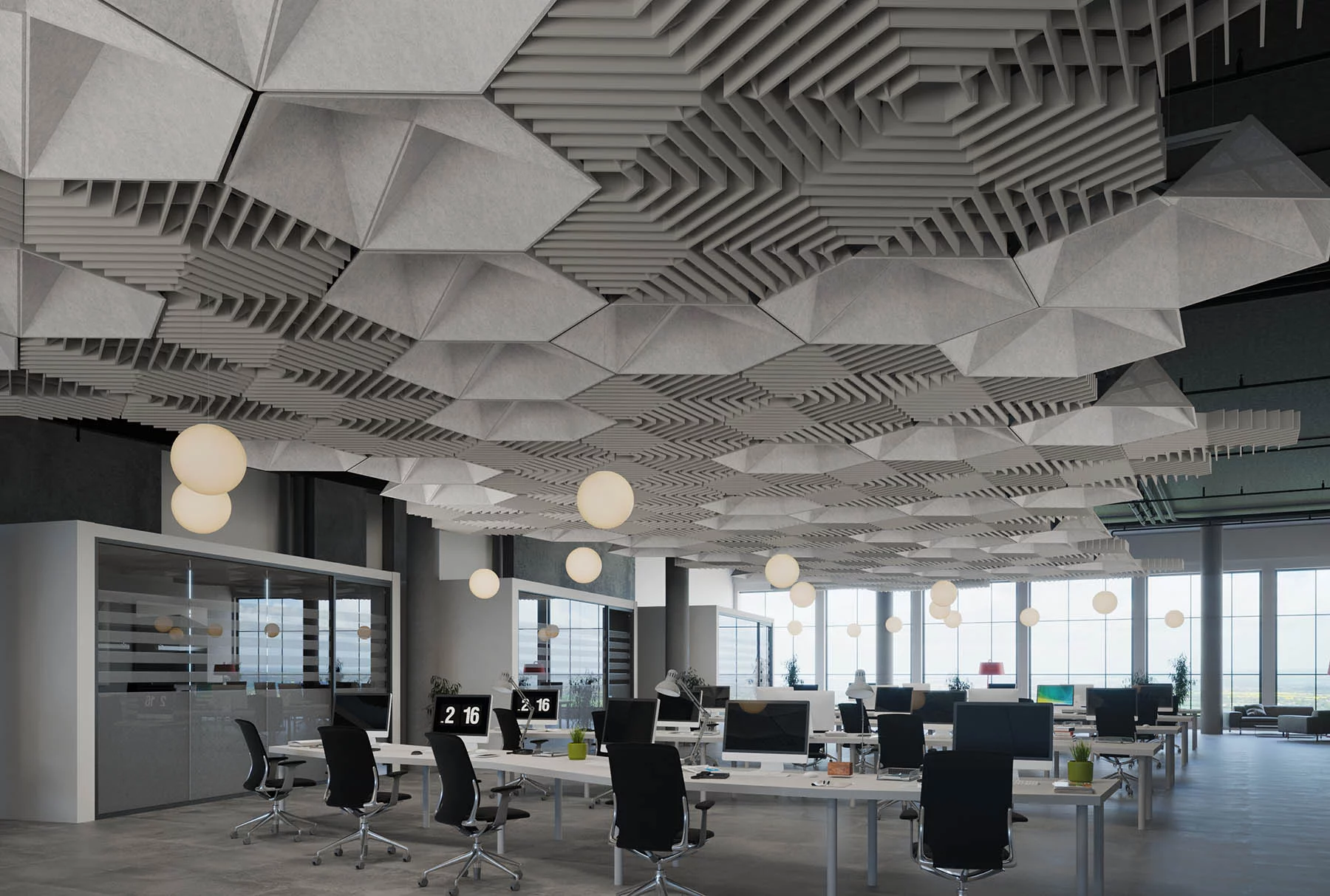
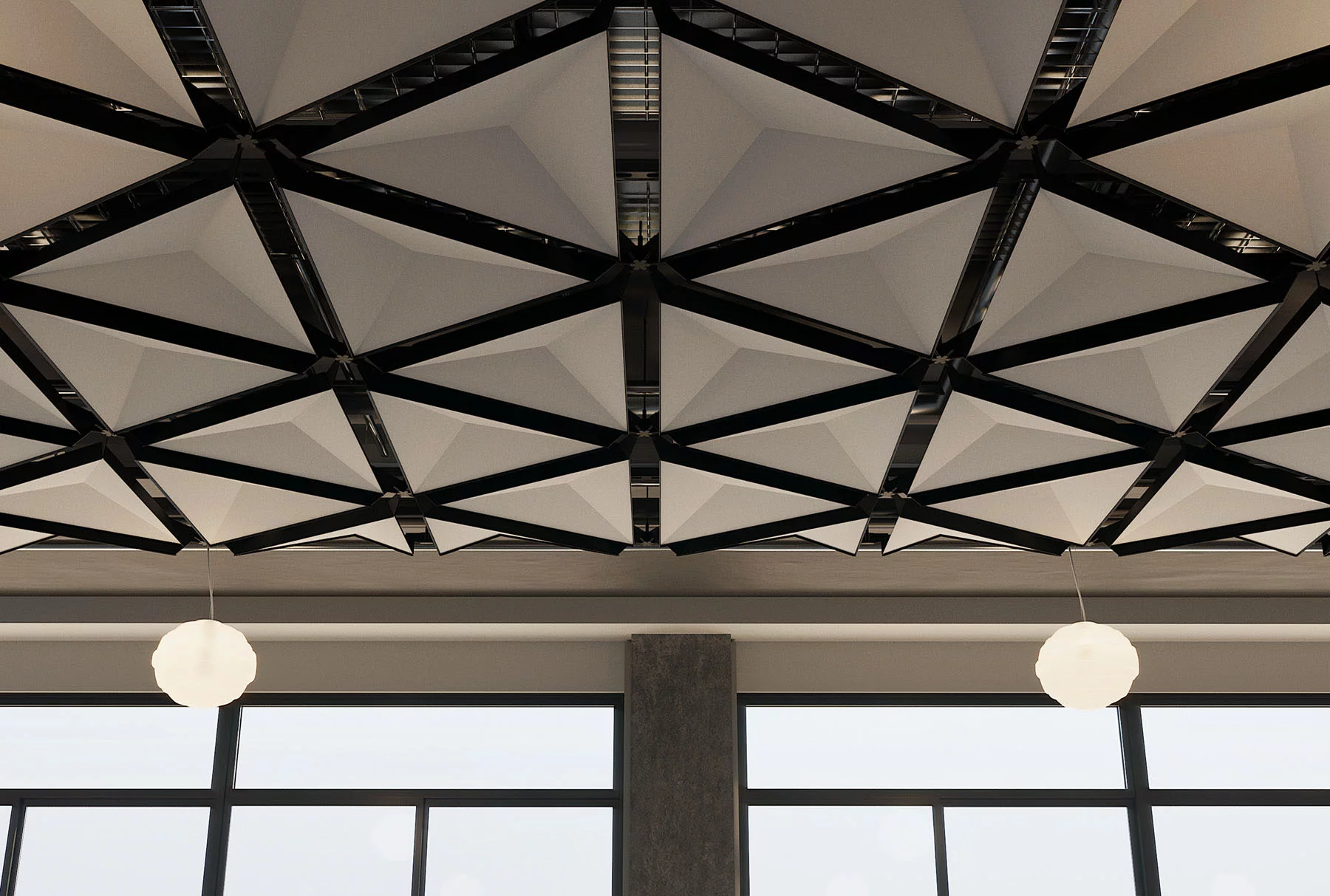
Ein Aspekt des Brandschutzes bei Deckensystemen, der oft übersehen wird, ist der Zusammenhang mit den über der Decke installierten Brandbekämpfungsanlagen. Deckensysteme mit offener Struktur – darunter auch die von NOWN – Atmosphera® Trennwandkonfigurationen – erfordern eine Brandschutzplanung, die der offenen Struktur der Deckenfläche Rechnung trägt. Dies ist ein Koordinationspunkt zwischen der Deckenauslegung, dem Brandschutzingenieur und dem Sprinklerplaner.
Unterlagen zum Brandverhalten der NOWN-Deckenprodukte anfordern →