

Specifying Integrated Backlighting for a Metal Ceiling Tile: A Technical Guide
June 22, 2026
-3 Minuten lesen
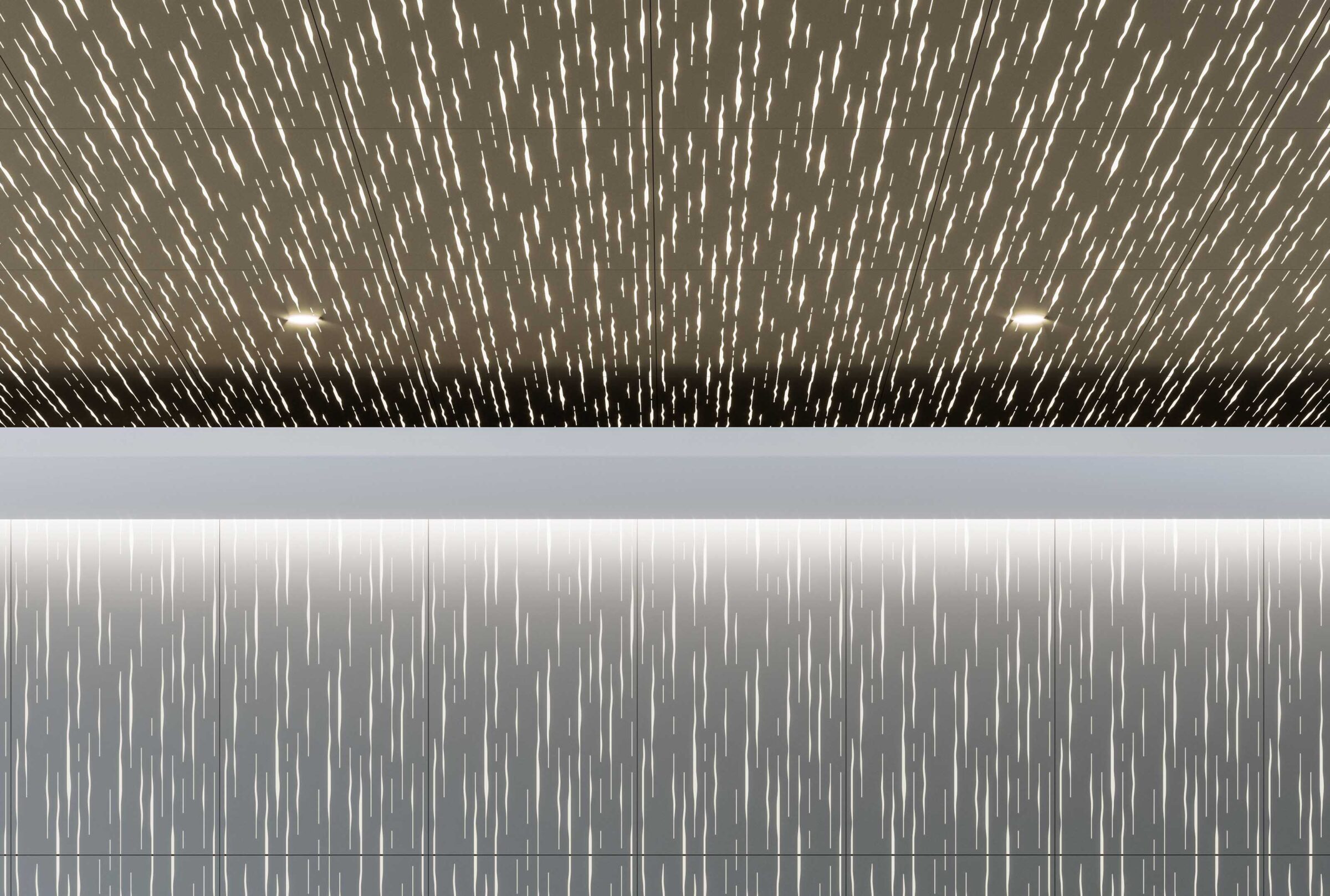
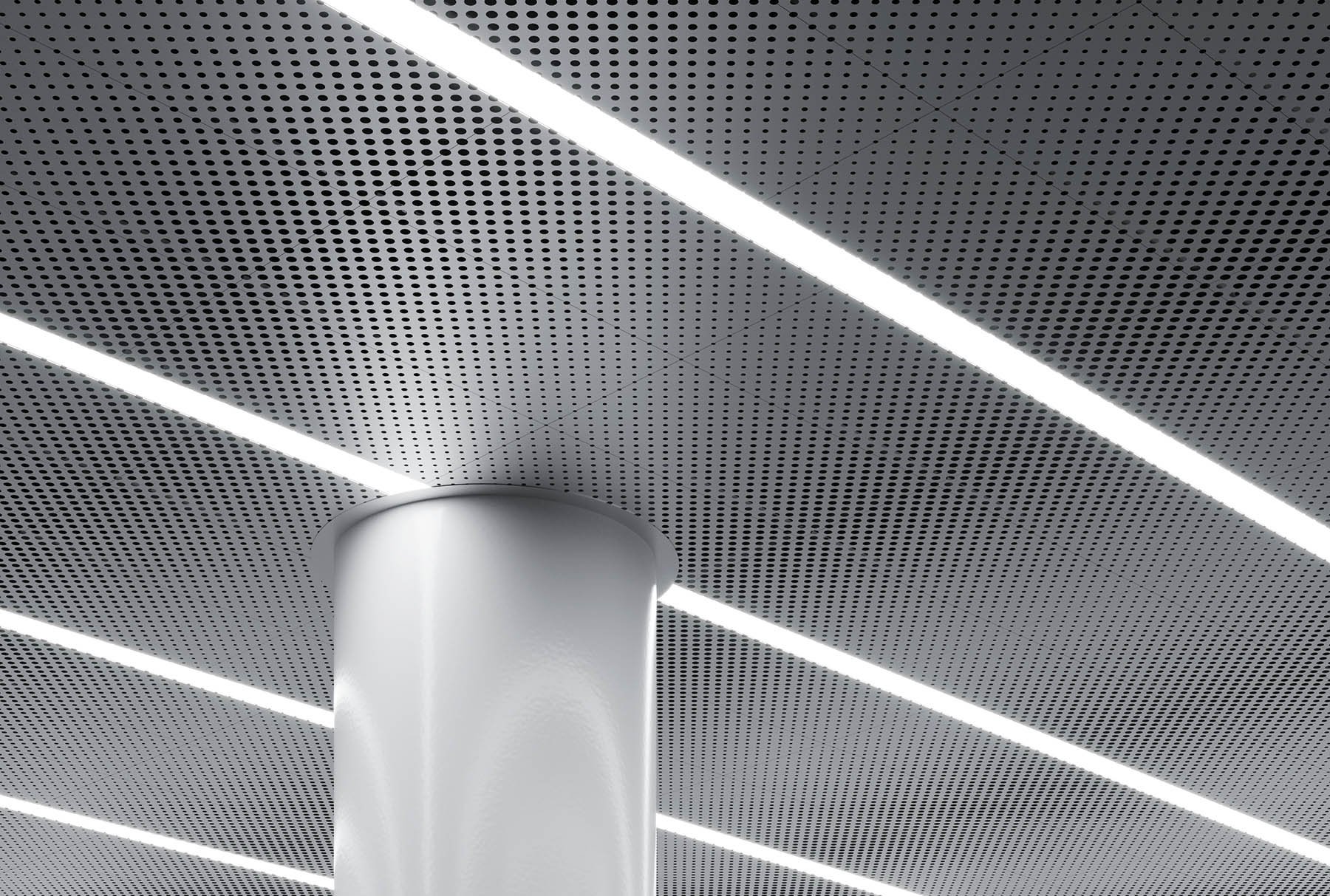
Integrating light into a ceiling tile is a three-way specification: the panel, the light source, and the interaction between perforation density and light output. For VEIL, all three are specified in VEIL Studio and confirmed in a single DXF. This guide covers the technical parameters architects and M&E consultants need to confirm before specifying VEIL with integrated backlighting.
Colour temperature: 2700K to 6000K
VEIL’s integrated backlighting covers the full architectural range of colour temperatures, from 2700K (warm white) to 6000K (cool white/daylight). The selection is made in VEIL Studio when backlighting is specified.
2700K is used in hospitality, residential-adjacent, and any environment where a warm, welcoming atmosphere is part of the design brief. 3000K–4000K covers most commercial office, retail, and healthcare applications. 5000K–6000K is used in environments requiring high colour rendering accuracy or a strong sense of daylight — studios, exhibition spaces, clinical environments.
Output level: 25W, 45W, 65W
Three output levels are available: 25W for ambient or feature lighting in lower-lux environments, 45W for general commercial applications where the backlit panel is contributing to the primary lighting level, and 65W for higher-output requirements or larger panel configurations where more lux at desk level is needed.
Output level selection requires input from the lighting designer or M&E consultant — lux-at-task calculations should be confirmed before the VEIL panel specification is finalised. The backlit panel’s contribution to the overall lighting scheme depends on the panel count, ceiling height, reflectance values of the space, and the colour temperature selected.
How does perforation density interact with light output?
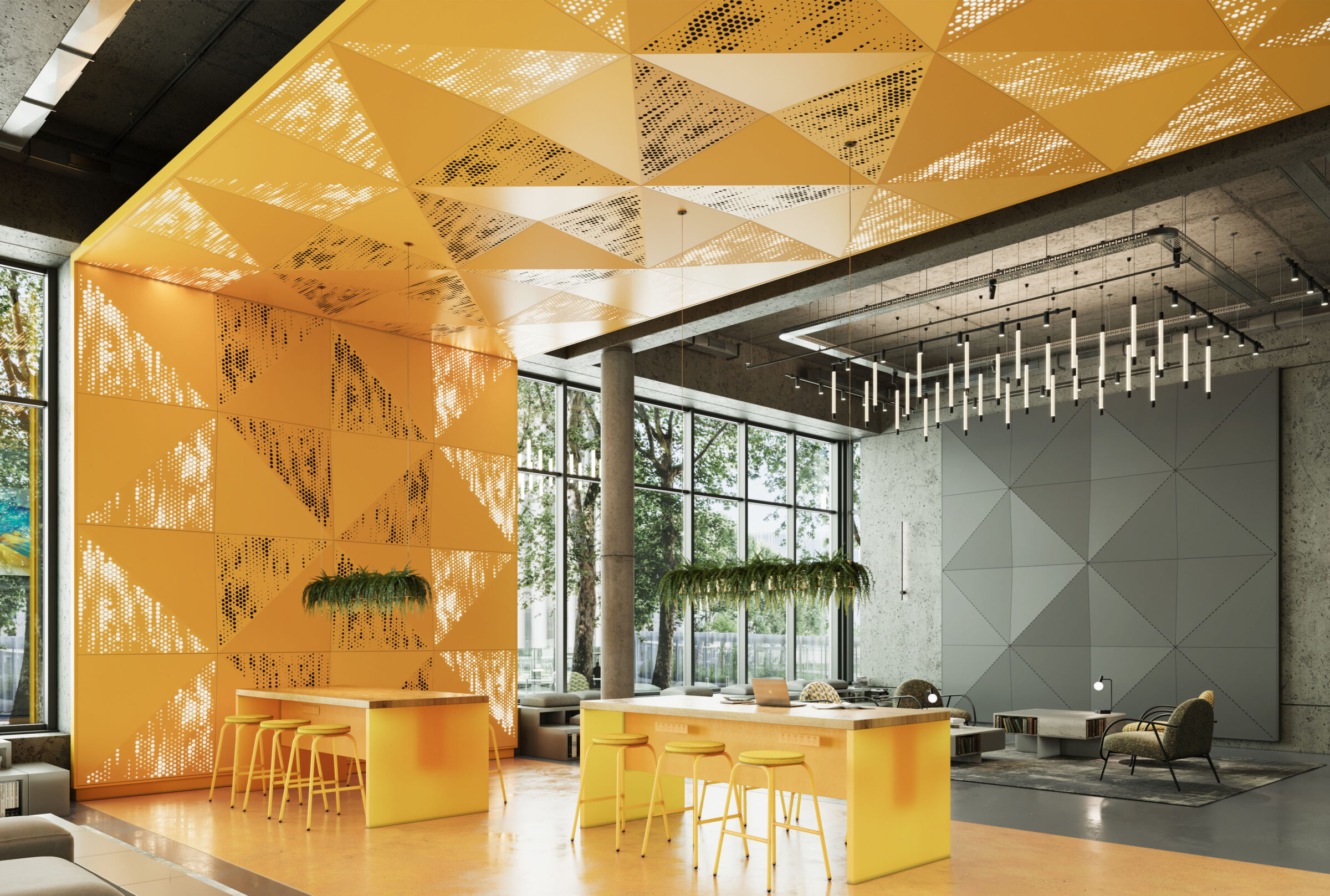
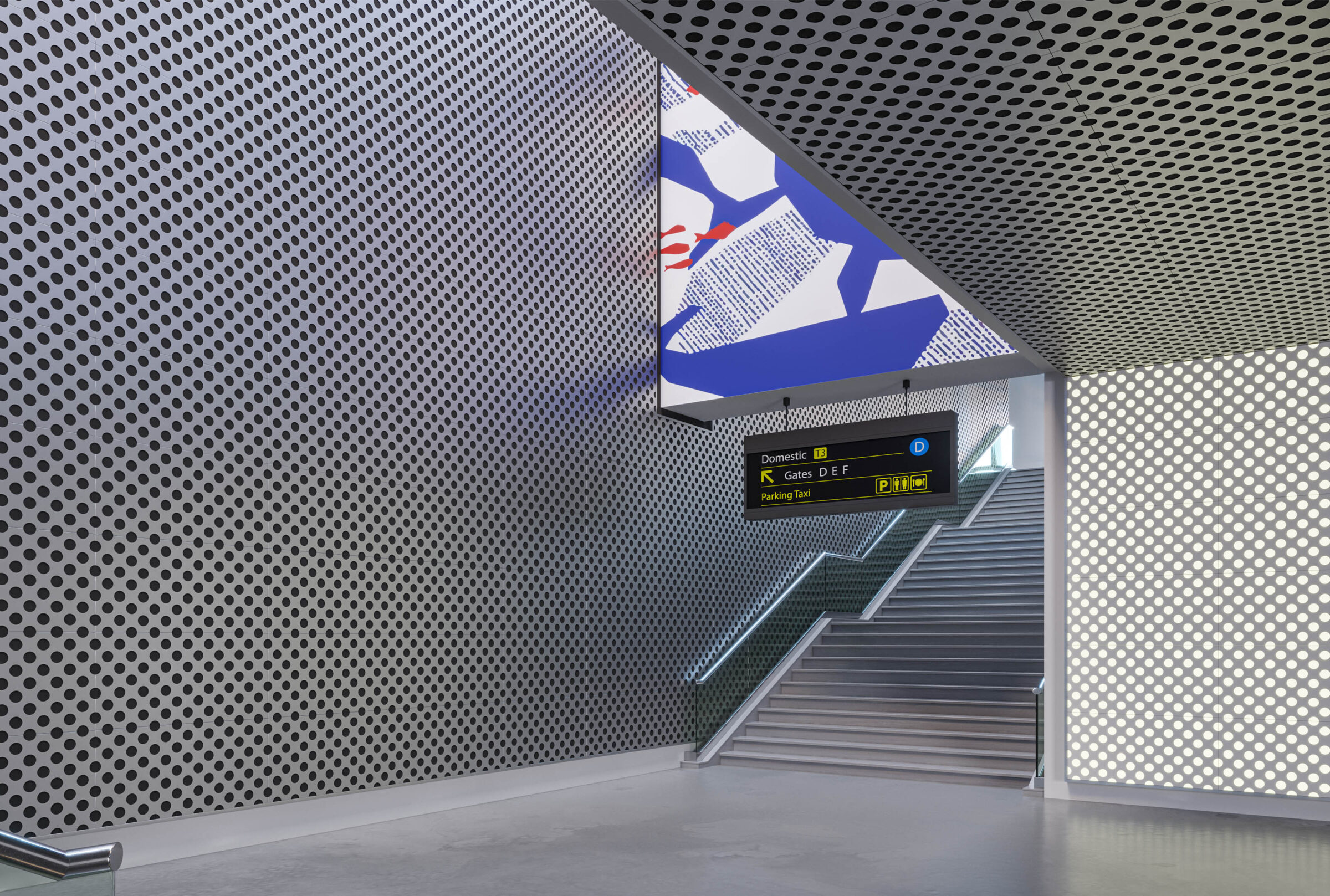
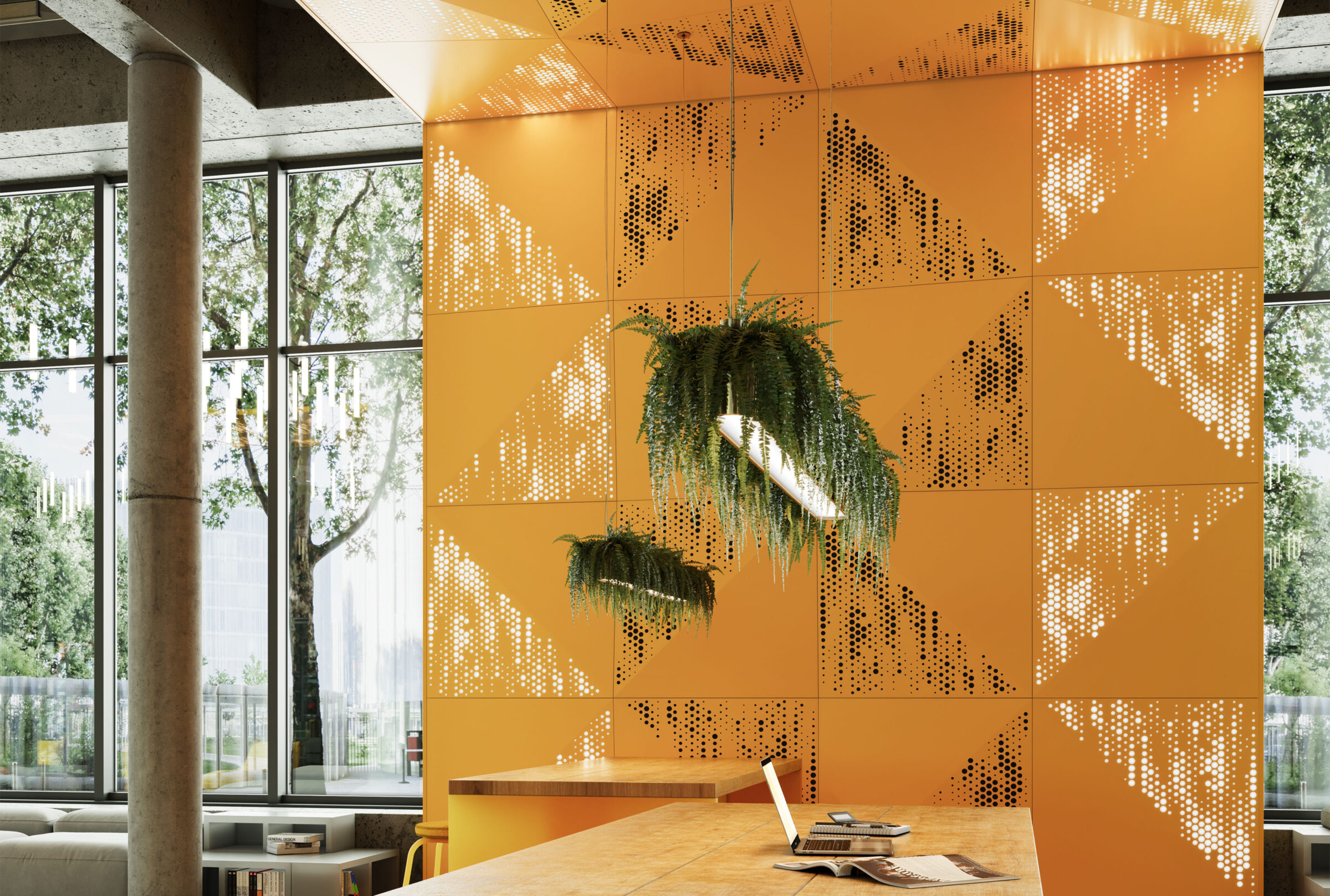
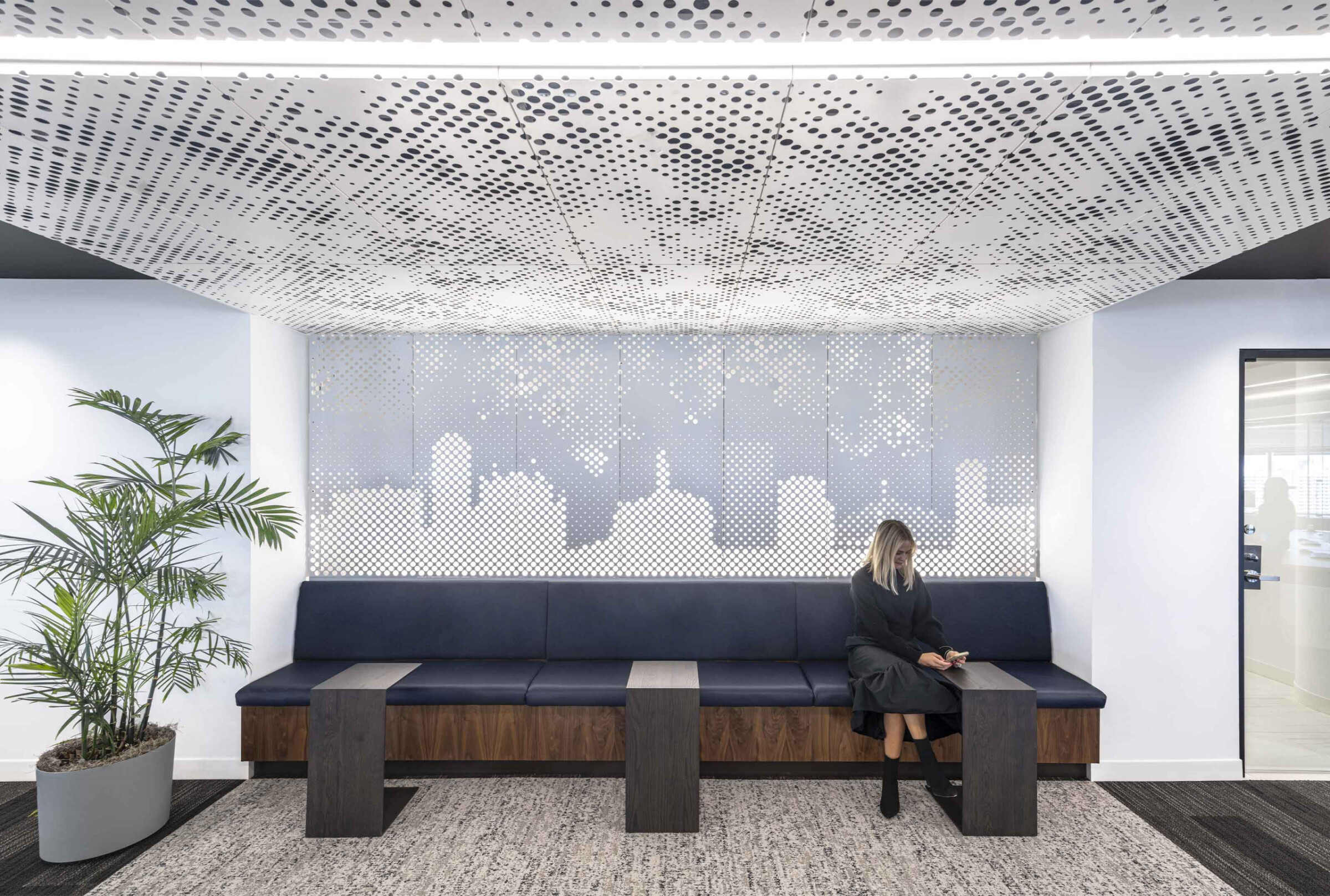
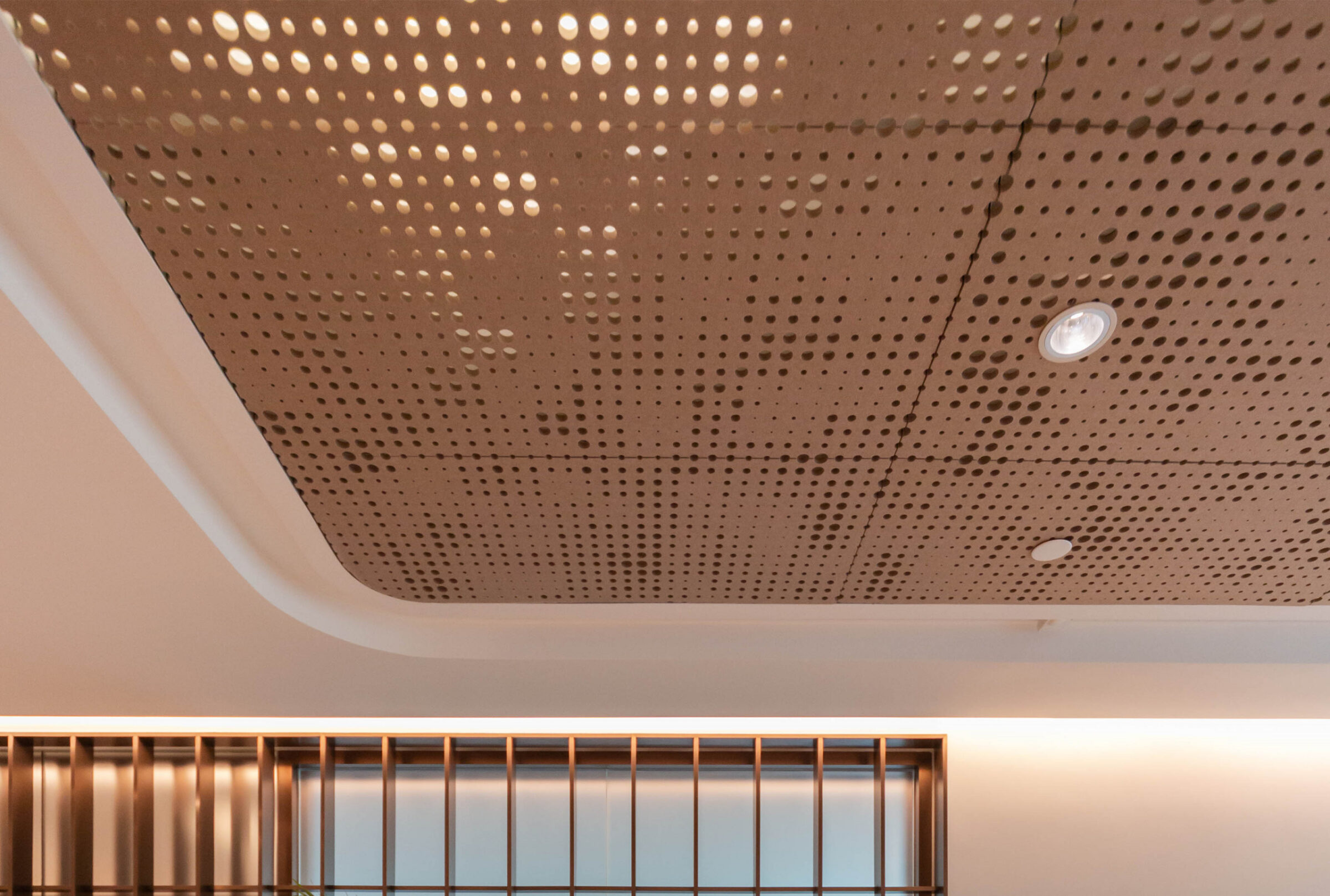
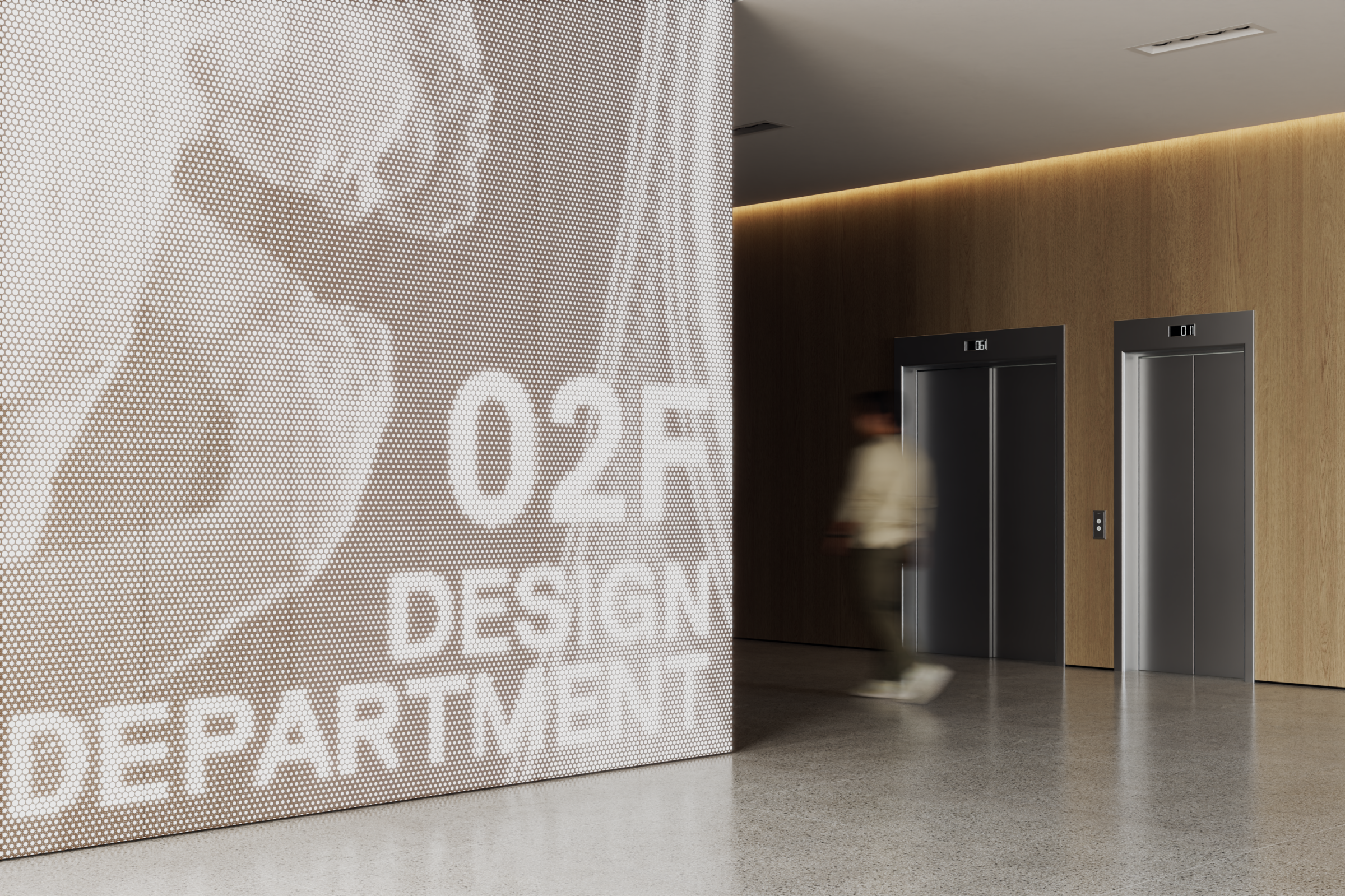
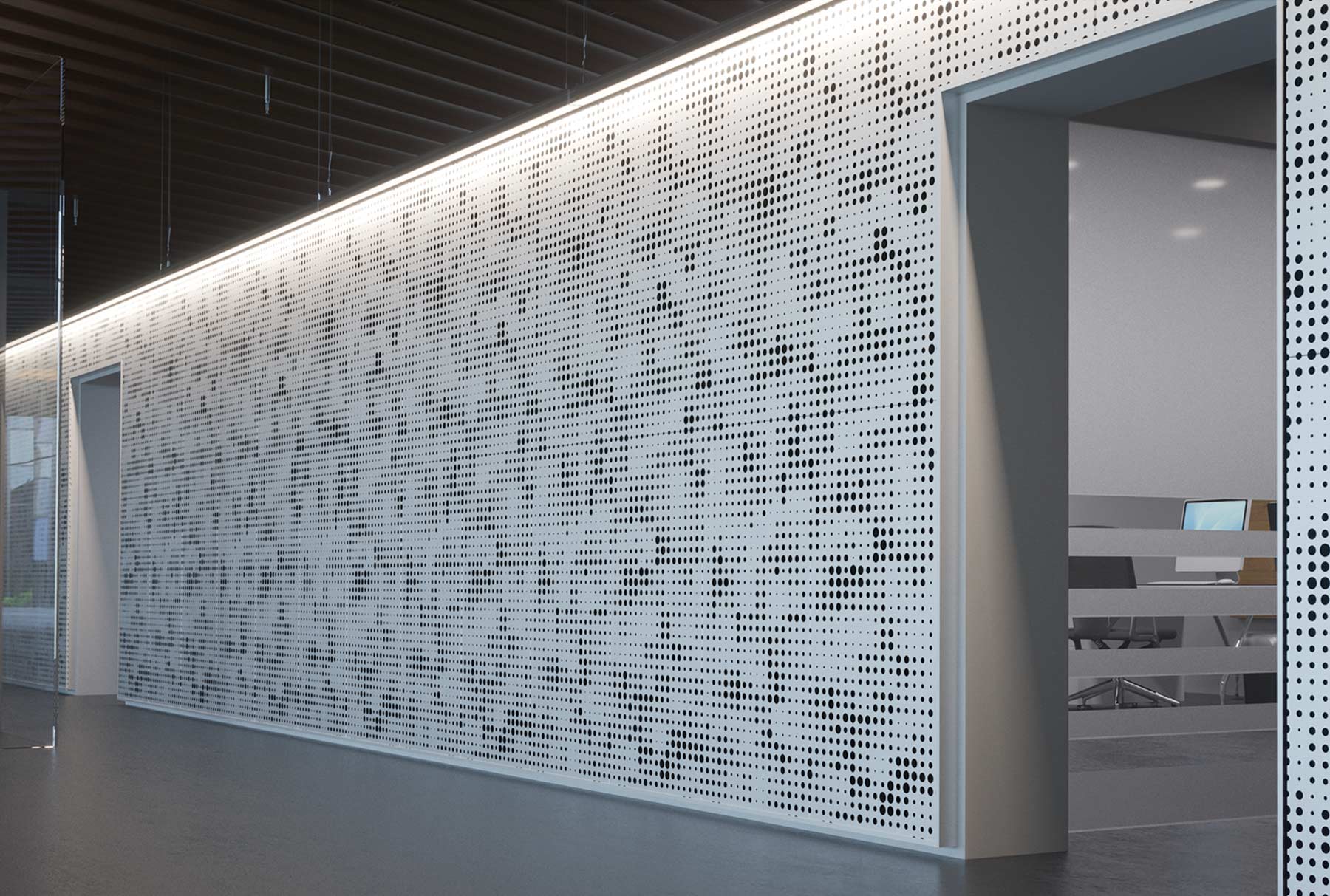
The perforations in the panel are the apertures through which the backlight passes into the room. Higher perforation density means more light passes through the face — the panel reads as more luminous. Lower perforation density means less light, but a stronger visual contrast between the illuminated perforations and the metal face.
VEIL Studio’s real-time preview reflects the visual character of the backlit panel with the current perforation parameters. Adjust the pattern to balance visual effect and lux output before generating the DXF.
Electrical connection
Backlighting is integrated into the panel at manufacture — the electrical connection point is part of the panel specification. Confirm connection type and driver requirements with the M&E consultant before finalising the VEIL specification. The panel arrives crated with the backlighting integrated. The M&E trades connect at installation. Built in days. Shipped in weeks. The simple part is yours.