
Influence de la profondeur et de l'espacement des ailettes sur les performances acoustiques des systèmes de plafonds à déflecteurs
1er mai 2026
-2 min lire
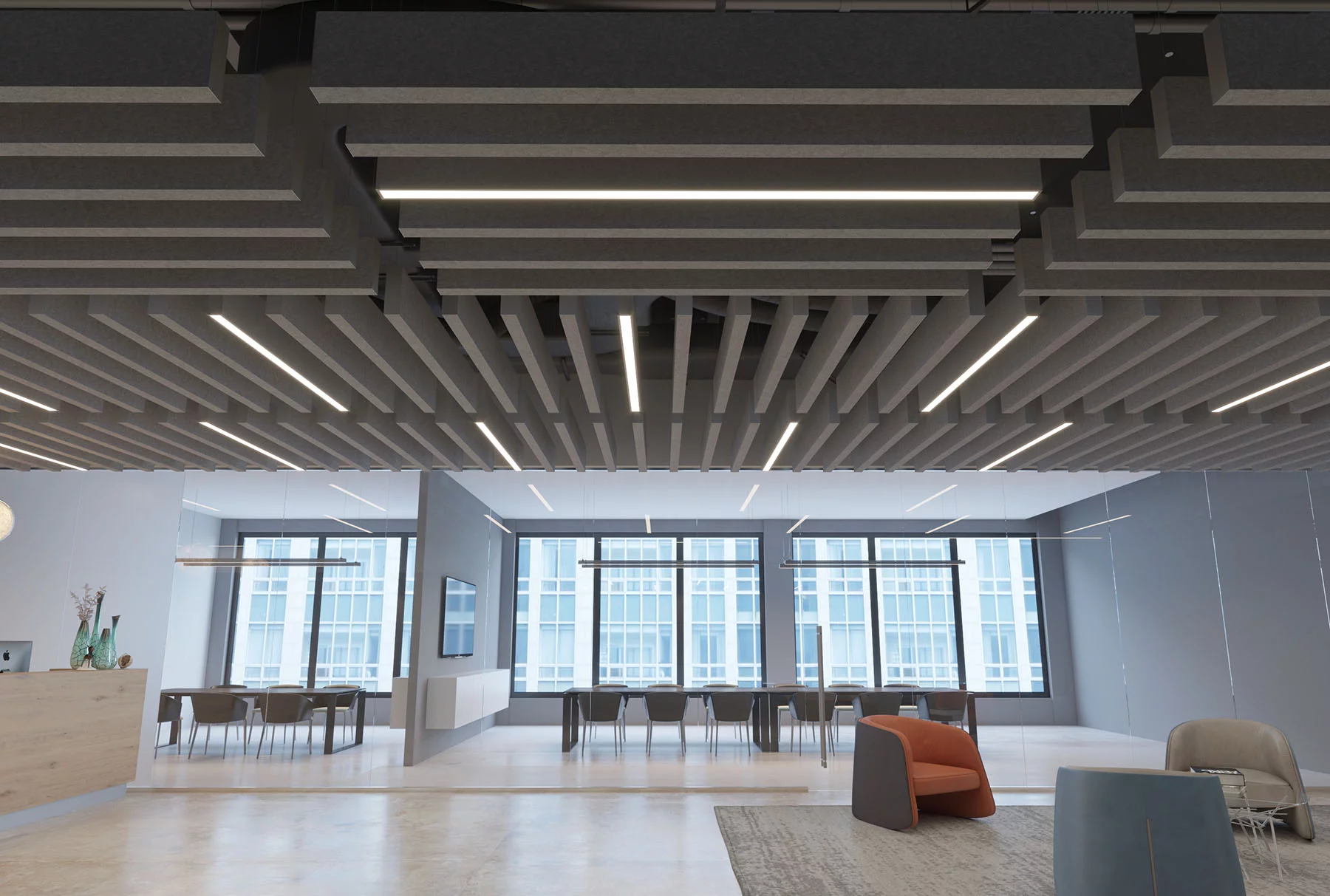
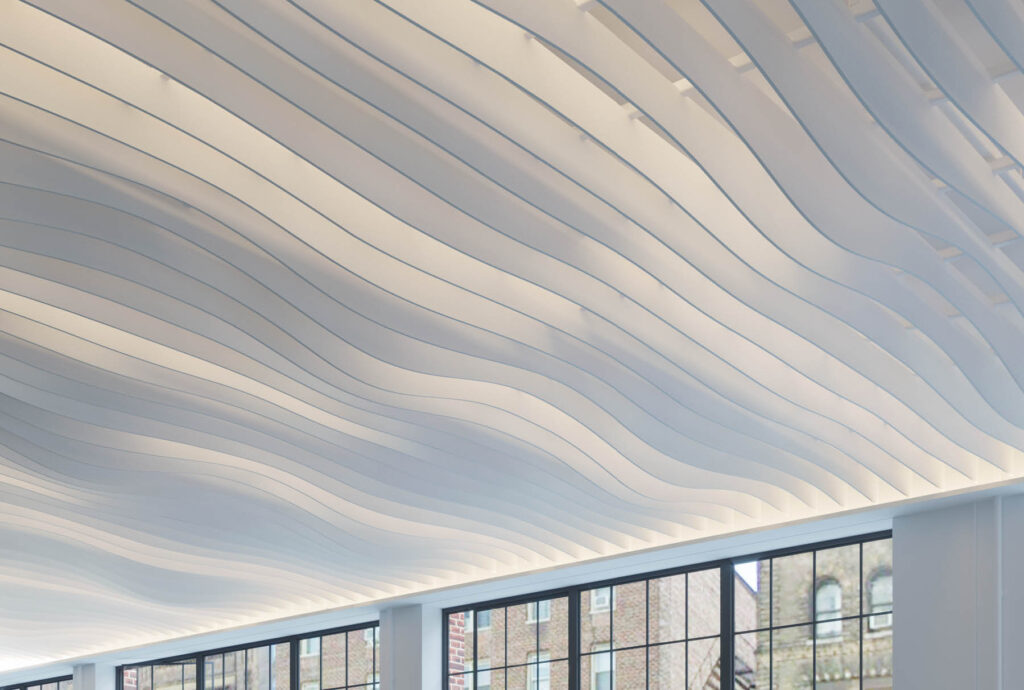
Les performances acoustiques des systèmes de plafonds à déflecteurs ne dépendent pas uniquement du choix des matériaux. La profondeur des déflecteurs, leur espacement et leur couverture ont tous une incidence sur le coefficient de réduction acoustique (NRC) obtenu. Voici comment prendre en compte ces variables.
L'indice NRC constitue le point de départ pour la spécification acoustique des systèmes de plafonds à déflecteurs, mais il ne fait pas tout. Les performances acoustiques réelles d'un plafond à déflecteurs dans un espace concret dépendent de l'indice NRC du matériau, du pourcentage de couverture par rapport à la surface au sol, de la profondeur et de l'espacement des ailettes, ainsi que de la géométrie de montage. Il est essentiel de comprendre comment ces variables interagissent pour concevoir un système de plafond qui atteigne ses objectifs acoustiques.
Pourcentage de couverture
La couverture — rapport entre la surface absorbante du plafond et la surface au sol — est la principale variable déterminant la réduction du temps de réverbération. Un système de plafond présentant un NRC de 0,85 mais une couverture de 30 % offre des performances acoustiques différentes de celles du même système avec une couverture de 60 %. Pour un temps de réverbération cible et un volume de pièce donnés, la couverture requise peut être calculée à l'aide des équations de Sabine ou d'Eyring.
Le choix de la couverture n'est donc pas seulement une question d'esthétique. Il s'agit d'un choix de conception acoustique, qui doit être déterminé en fonction du temps de réverbération cible de l'espace.
Profondeur des ailettes et absorption des basses fréquences
Les ailettes plus profondes, ou celles qui sont fixées plus loin du plan du plafond, absorbent plus efficacement les sons à basse fréquence que les ailettes peu profondes fixées près de la sous-face. Ce phénomène s'explique par la formation d'ondes stationnaires à proximité des surfaces dures, qui réduisent l'efficacité des matériaux absorbants lorsque ceux-ci sont fixés à très courte distance.
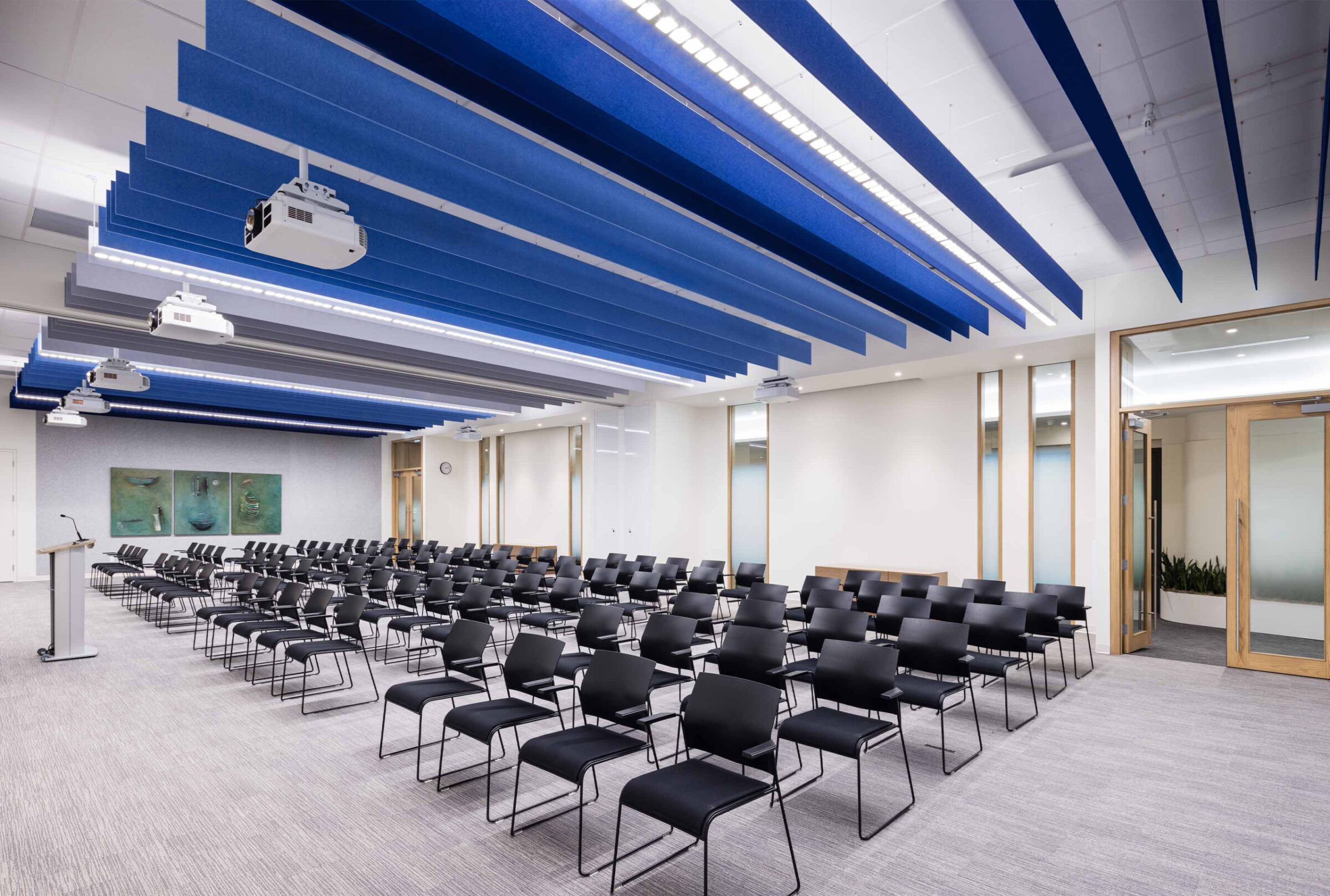
Dans les espaces où l'absorption des basses fréquences est importante — salles à manger où le bruit des systèmes de chauffage, de ventilation et de climatisation est important, salles de répétition musicale, salles de conférence —, il est pertinent, d'un point de vue acoustique, de prévoir une profondeur d'ailettes ou un espace d'air adéquat.
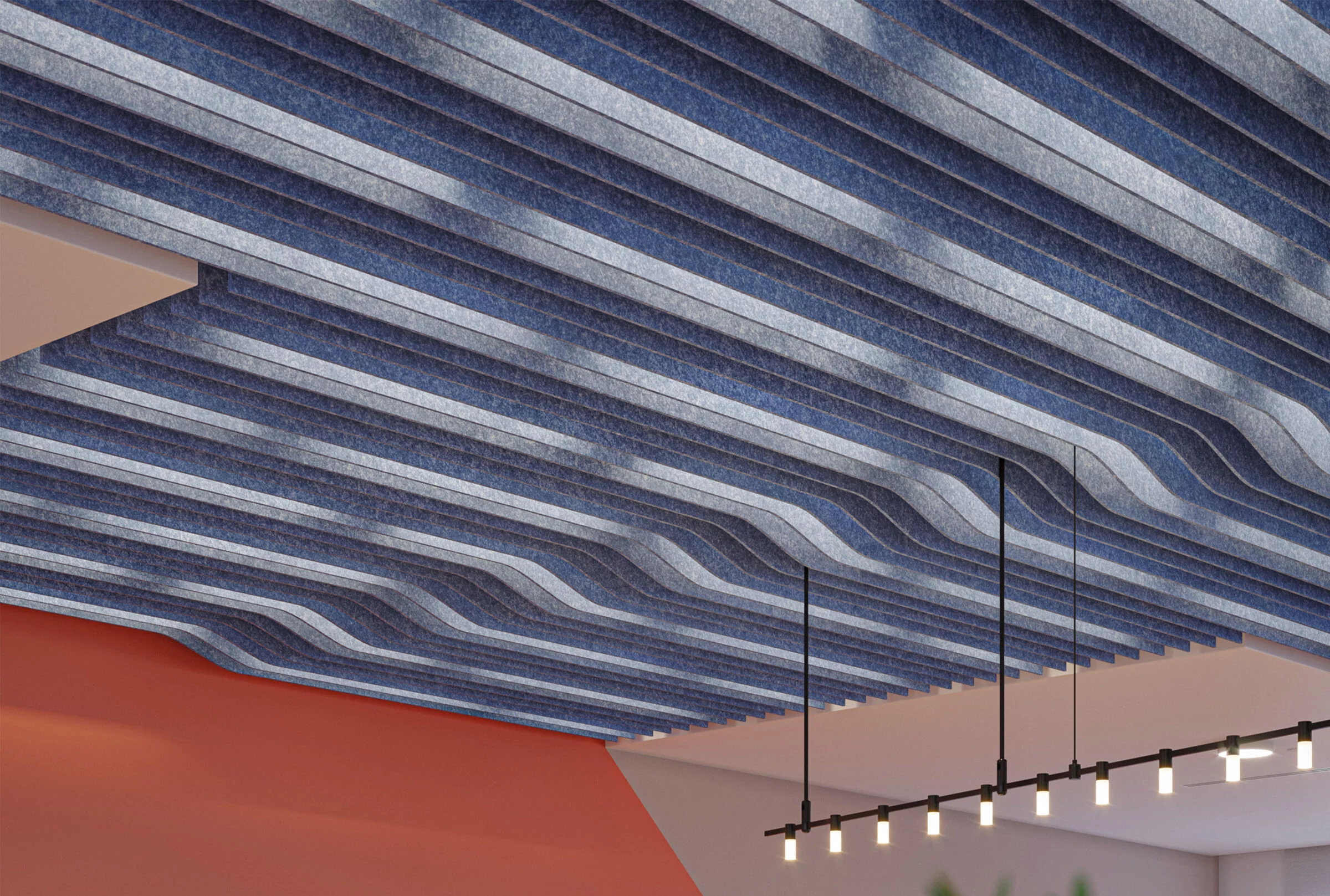
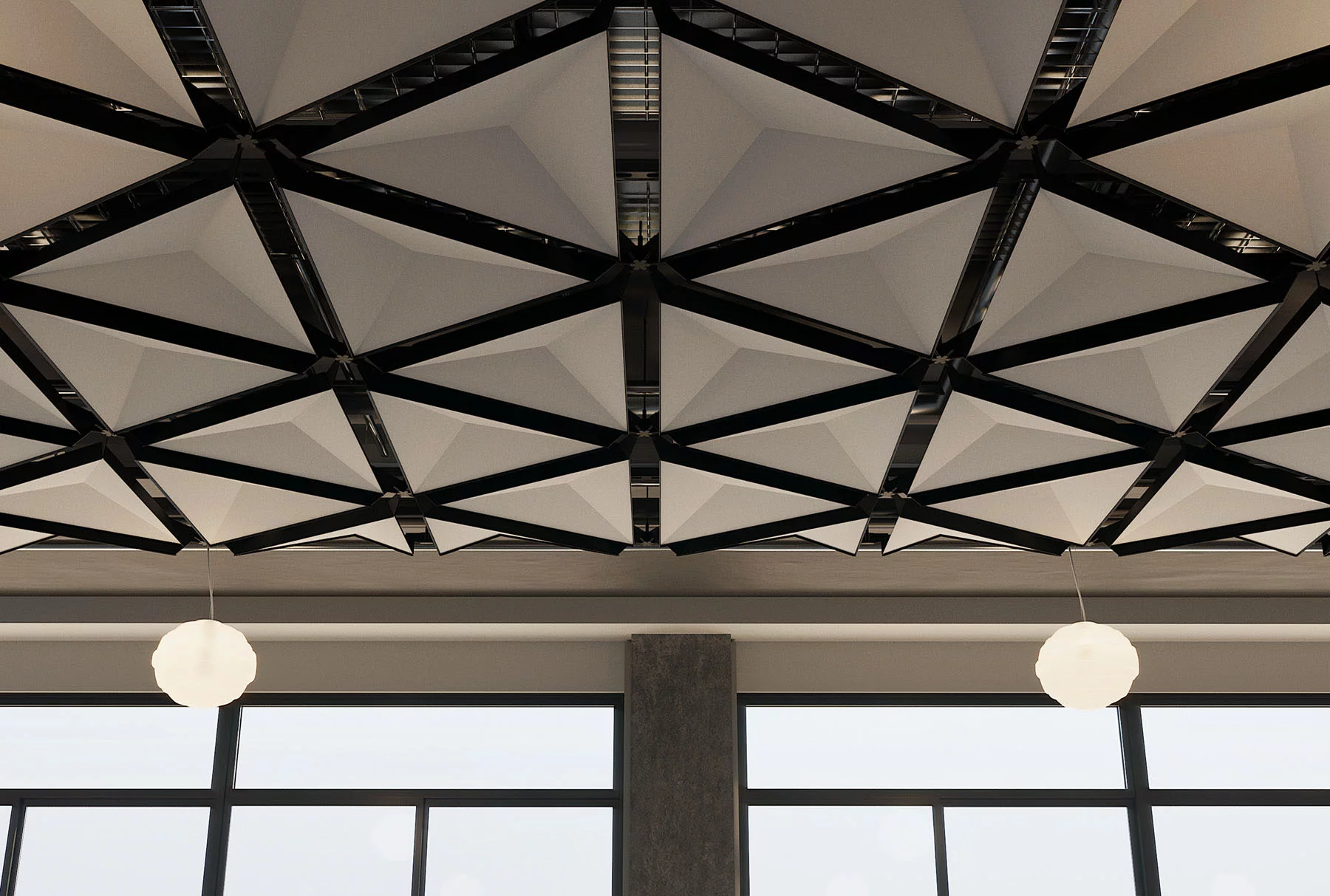
Atmosphera® de NOWN — Une conception modulable
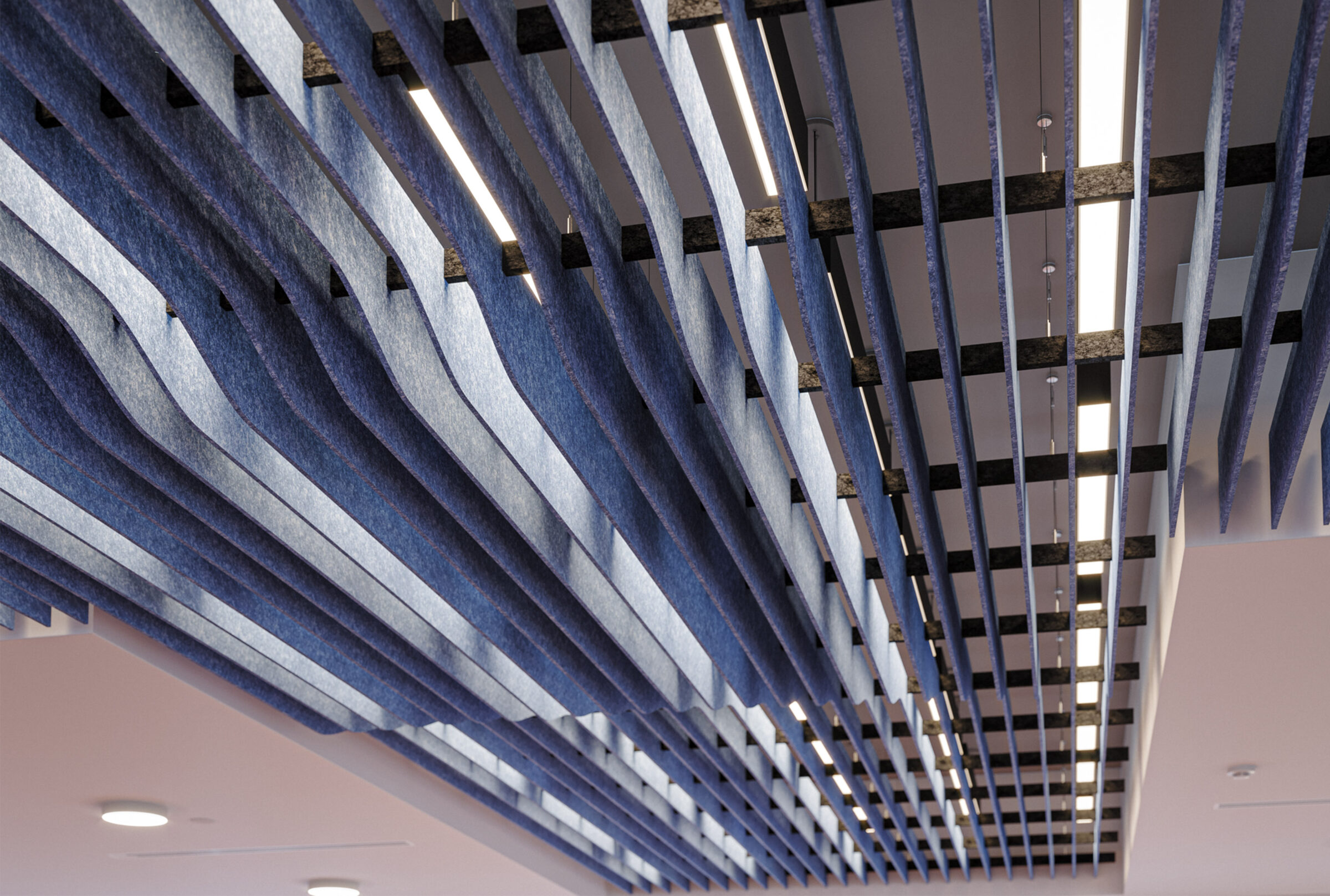
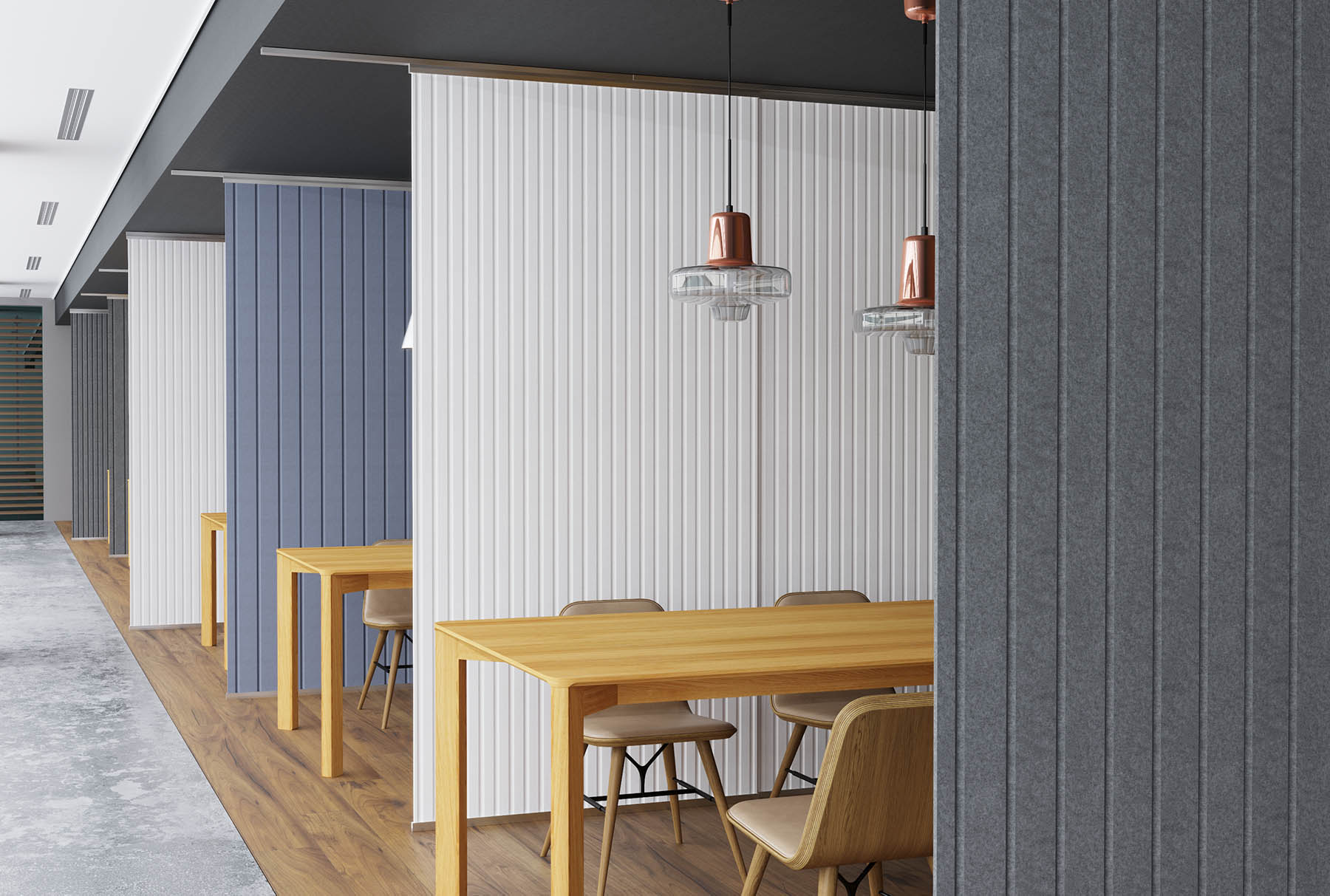
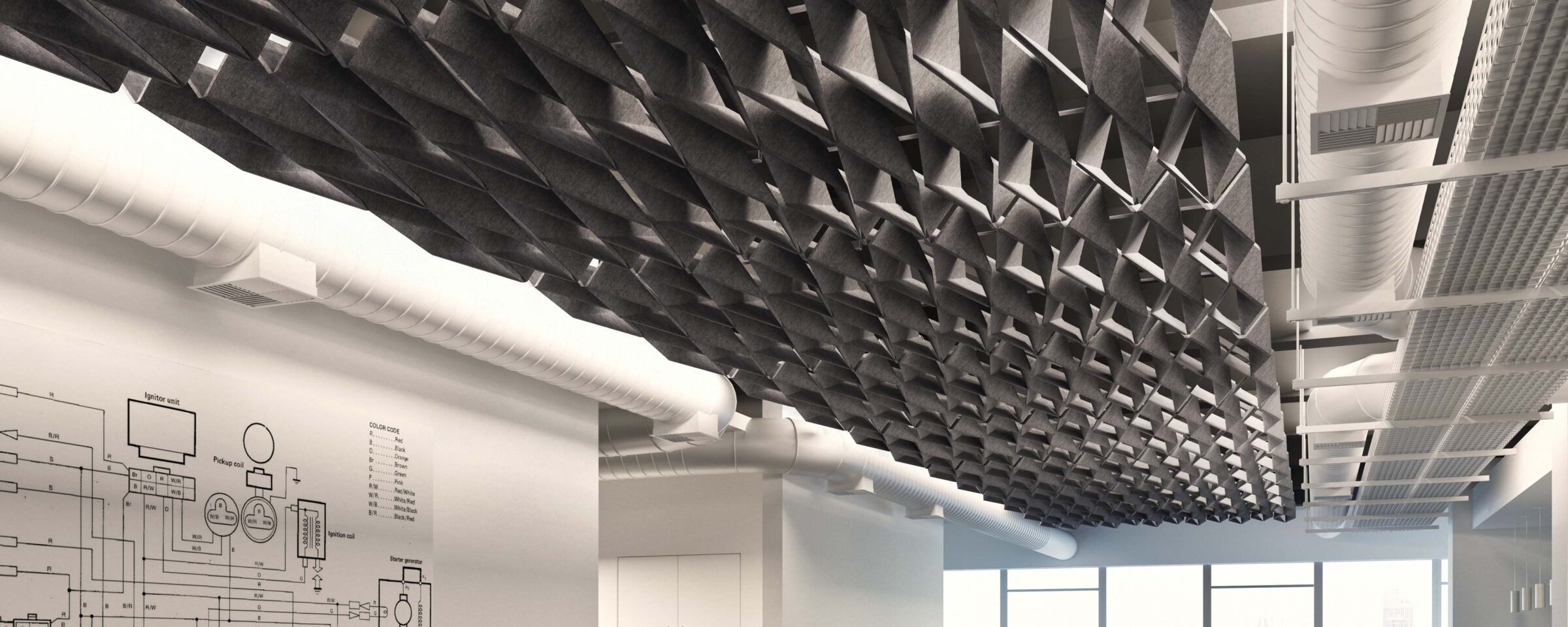
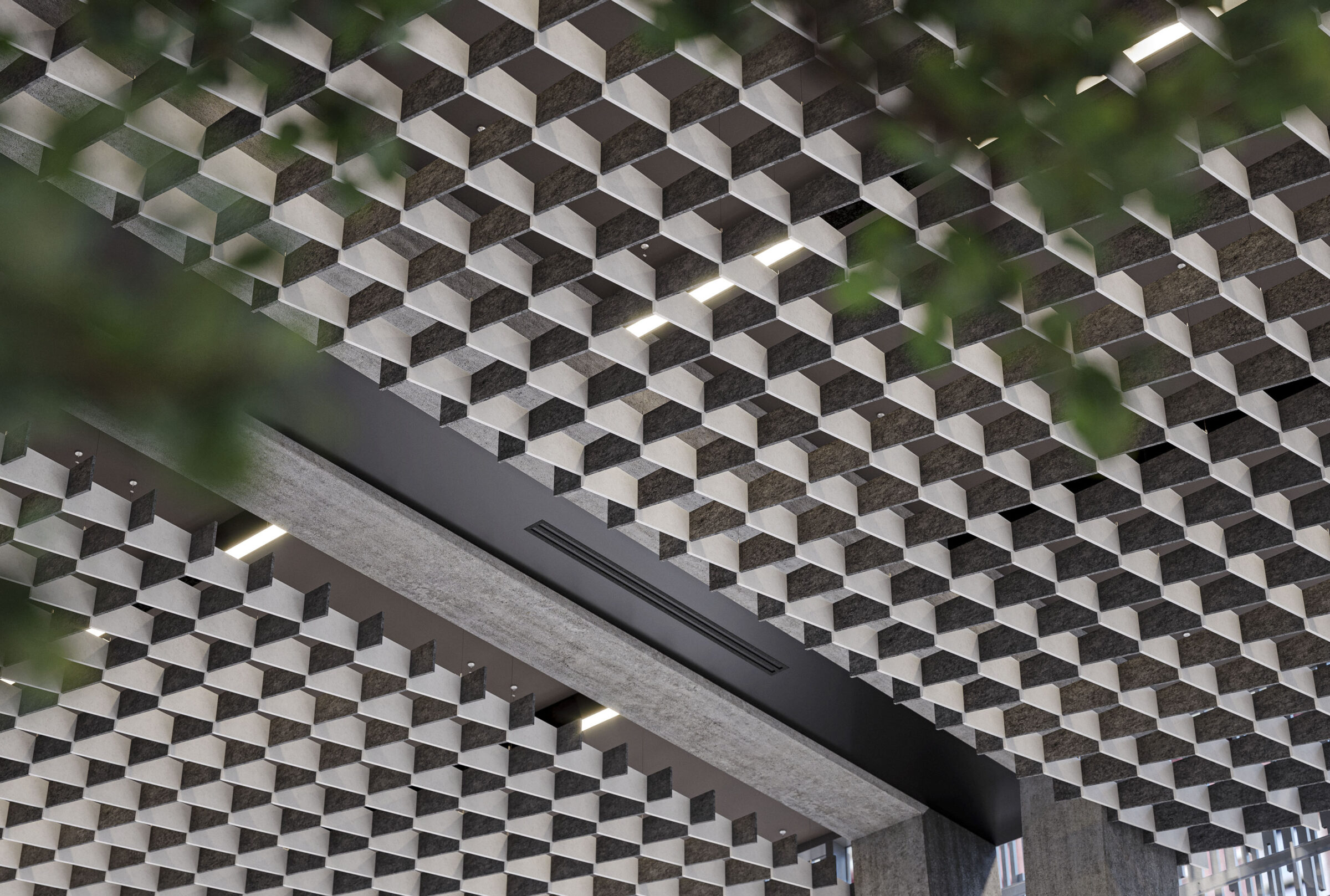
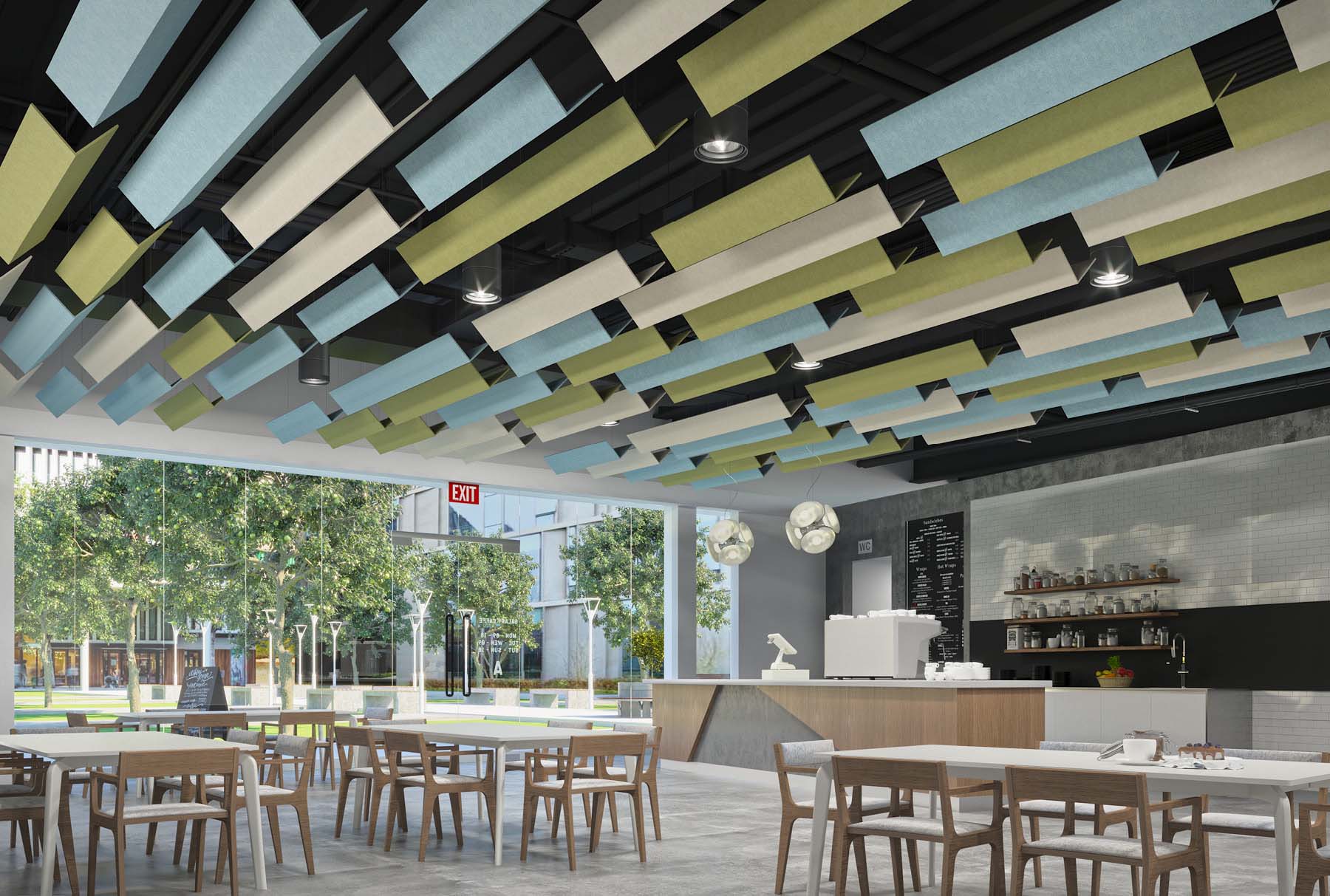
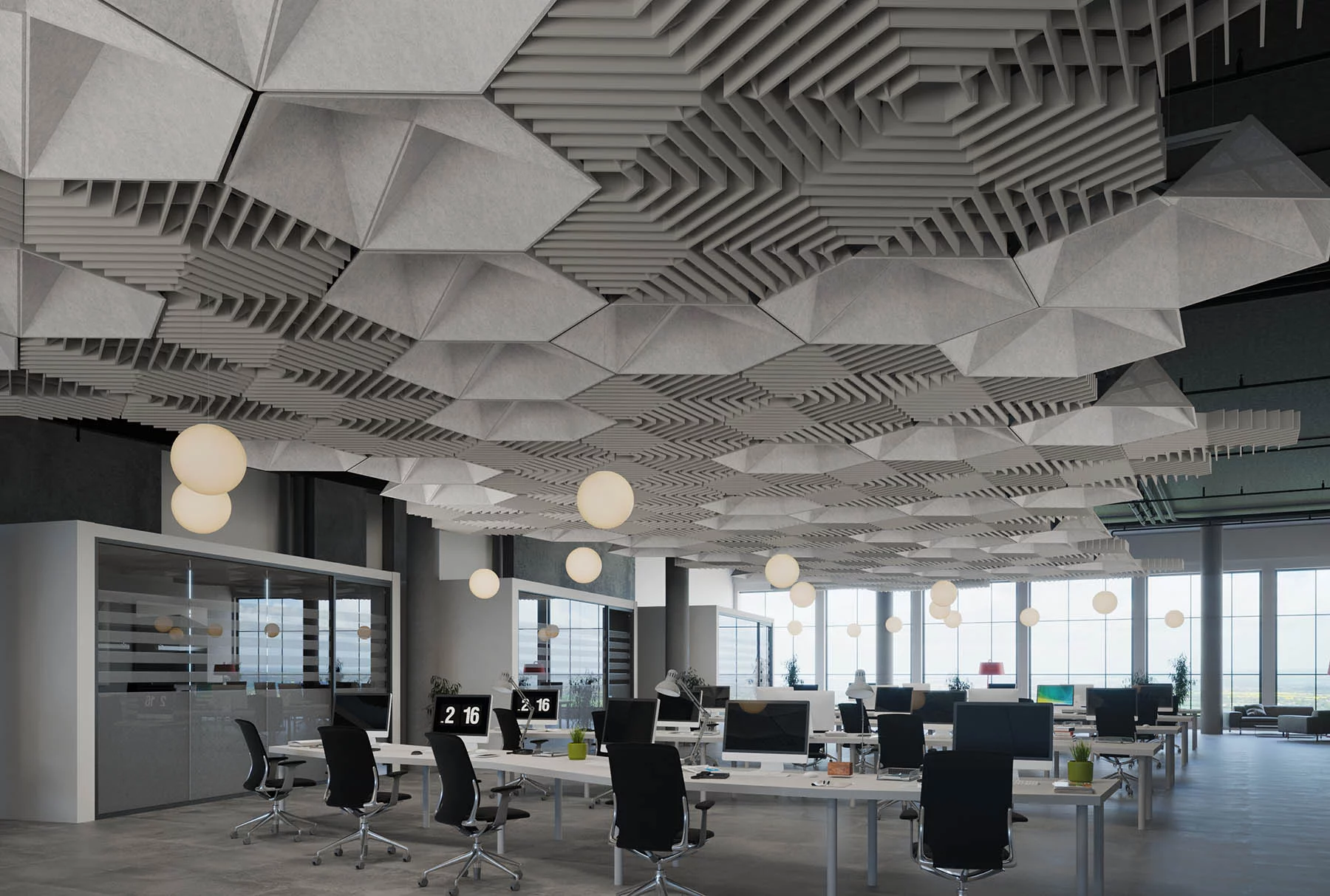
NOWN’s Atmosphera® Ce système est expressément conçu pour offrir une grande flexibilité de configuration en fonction de ces variables. La profondeur des ailettes, leur espacement et leur couleur peuvent être modifiés au sein du système afin d’obtenir différents résultats acoustiques et visuels. Le système utilise aSOFT™ Feutre en PET — composé à 60 % de PET recyclé, avec un NRC effectif pouvant atteindre 0,95 — pouvant être configuré pour répondre à des objectifs spécifiques en matière de temps de réverbération dans différents types d'espaces.
Les modules sont fabriqués conformément au cahier des charges du projet. La configuration acoustique est définie dès la phase de conception et intégrée aux composants livrés sur site. Aucun réglage n'est nécessaire sur place.
Demandez l'aide de l'équipe NOWN pour la conception acoustique