





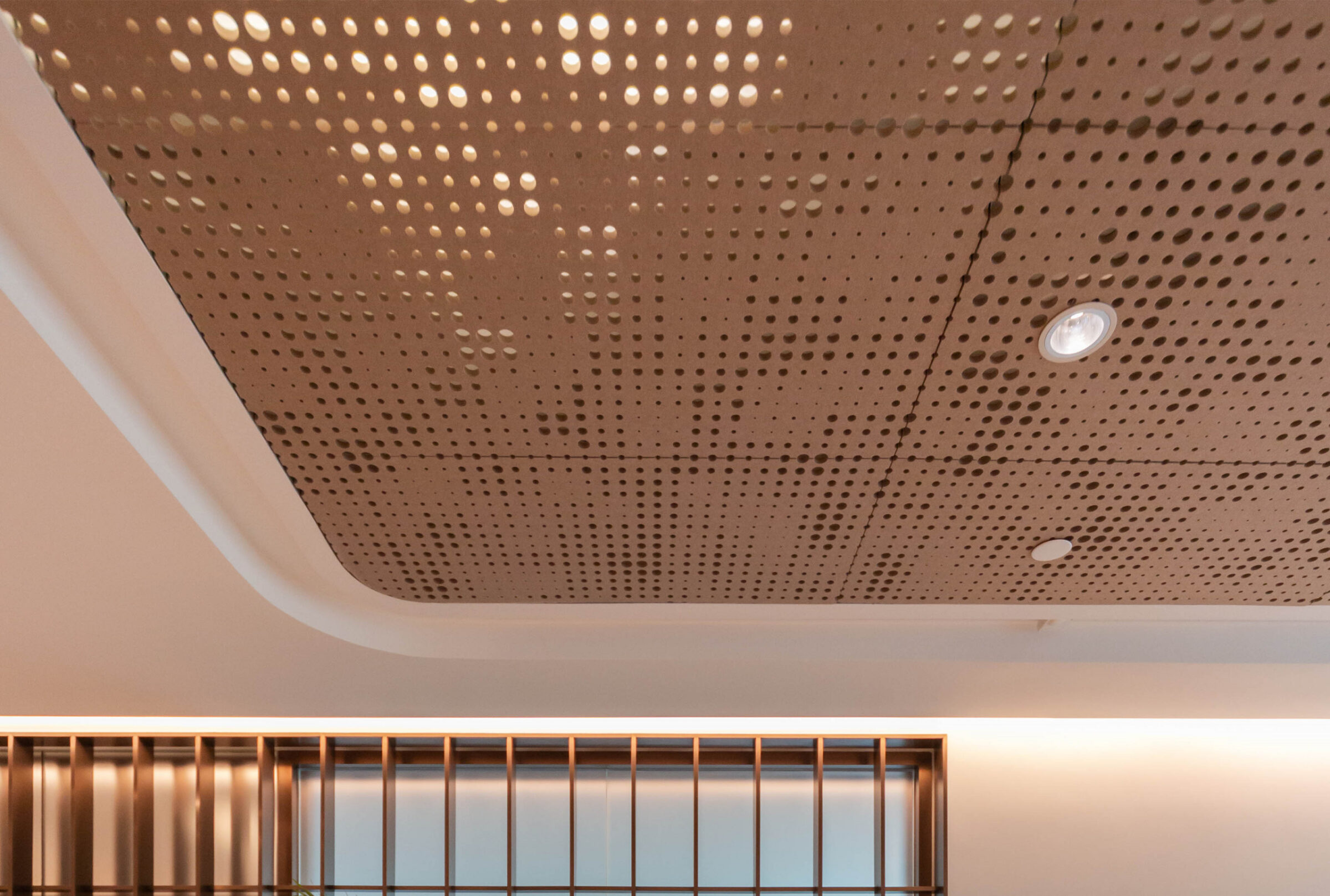
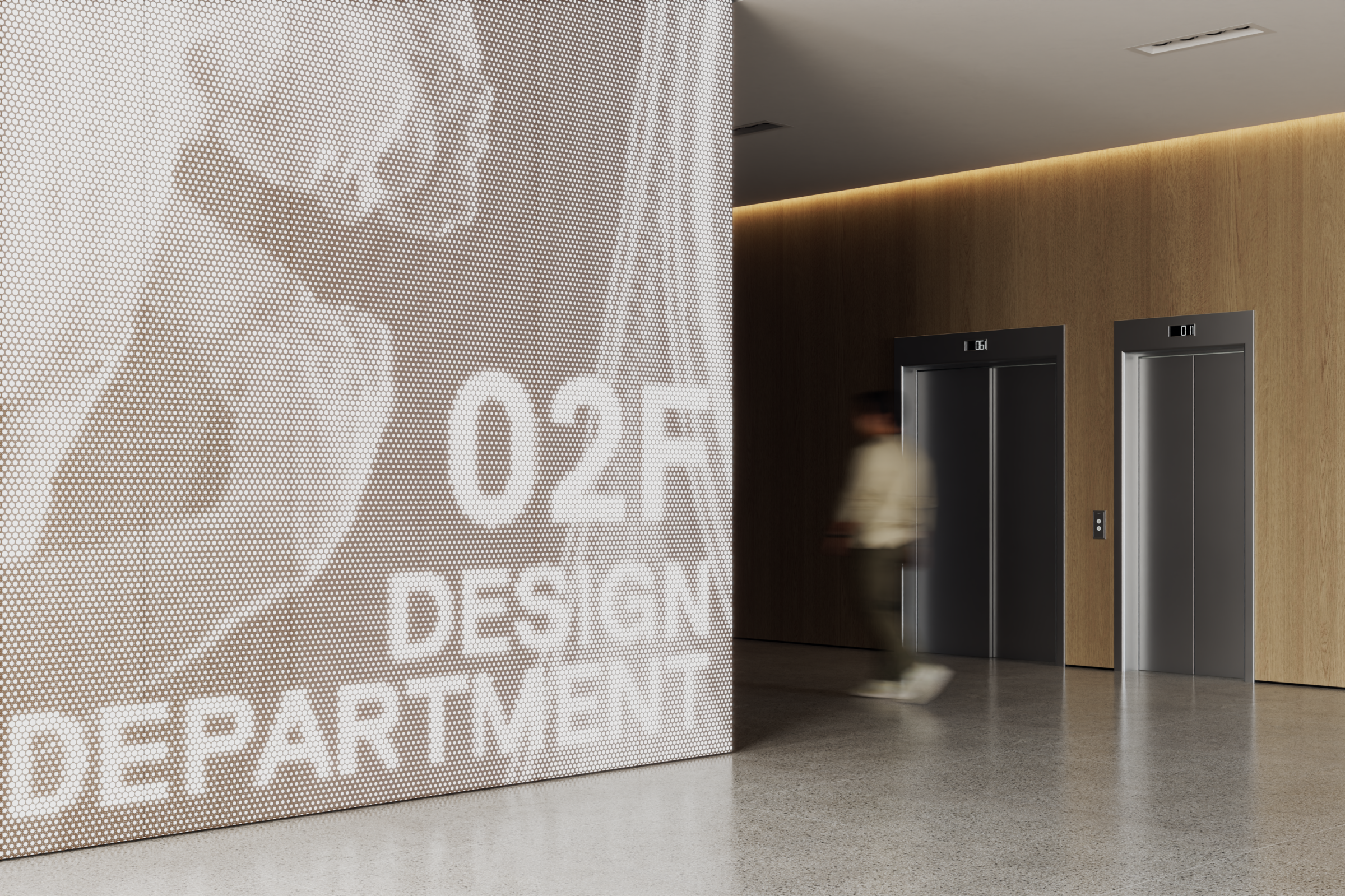
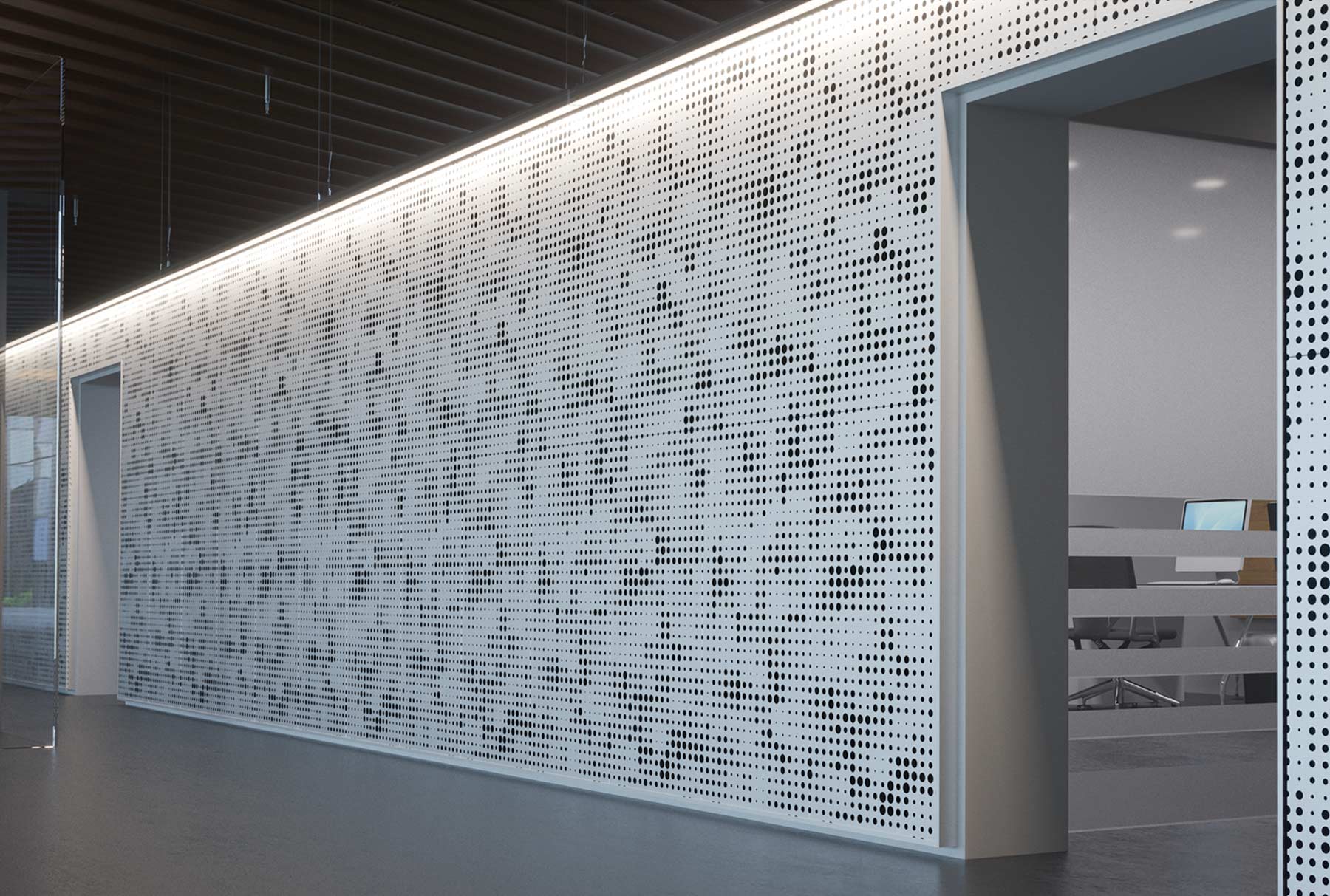
“No field modifications” is a small phrase that carries significant programme and cost implications. Field modification means cutting, trimming, or adjusting a panel on site to make it fit. For a powder-coated metal panel, field modification means cut edges without powder coat, modified dimensions that may affect acoustic performance, and skilled labour time spent on a task that the manufacturer should have resolved. VEIL arrives in the correct format. No field modifications. The hard work happens in our factory.
Why do some panels require field modification?
Field modification is required when: the panel is manufactured slightly oversize and needs trimming to fit the grid opening; the panel geometry does not match the grid module and needs cutting to fit; or the grid has been installed slightly out of tolerance and the panel needs to be adjusted to accommodate.
The first two causes are manufacturer failures — the panel should be made to the correct format. VEIL’s 596 × 1196mm format is designed to the correct clearance for a standard 600×1200 metric or 2’×4′ imperial grid opening. No trimming required. The third cause (grid out of tolerance) is a site issue that affects all ceiling tiles equally — not a VEIL-specific risk.
What does “no field modifications” save?
Time. A single panel modification on site takes a skilled trades person 15–30 minutes: measure, mark, cut, deburr, touch up. Across a ceiling of 200 panels, that is up to 100 hours of labour that VEIL eliminates. On a fixed-price contract, that labour is the contractor’s risk. On a managed contract, it is the client’s cost.
Beyond cost, field modification introduces damage risk. A powder-coated panel being cut on site has exposed cut edges that cannot be properly refinished. VEIL arrives coated. It leaves the factory coated. It installs coated. Nothing happens in between.
What about edge panels and perimeter cuts?
Perimeter cuts — where a ceiling module meets a wall, column, or other obstruction — are a normal part of any ceiling installation and require field cutting regardless of the tile type. This is not a VEIL-specific issue. For perimeter panels, the ceiling contractor cuts the tile to fit using standard metal-cutting tools.
No field modifications applies to the full-module panels that make up the bulk of any commercial ceiling. The perimeter detail is a site trade matter. Standard grid. Standard install. The simple part is yours.