
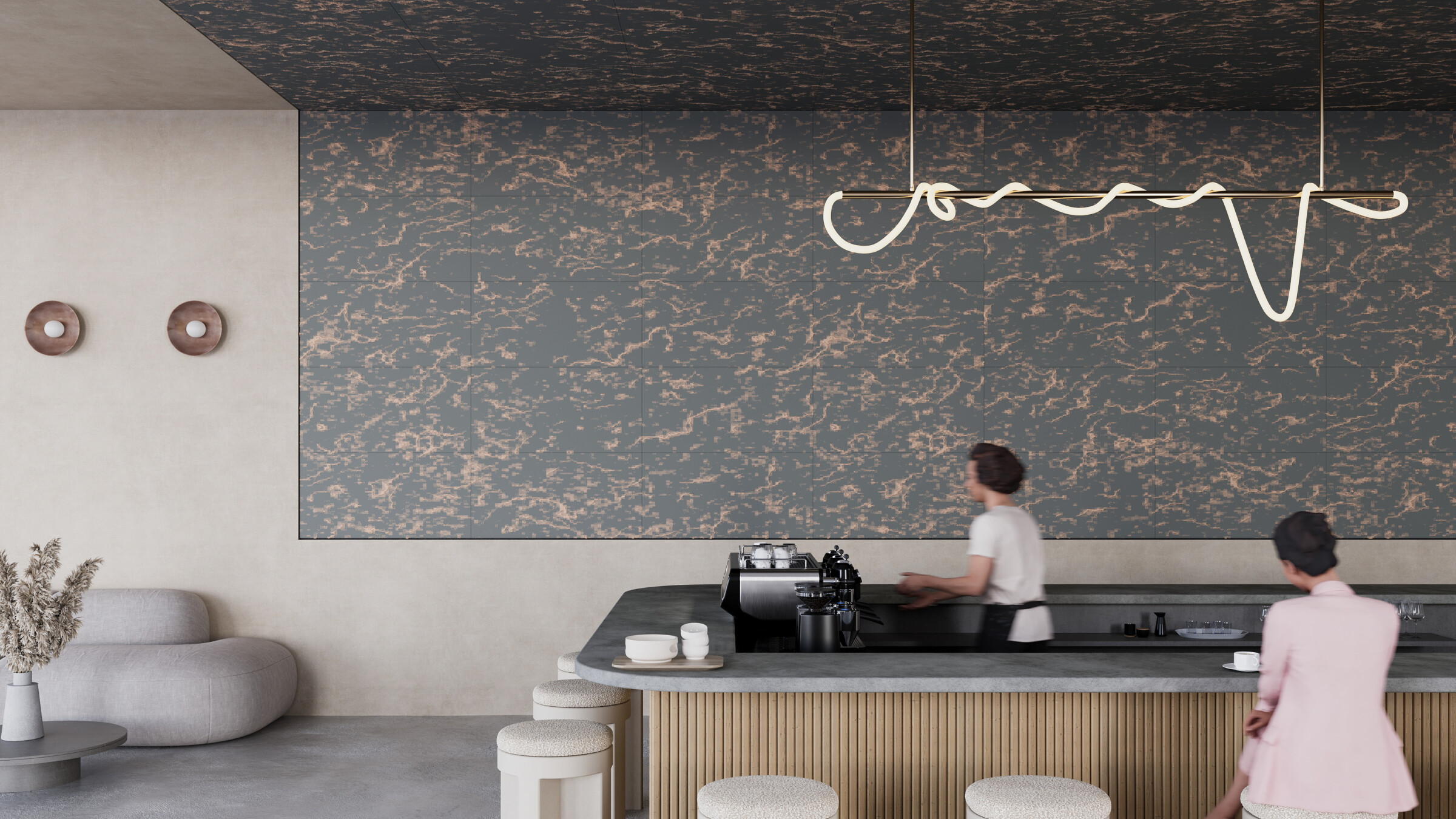
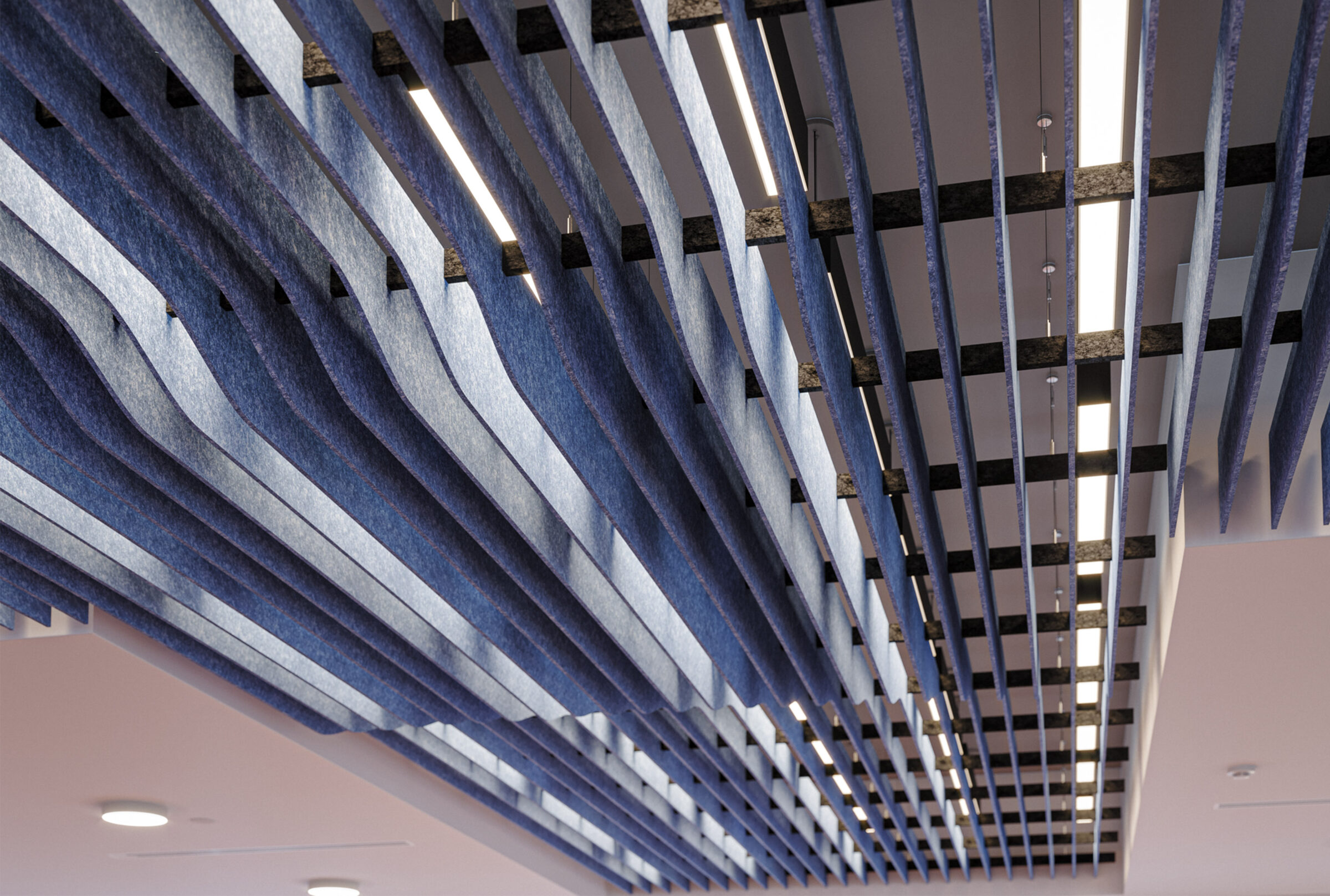
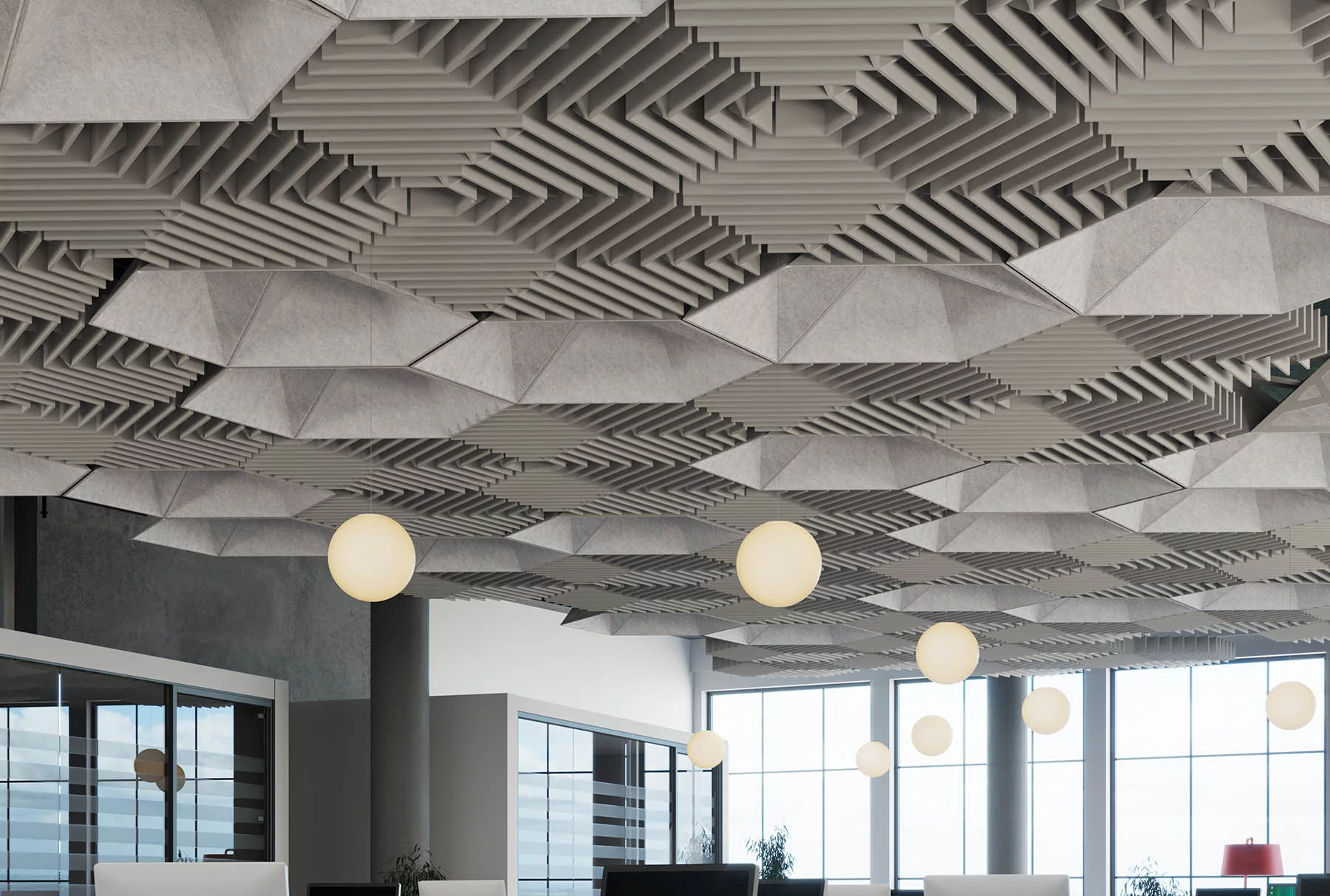


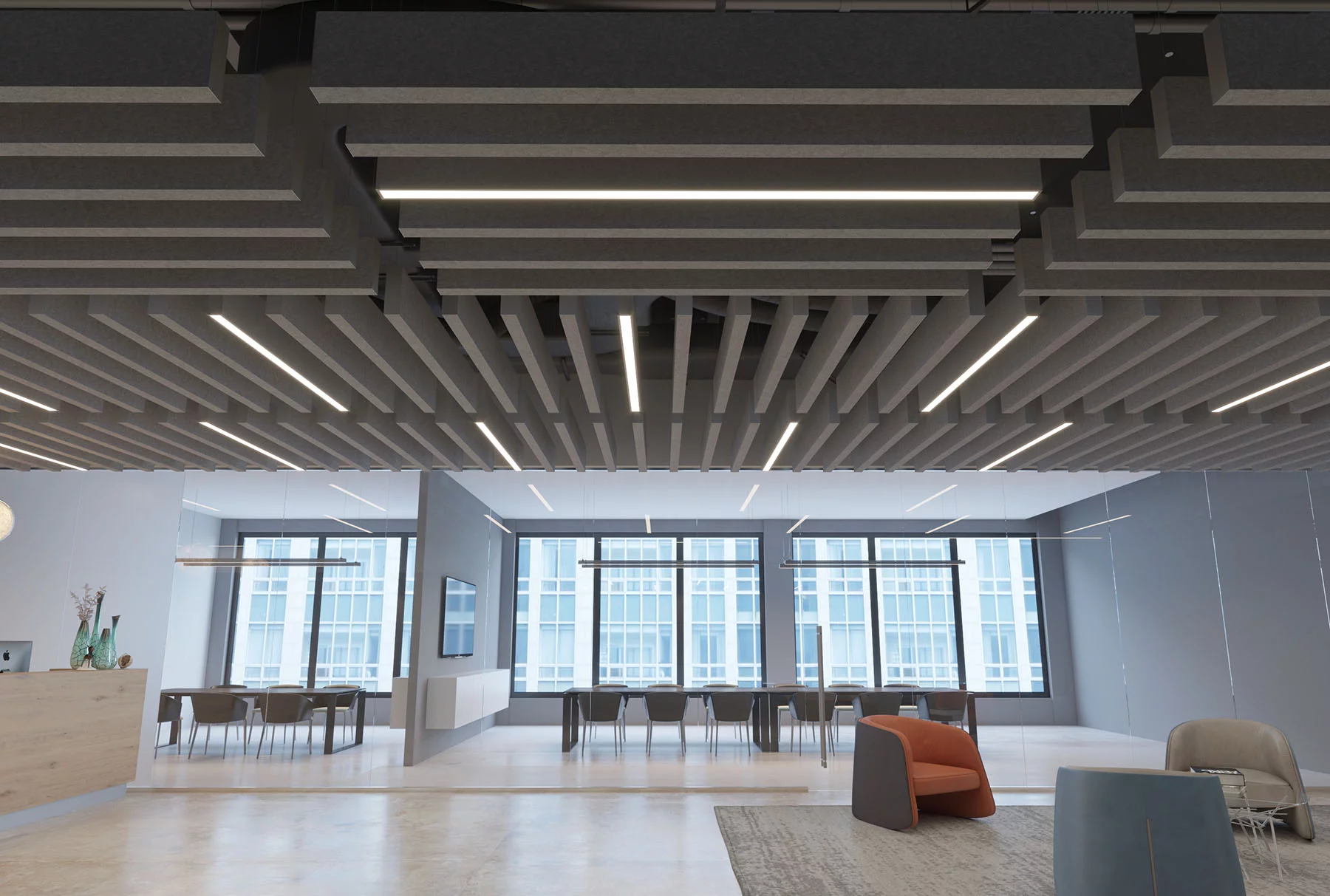
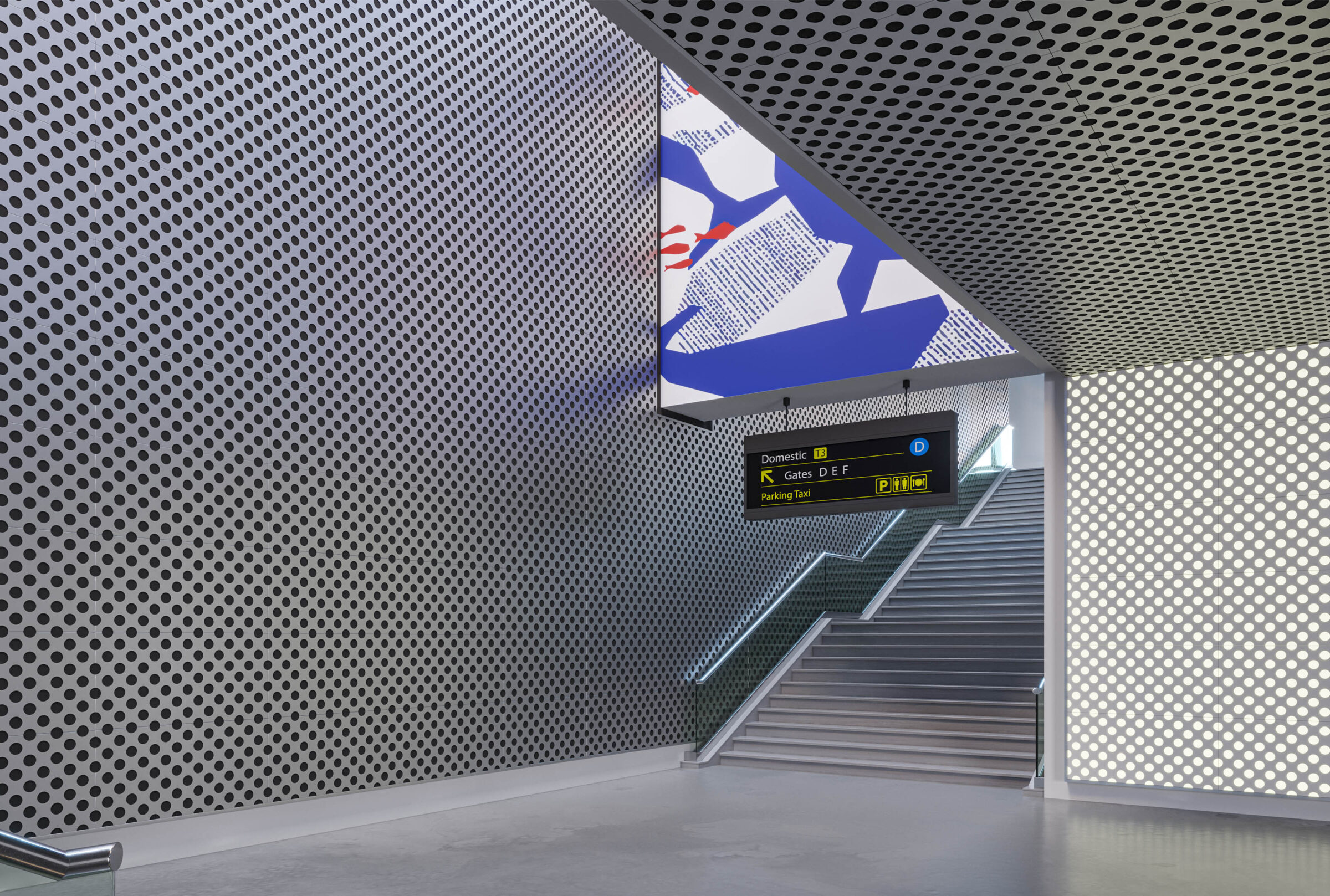


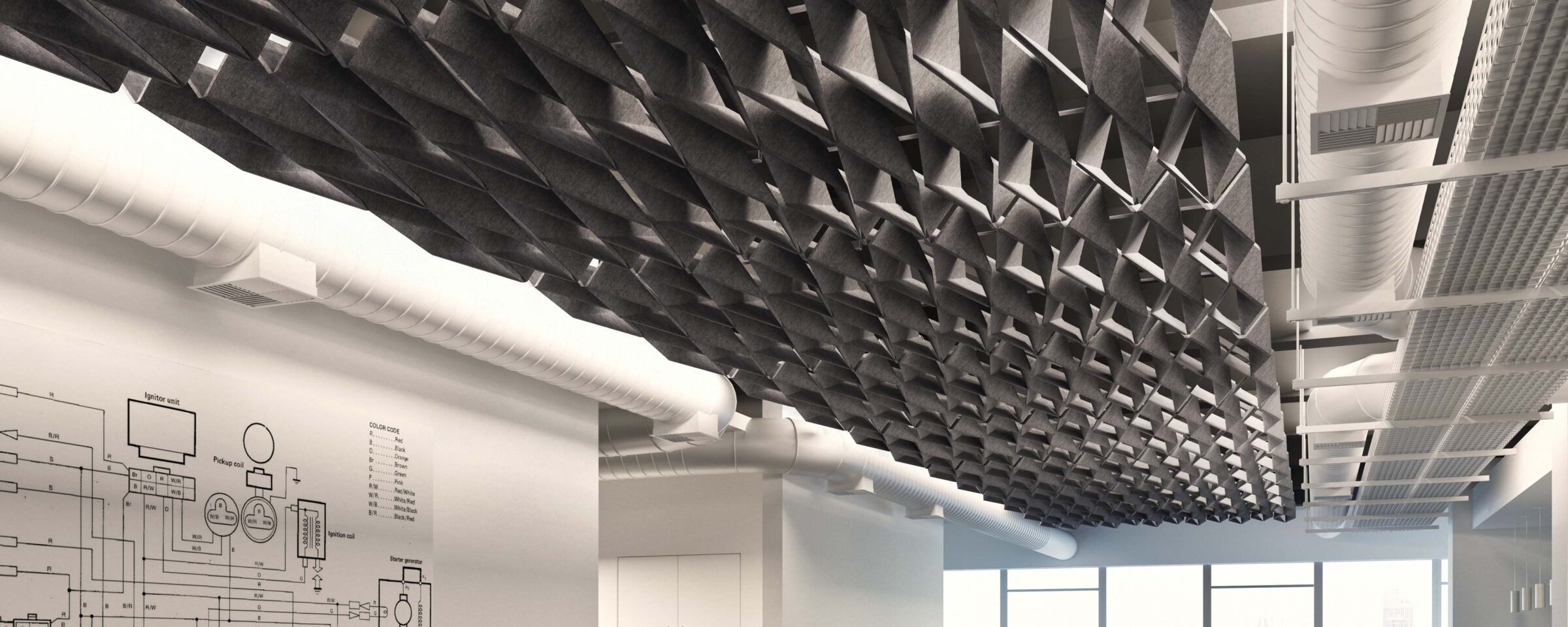
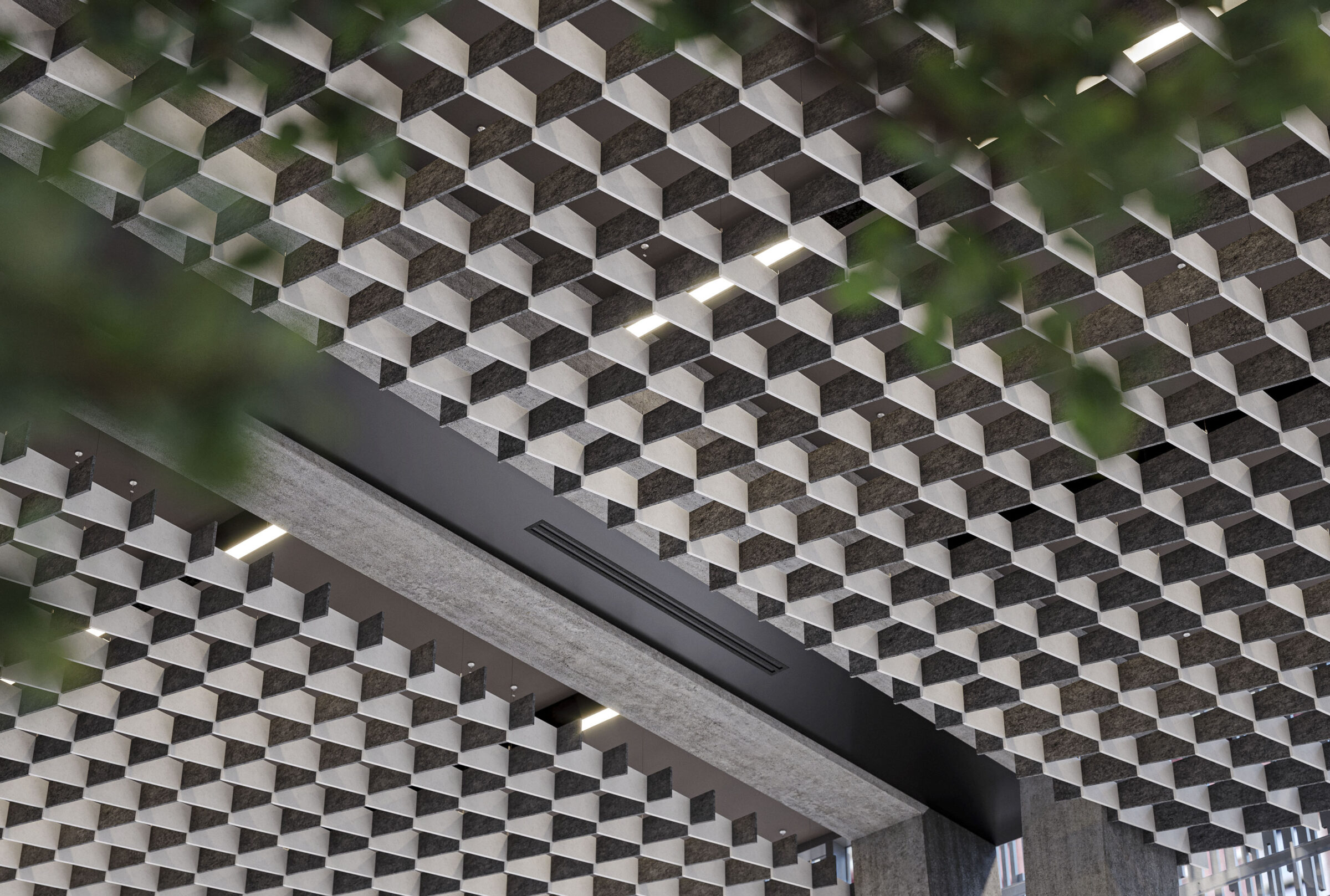
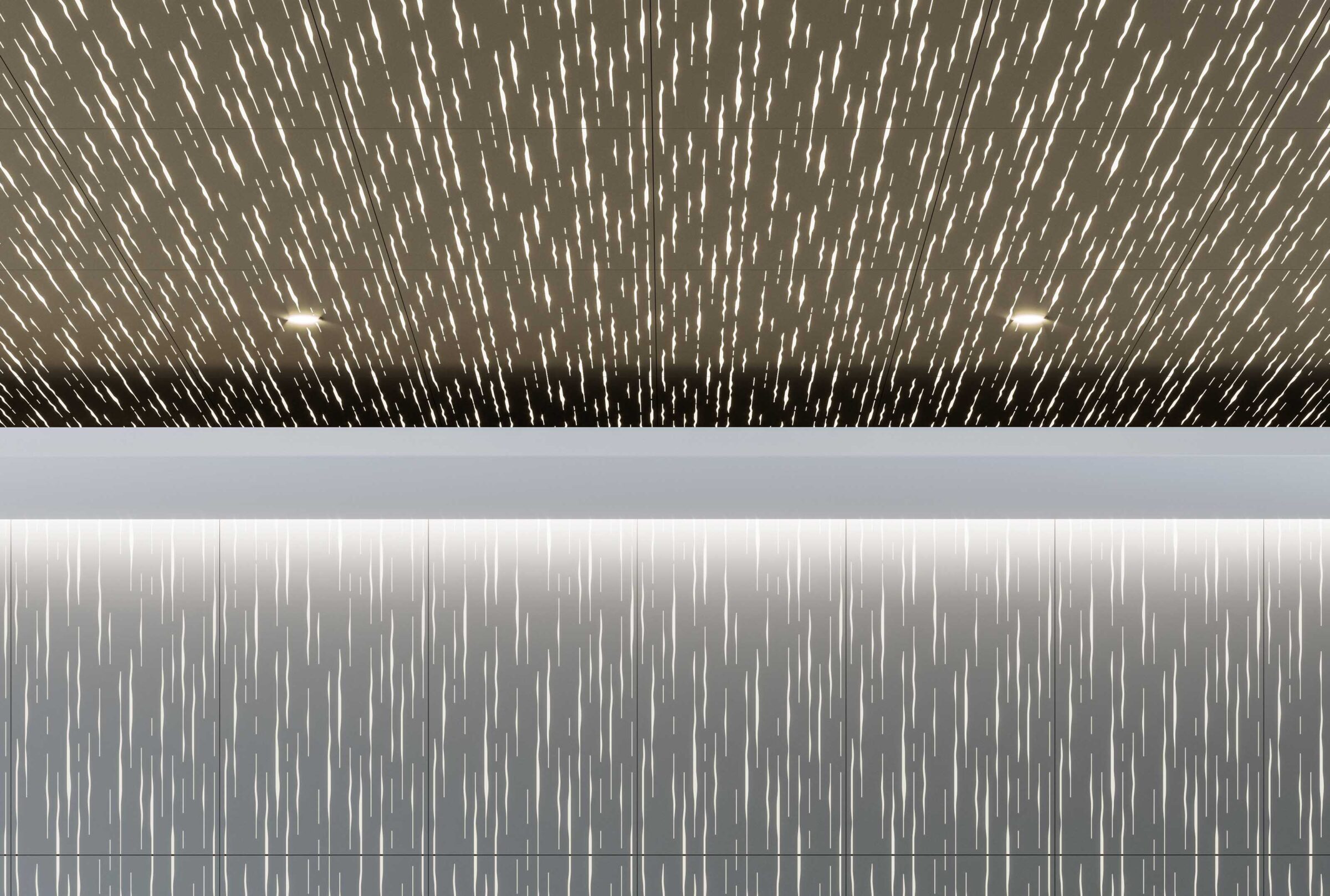
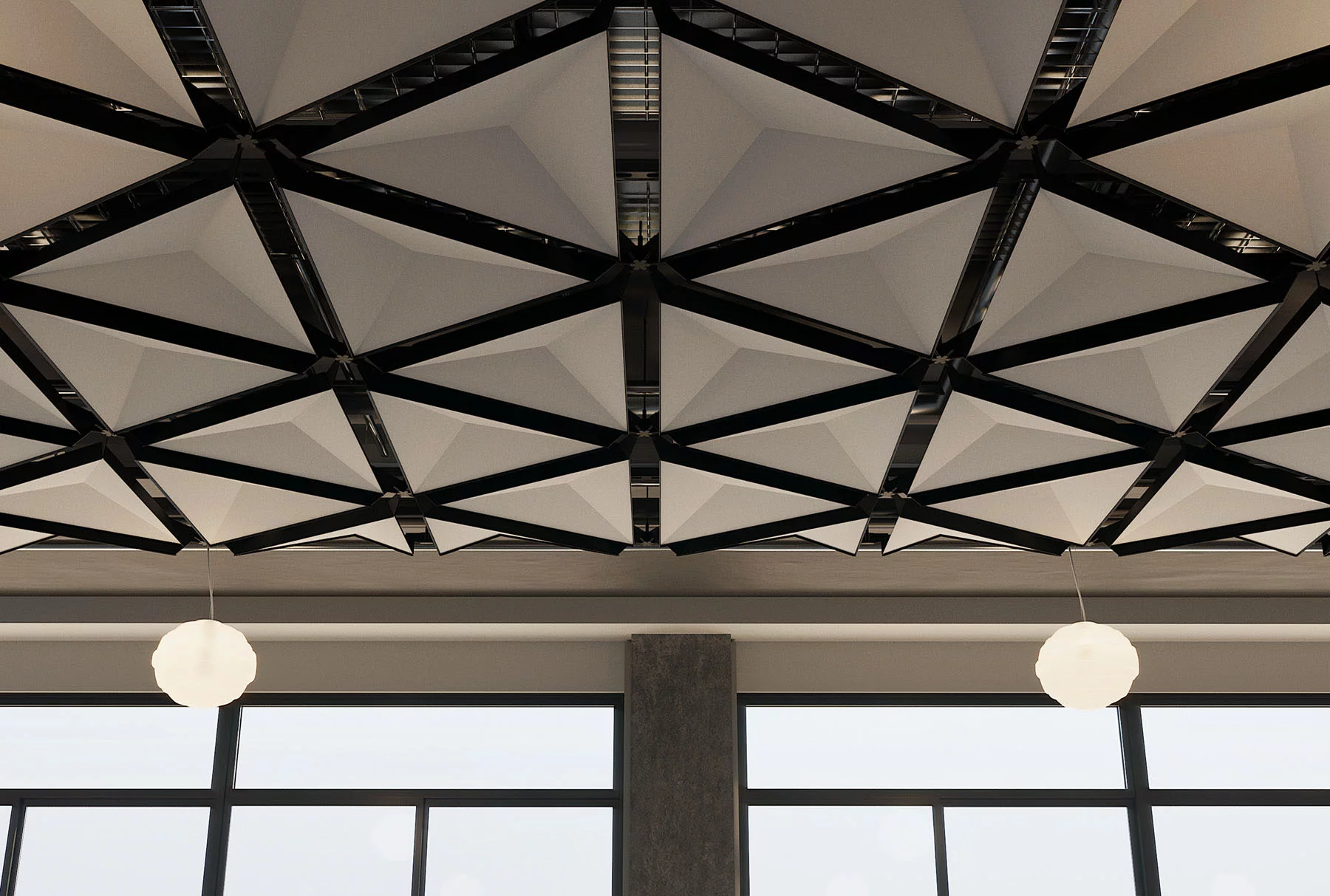
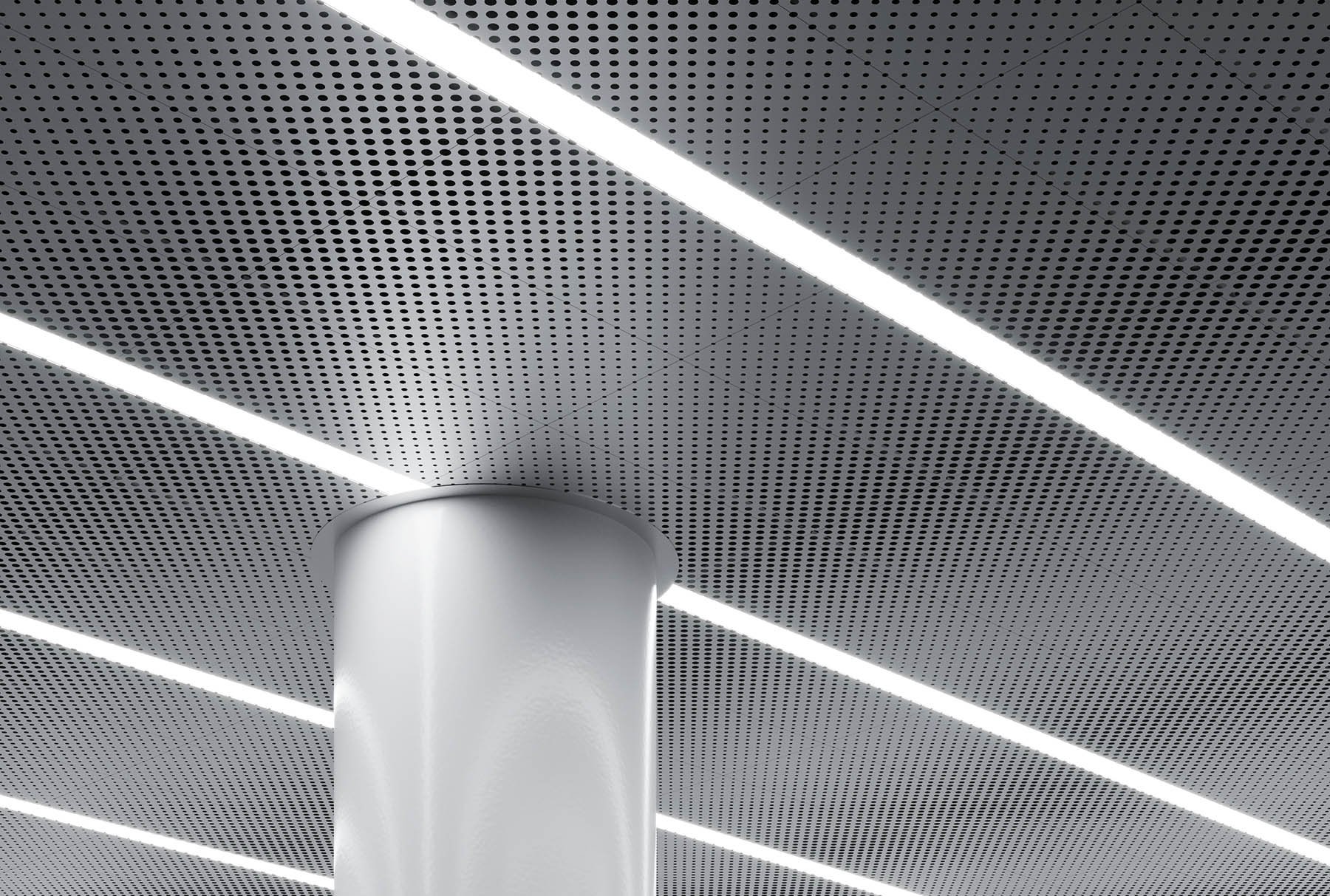

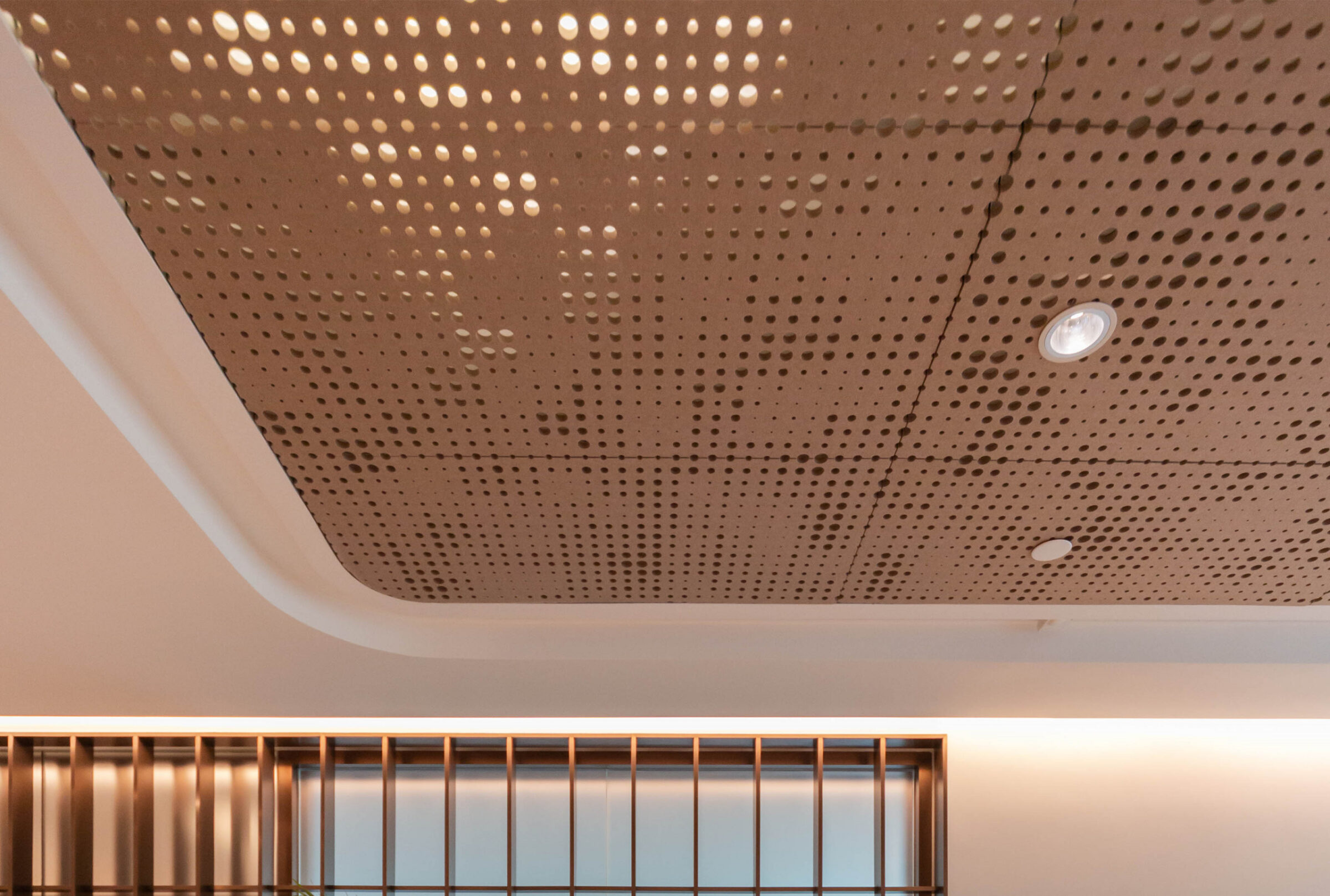
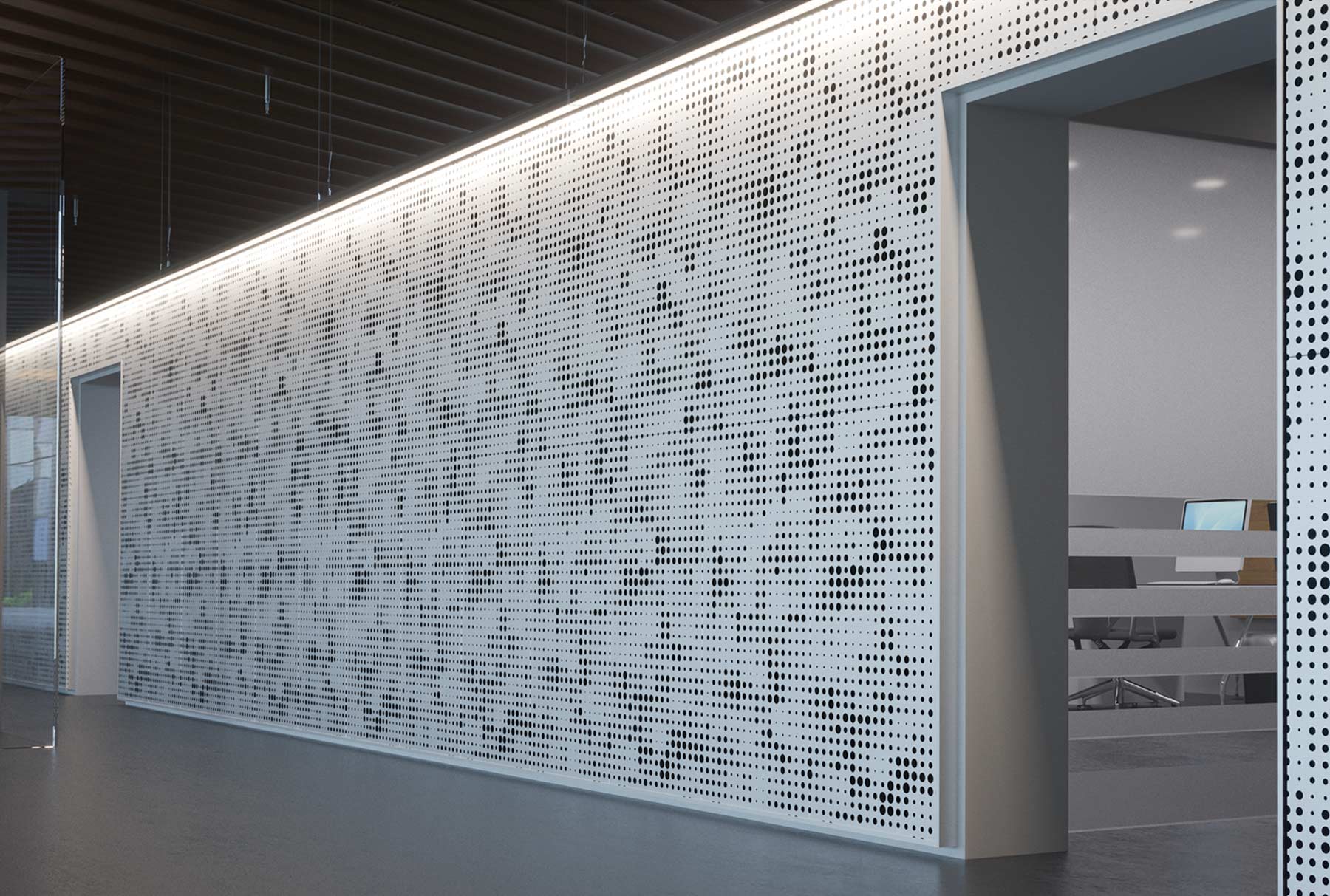
Sowohl ein Standard- VEIL Metall-Deckenplatte und eine VEIL Akustikplatten mit aSOFT™-Rückseite sind individuell perforierte Stahlplatten. Sie weisen dasselbe Plattenformat (596 × 1196 mm), dieselbe lasergeschnittene Stahlkonstruktion und dieselbe pulverbeschichtete Oberfläche in RAL K5 auf. Der Unterschied liegt darin, was sich hinter der Metalloberfläche verbirgt – und was dies für die akustische Leistung der Decke bedeutet.
Was bewirkt eine akustische Begleitung?
Eine perforierte Metallplatte reflektiert für sich genommen den größten Teil des einfallenden Schalls. Durch die Perforationen gelangt ein Teil der Schallenergie durch die Metalloberfläche in den darüber liegenden Hohlraum; ohne dämpfendes Material hinter der Platte wird diese Energie jedoch von den harten Oberflächen im Hohlraum reflektiert und kehrt in den Raum zurück.
Akustische Unterlage – aSOFT™ in VEIL– ist eine absorbierende Schicht, die hinter der perforierten Oberfläche angebracht ist. Schallenergie, die durch die Perforationen dringt, trifft auf das aSOFT™-Material und wird in Wärme umgewandelt, anstatt zurückreflektiert zu werden. Das Ergebnis ist eine messbare Verringerung des Nachhalls und des Geräuschpegels im Raum.
Wie lautet der NRC-Wert eines VEIL Akustikplatte?
Der NRC-Wert (Noise Reduction Coefficient) für jede perforierte Platte mit akustischer Rückwand ergibt sich aus der Kombination aus Perforationsgrad, Rückwandmaterial, Rückwanddicke und Hohlraumtiefe. VEILDie aSOFT™-Trägerfolie wurde so entwickelt, dass sie in Kombination mit einer geeigneten Perforationsdichte eine überzeugende akustische Leistung bietet.
Für bestätigte NRC-Werte für Ihr spezifisches VEIL Konfiguration: Beachten Sie die technischen Spezifikationen. Die NRC-Anforderungen für das Projekt sollten vom Akustikberater vor dem VEIL Die Parameter für die Perforation der Platten werden in VEIL Studio – die beiden Spezifikationen wirken zusammen.
Vorderseite oder Rückseite: Was soll angegeben werden?
Bei der aSOFT™-Oberflächenanwendung wird das akustische Material direkt hinter den Perforationen angebracht – wodurch der Kontakt mit der durch die Löcher hindurchtretenden Schallenergie maximiert wird. Dies ist in der Regel die leistungsstärkere Option hinsichtlich des NRC-Werts.
Bei der aSOFT™-Rückseitenbeschichtung wird das akustische Material auf die Rückseite der Platte aufgebracht. Dies ist sinnvoll, wenn die Vorderseite der Platte vollständig sichtbar bleiben muss – beispielsweise wenn hinterleuchtete Platten vorgesehen sind oder wenn der Hohlraum über der Platte sein eigenes akustisches Volumen beiträgt.
Beide Optionen sind festgelegt in VEIL Studio. Beide werden bereits bei der Herstellung integriert. Die Platte wird komplett verpackt geliefert und kann sofort in das Raster eingesetzt werden. Der einfache Teil liegt bei Ihnen.