


Gestaltung leistungsstarker gewerblicher Innenräume ohne Greenwashing
25. April 2026
-2 Minuten lesen
Der Unterschied zwischen echter materieller Nachhaltigkeit und Nachhaltigkeitsmarketing war noch nie so deutlich wie heute. So sieht eine glaubwürdige Spezifikation in der Praxis aus.
Nachhaltiges Design hat ein Glaubwürdigkeitsproblem. Nicht hinsichtlich der zugrunde liegenden Prinzipien – diese sind fundiert –, sondern hinsichtlich der Sprache, mit der sie beschrieben werden. „Grün“, „umweltfreundlich“, „nachhaltig“, „verantwortungsbewusst“ – diese Begriffe tauchen in allen Produktkategorien auf, ohne dass sie eine einheitliche Bedeutung oder eine nachprüfbare Grundlage hätten. Für Architekten, die im Auftrag von Bauherren mit dokumentierten Nachhaltigkeitszielen Planungen erstellen, stellt dies ein echtes Problem dar.
So sieht nachprüfbare Nachhaltigkeit aus
Nachweisbare Nachhaltigkeit bei Architekturprodukten wird durch Zertifizierungen durch unabhängige Dritte und dokumentierte Daten gewährleistet. Die wichtigsten Rahmenwerke für die Spezifikation von Deckenelementen sind Umweltproduktdeklarationen (EPDs), das „Declare“-Label-Programm, die „Red List Free“-Zertifizierung sowie die Zertifizierung durch SCS Global Services für den Recyclinganteil.
Jede dieser Angaben erfordert eine unabhängige Überprüfung der jeweiligen Behauptung. Eine EPD dokumentiert die von einer unabhängigen Stelle bewerteten Umweltauswirkungen eines Produkts über dessen gesamten Lebenszyklus. Ein „Declare“-Label belegt vollständige Transparenz hinsichtlich der Inhaltsstoffe im Vergleich zur „Red List“ der Living Building Challenge. Die SCS-Zertifizierung für recycelte Inhaltsstoffe bestätigt den prozentualen Anteil an Post-Consumer-Material in einem Produkt.
NOWN-Produkte sind mit Declare-Etiketten, dem Status „Red List Free“ und der SCS-Zertifizierung versehen. NOWN’s CircuLUM™. Das Aluminium enthält 80 % recycelte Post-Consumer-Anteile – eine Zahl, die dokumentiert und nachprüfbar ist.
Auswirkungen auf die Produktionsebene
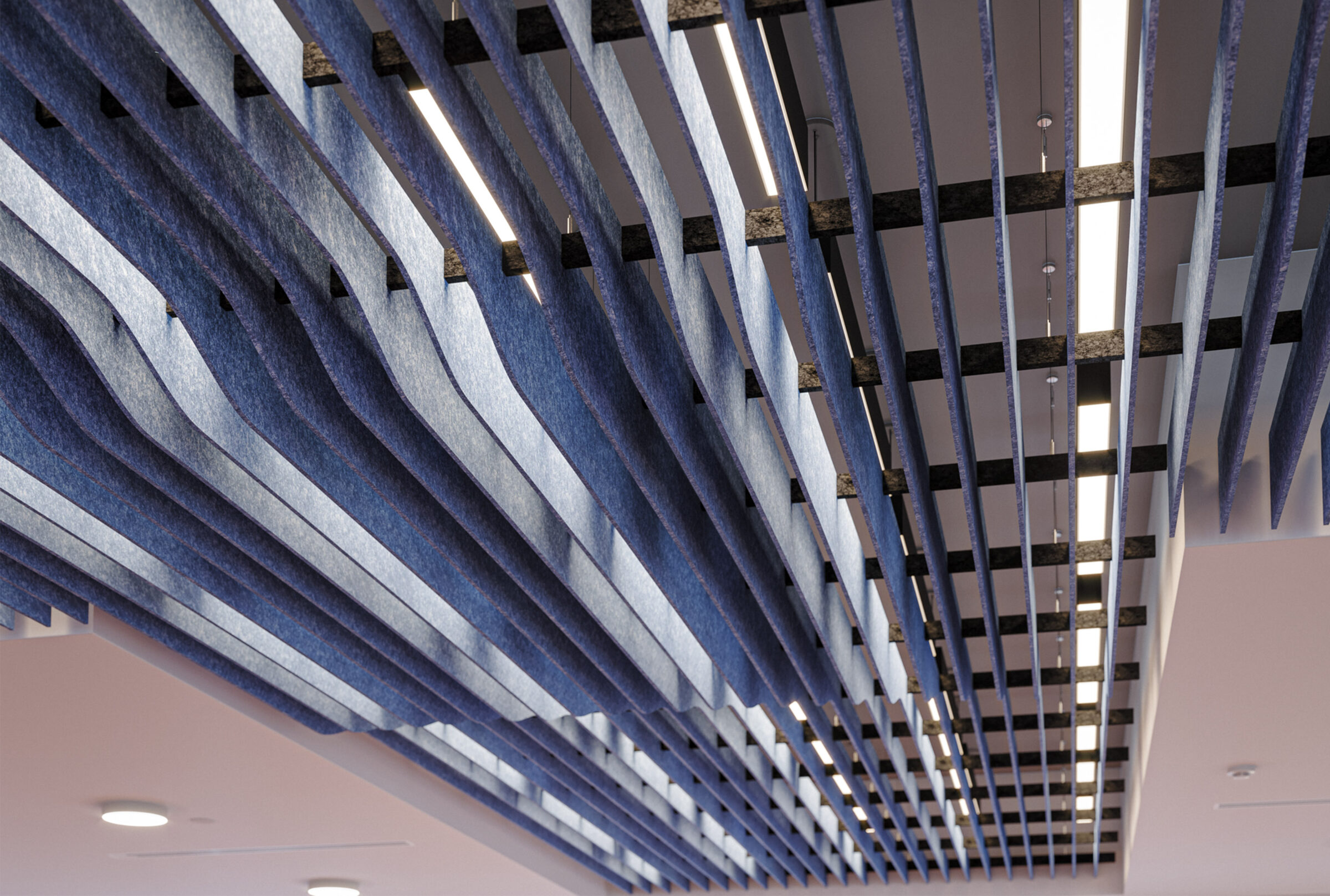
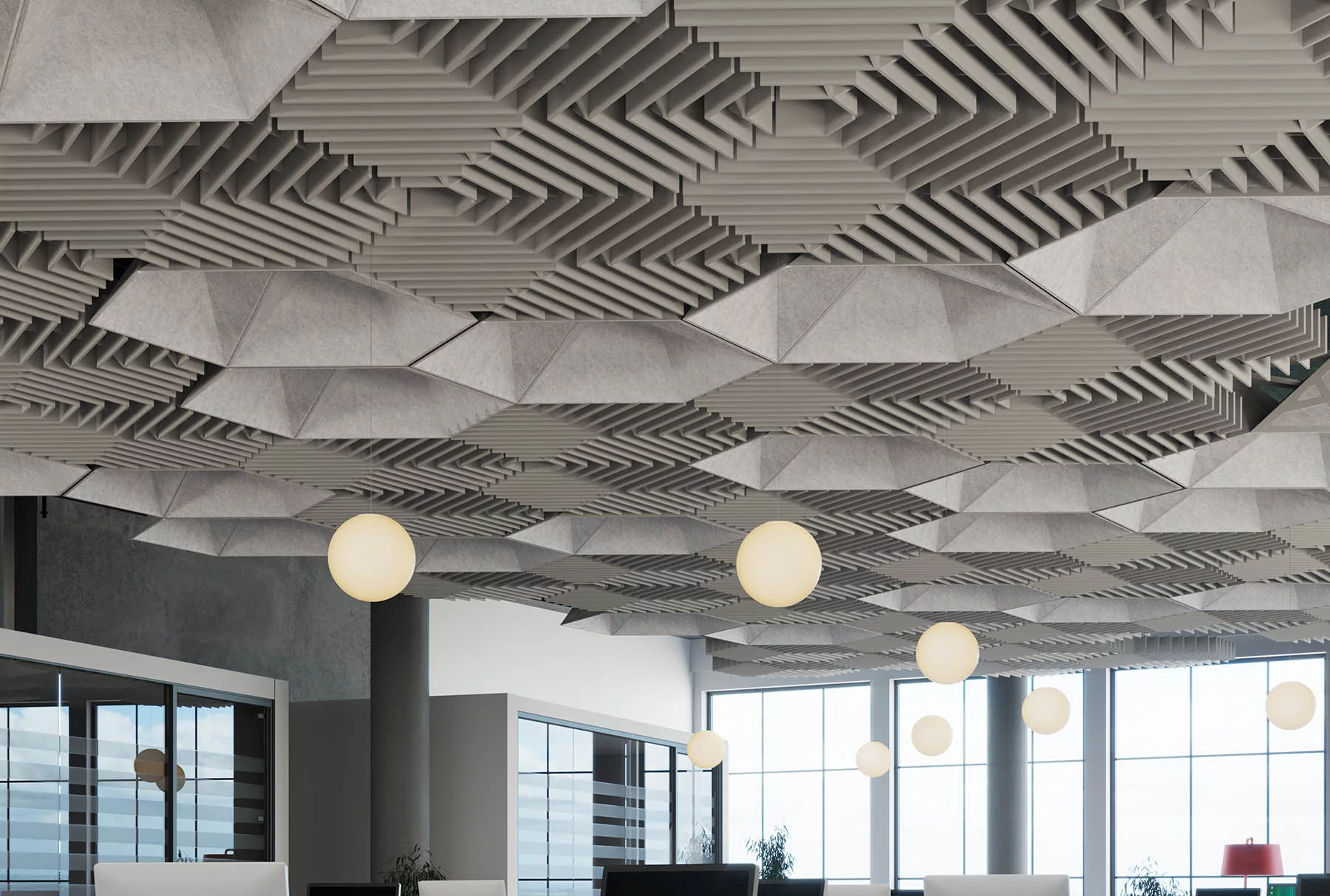
Neben den verwendeten Materialien beeinflusst auch die Gestaltung des Herstellungsprozesses den ökologischen Fußabdruck eines Produkts. NOWN’s InfiKnit™ Beim 3D-Strickverfahren wird jedes Bauteil in seiner endgültigen Form hergestellt, wodurch Fertigungsabfälle vermieden werden. Das bedeutet null Materialverschwendung in der Produktion – keine bloße Behauptung, sondern eine direkte Folge des Verfahrens. InfiKnit™ Bei der Herstellung werden zudem 40 % weniger Wasser verbraucht als bei herkömmlichen Verfahren der Textilherstellung.
Warum dies für die Spezifikation von Bedeutung ist
Architekten, die Produkte mit nachgewiesener Nachhaltigkeit spezifizieren, können die Nachhaltigkeitsberichterstattung ihrer Kunden mit überprüfbaren Daten untermauern. Architekten, die Produkte allein auf der Grundlage von Marketingaussagen spezifizieren, können dies nicht. Dieser Unterschied ist von Bedeutung, da die Anforderungen an die Nachhaltigkeitsberichterstattung im Bereich der Gewerbeimmobilien zunehmen – sowohl gesetzliche Vorschriften als auch die Berichtsrahmen der Kunden orientieren sich zunehmend an verifizierten Daten.
NOWN-Unterlagen zu Nachhaltigkeit und Zertifizierung herunterladen →