




Choix des systèmes de plafonds acoustiques : guide pratique à l'intention des architectes du secteur commercial
11 avril 2026
-2 min lire
Des classifications du NRC aux principes d'installation, ce guide aborde les éléments clés que les architectes doivent maîtriser lorsqu'ils choisissent des systèmes de plafonds acoustiques pour des projets commerciaux.

Que signifie « NRC » et pourquoi est-ce important ?
Le NRC (coefficient de réduction du bruit) est l'unité de mesure standard des performances d'absorption acoustique d'un matériau. Il varie de 0 (réflexion totale) à 1,0 (absorption totale). Un matériau présentant un NRC de 0,75 absorbe 75 % de l'énergie sonore incidente et en réfléchit 25 %.
Pour la plupart des intérieurs commerciaux, l'obtention d'un NRC de 0,65 ou plus sur l'ensemble de la surface du plafond est considérée comme le seuil minimal pour un contrôle acoustique fonctionnel. Les bureaux en open space, les établissements d'enseignement et les espaces d'accueil tirent généralement profit de systèmes plus performants, avec un NRC de 0,80 ou plus.
NOWN’s aSOFT™ Ce matériau atteint des indices NRC effectifs pouvant aller jusqu'à 0,95, en fonction de la configuration du produit et des conditions de montage. L'indice NRC effectif est déterminé conformément à la norme ASTM C423 ou à une norme équivalente, en tenant compte de l'absorption au niveau des bords lors des essais sur des panneaux de petite taille, afin d'obtenir un résultat représentatif des conditions réelles d'utilisation.
Comprendre les conditions de montage
Les performances acoustiques ne dépendent pas uniquement du matériau : la géométrie de montage joue également un rôle important. Un déflecteur suspendu à une certaine distance du plafond n'offre pas les mêmes performances qu'un panneau plat fixé directement contre la sous-face. L'augmentation de l'espace d'air derrière un panneau absorbant améliore généralement l'absorption des basses fréquences.
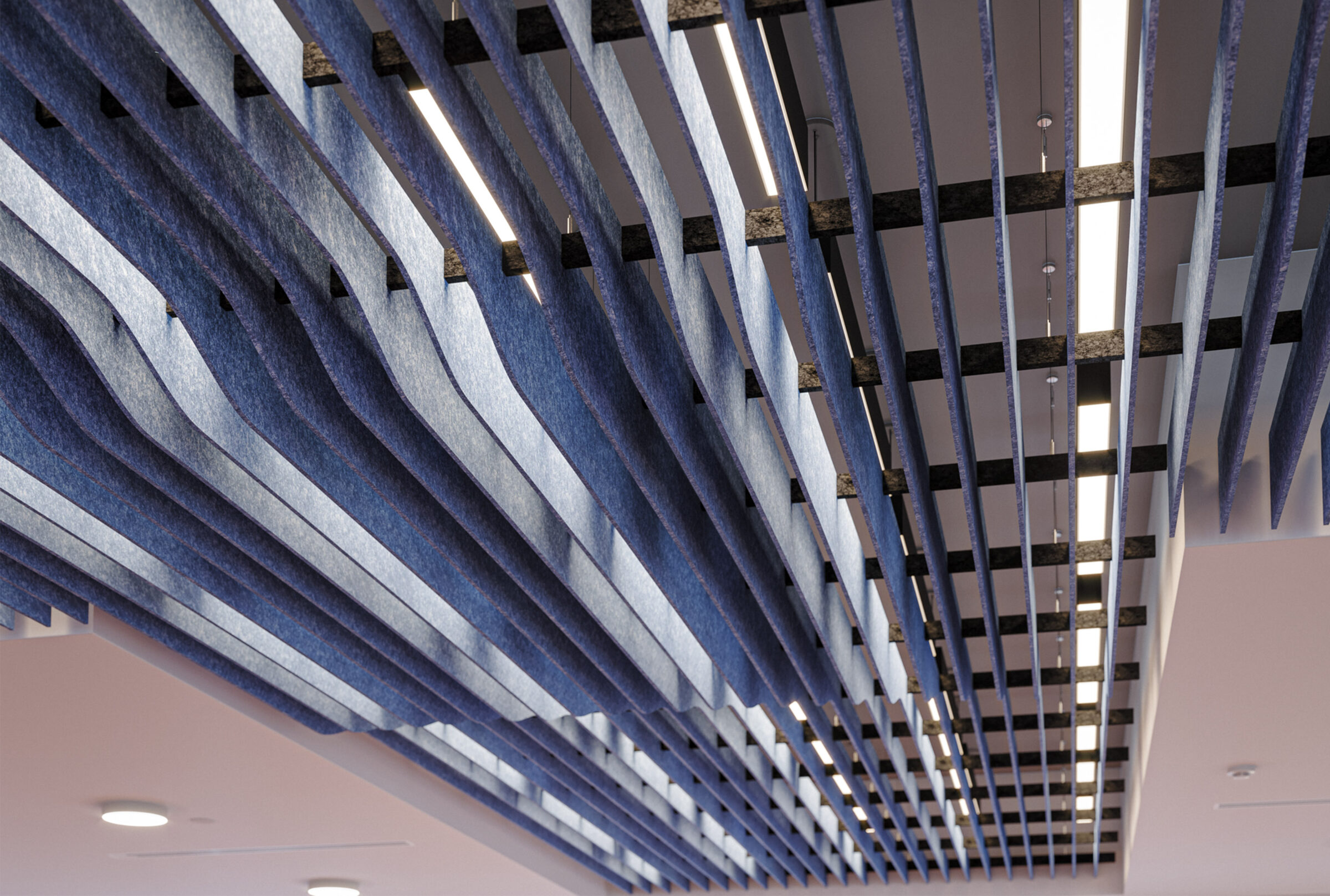
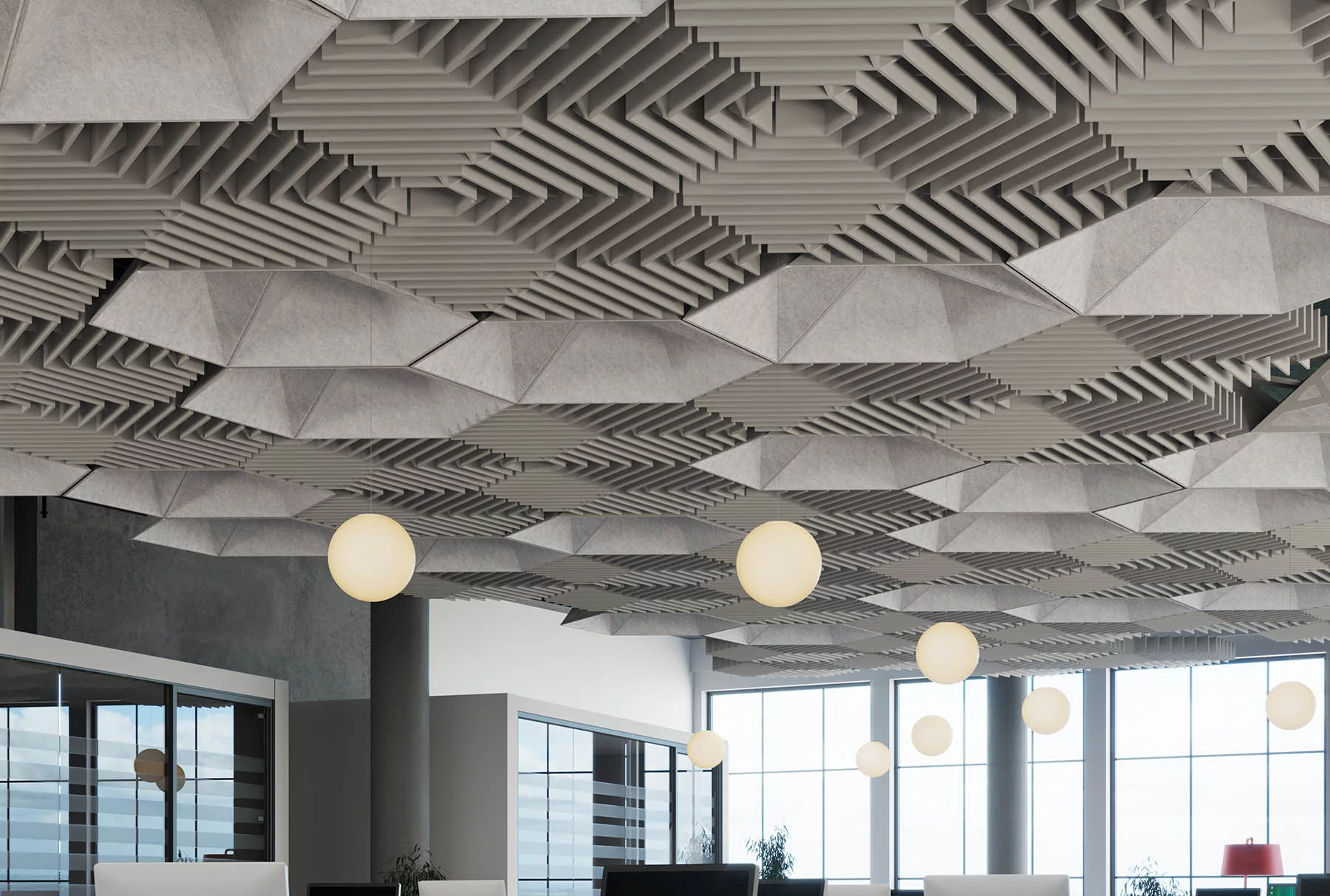
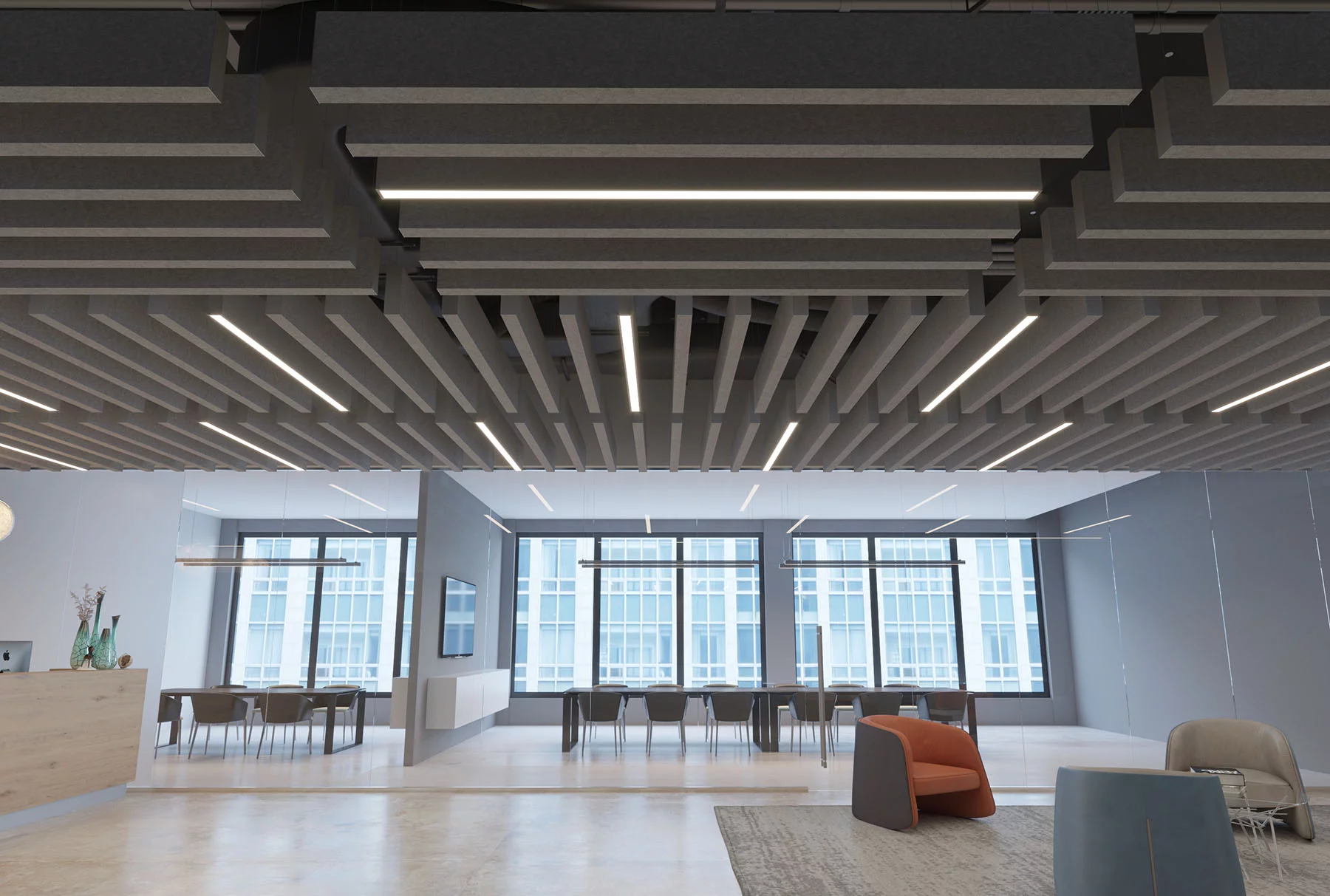
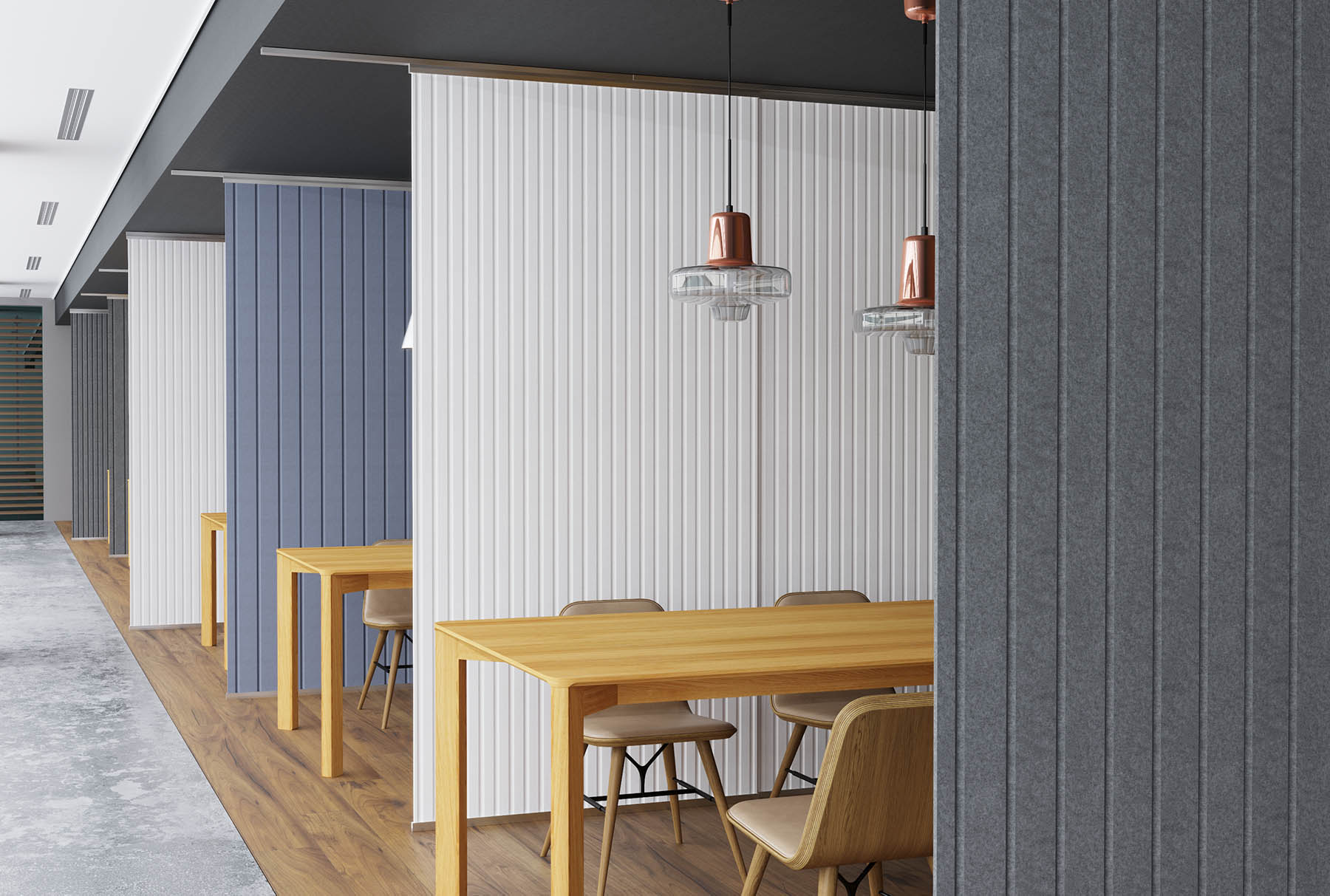
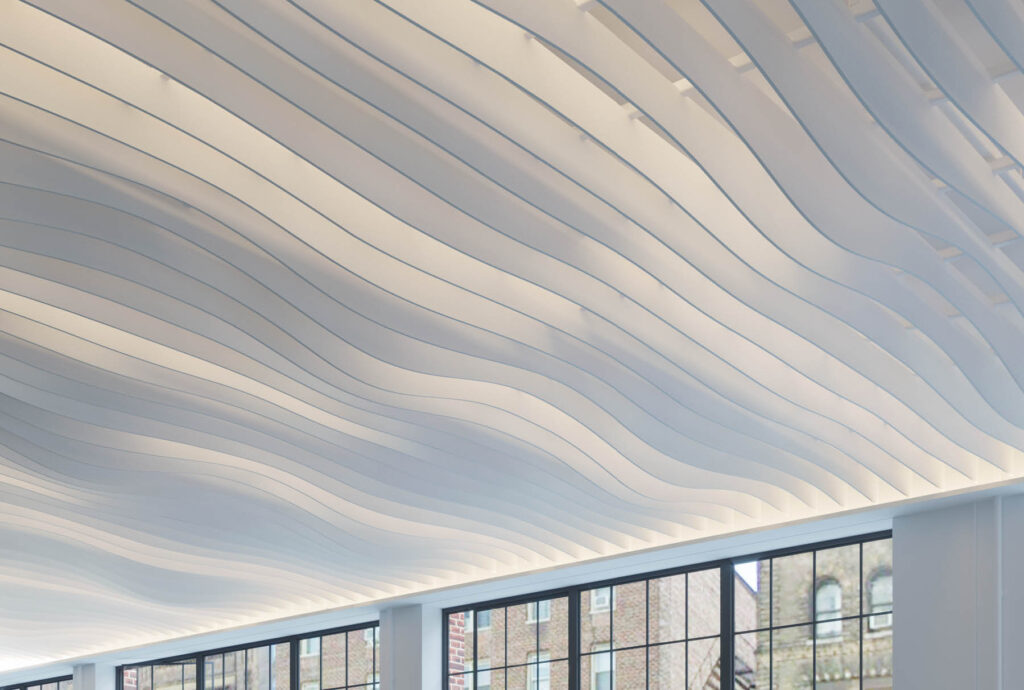
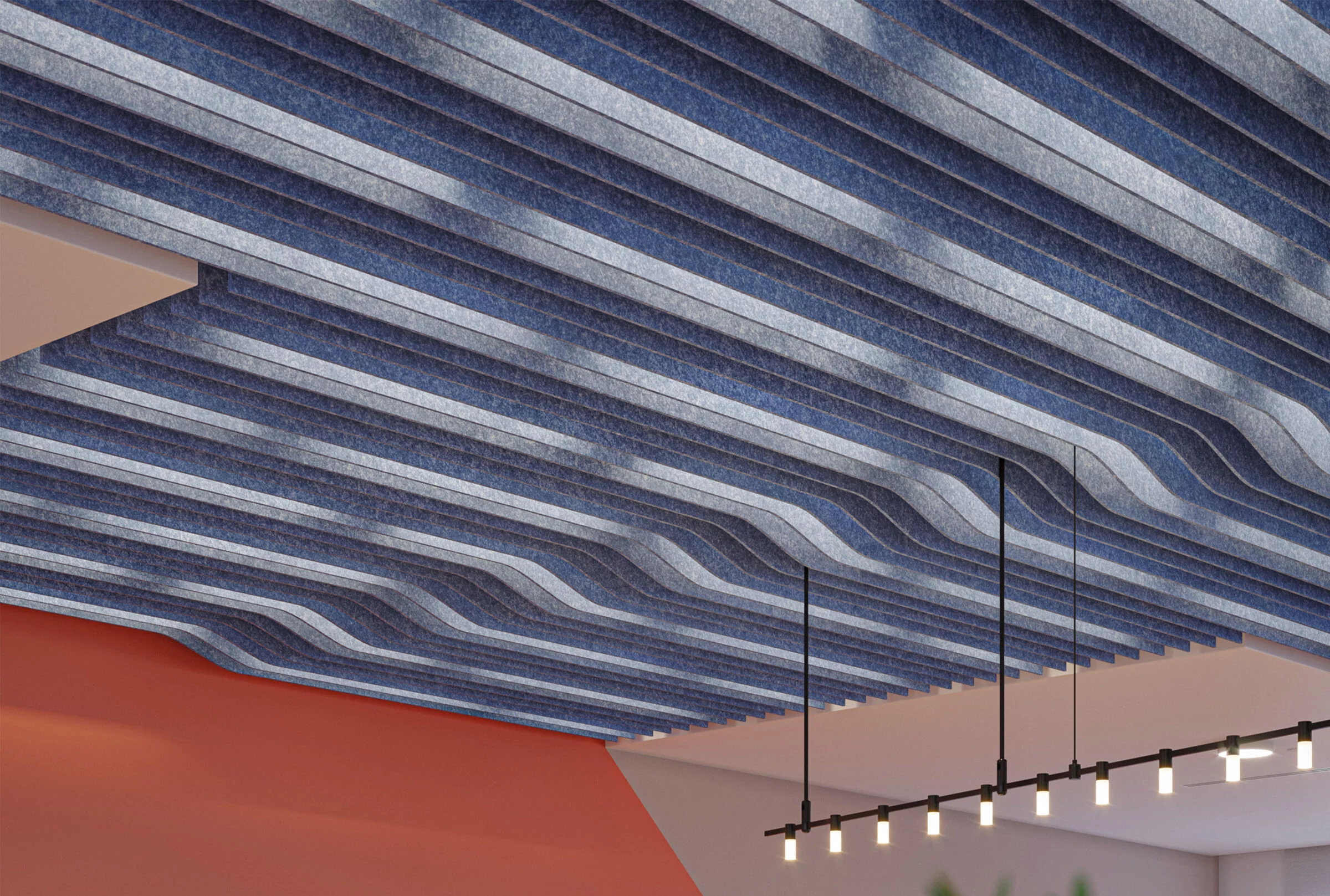
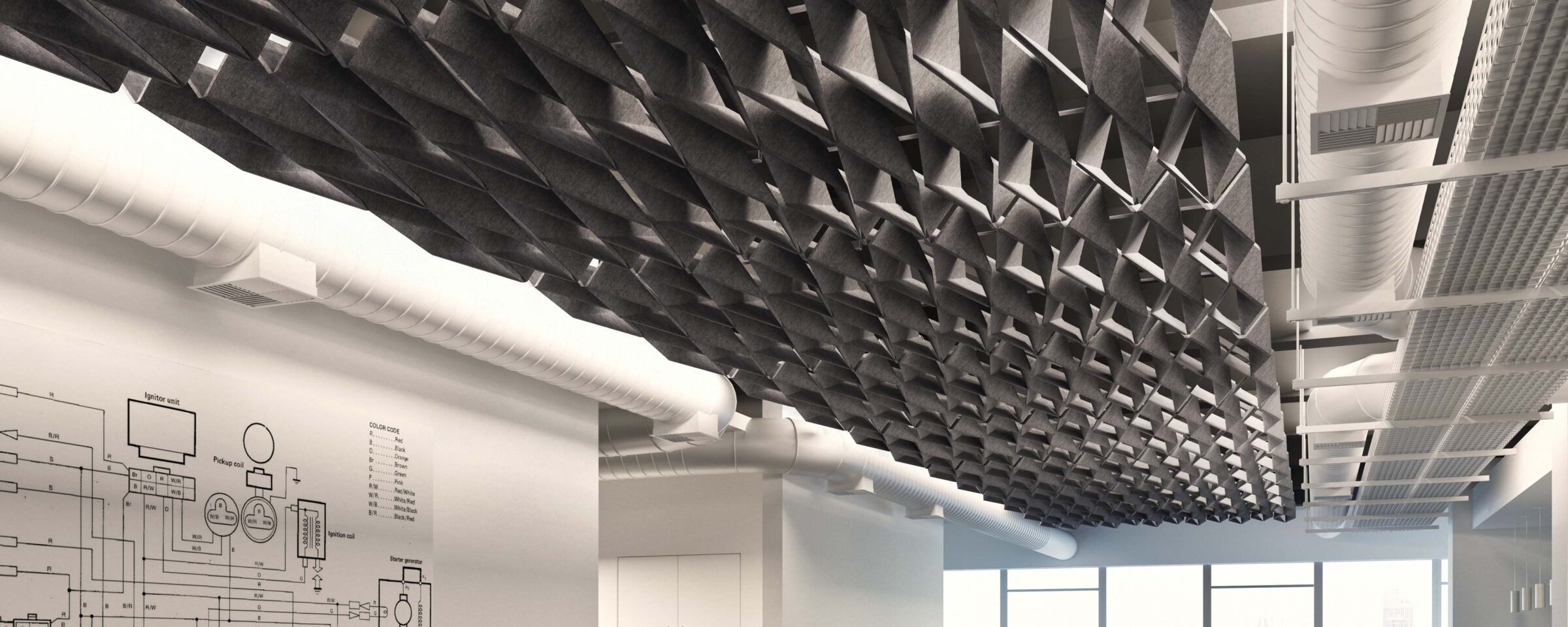
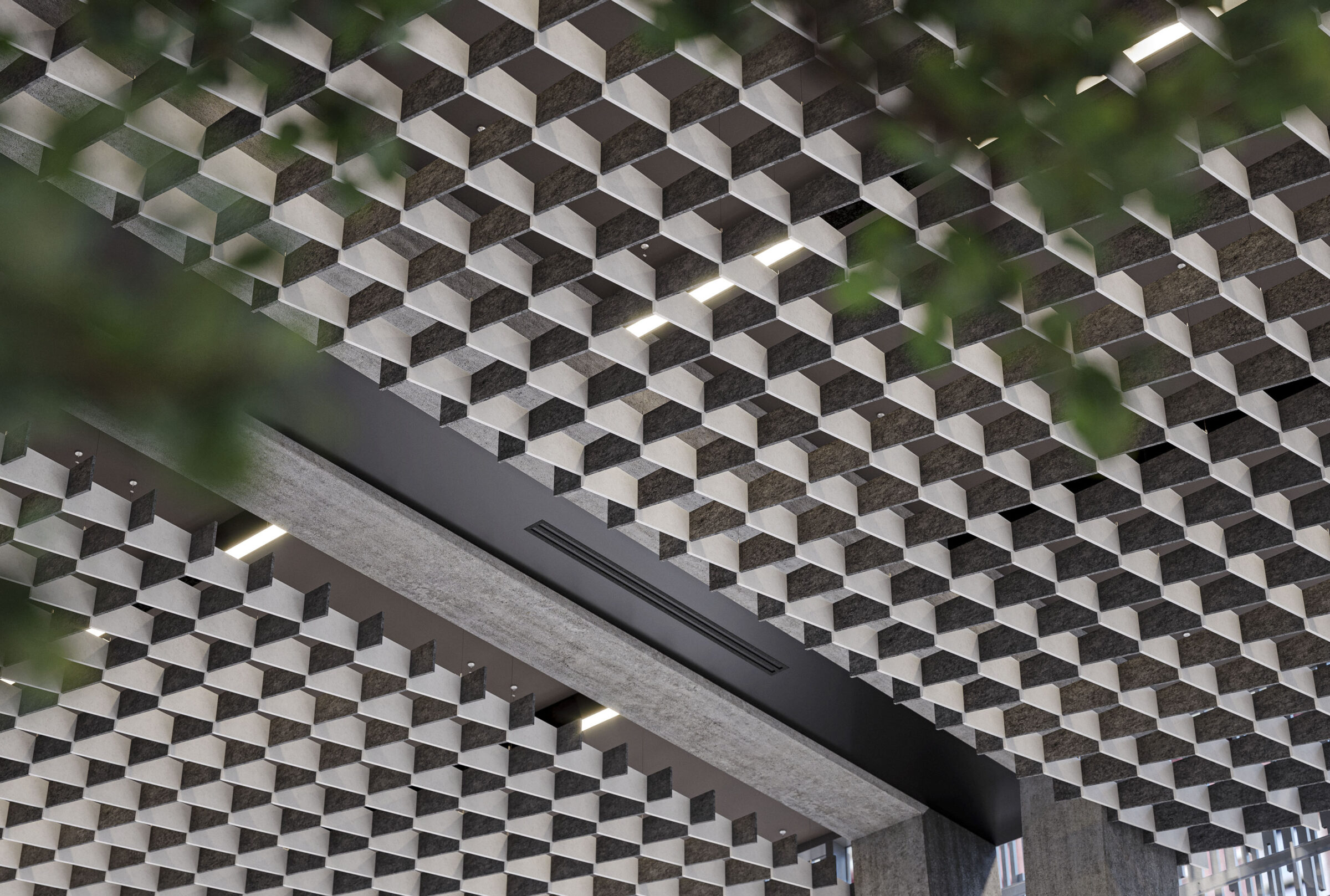
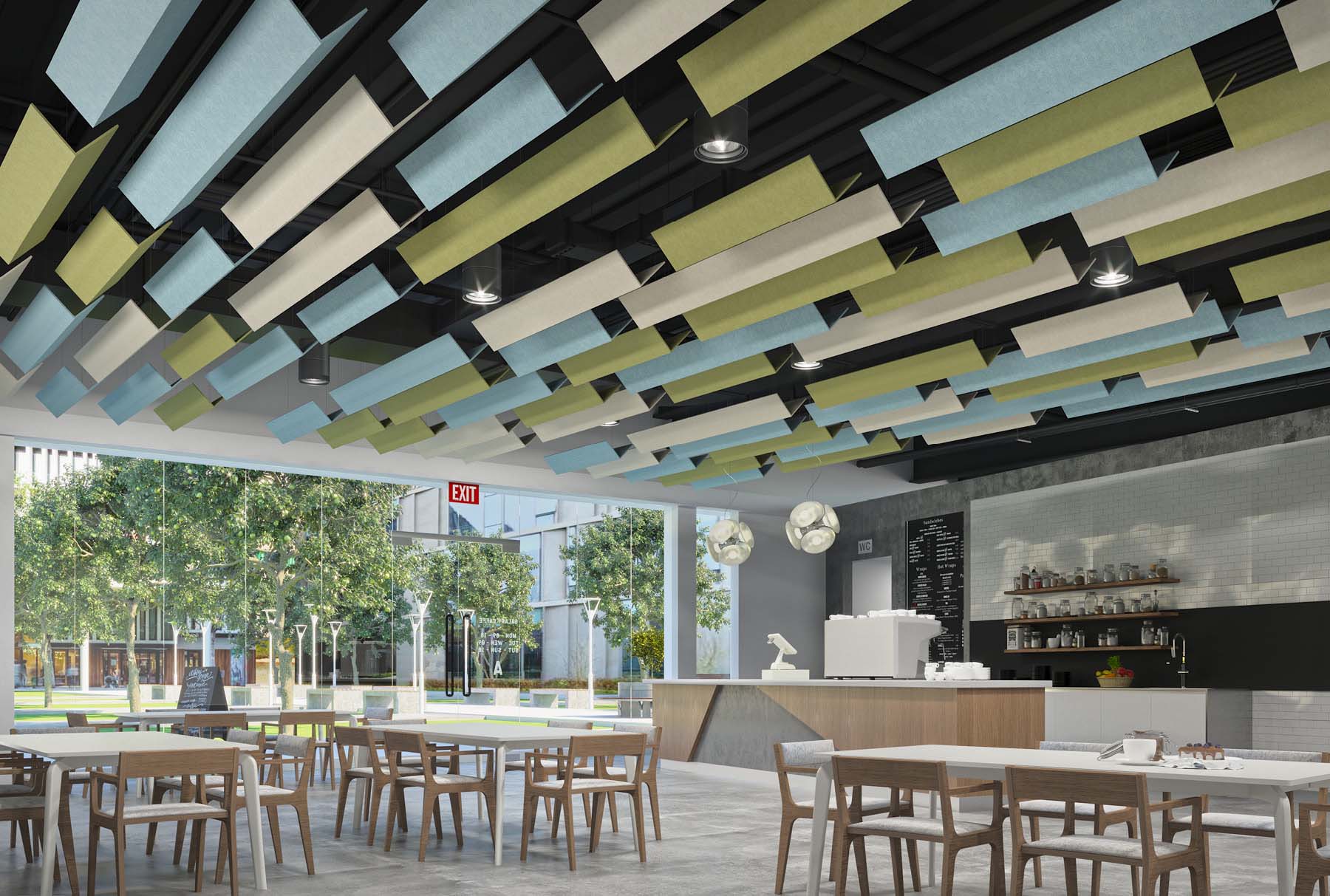
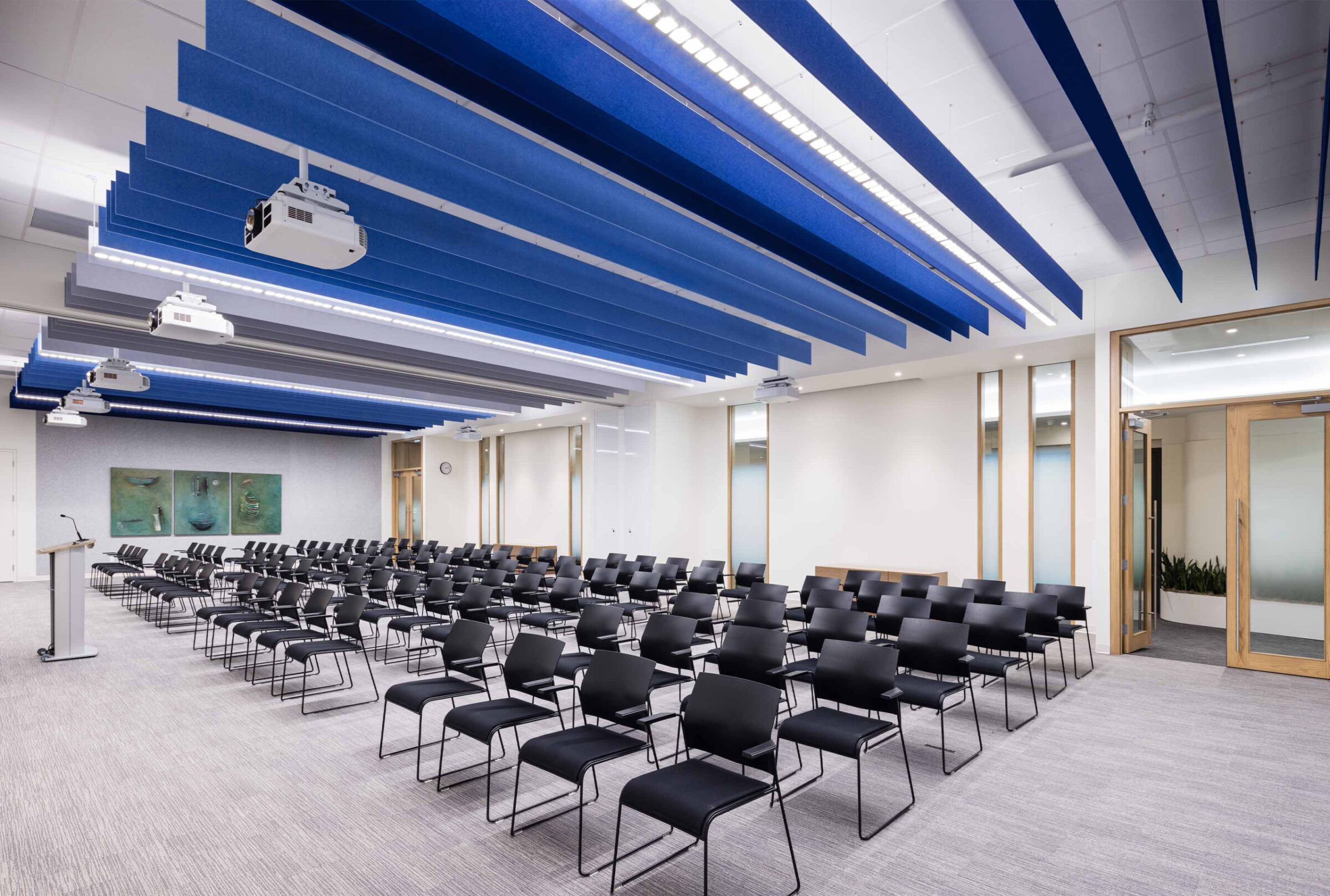
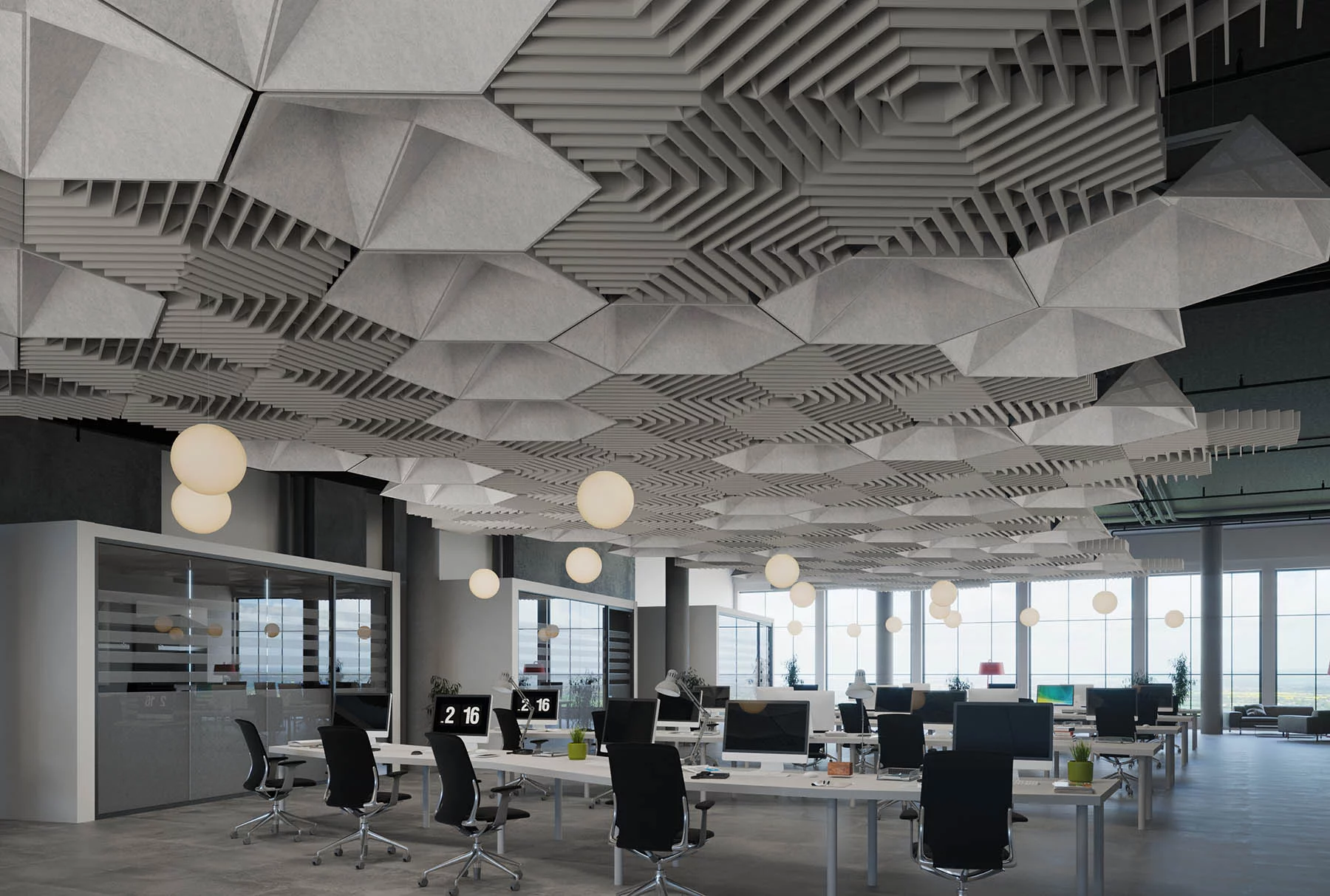
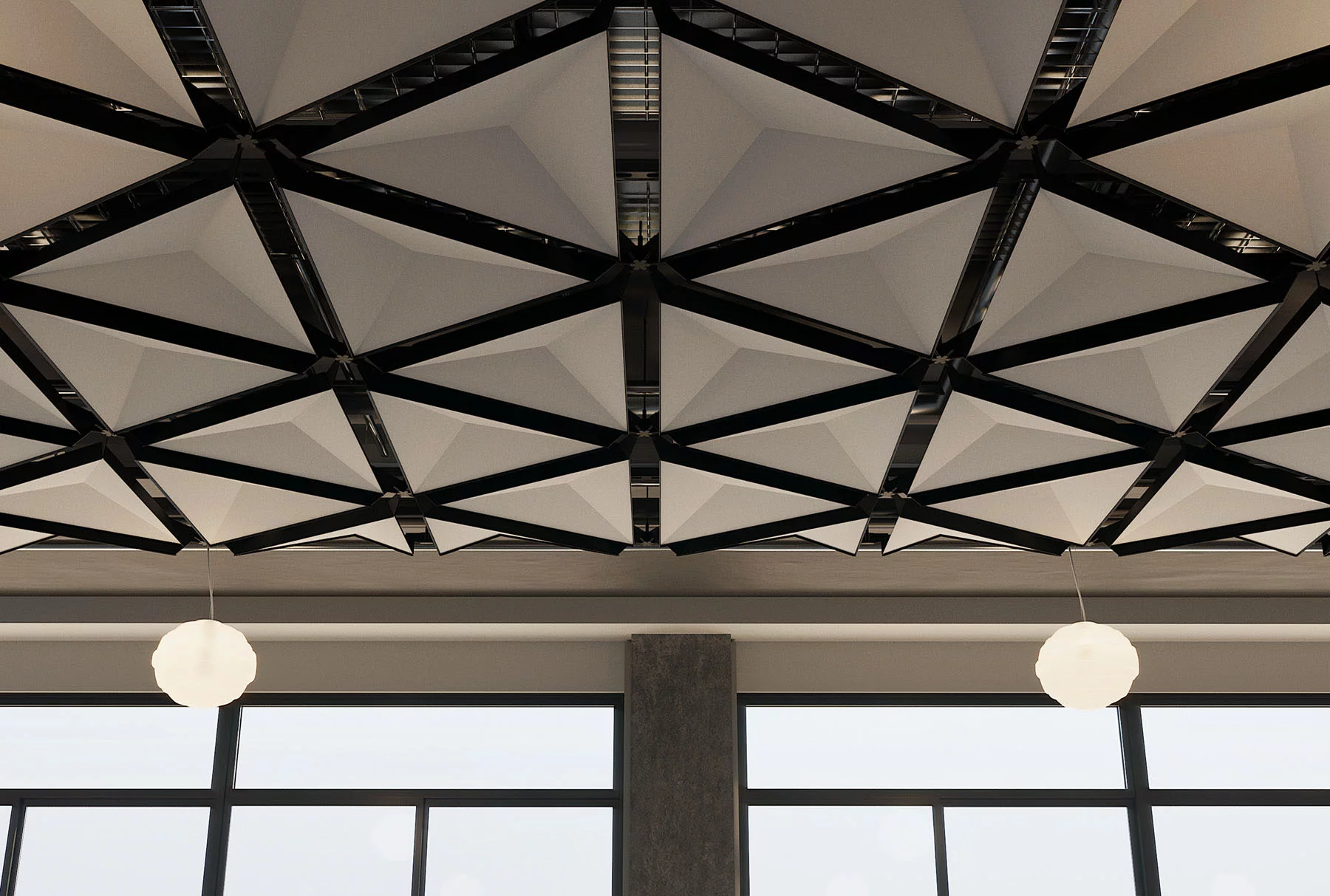
NOWN’s Atmosphera® système, qui déploie aSOFT™ grâce à une géométrie de déflecteur configurable, il atteint ses valeurs NRC nominales dans une configuration de faux-plafond. La structure ouverte du système permet en outre d'accéder aux installations techniques situées au-dessus du plafond — un aspect pratique qui influe à la fois sur la conception acoustique et sur le programme d'entretien.
Une installation sans mauvaise surprise
Les systèmes de plafond constituent souvent le dernier corps de métier majeur dans le calendrier d'un projet. La complexité de la pose, qui entraîne des retards dans le calendrier, a des conséquences qui vont au-delà des seuls coûts. Les produits NOWN sont fabriqués selon les spécifications du projet : les modules sont livrés aux dimensions exactes, sans qu'aucune découpe sur chantier ne soit nécessaire. Le système d'assemblage est conçu pour une pose simple, et la structure ouverte permet d'accéder aux installations techniques aussi bien pendant qu'après la pose.
Intégrer le développement durable dans les cahiers des charges acoustiques
aSOFT™ est fabriqué à partir de 60 % de PET recyclé. Il ne s'agit pas là d'un aspect secondaire : pour les projets visant à obtenir des crédits LEED, BREEAM ou WELL, la composition des matériaux influe directement sur le calcul des crédits. Le choix d'un matériau acoustique hautement performant dont la teneur en matériaux recyclés est certifiée permet de répondre simultanément à deux critères de spécification.
Remarque finale
Une conception acoustique bien pensée passe inaperçue dans l’espace une fois aménagé. Les occupants ne parlent pas d’une « bonne acoustique » : ils décrivent un espace où il fait bon travailler, où il est facile de discuter, ou qui est calme sans pour autant paraître « mort ». C’est le système de plafond qui remplit cette fonction. Il mérite donc d’être conçu avec soin.
Télécharger aSOFT™ données relatives aux performances acoustiques →