
Design d'intérieur dans le secteur de l'hôtellerie : pourquoi les systèmes de plafond déterminent l'expérience client
16 avril 2026
-2 min lire
Dans les établissements hôteliers, le plafond constitue la plus grande surface continue dans le champ de vision du client. Voici pourquoi il mérite la même attention en matière de design que le choix du mobilier.
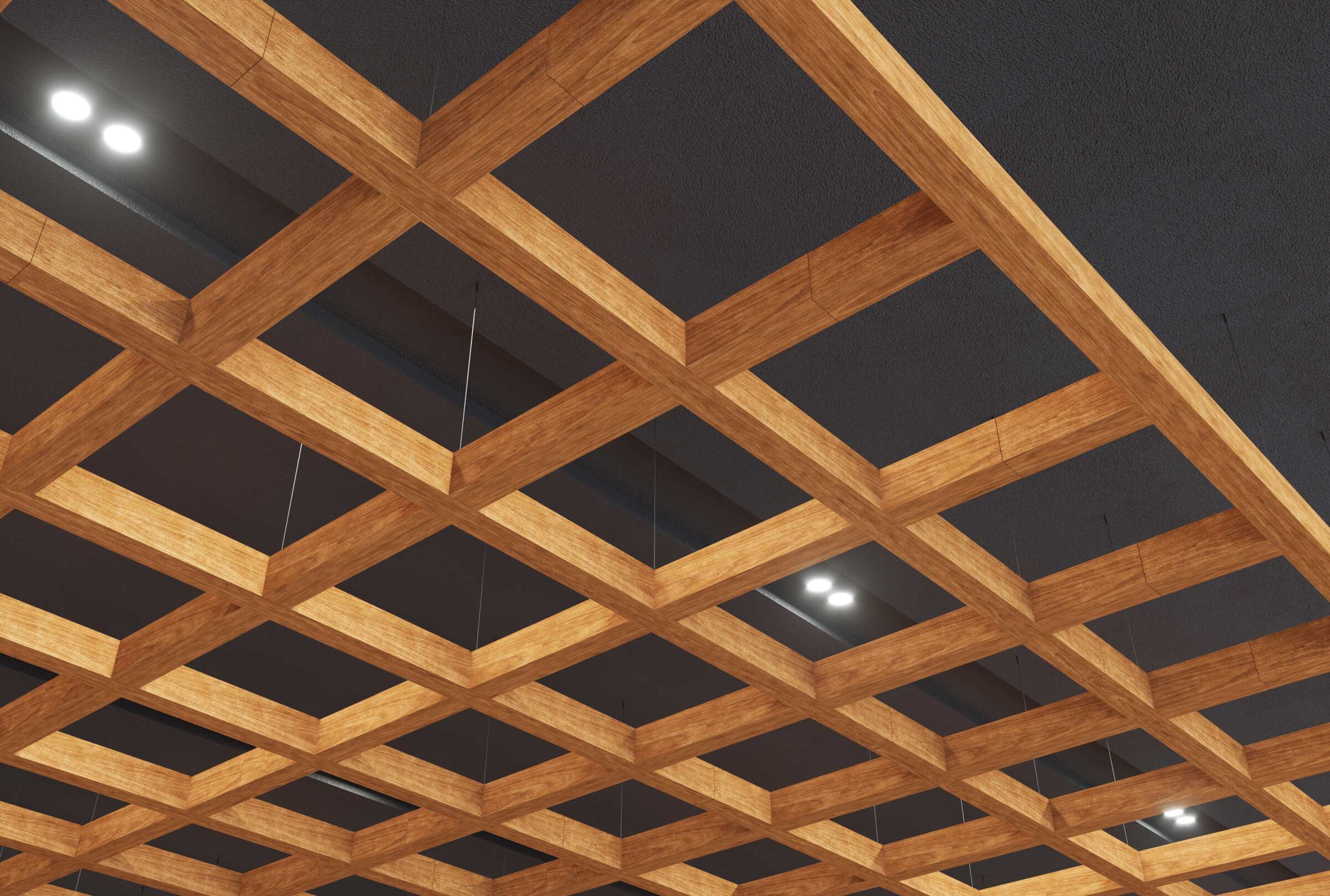
Depuis toujours, dans la conception des hôtels, le plafond est considéré comme une surface à mettre en valeur : plâtre à caissons, peinture décorative, charpente apparente. Si le design hôtelier contemporain s'oriente désormais vers une expression architecturale plus épurée, le plafond reste néanmoins la surface qui occupe la place la plus importante dans l'espace réservé aux clients.
Un client, dans le hall d'entrée, au restaurant ou dans une chambre, lève les yeux. La question est de savoir ce qu'il voit lorsqu'il le fait.
Cahier des charges pour un plafond destiné au secteur de l'hôtellerie
Les plafonds destinés au secteur de l'hôtellerie-restauration doivent répondre simultanément à de multiples exigences de performance. Ils doivent présenter un aspect soigné et refléter une intention architecturale. Ils doivent permettre de gérer l'acoustique dans des environnements où le bruit ambiant — activité en cuisine, musique, conversations — peut facilement devenir gênant. Ils doivent permettre un accès à l'espace au-dessus du plafond pour l'entretien des systèmes de chauffage, de ventilation et de climatisation (CVC) ainsi que de l'éclairage. Enfin, ils doivent conserver leurs performances au fil du temps, en préservant leur aspect malgré les routines de nettoyage et l'usure typiques d'une utilisation commerciale dans le secteur de l'hôtellerie-restauration.
InfiKnit™ dans les établissements hôteliers
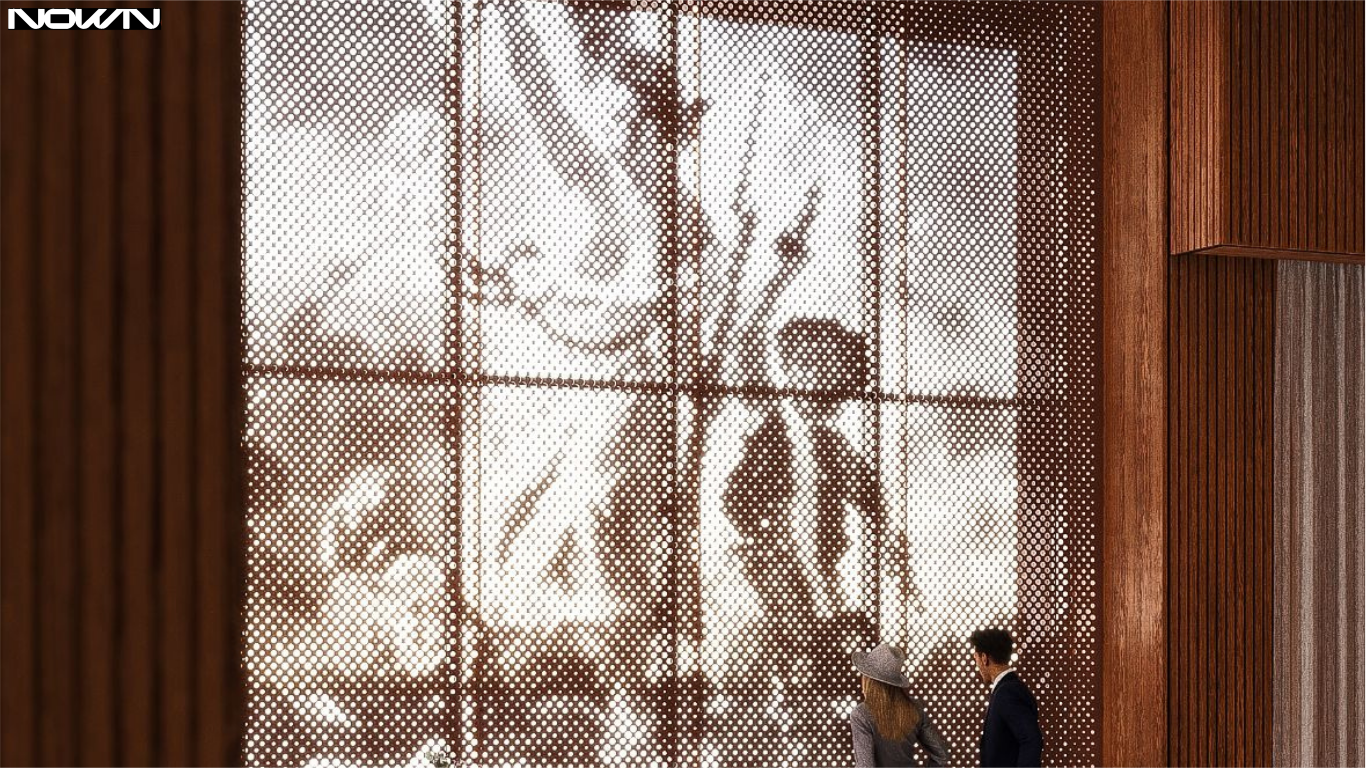
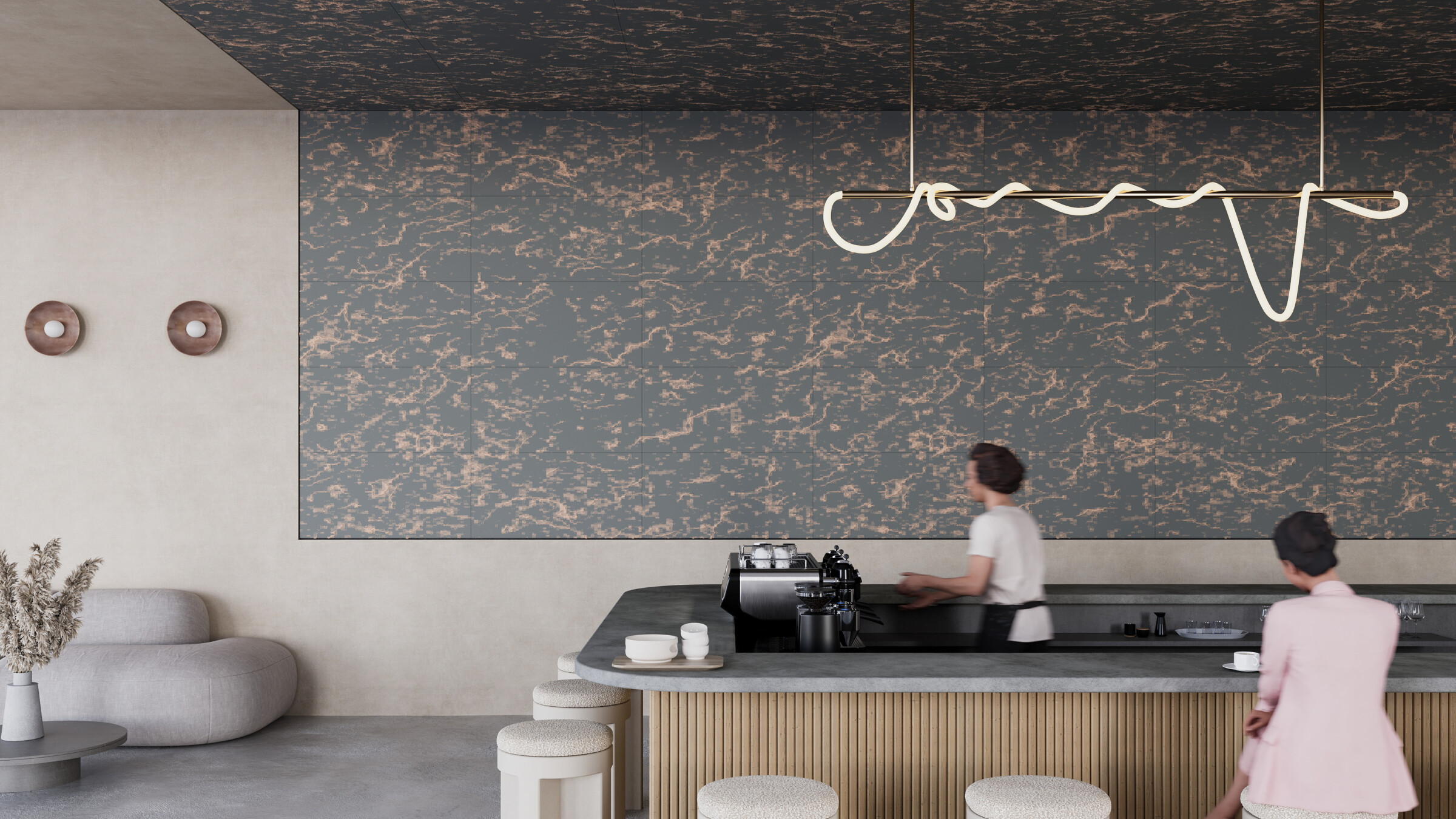
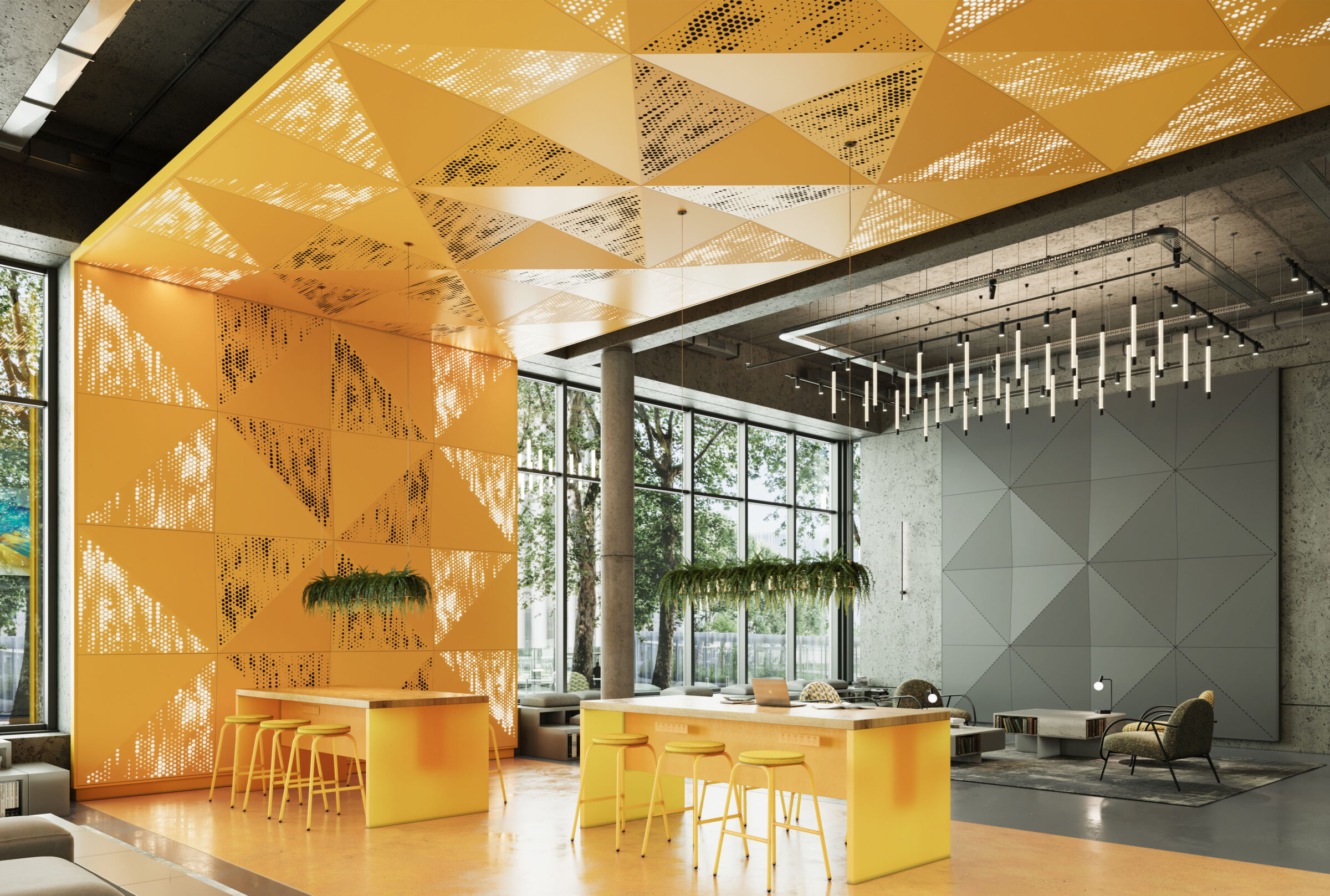
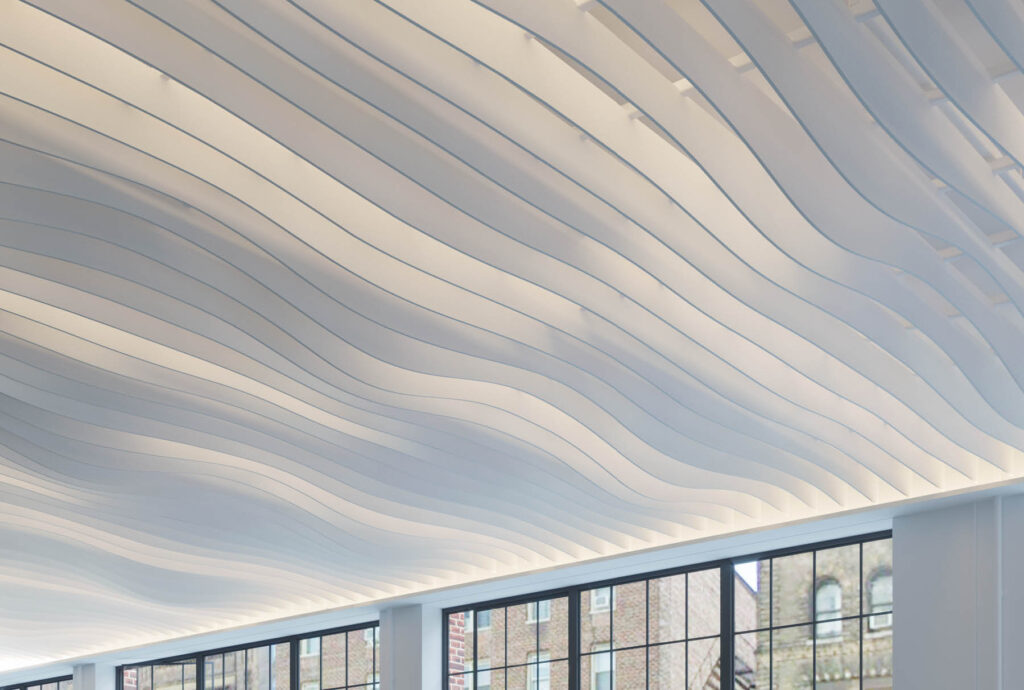
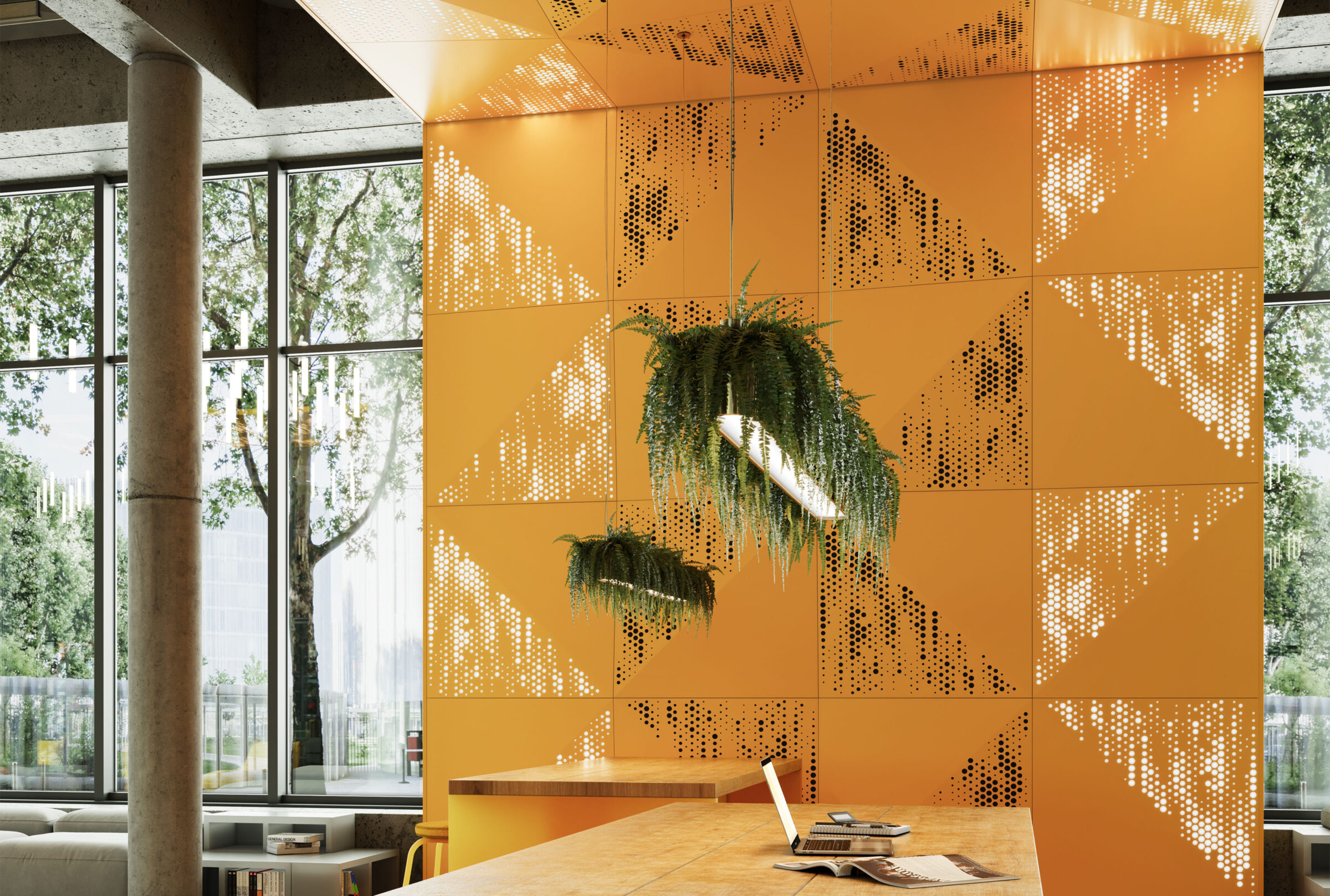
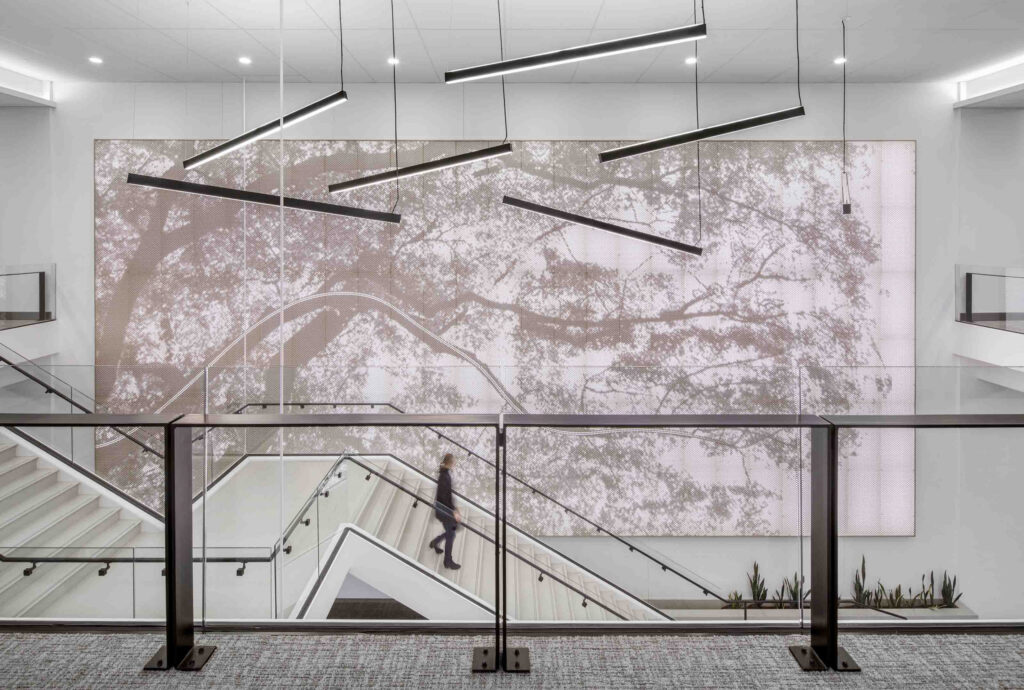
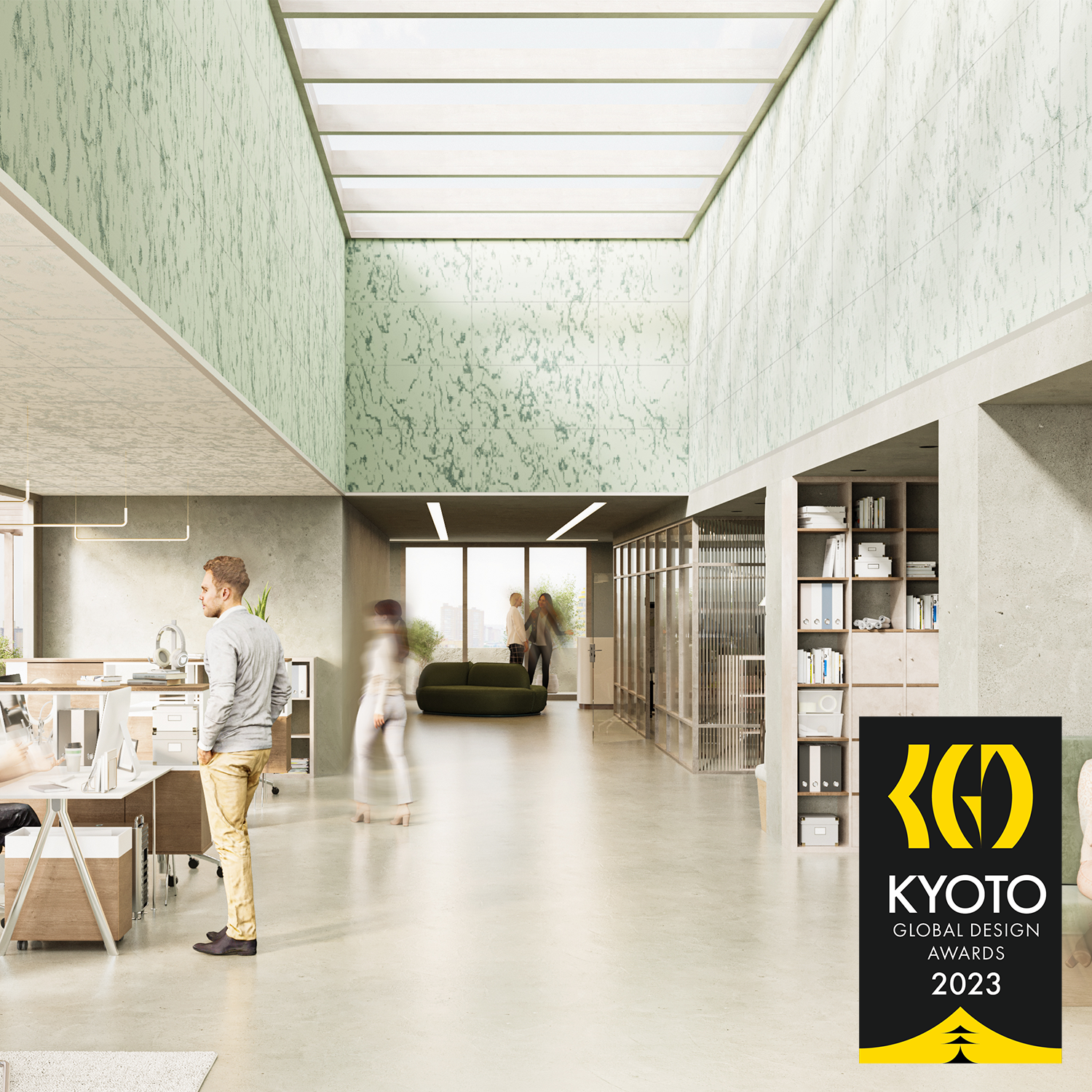
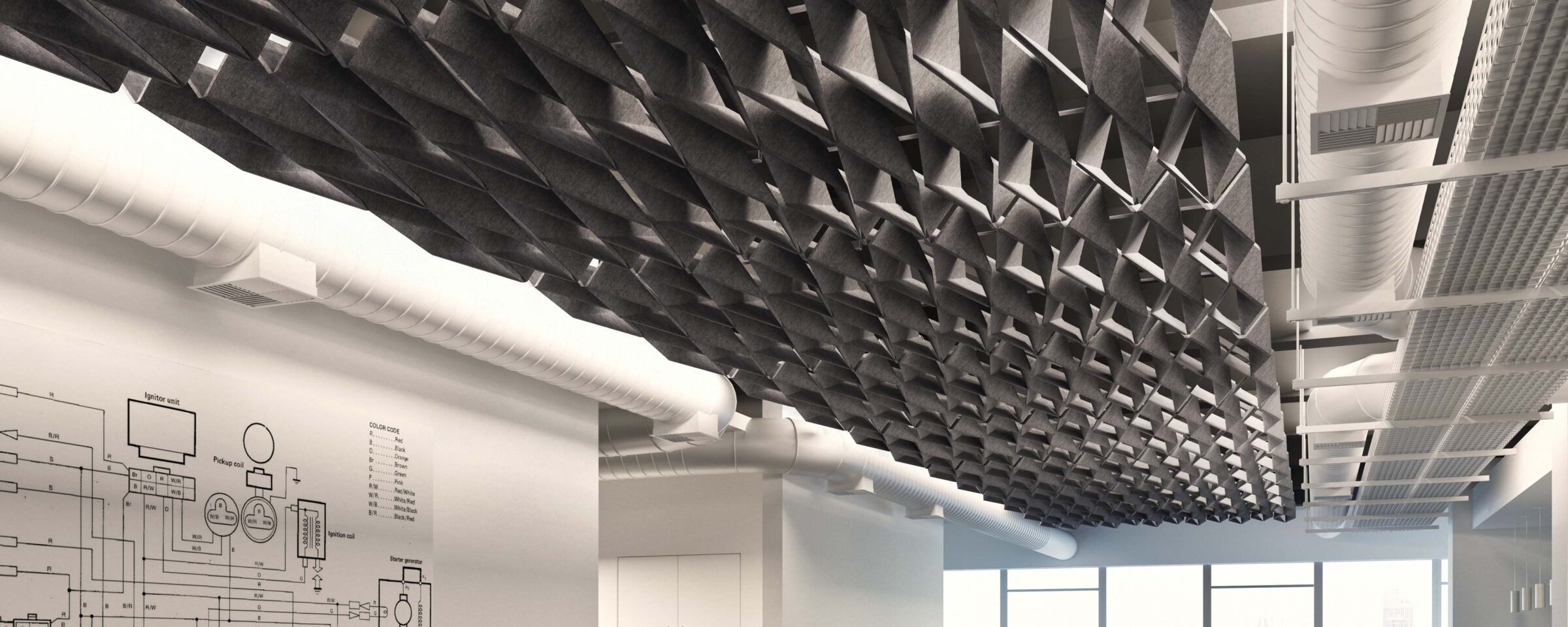
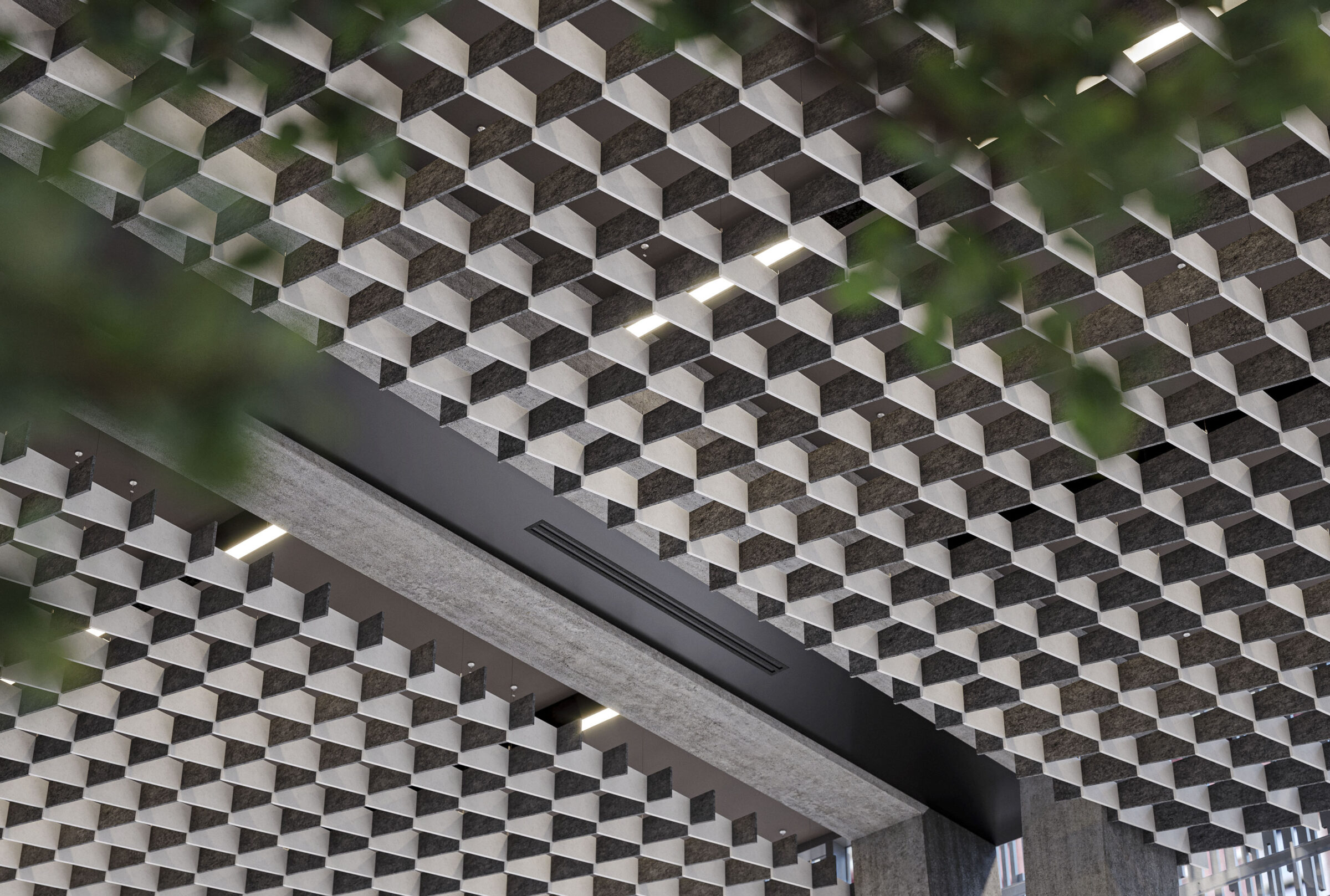
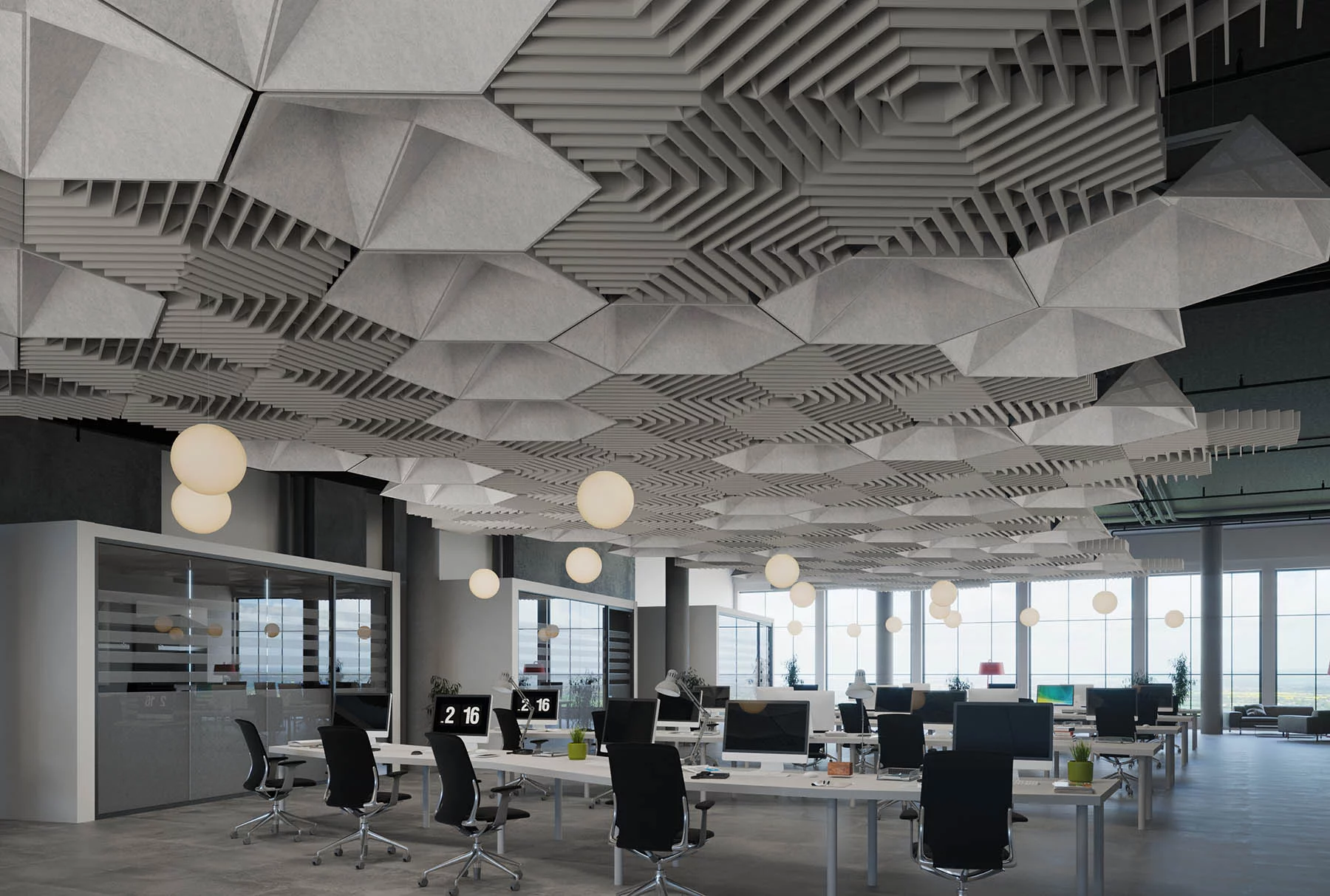
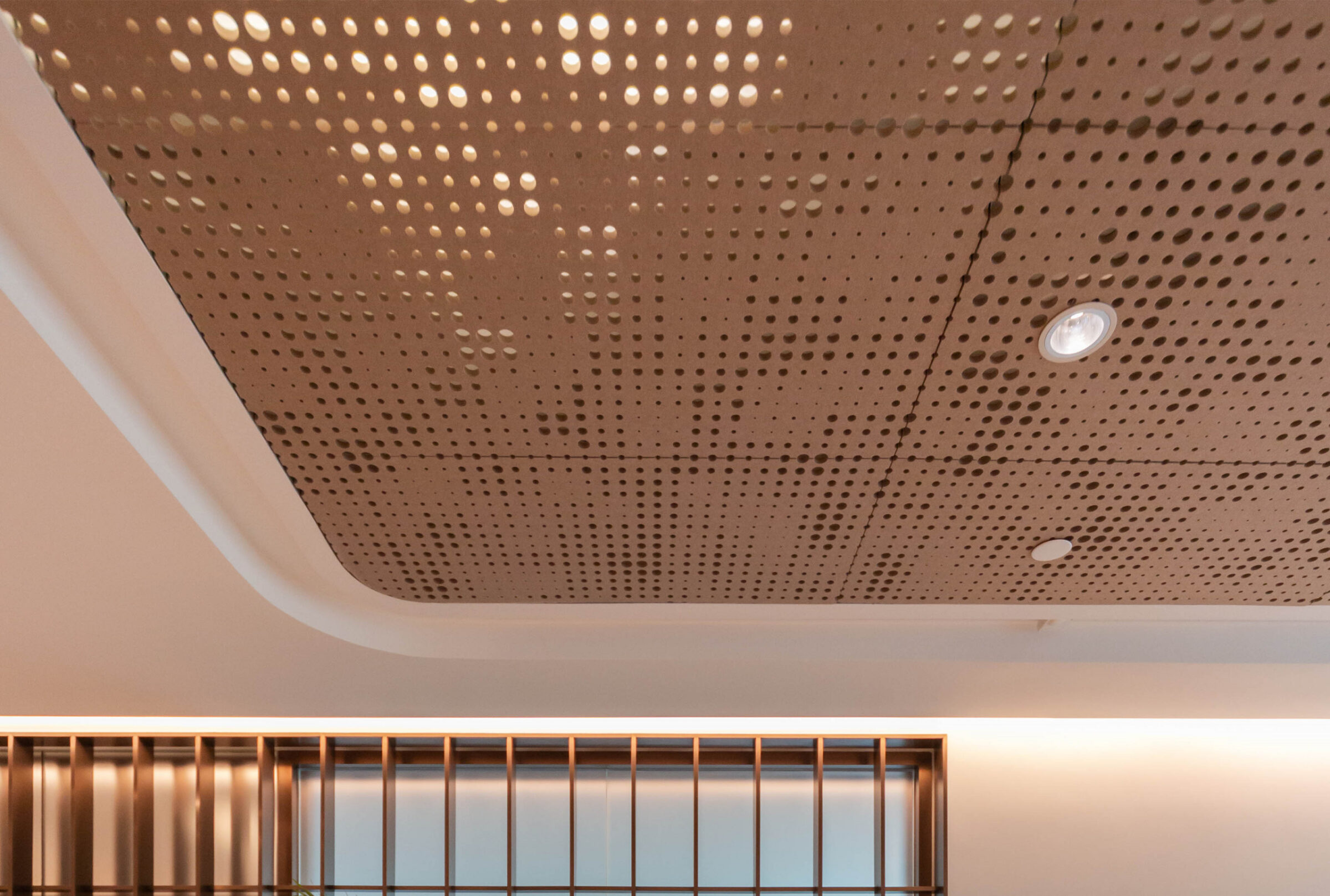
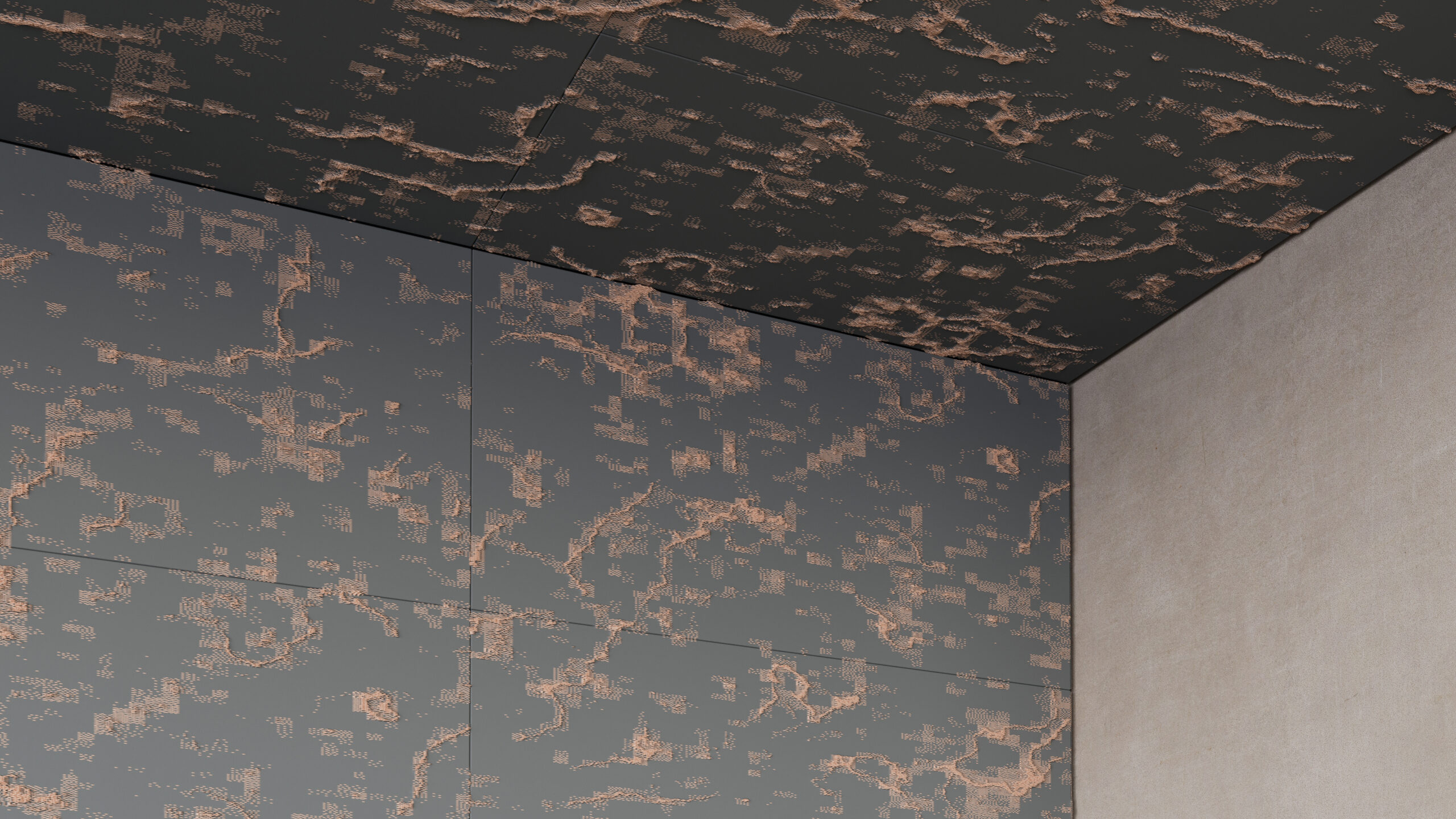
NOWN’s InfiKnit™ Ce système permet de reproduire une géométrie textile tridimensionnelle sur la surface du plafond. La surface tricotée en 3D confère une profondeur au matériau et un intérêt visuel à une échelle adaptée aux applications décoratives sur les plafonds et les murs : halls d'entrée, plafonds de restaurants, couloirs, murs décoratifs dans les chambres d'hôtel. Le système s'intègre à CircuLUM™ une ossature en aluminium, créant ainsi un ensemble harmonieux qui présente une façade épurée tout en conservant son intégrité structurelle.
Le système d'installation repose sur un système de fixation dissimulé : les panneaux s'encastrent ou s'emboîtent dans le cadre en aluminium sans aucune fixation apparente. Pour les architectes d'intérieur du secteur de l'hôtellerie qui souhaitent que le plafond donne l'impression d'avoir été conçu plutôt que simplement installé, ce détail revêt une importance particulière.
InfiKnit™ est fabriqué sans aucun déchet de matière première. Pour les exploitants hôteliers qui s'efforcent d'atteindre des objectifs de développement durable ou d'obtenir une certification écologique, il s'agit là d'une qualité de matière première attestée par des documents, et non d'une simple affirmation.
Contrôle acoustique dans les restaurants et les bars
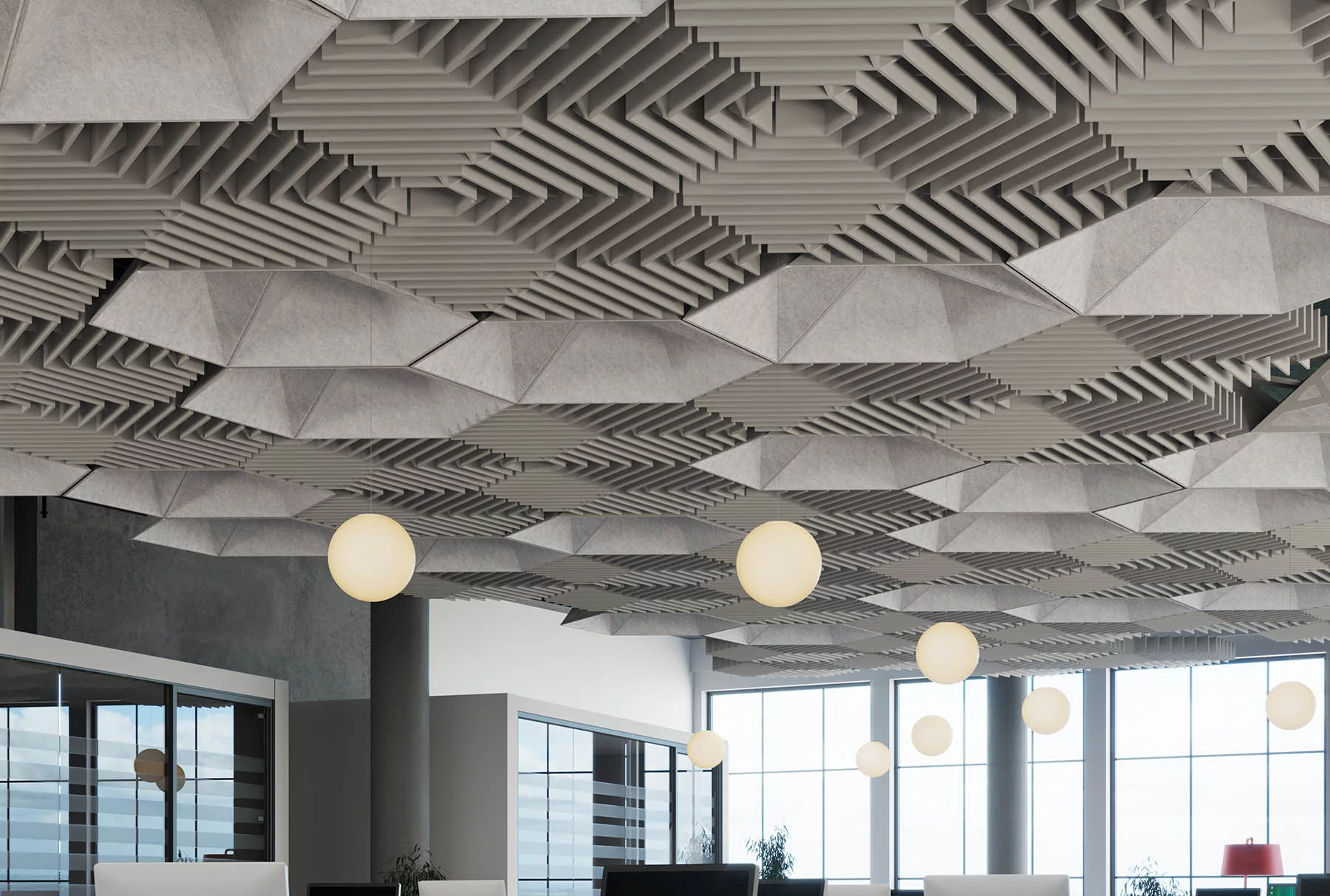
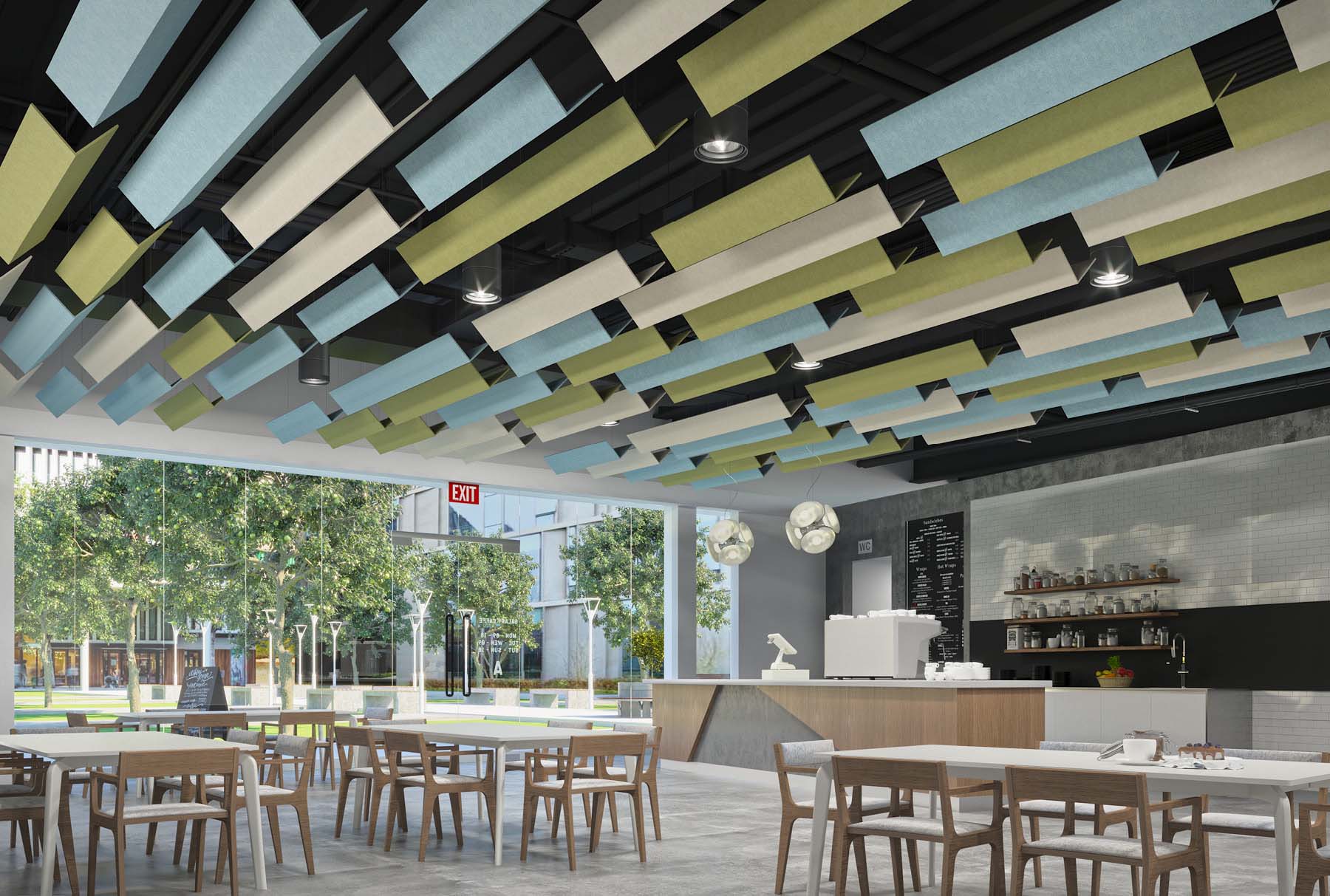
L'acoustique des restaurants et des bars constitue un défi bien connu dans le secteur de l'hôtellerie-restauration. Les surfaces dures parallèles — sols en béton poli, façades vitrées, plafonds apparents — créent des environnements où les niveaux sonores augmentent rapidement à mesure que le nombre de clients augmente. L'installation de matériaux absorbants au niveau du plafond est la mesure la plus efficace pour remédier à ce problème.
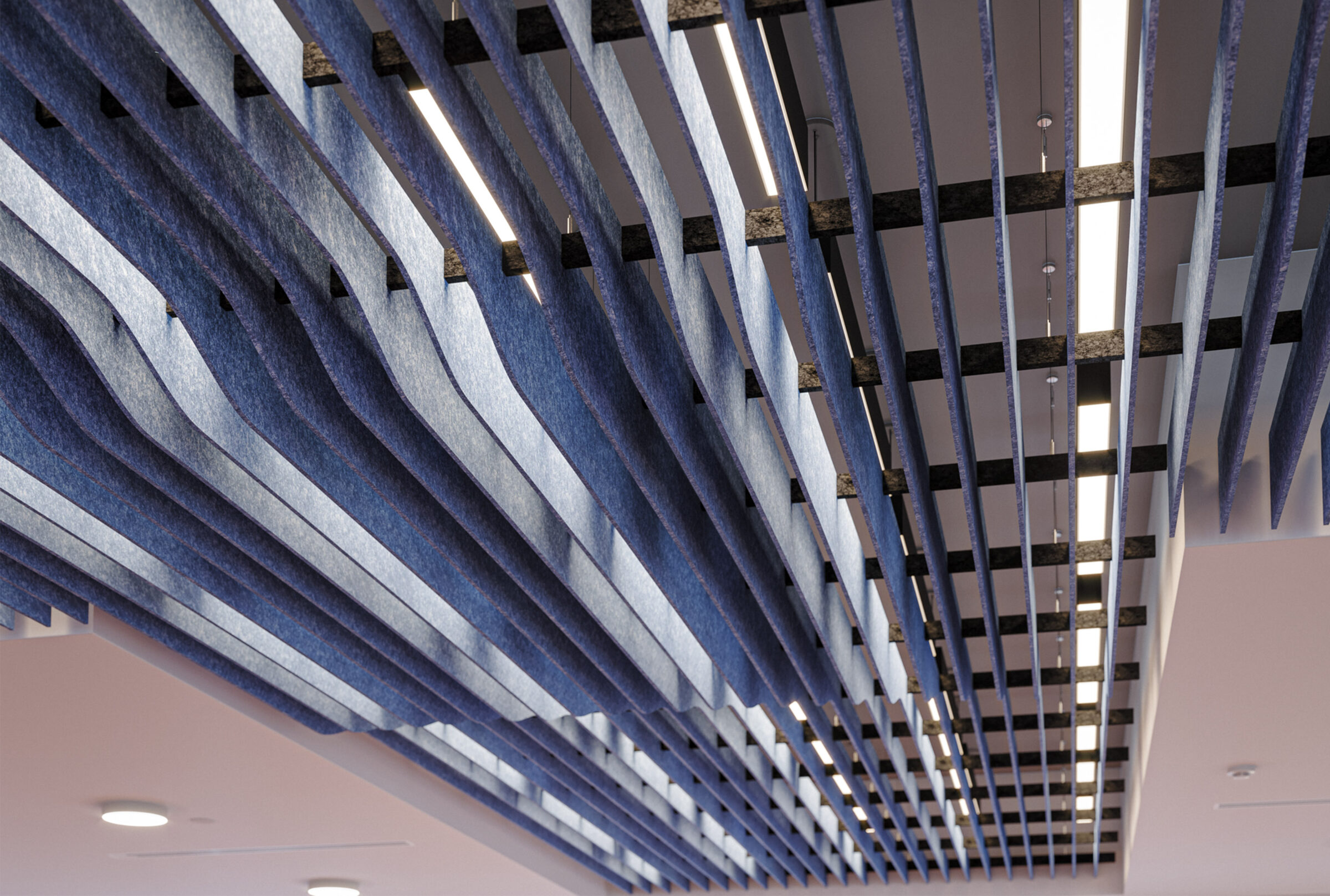
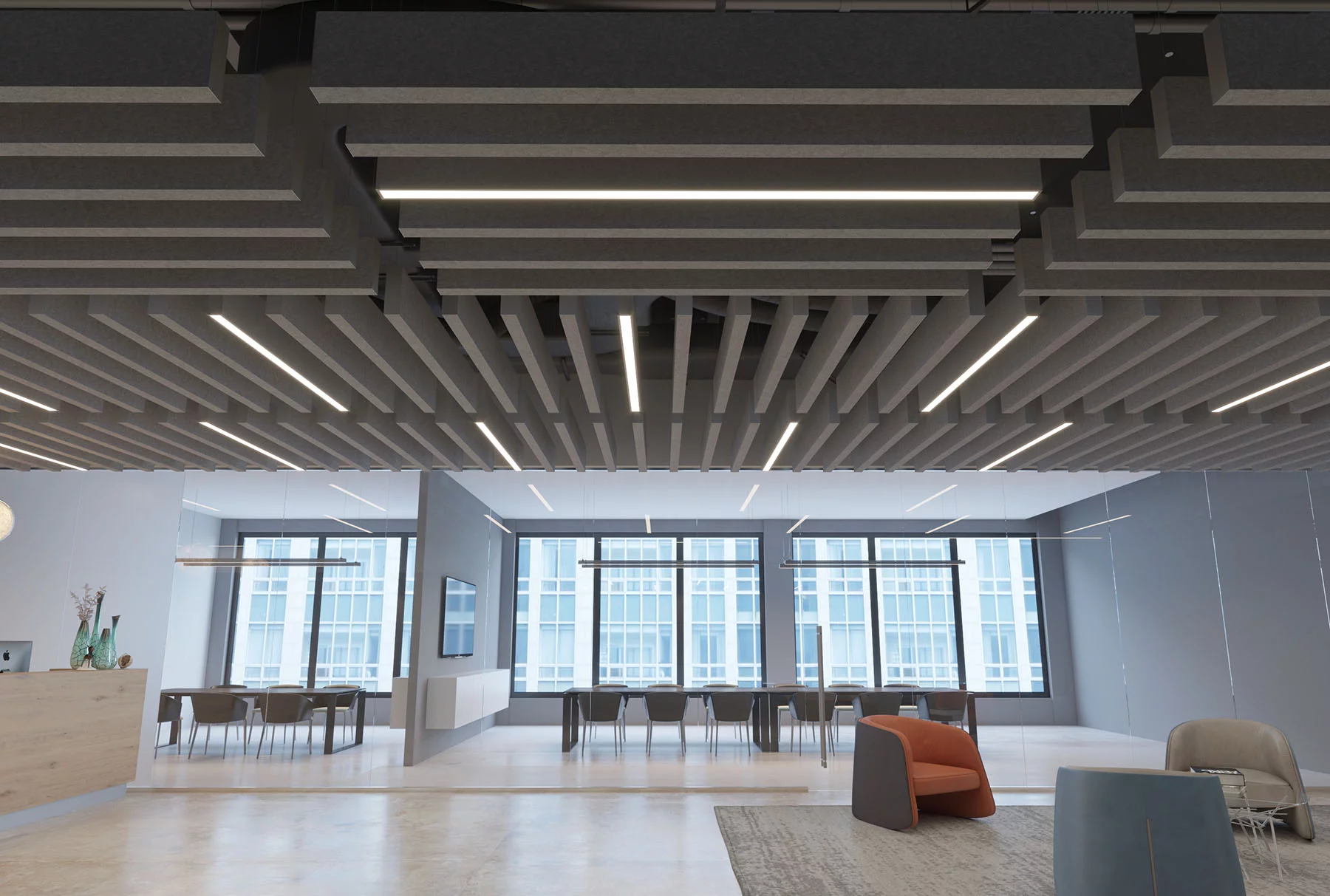
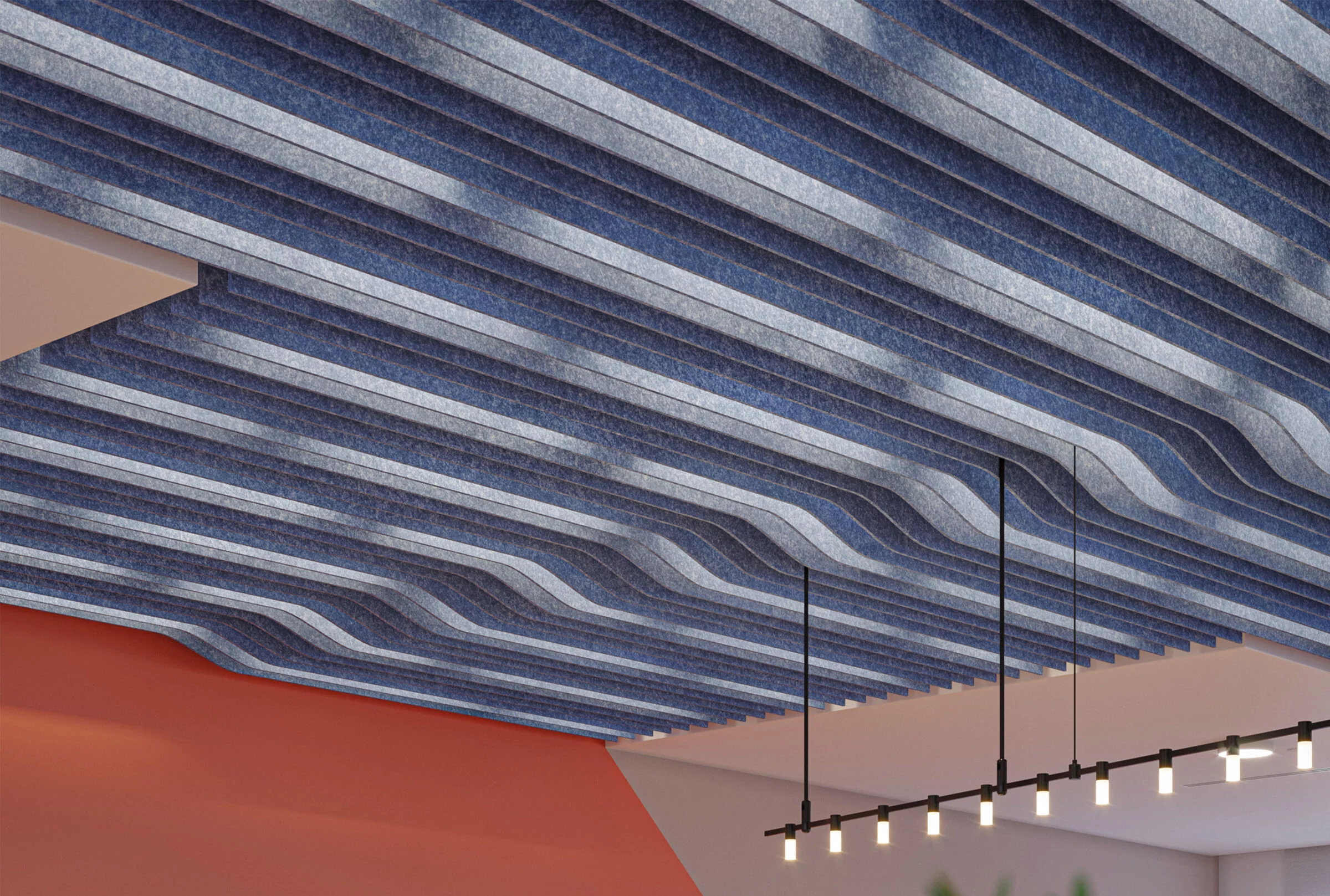
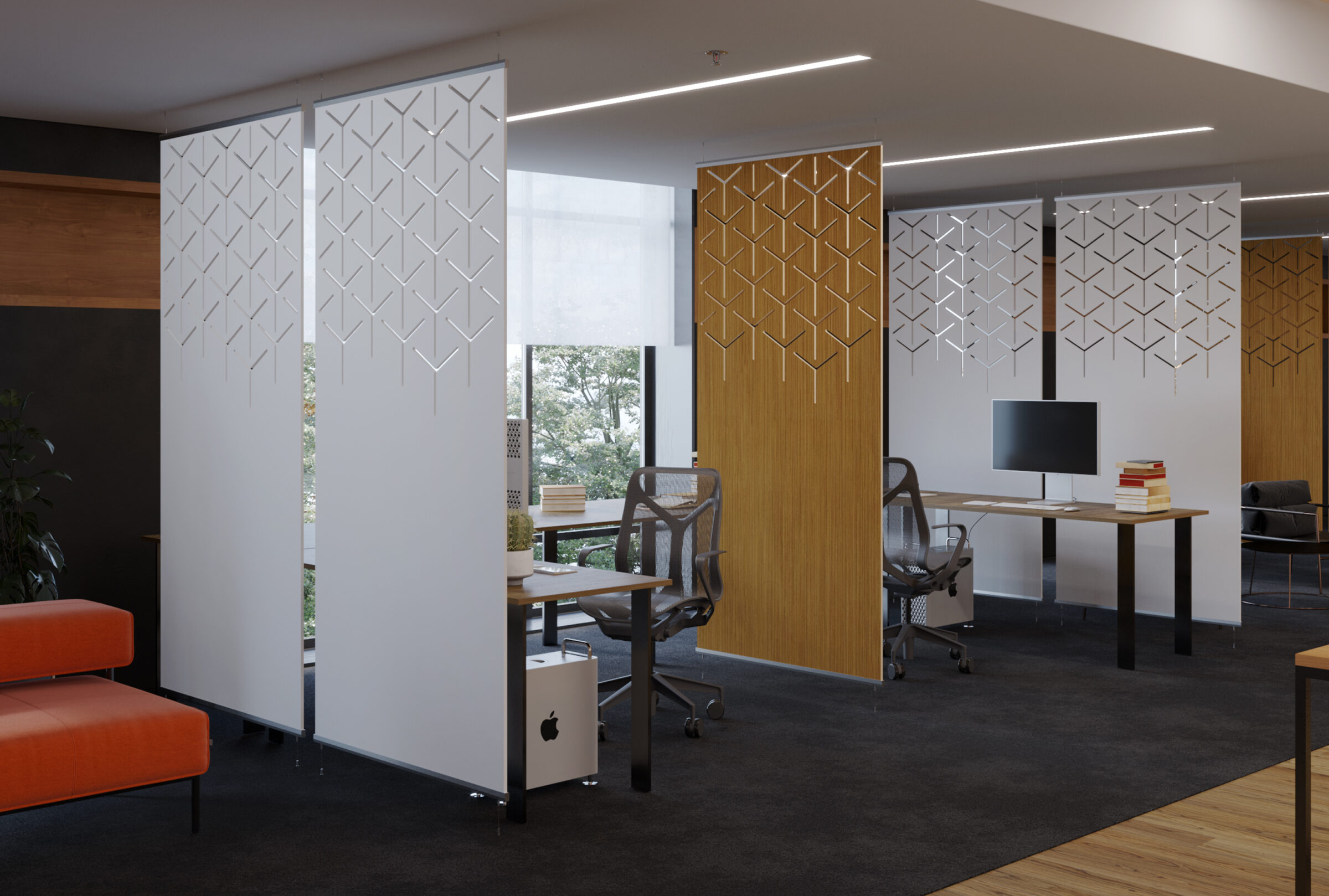
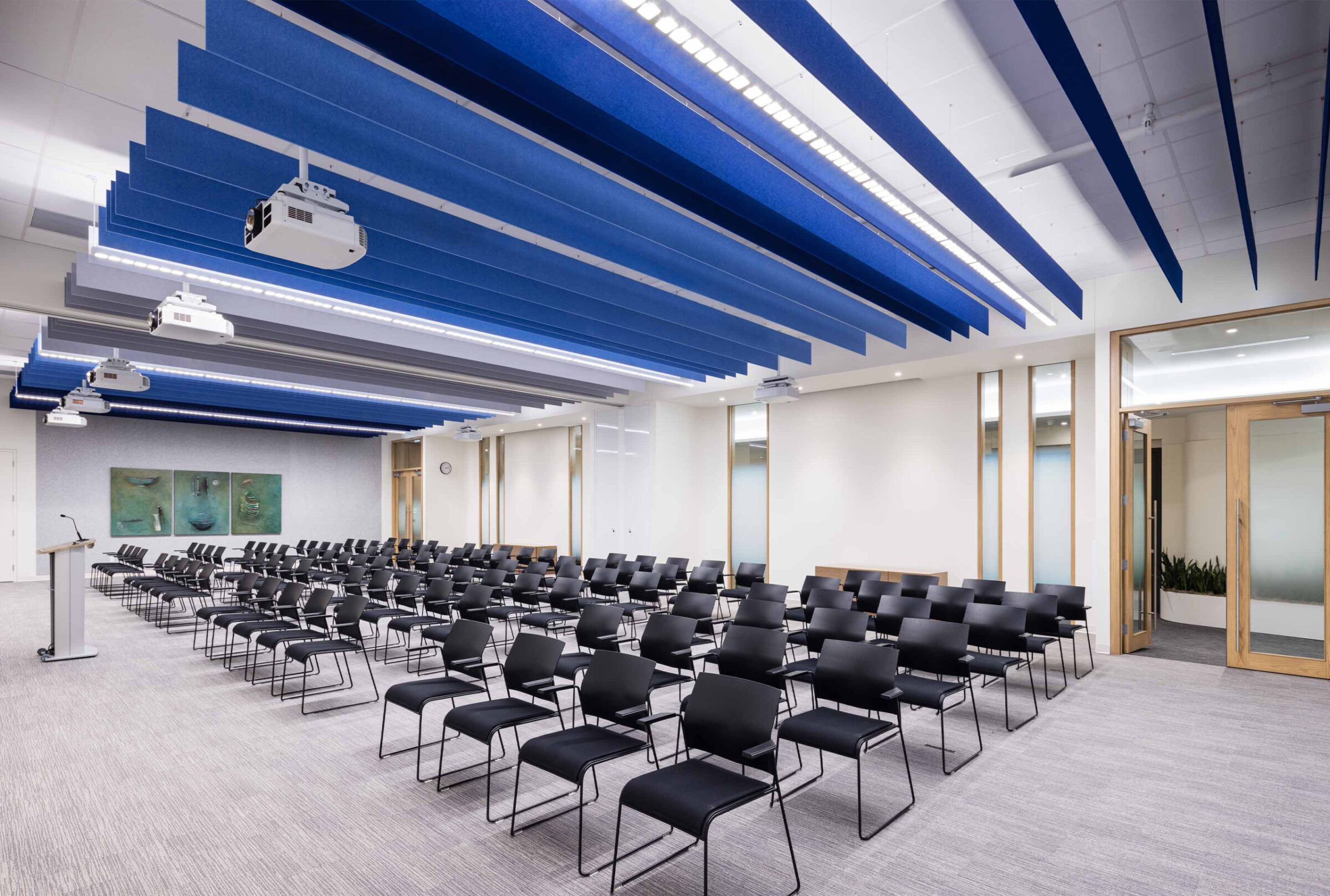
Combiner InfiKnit™la richesse textile de… avec aSOFT™ Les matériaux disposés en forme de radeaux permettent de contrôler l'acoustique sans nécessiter un plafond entièrement fermé, ce qui permet de conserver le caractère ouvert et spacieux sur lequel repose souvent l'architecture hôtelière, tout en réduisant la réverbération.
Découvrez les systèmes de plafond NOWN destinés aux établissements hôteliers