
Guide de l'architecte pour la sélection des systèmes de plafond destinés aux bâtiments culturels et publics
30 avril 2026
-2 min lire
Les bâtiments culturels imposent des exigences particulières aux systèmes de plafond : les exigences en matière de performances sont élevées, les ambitions esthétiques sont importantes et le cahier des charges est souvent contraignant. Voici comment s'y retrouver dans le cahier des charges.
Les bâtiments culturels occupent une place particulière dans le paysage architectural. Il s’agit généralement de projets très médiatisés et soumis à un examen minutieux, pour lesquels on attend une qualité de conception exemplaire. Ils présentent souvent des exigences acoustiques complexes : les salles de spectacle, les halls d’exposition, les bibliothèques et les halls d’accueil publics ont chacun des profils acoustiques différents. De plus, leur réalisation s’inscrit fréquemment dans des cadres contraints et des contextes impliquant de multiples parties prenantes.
Dans ce contexte, la conception du plafond doit concilier à la fois les ambitions esthétiques, les performances acoustiques et la logique d'installation.
Exigences acoustiques selon les types d'espaces
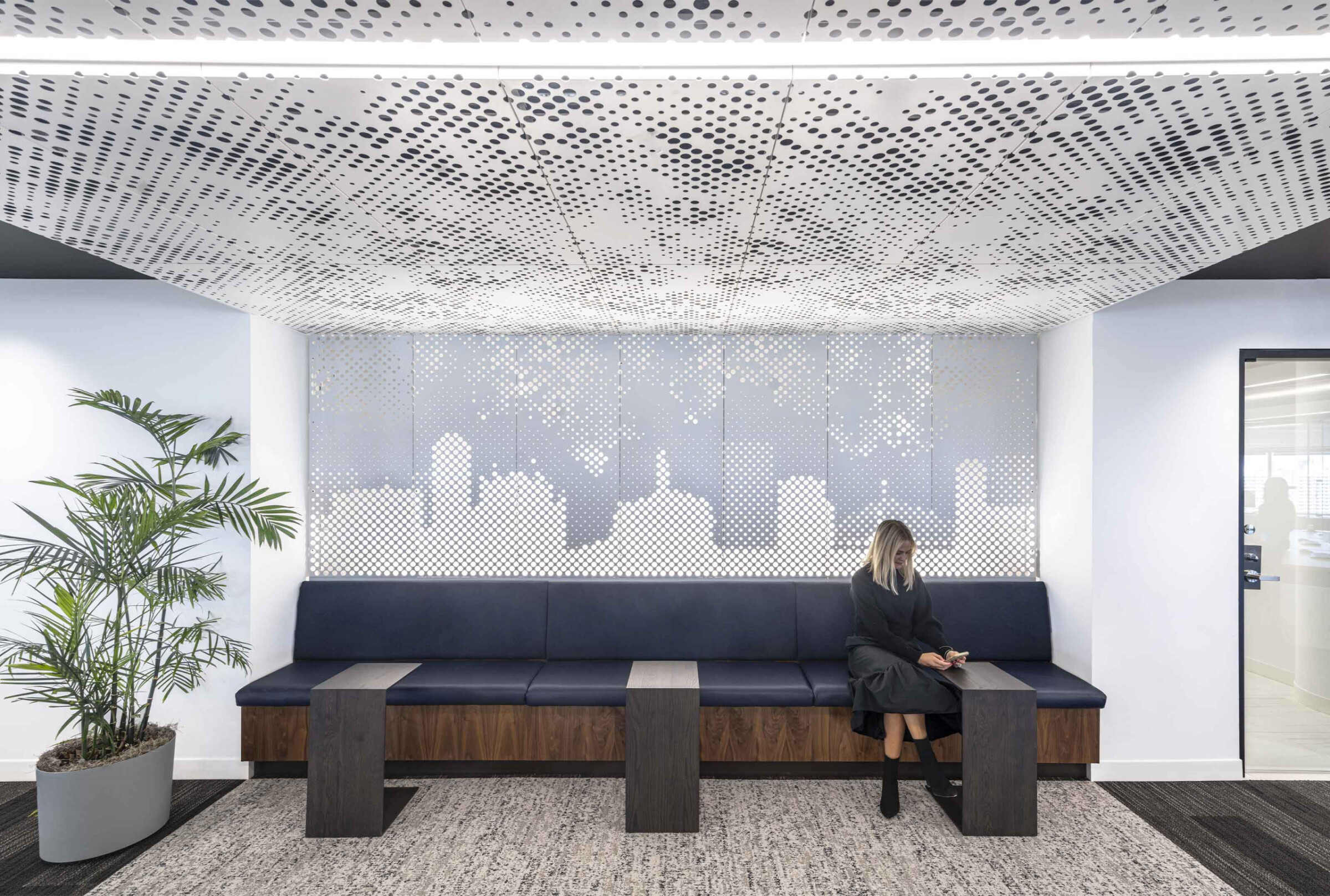
Une salle d'exposition de musée, une salle de lecture de bibliothèque et un hall d'accueil public ont des objectifs acoustiques différents. Les salles d'exposition nécessitent généralement une absorption acoustique afin d'éviter que les réflexions provenant des surfaces dures ne créent un environnement sonore perturbant pour le contenu exposé. Les bibliothèques ont besoin d'une faible réverbération pour favoriser la concentration dans le calme. Les halls d'accueil publics doivent gérer le bruit de la foule sans pour autant atténuer la qualité spatiale qui fait d'eux des lieux de rassemblement réussis.
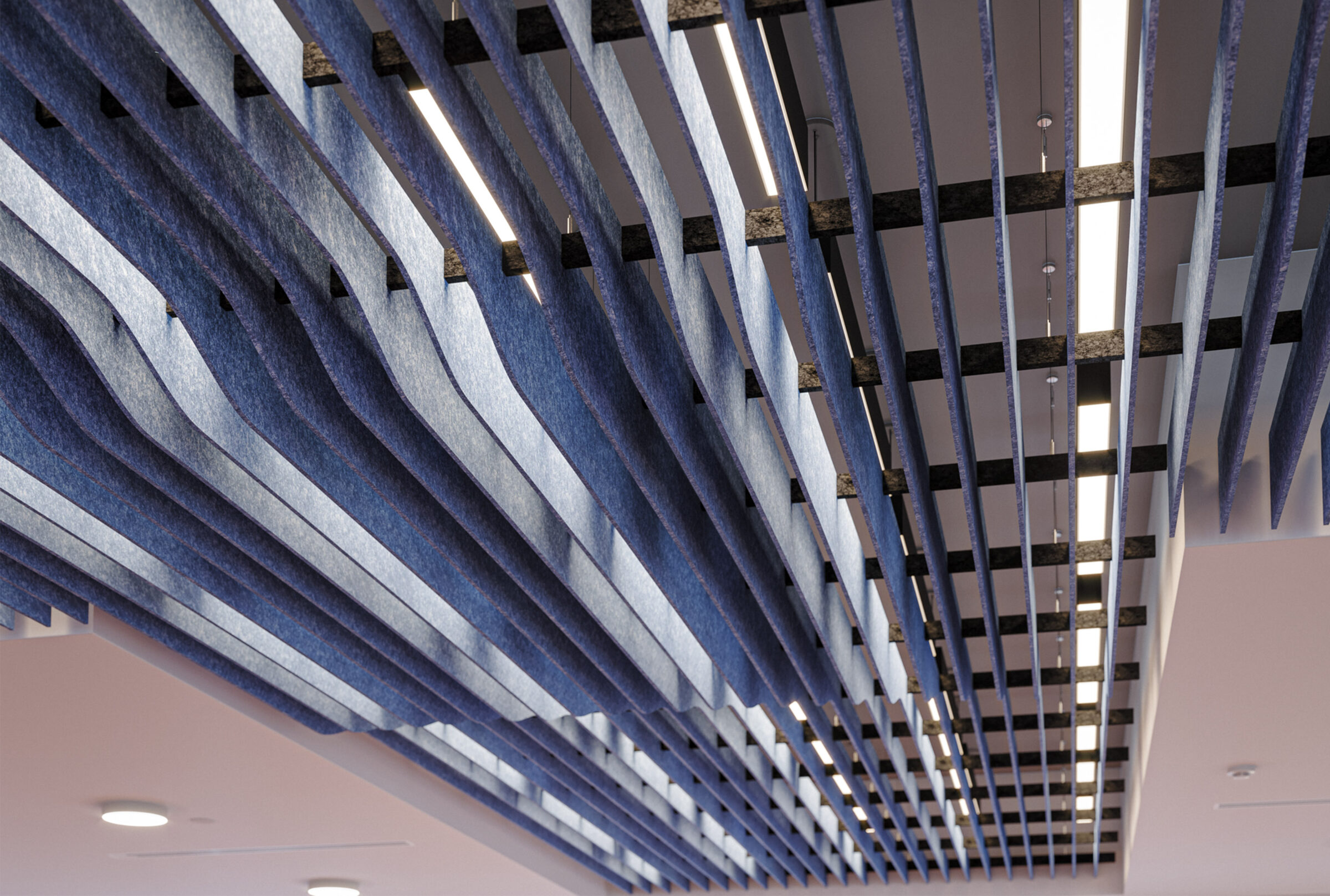
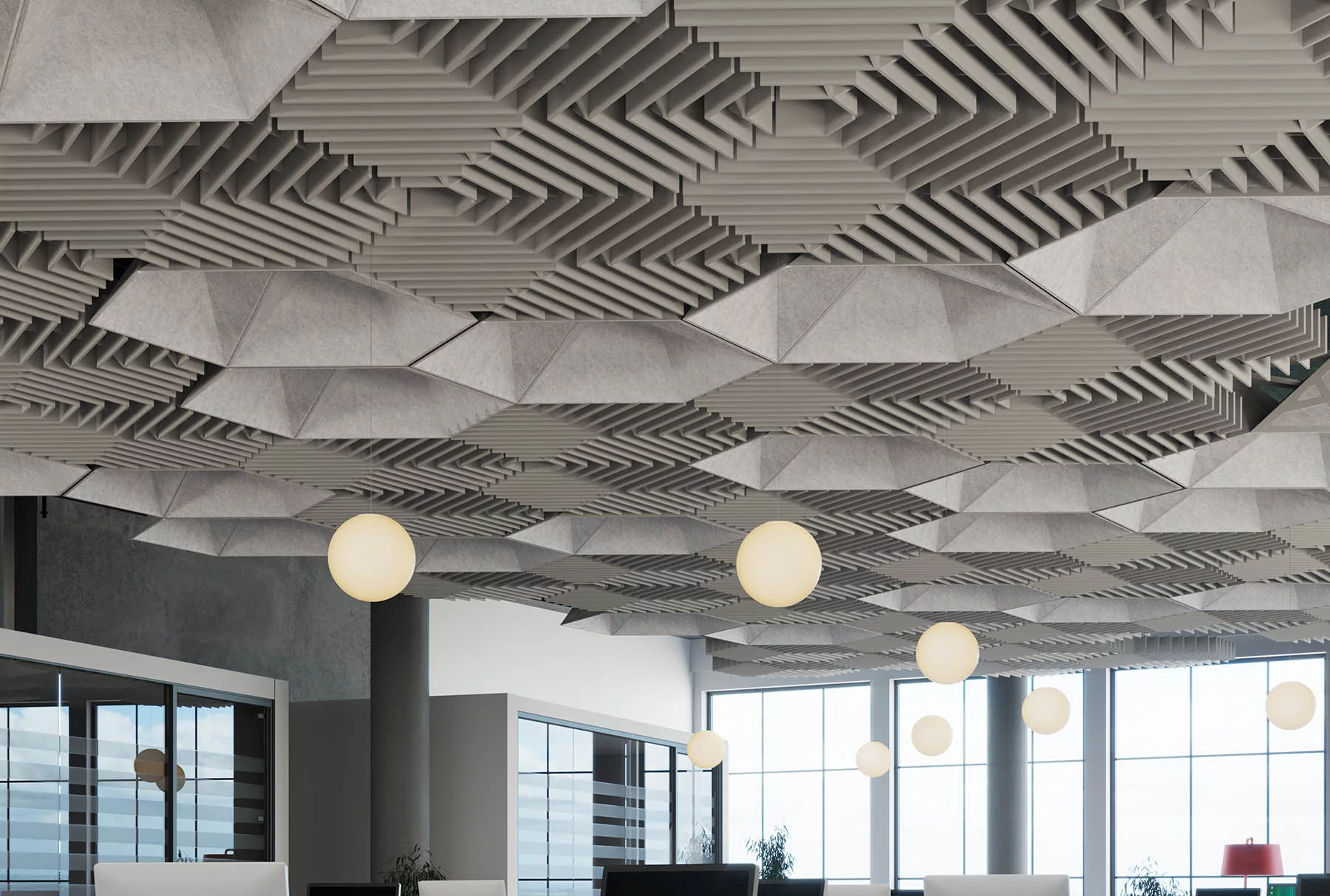
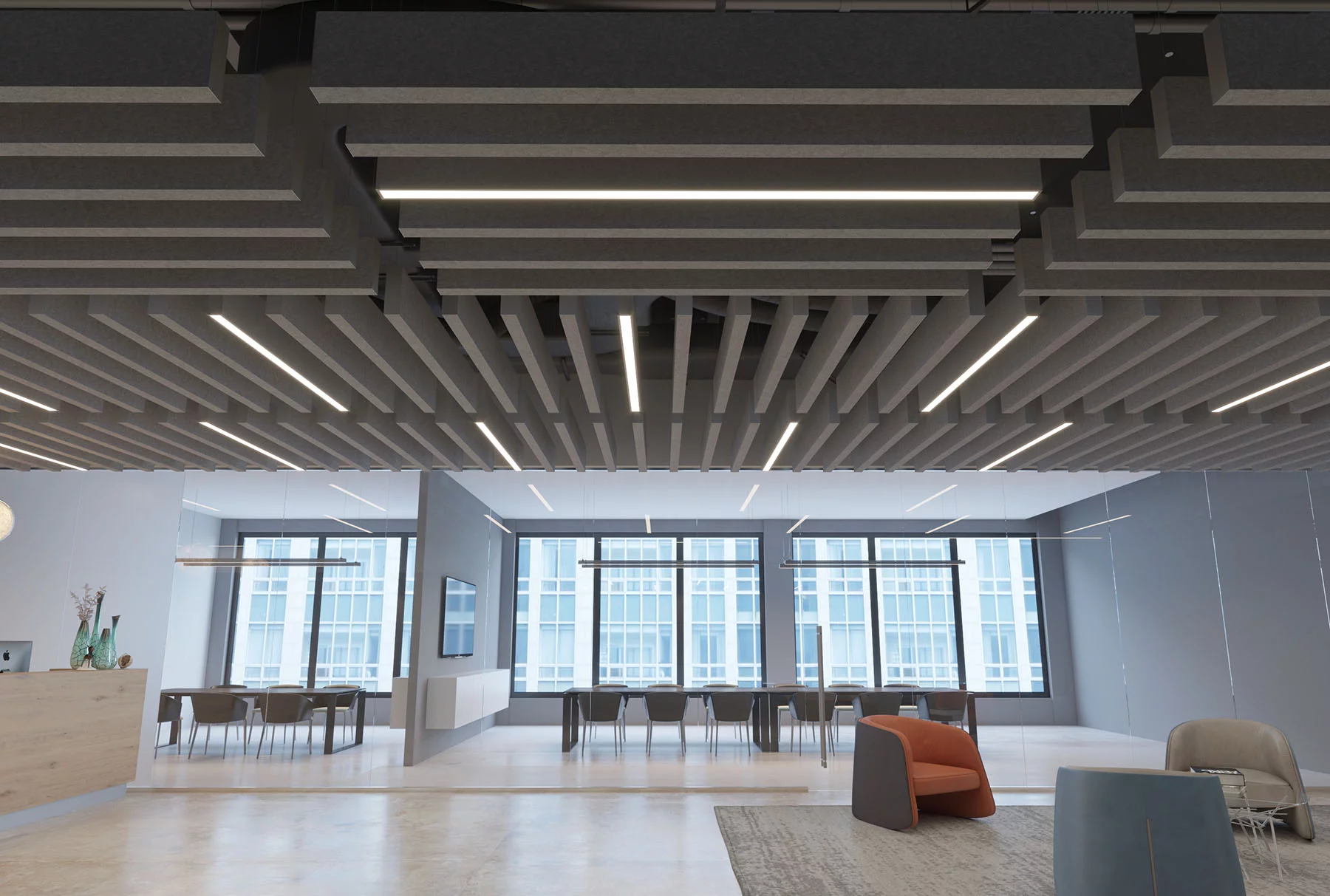
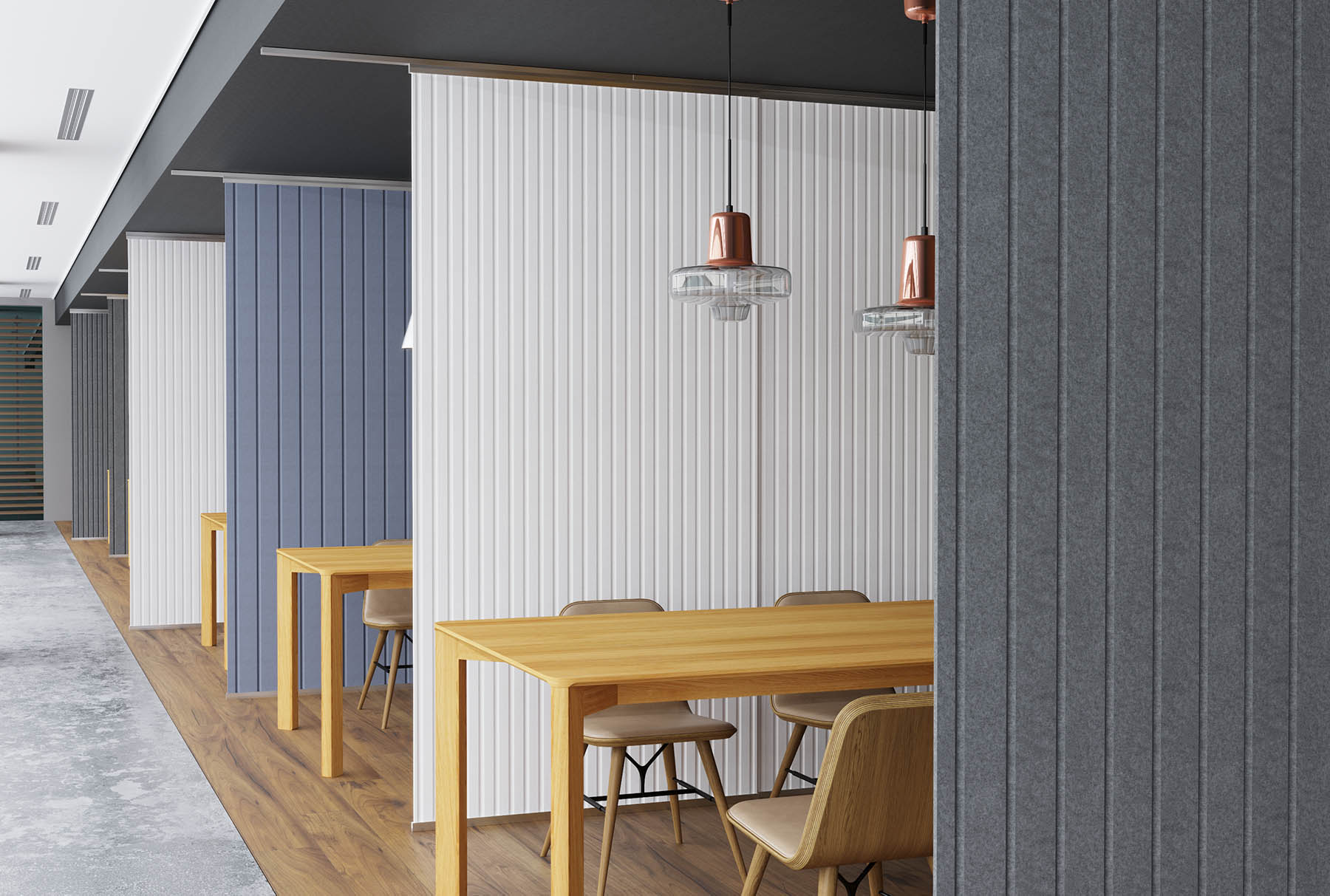
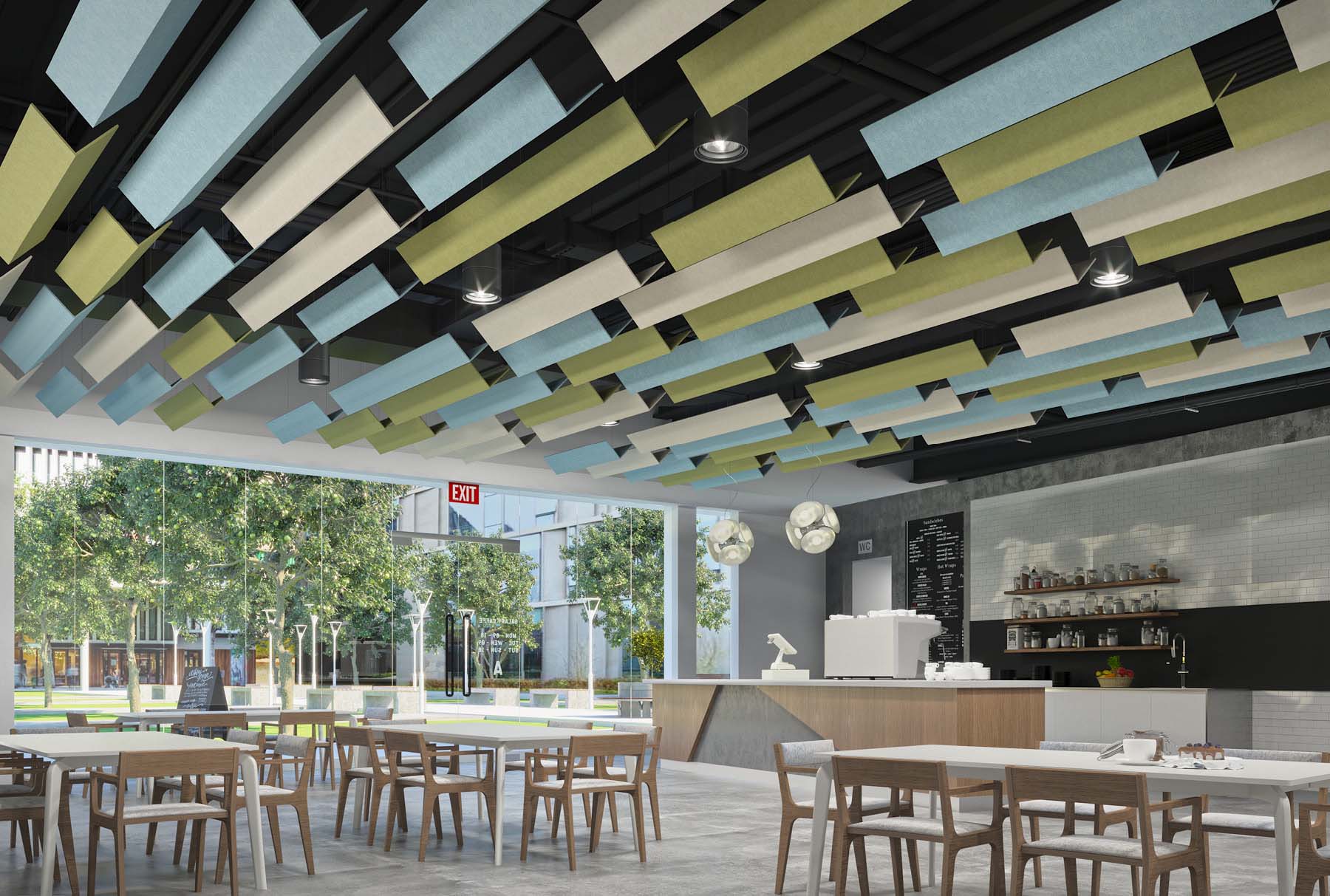
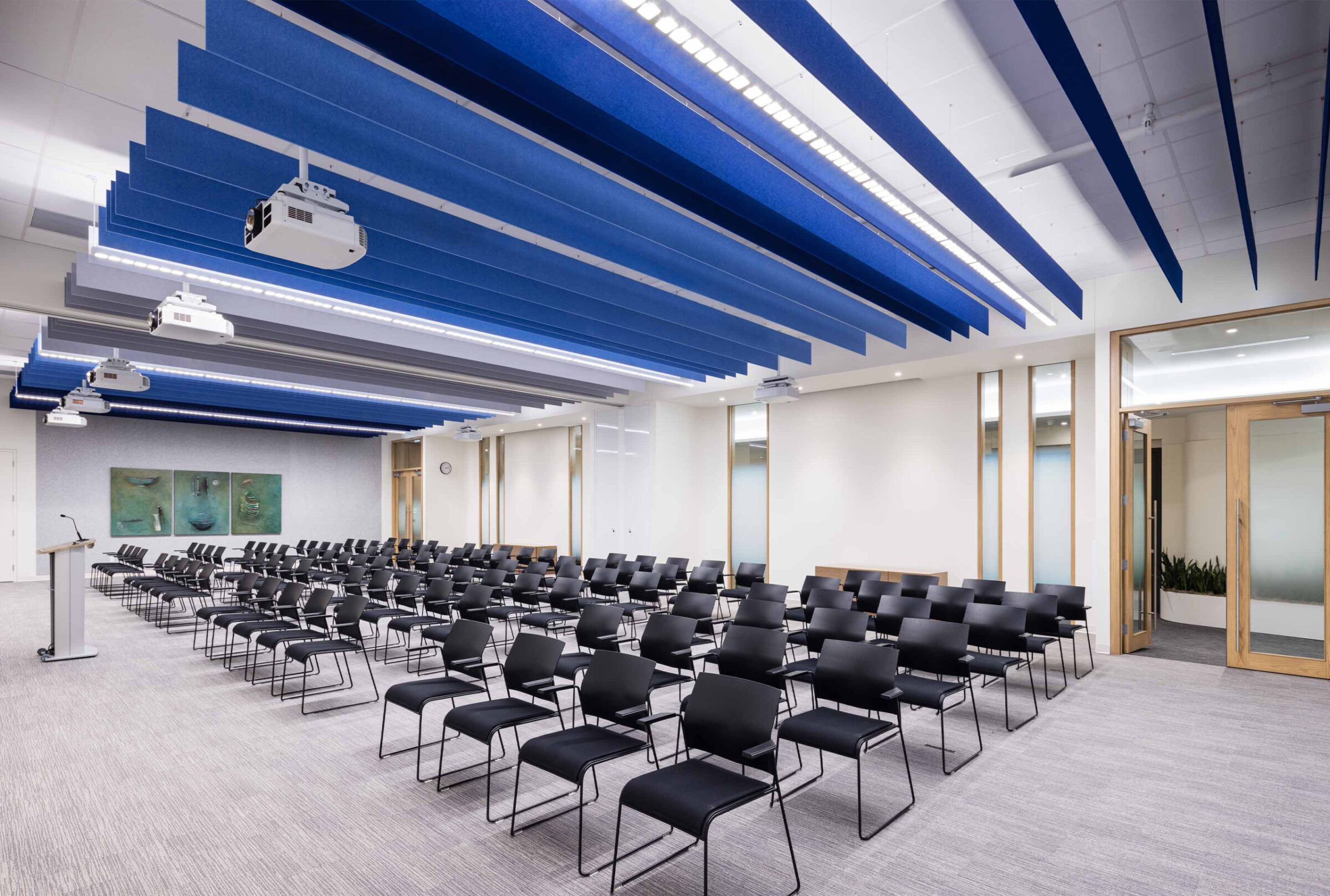
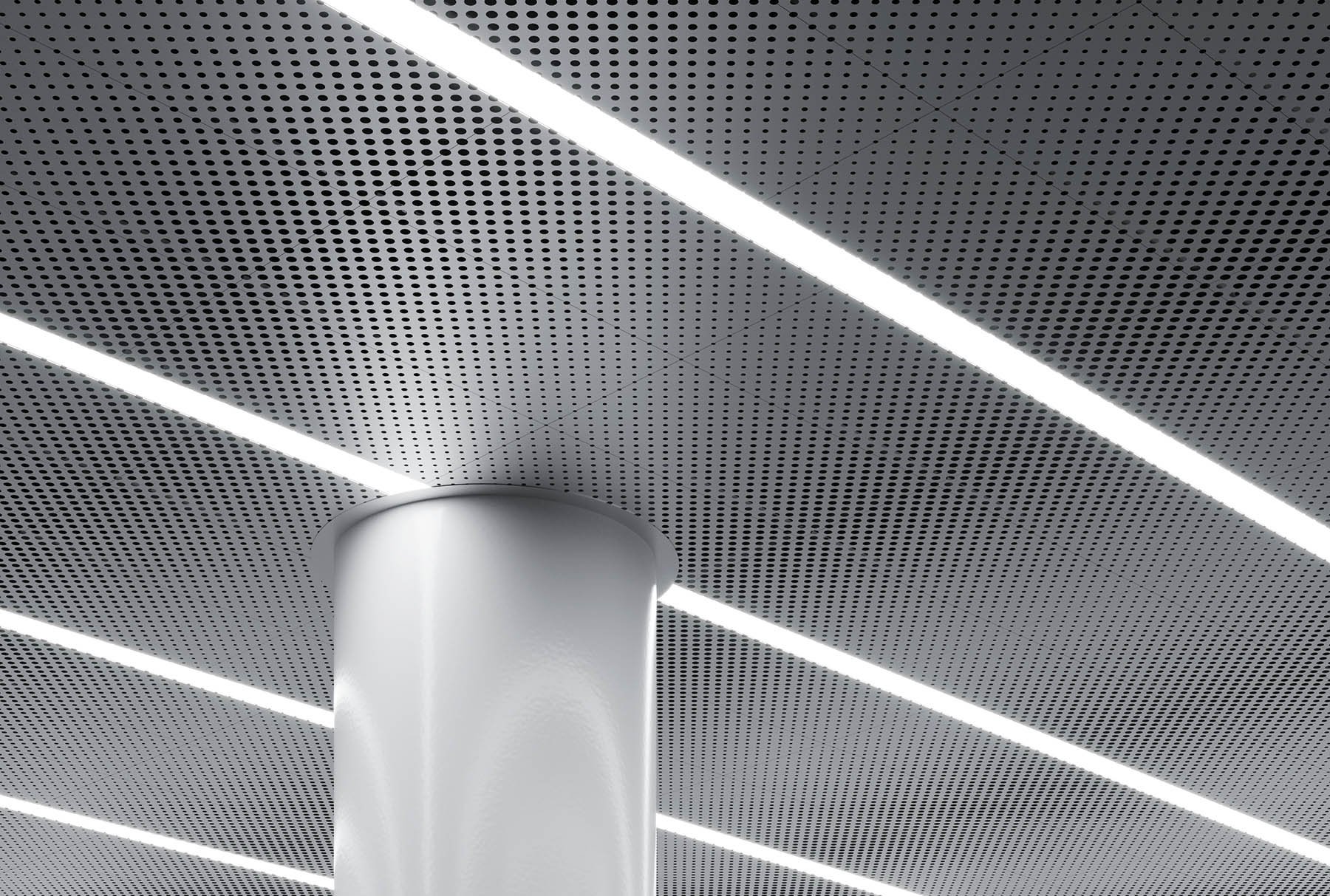
Les systèmes de plafond pouvant être configurés — en termes de profondeur des ailettes, de densité des matériaux et de pourcentage de couverture — afin de répondre à ces différents objectifs tout en conservant un langage architectural cohérent, sont particulièrement adaptés aux projets de bâtiments culturels.
Ambition esthétique et présence des matériaux
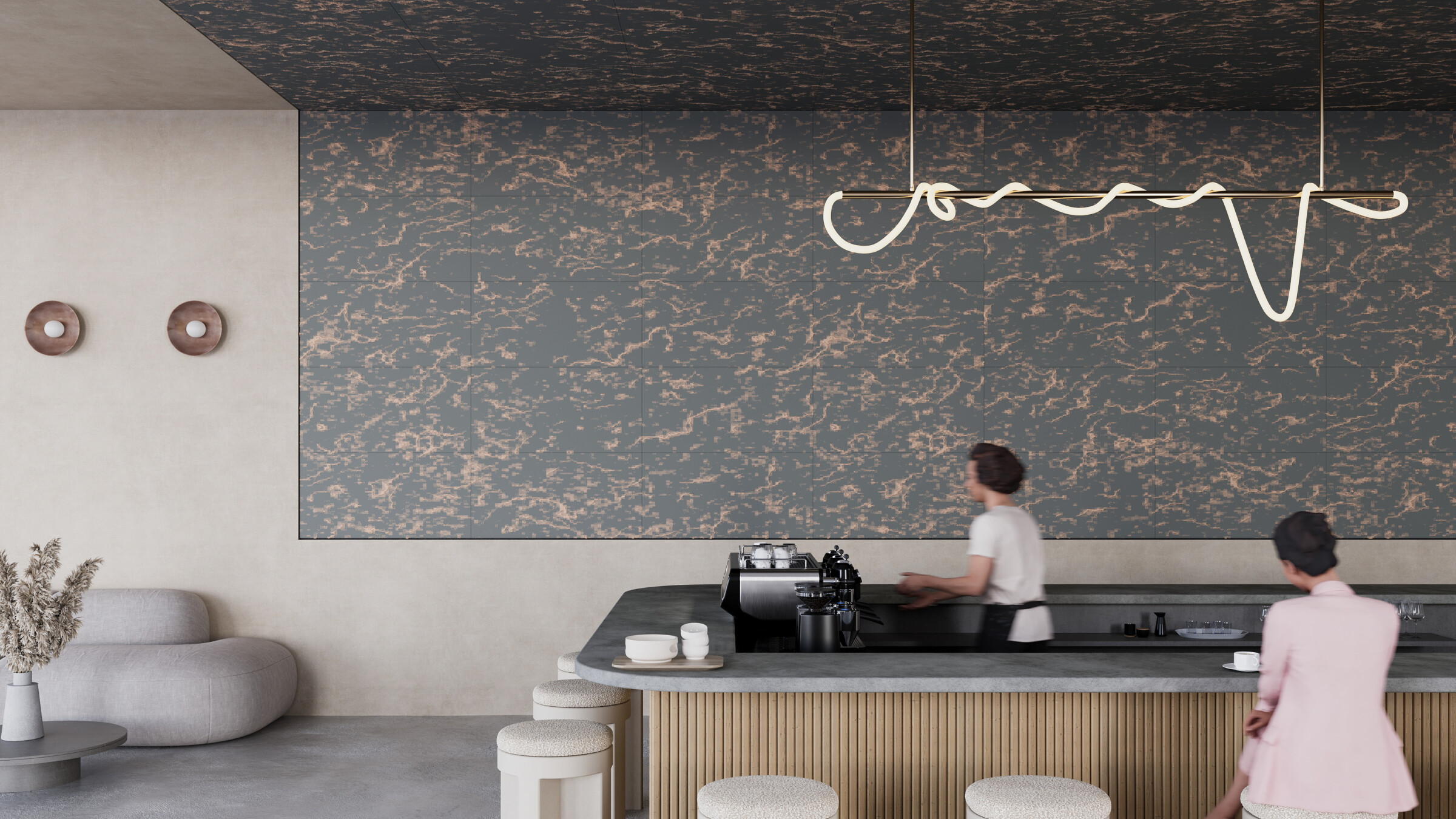
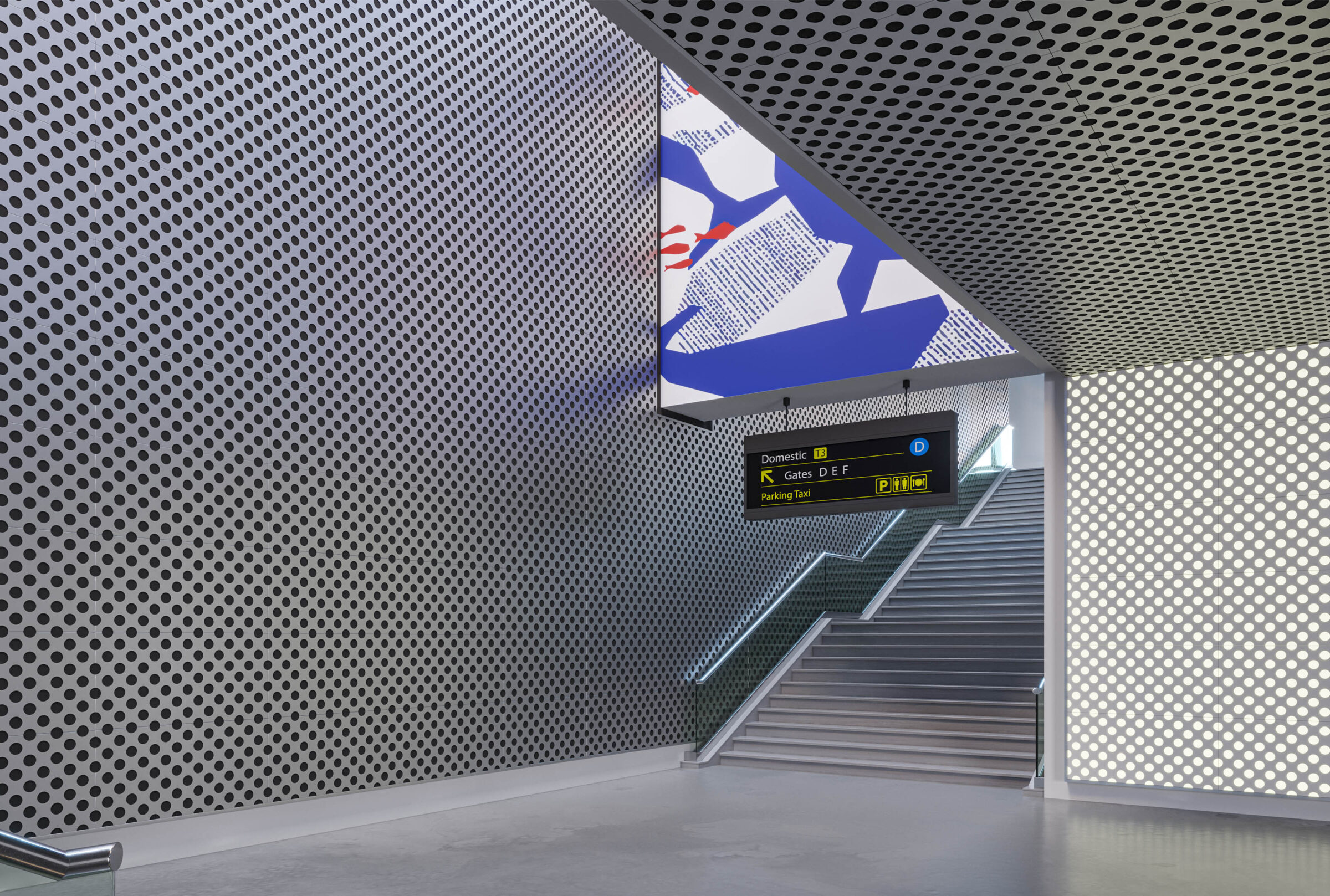
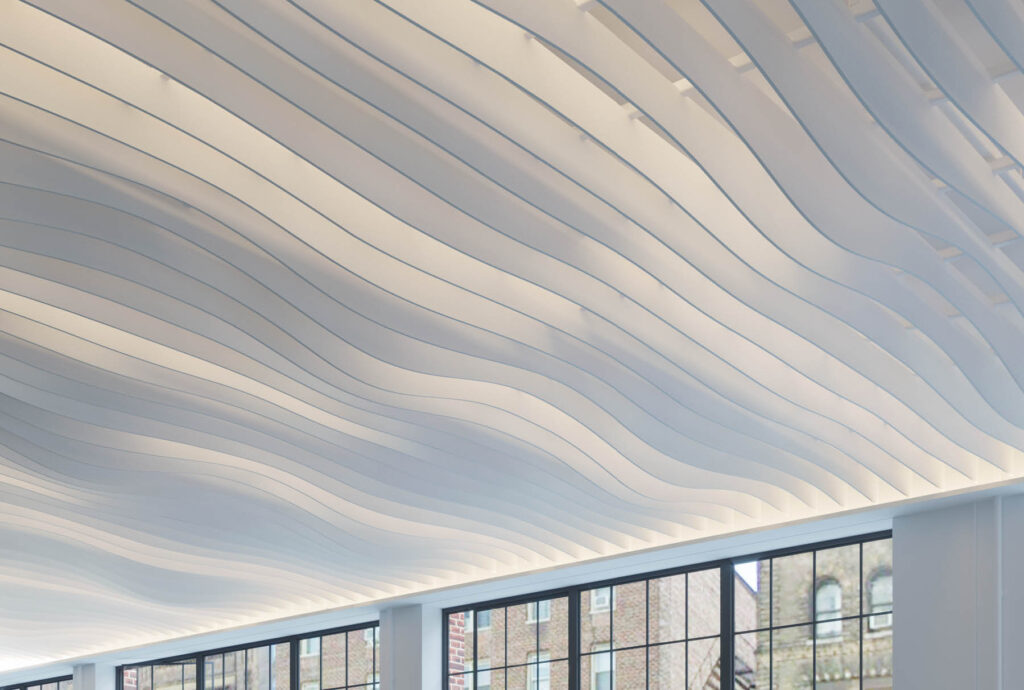
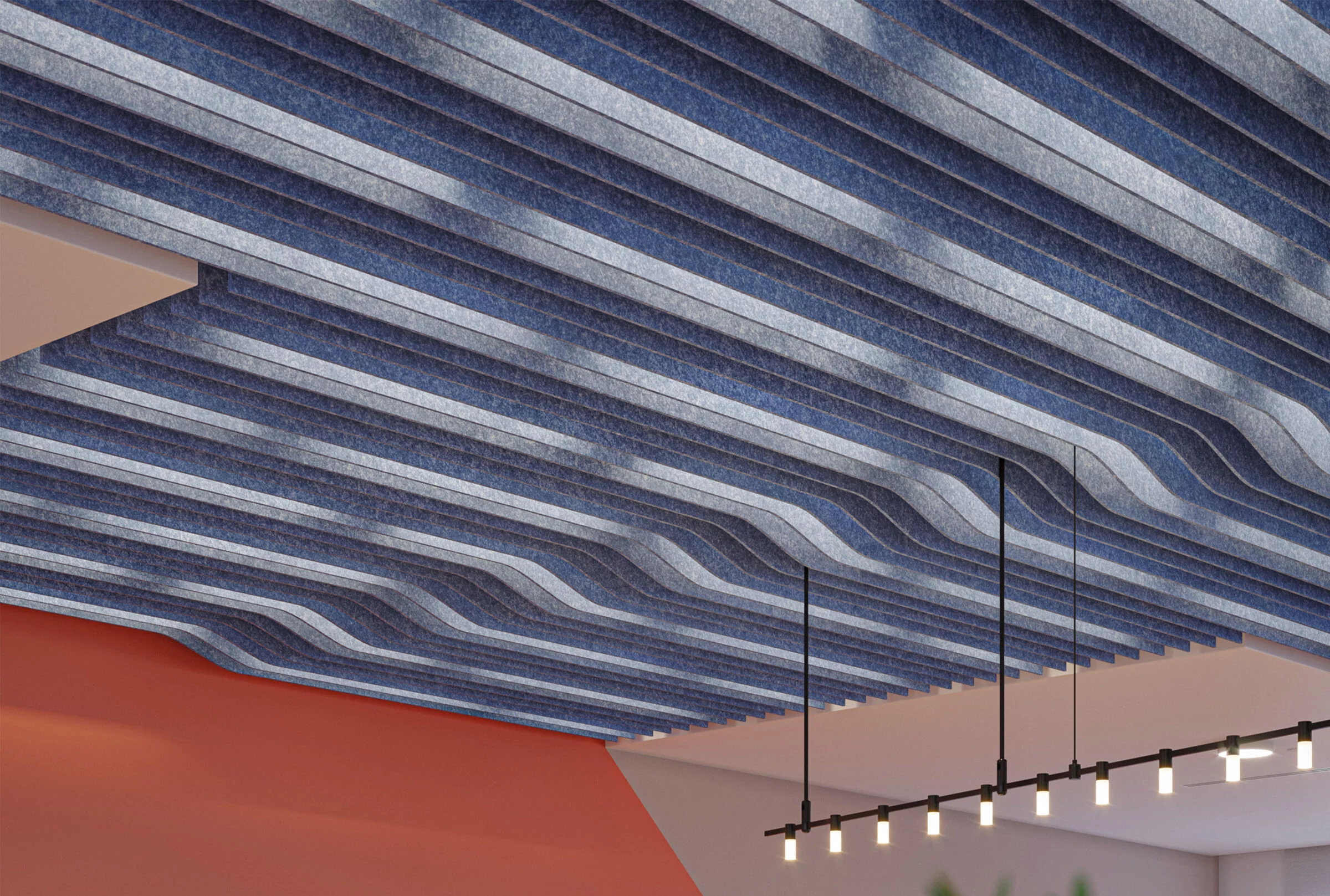
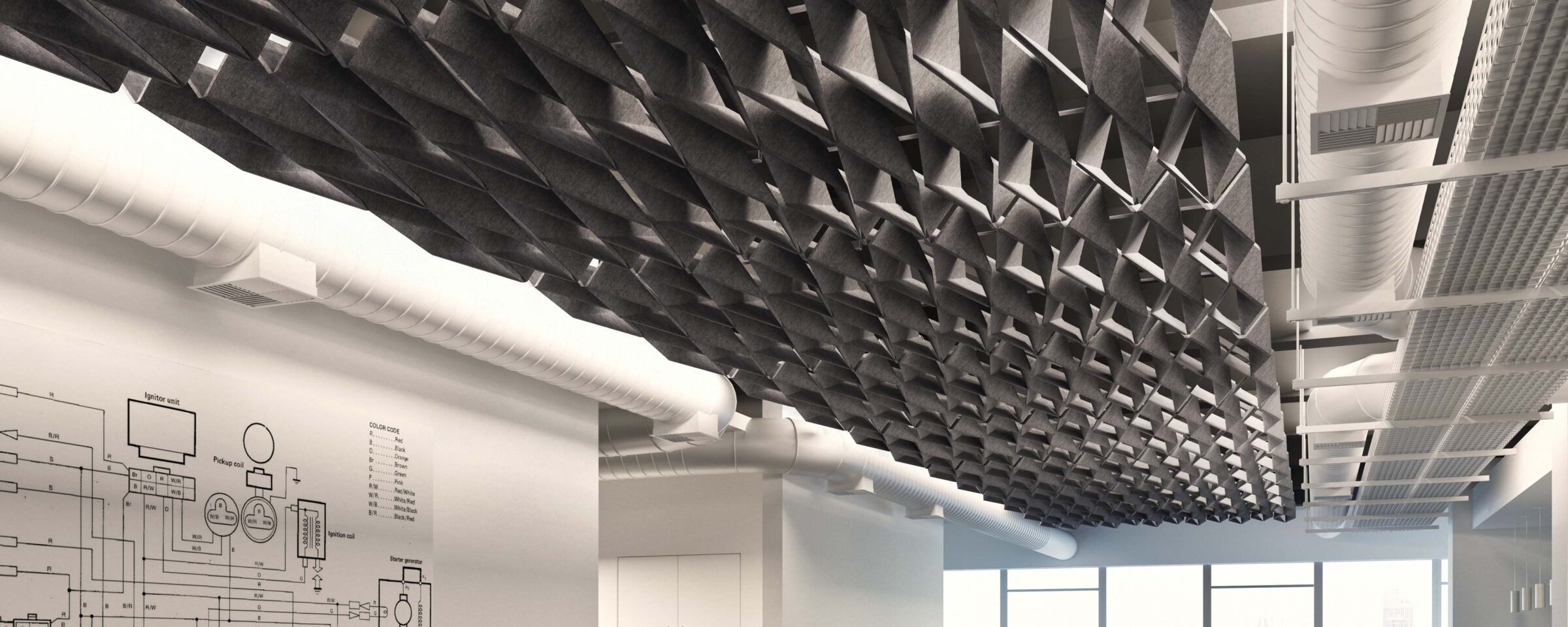
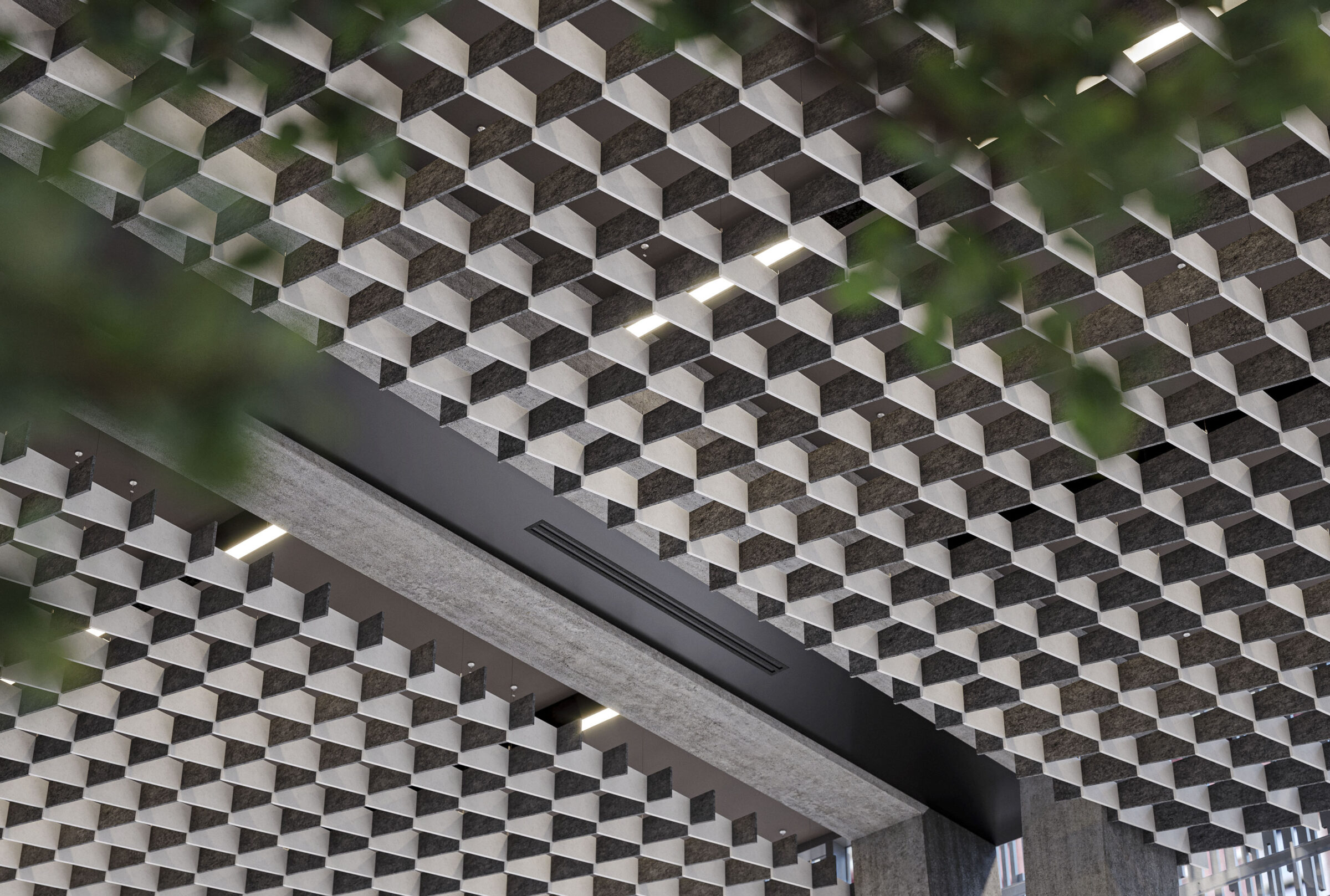
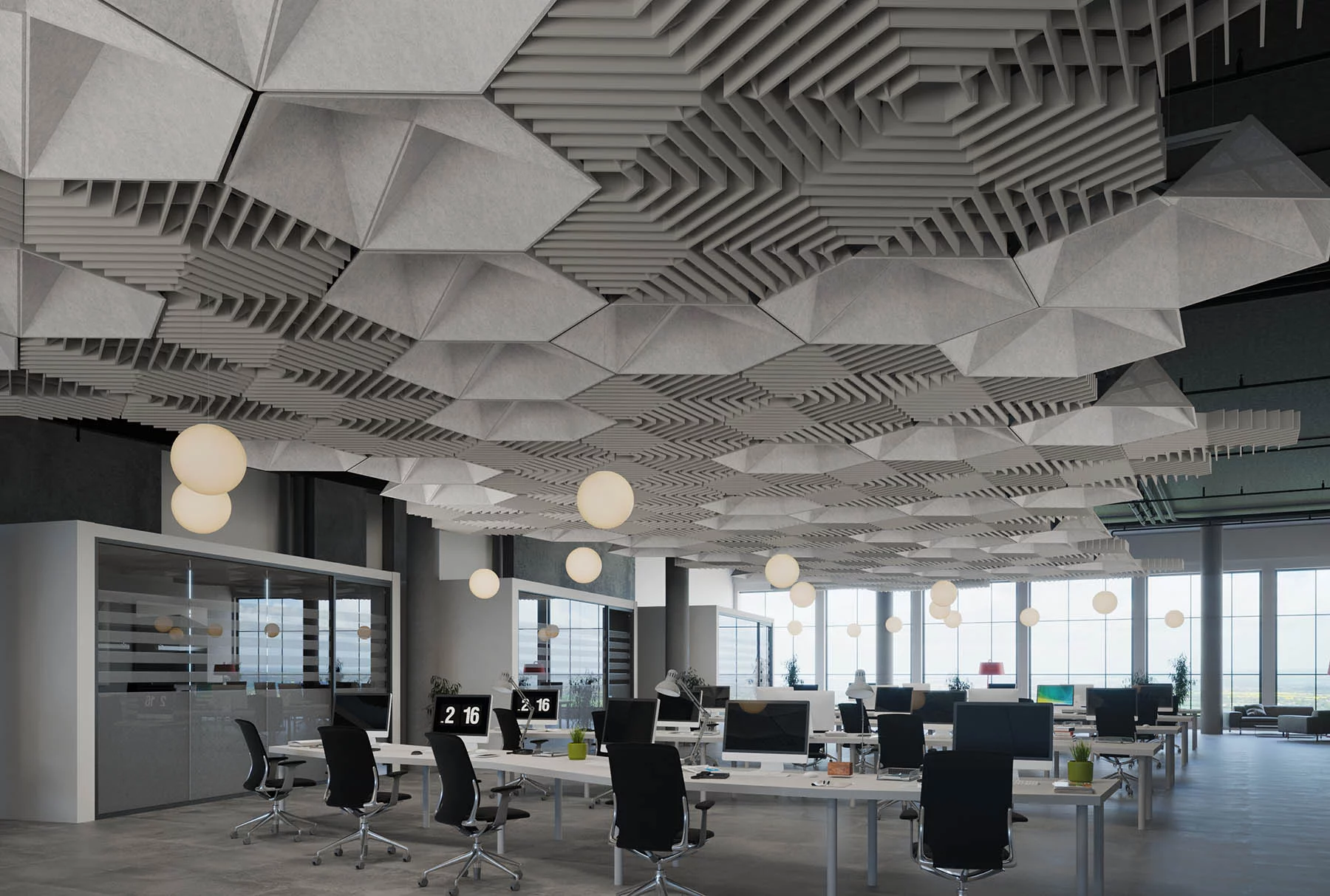
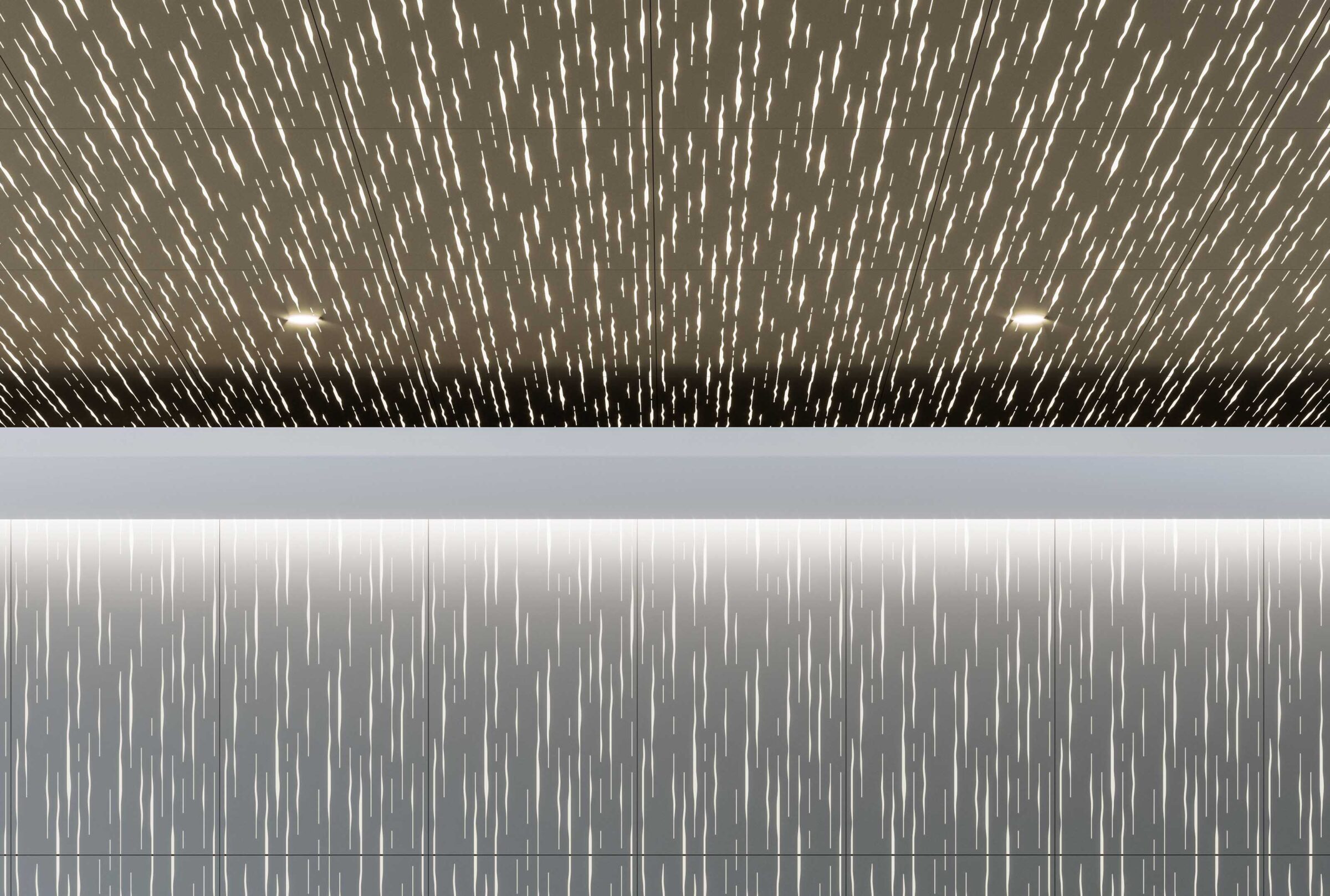
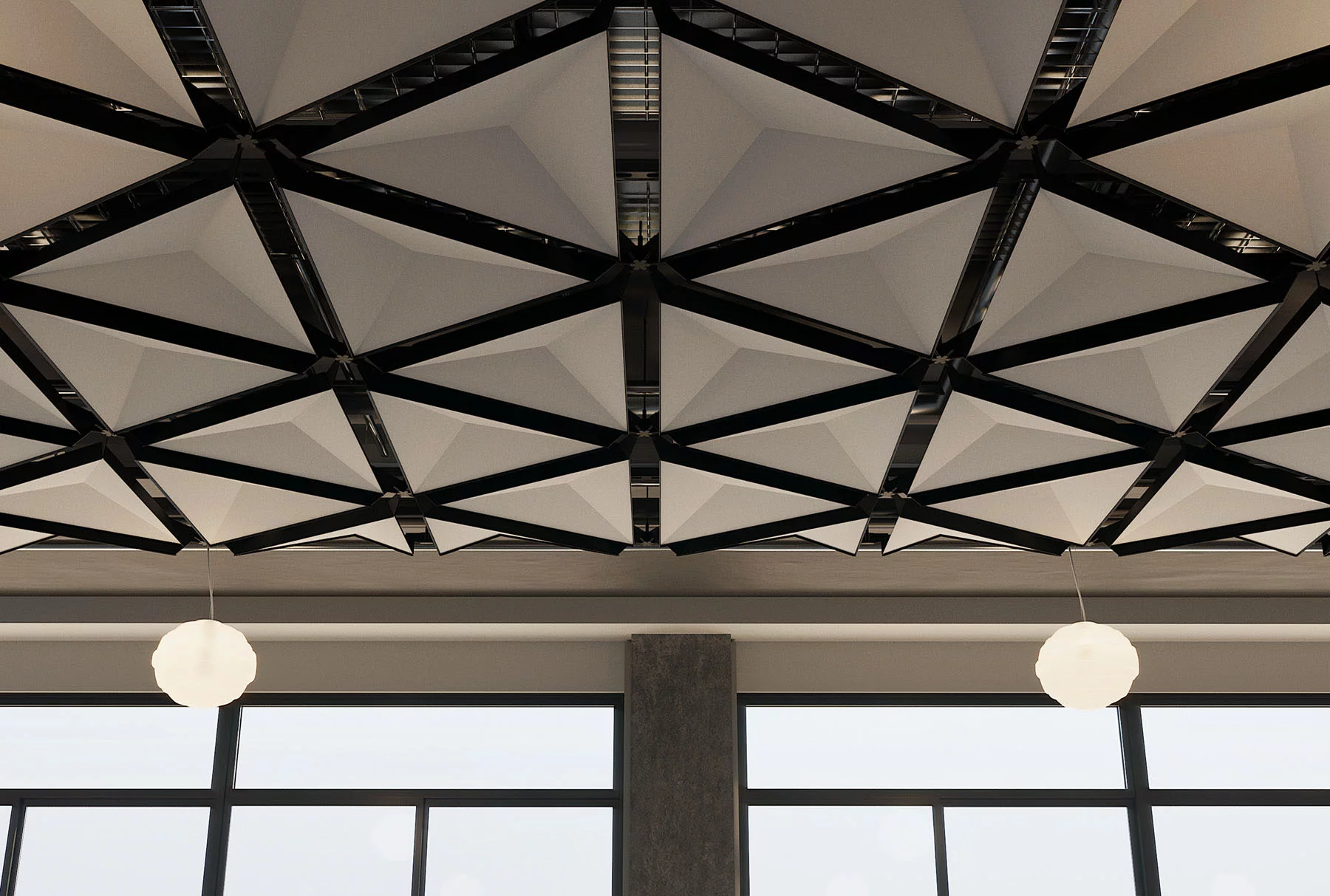
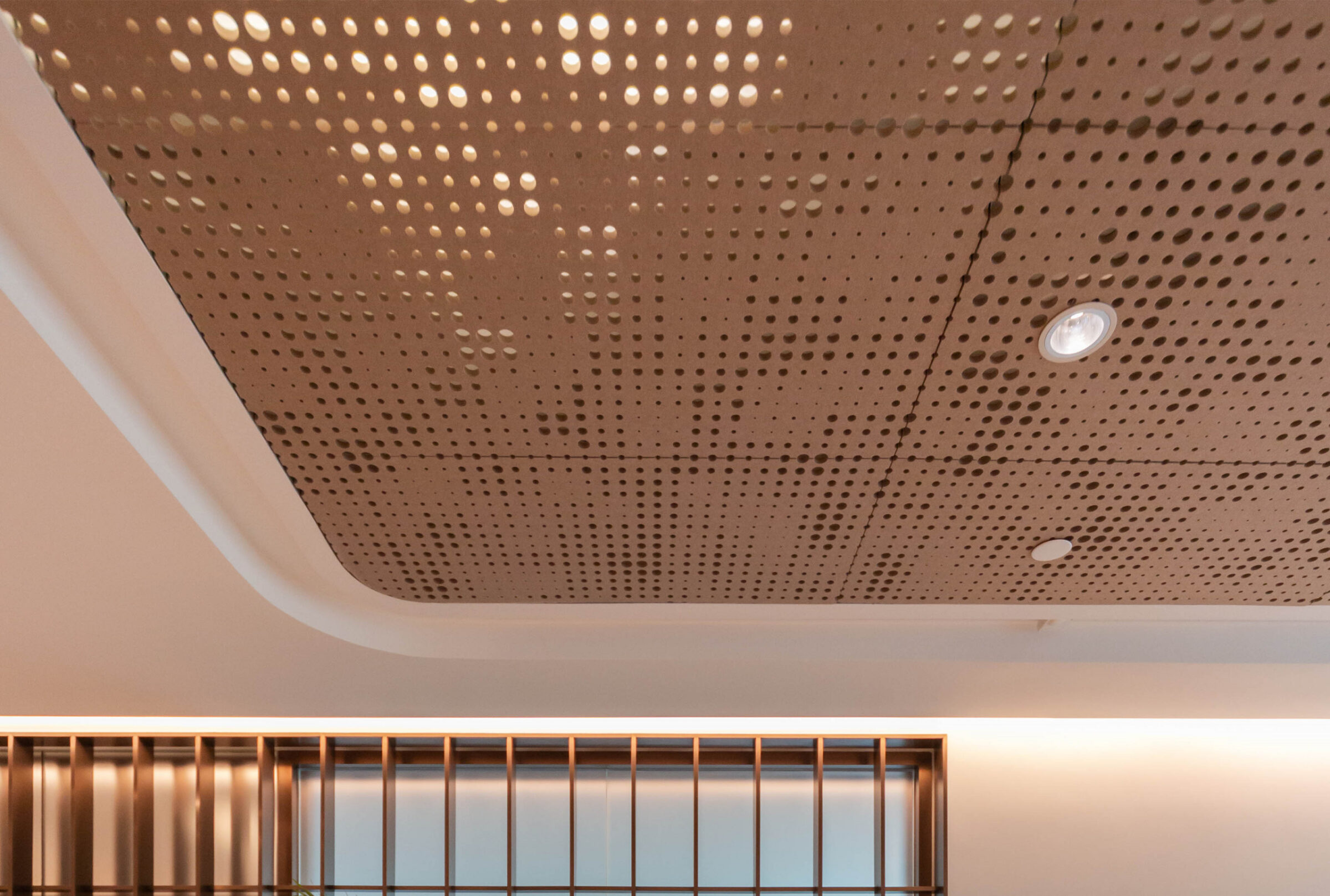
Les bâtiments culturels sont des environnements où le choix des matériaux doit être mûrement réfléchi. Un plafond original, qui apporte de la profondeur et un intérêt visuel — plutôt qu’une simple dalle acoustique standard —, traduit l’intention du concepteur aux occupants et contribue à l’identité institutionnelle du bâtiment.
NOWN’s InfiKnit™ Ce système, dont la géométrie textile tridimensionnelle est obtenue par tricotage 3D, confère aux intérieurs culturels une présence matérielle adaptée. Il s'installe sur un support dissimulé CircuLUM™ cadre en aluminium, sans aucune fixation visible sur la face avant. Sa fabrication ne génère aucun déchet de matière — une caractéristique importante pour les institutions culturelles ayant pris des engagements avérés en matière de développement durable.
Considérations relatives au programme
Les programmes de construction d'équipements culturels sont souvent rythmés par des dates d'inauguration bénéficiant d'une forte visibilité auprès du public. Les retards dans la pose des plafonds ont des conséquences importantes. Les produits NOWN sont livrés prêts à l'emploi, conformément aux spécifications du projet, sans nécessiter de découpe sur chantier, ce qui réduit directement les risques liés au calendrier de pose.
Découvrir InfiKnit™ pour les projets de bâtiments culturels et publics →