
Gestaltung ruhiger Räume: Akustische Deckenausführung für Bibliotheken und Lernumgebungen
5. Mai 2026
-2 Minuten lesen
Bibliotheken und spezielle Lernräume erfordern eine geringe Nachhallzeit und kontrollierte Umgebungsgeräusche. Hier erfahren Sie, wie Deckenkonstruktionen diesen Anforderungen in der modernen Gestaltung von Bildungs- und öffentlichen Gebäuden gerecht werden.
Bibliotheken und Lernräume stellen besondere akustische Anforderungen: Sie müssen ruhig sein, ohne jedoch hallfrei zu sein. Ein Raum mit zu starkem Nachhall wirkt laut und lenkt ab. Ein Raum, der zu stark gedämpft ist, wirkt unangenehm – schwer, bedrückend und auf seltsame Weise beunruhigend. Das Ziel ist eine kurze, kontrollierte Nachhallzeit, die ruhige Konzentration fördert, ohne eine Umgebung zu schaffen, die sich akustisch leblos anfühlt.
Nachhallziele für Bibliotheksräume
Die Richtlinien für Bibliotheken und Lernräume sehen in der Regel RT60-Werte von 0,4 bis 0,6 Sekunden bei Belegung vor. Für einen Bibliotheksraum mit Standardvolumen und mäßiger Belegung erfordert dies eine nennenswerte Schallabsorption – die sich am praktikabelsten auf Deckenebene realisieren lässt.
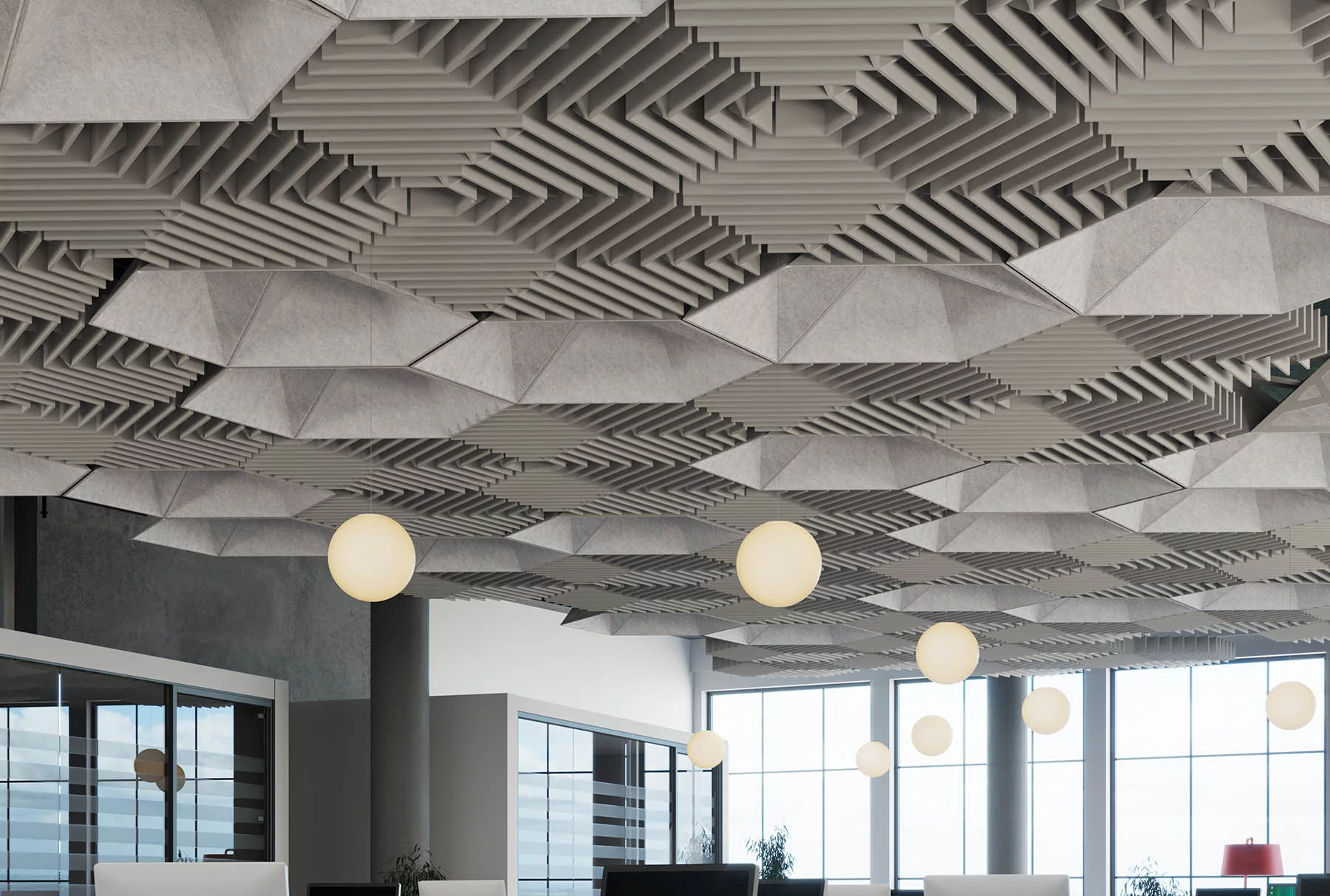
Um dieses Ziel in einer modernen Bibliotheksinnenraumgestaltung zu erreichen – die beispielsweise freiliegende Betonkonstruktionen, polierte Böden und verglaste Lesesäle umfassen kann –, ist ein Deckensystem erforderlich, das eine gleichmäßige, hochwirksame Schallabsorption über die gesamte Deckenfläche hinweg gewährleistet.
aSOFT™ in Bibliotheksanwendungen
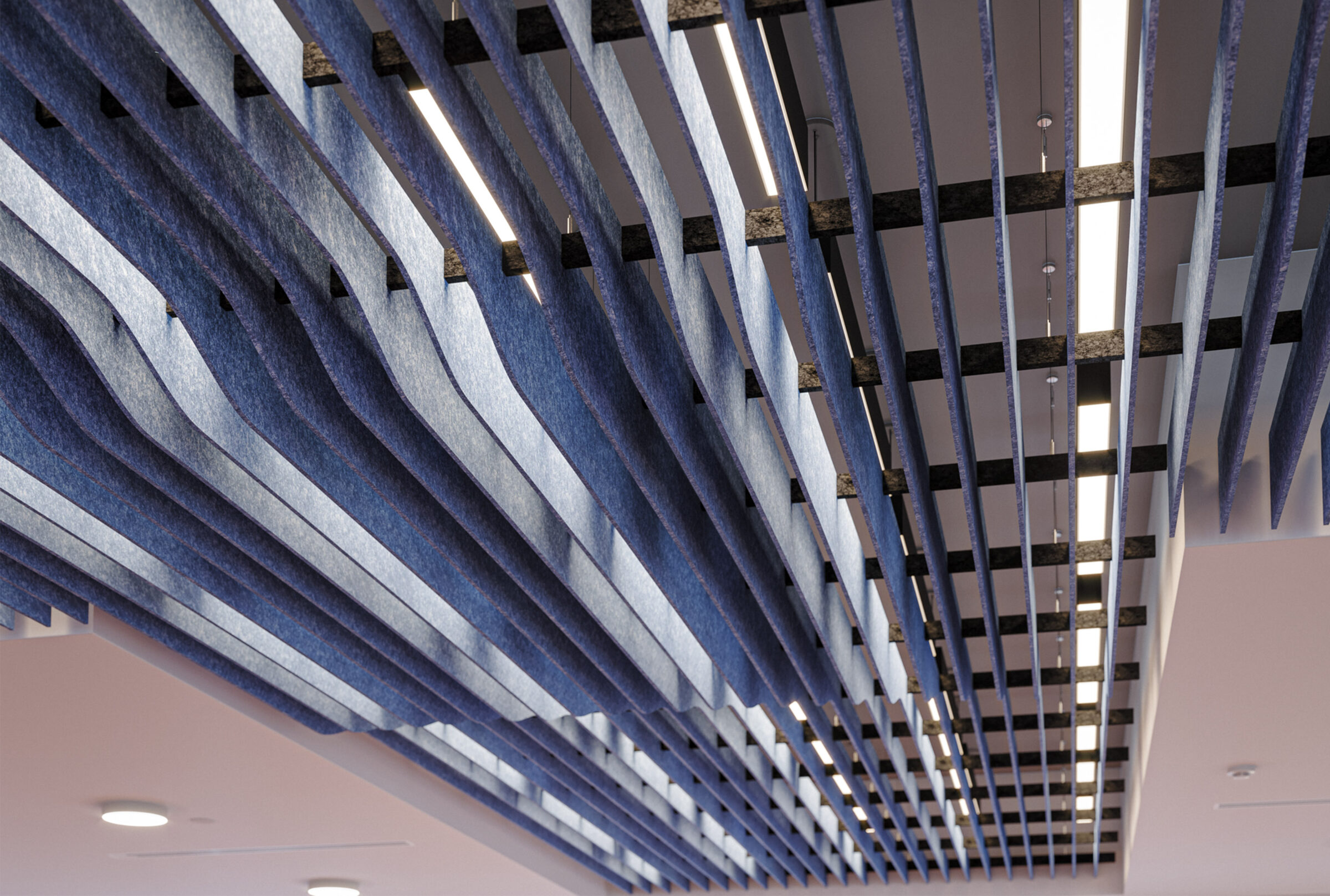
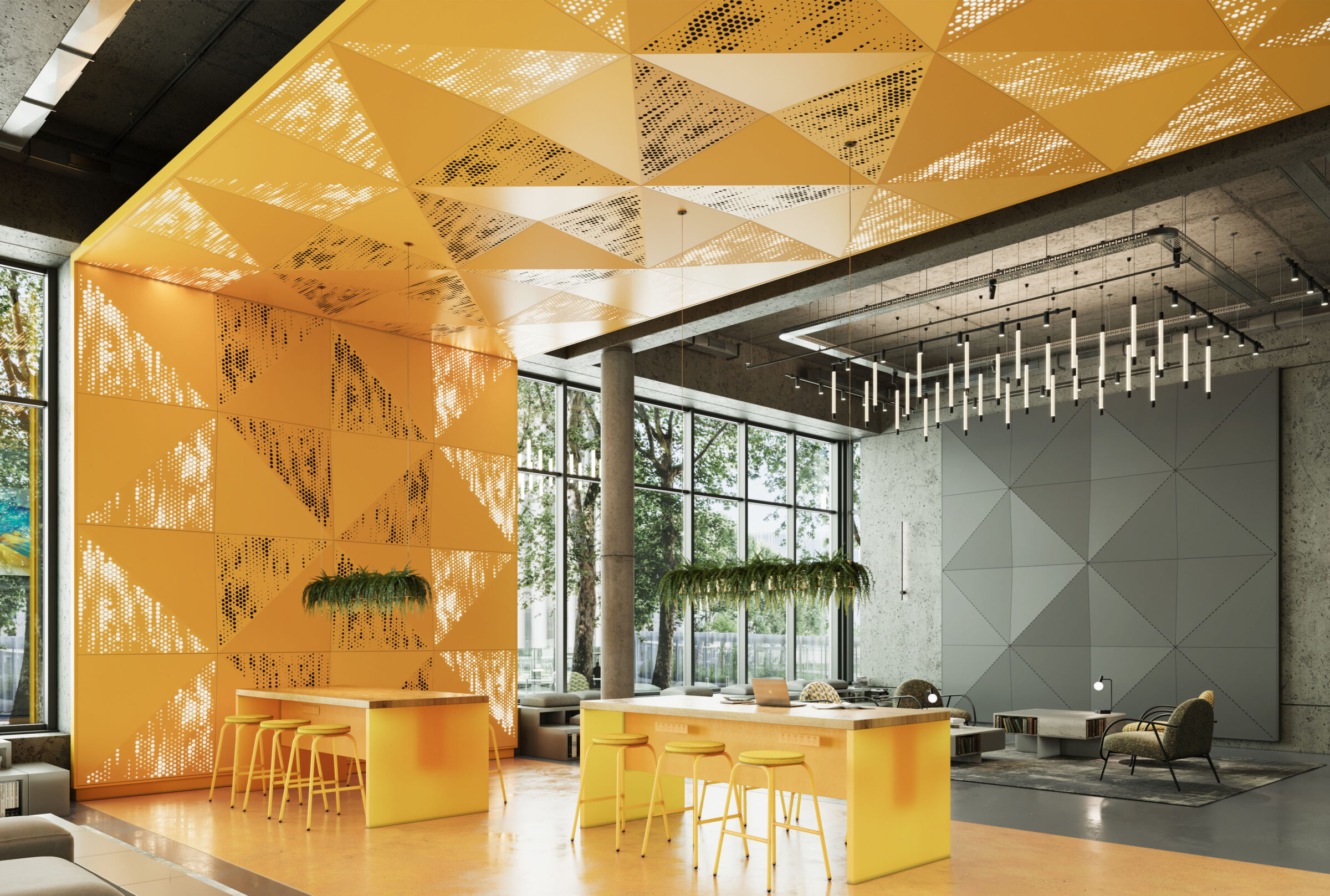
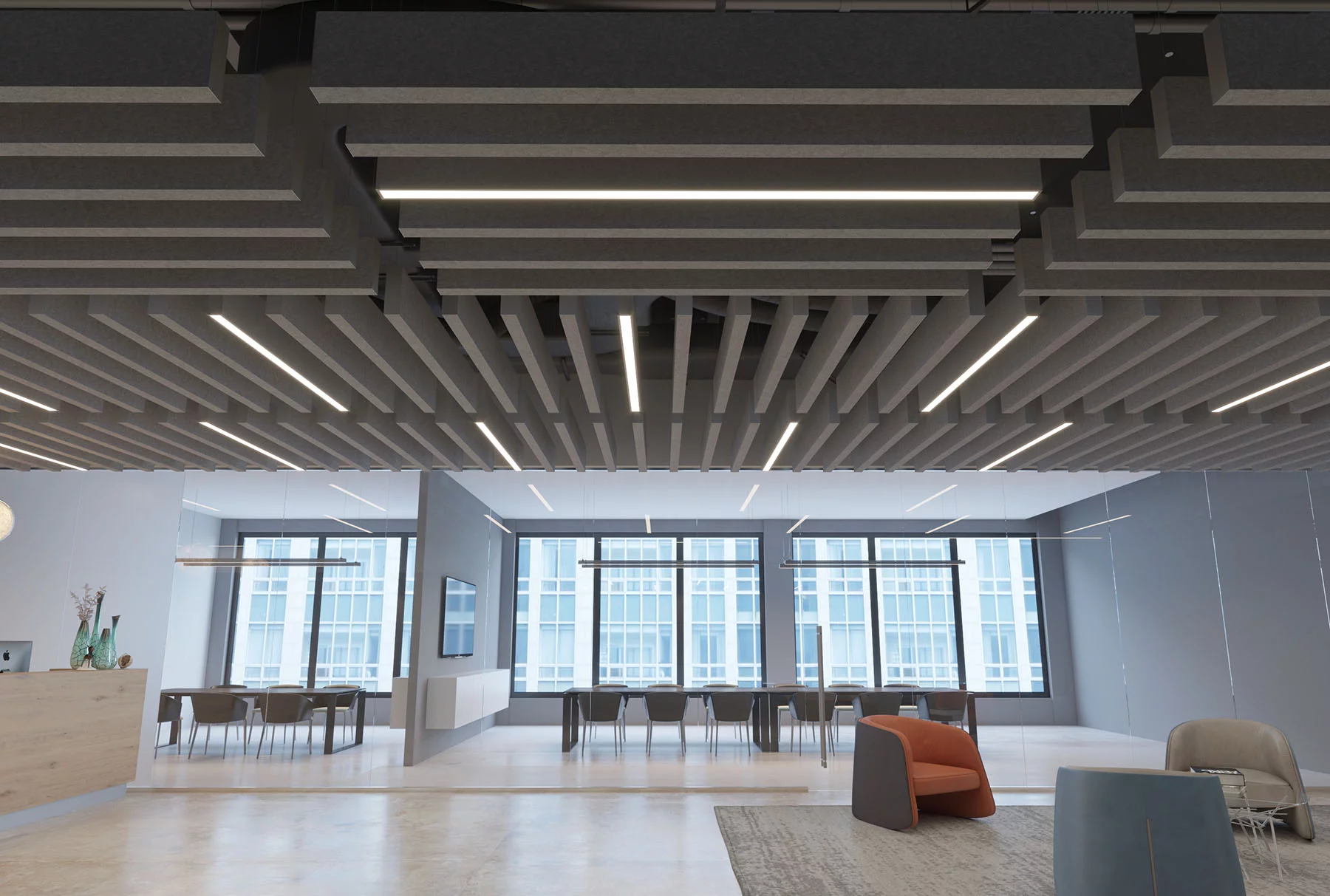
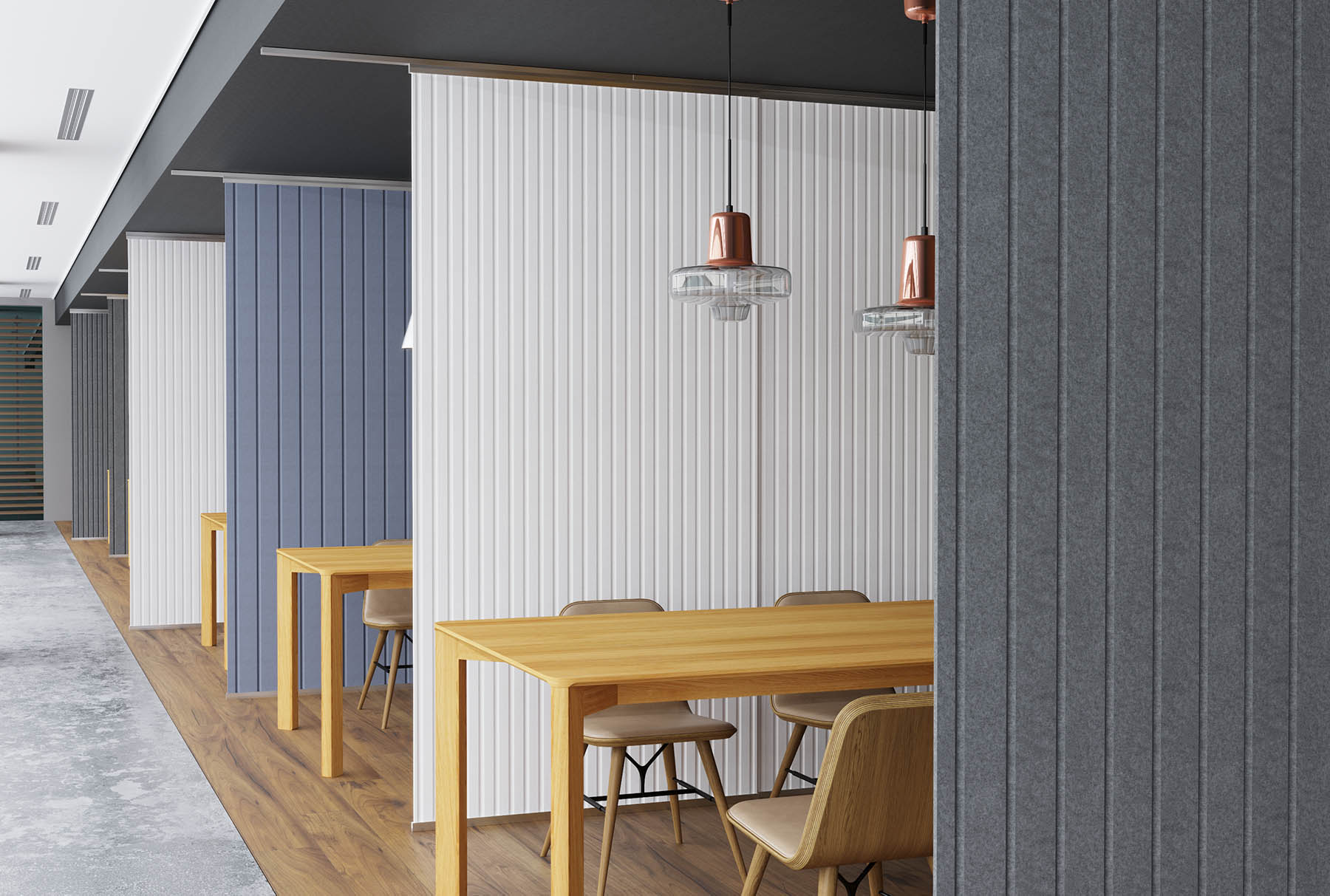
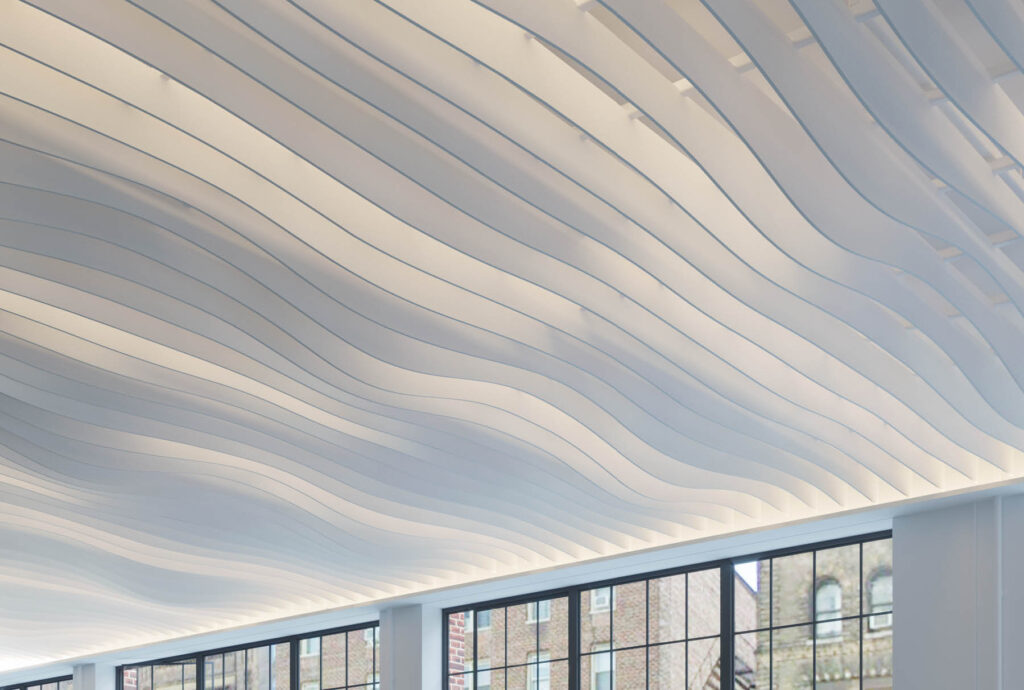
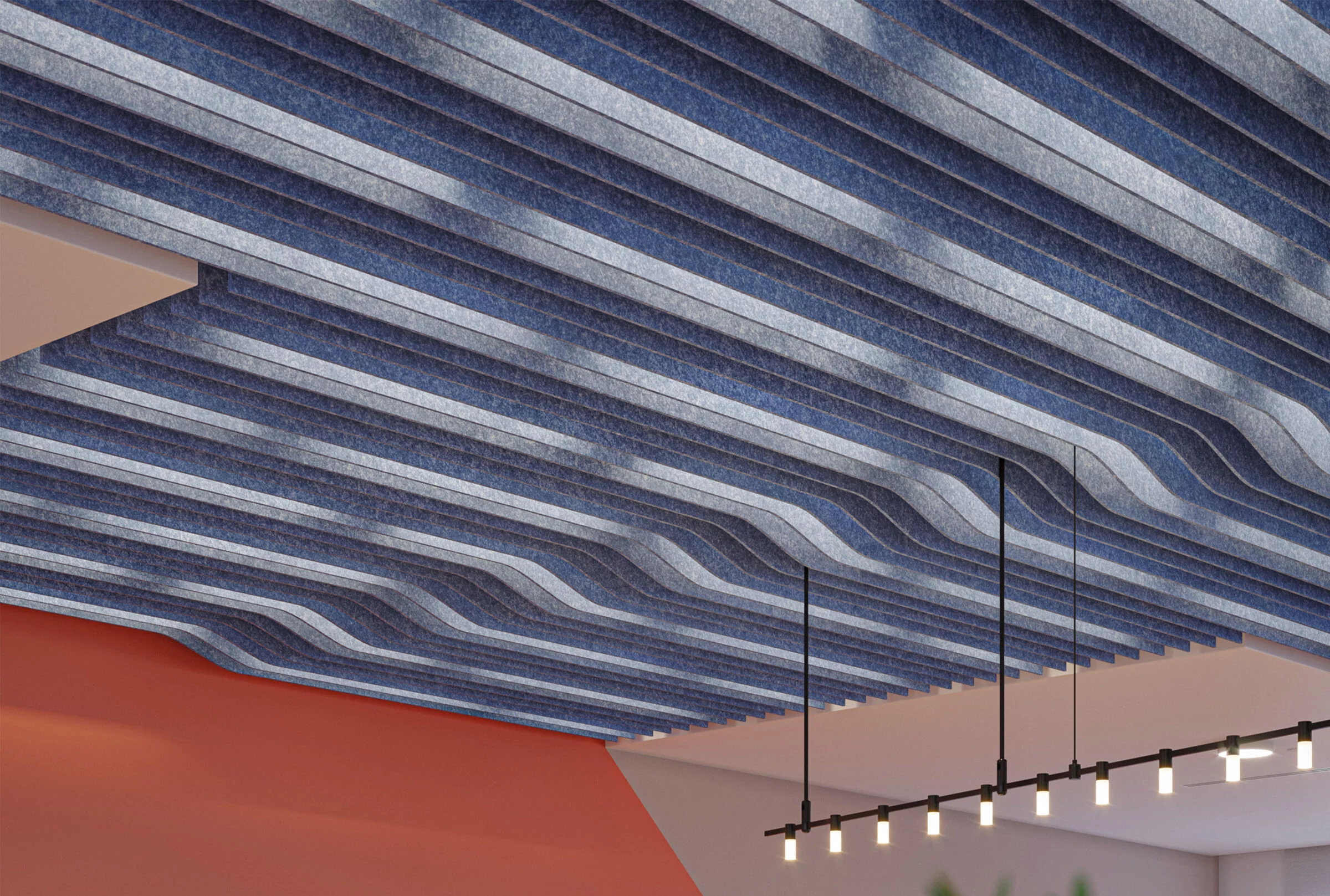
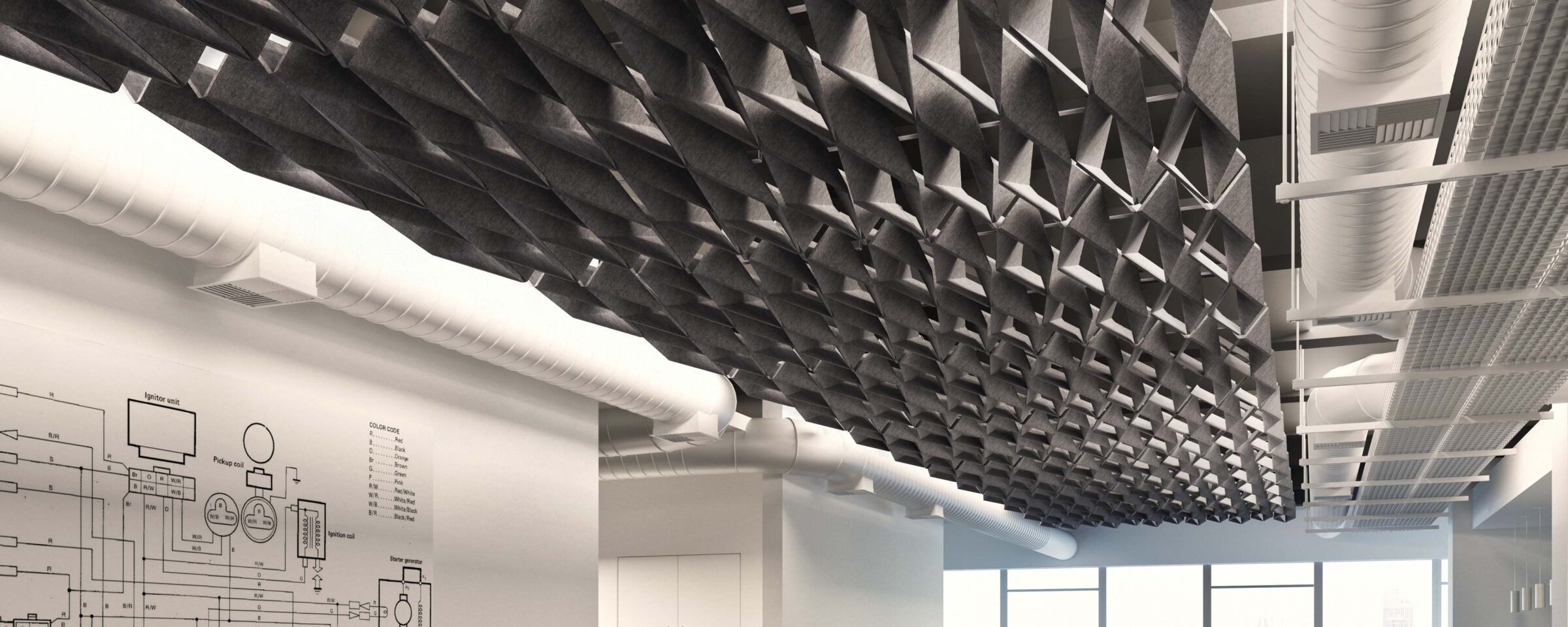
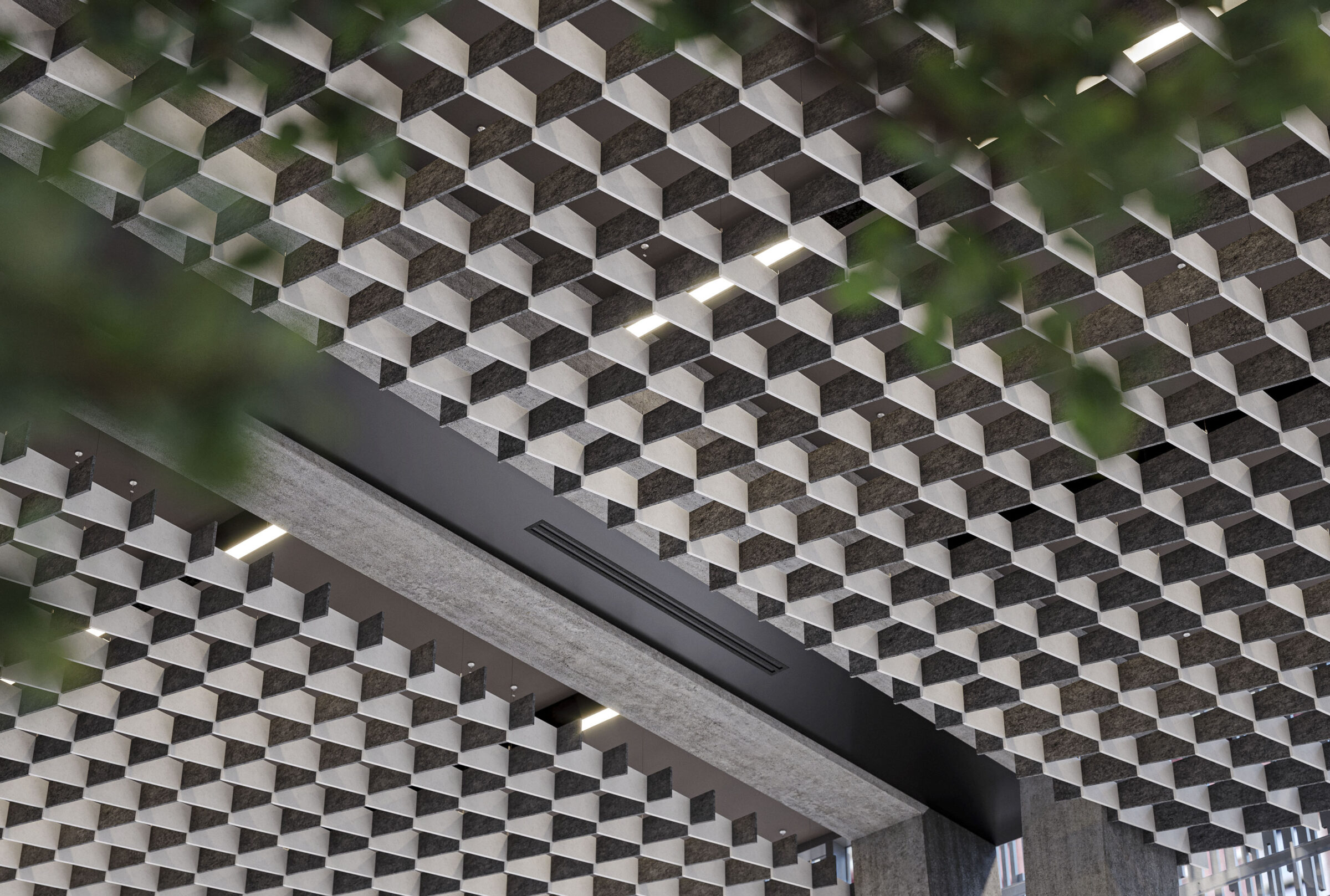
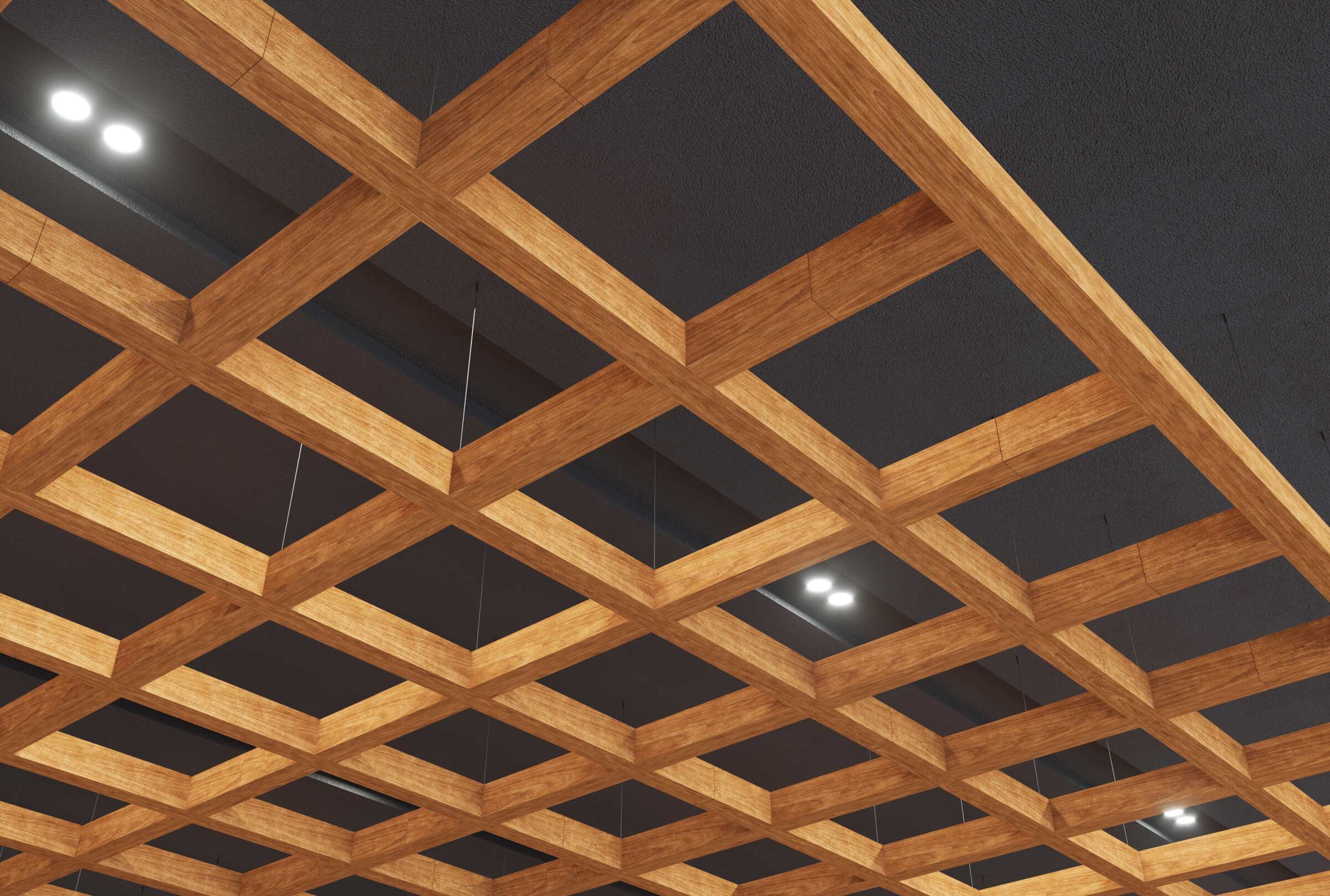
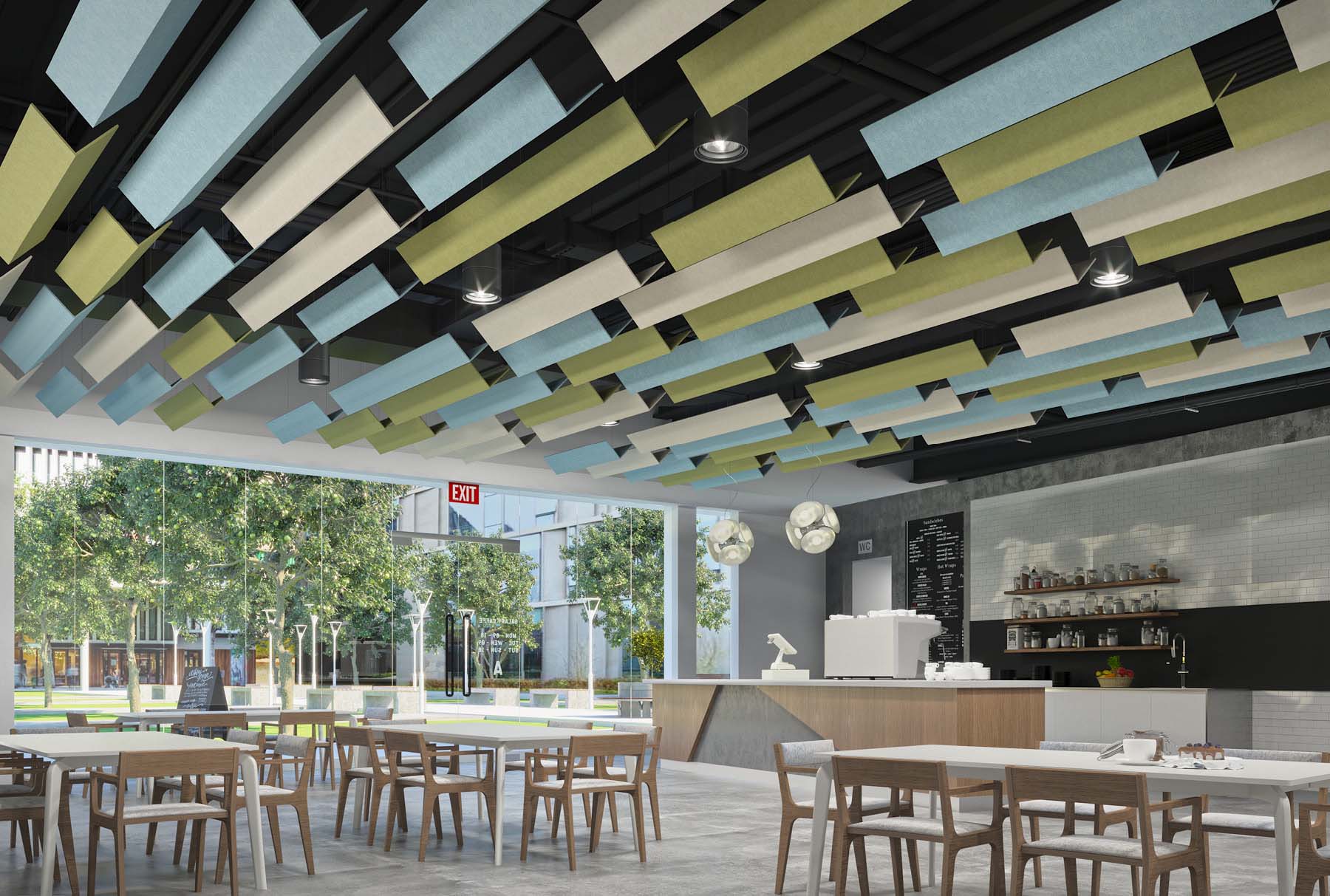
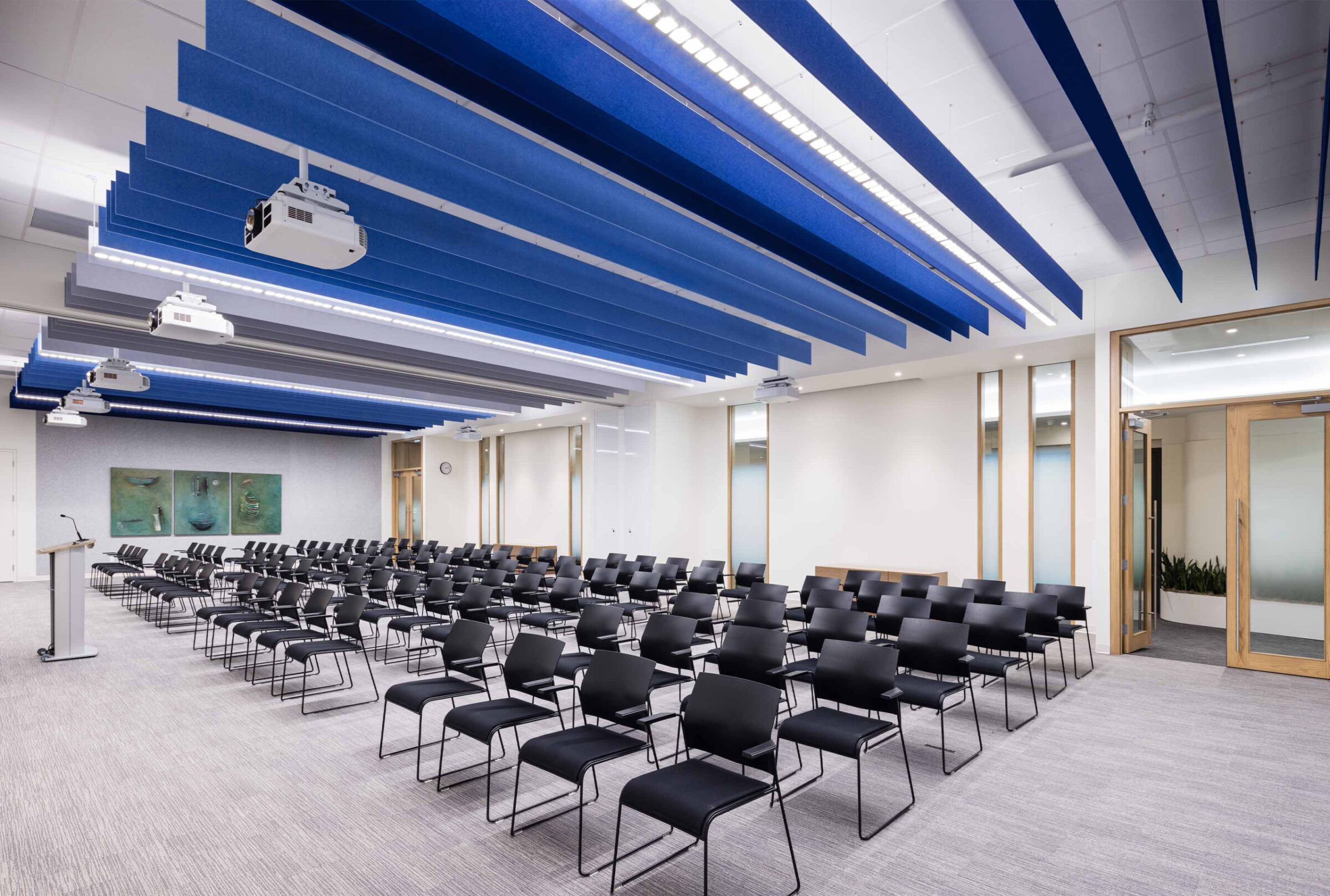
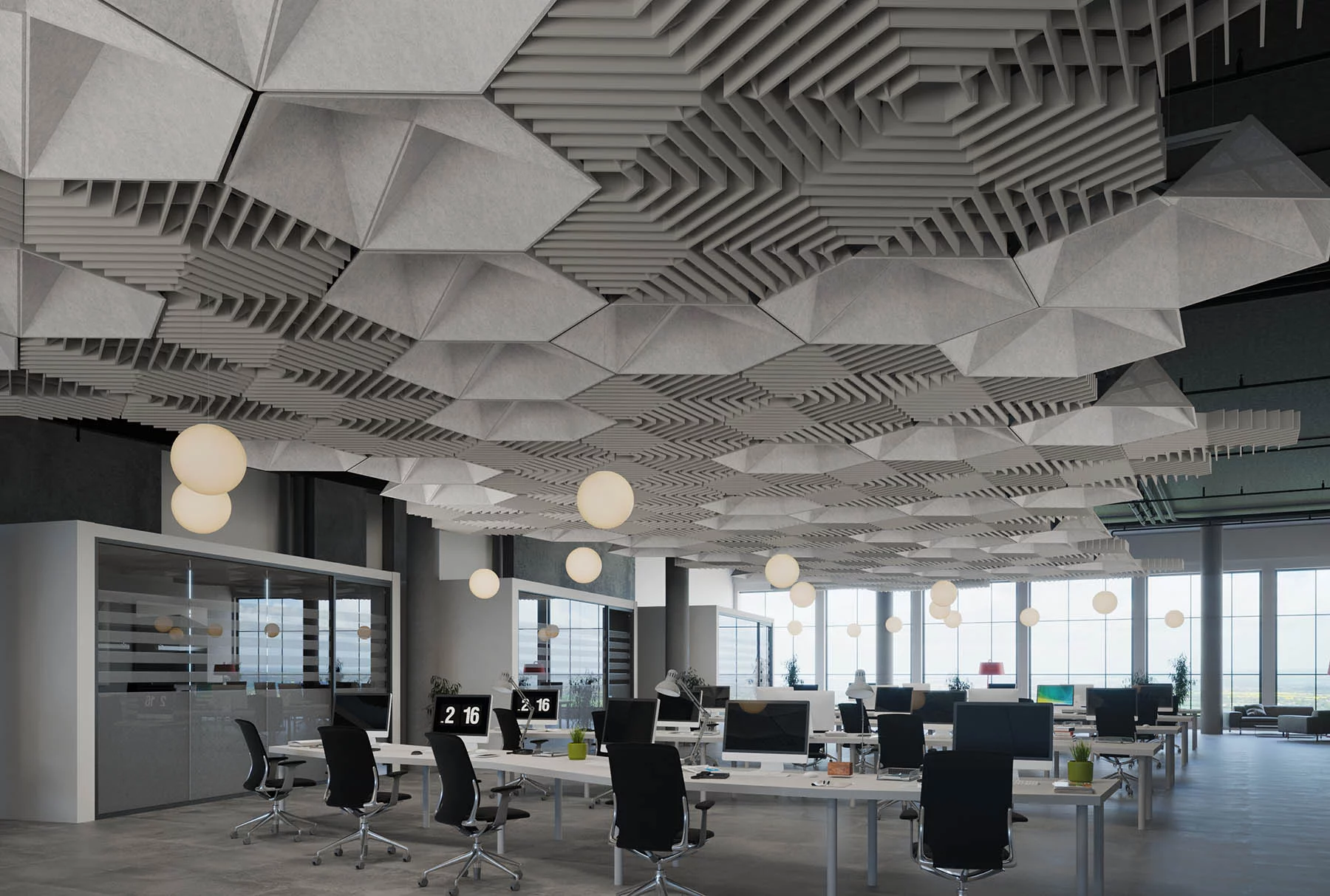
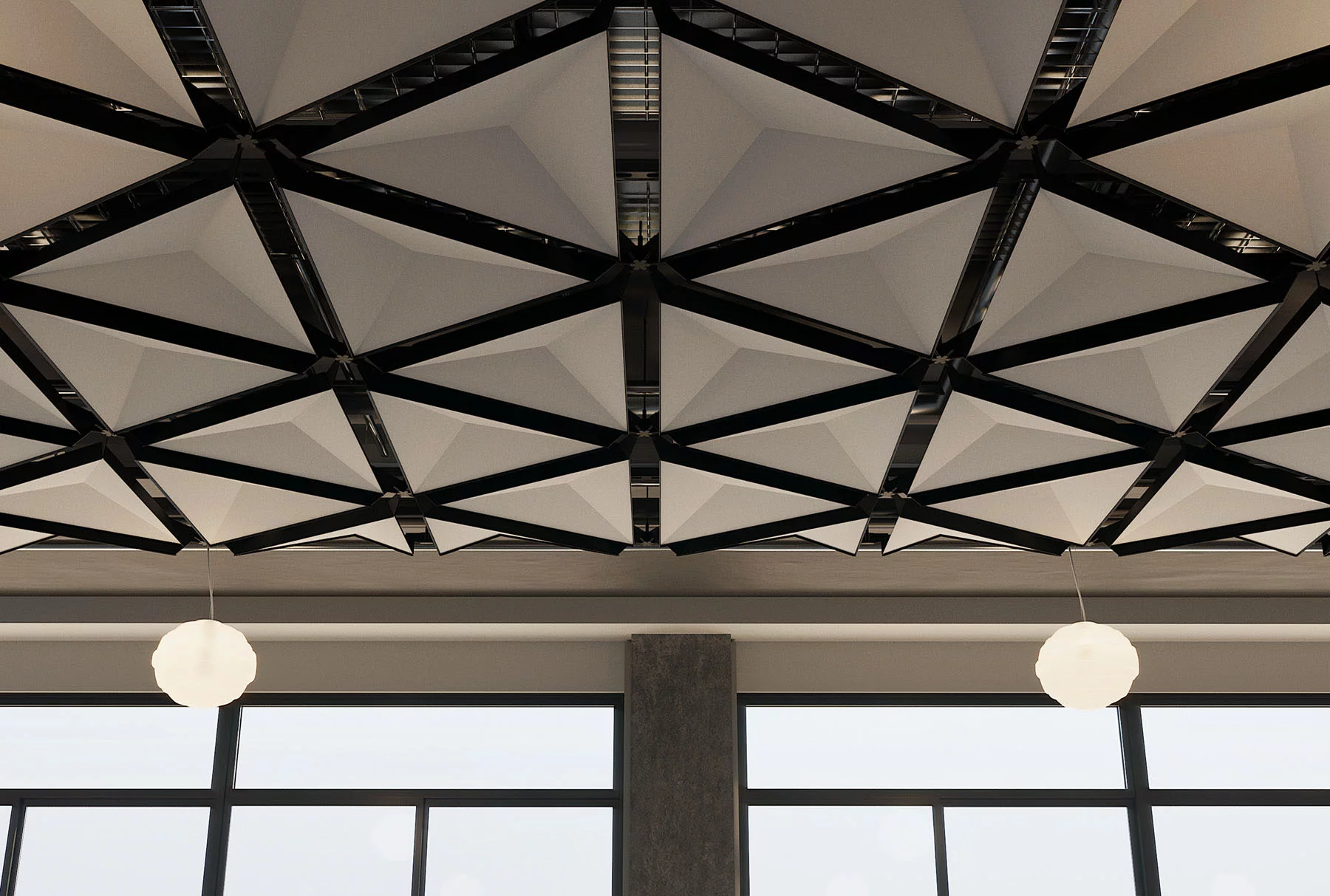
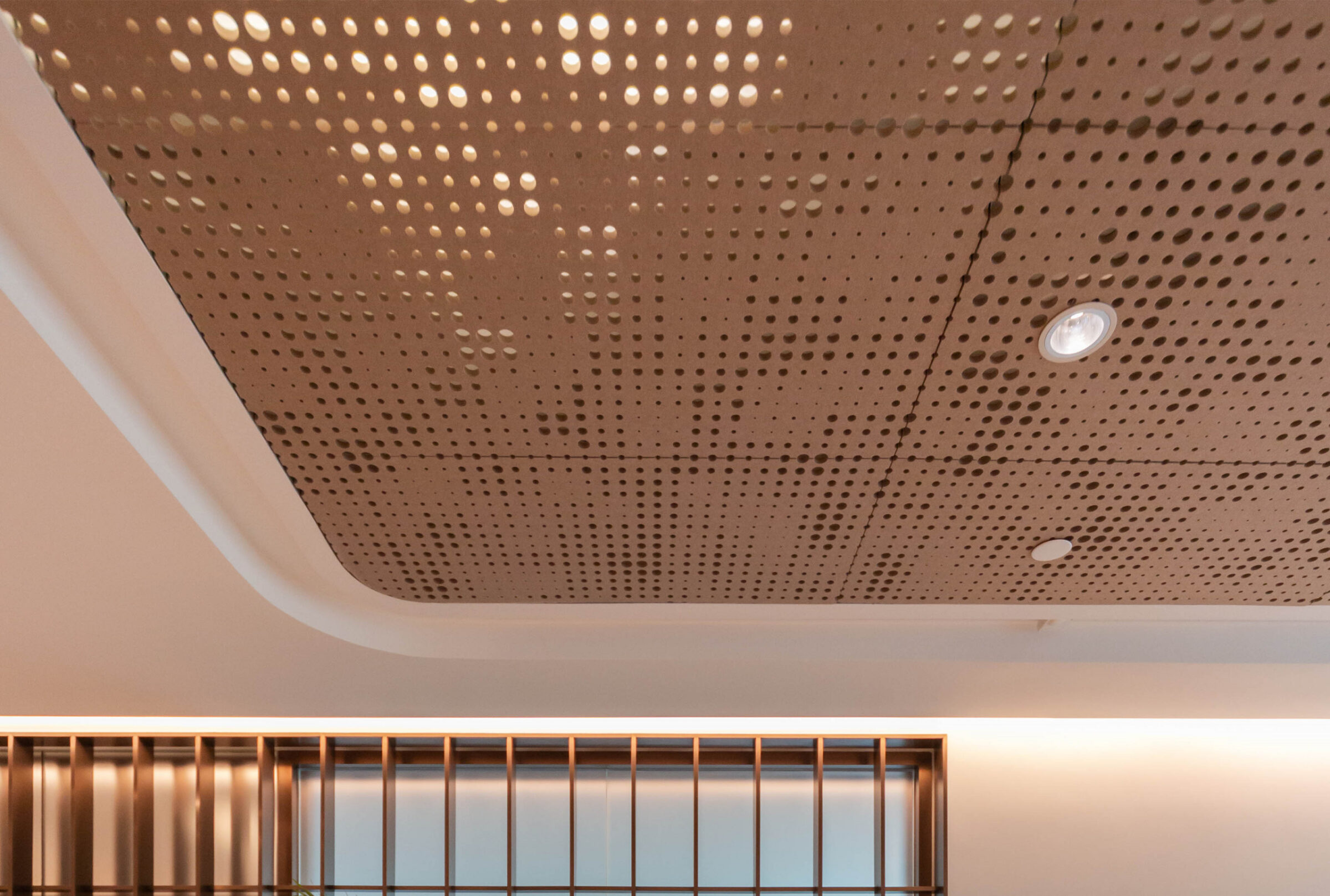
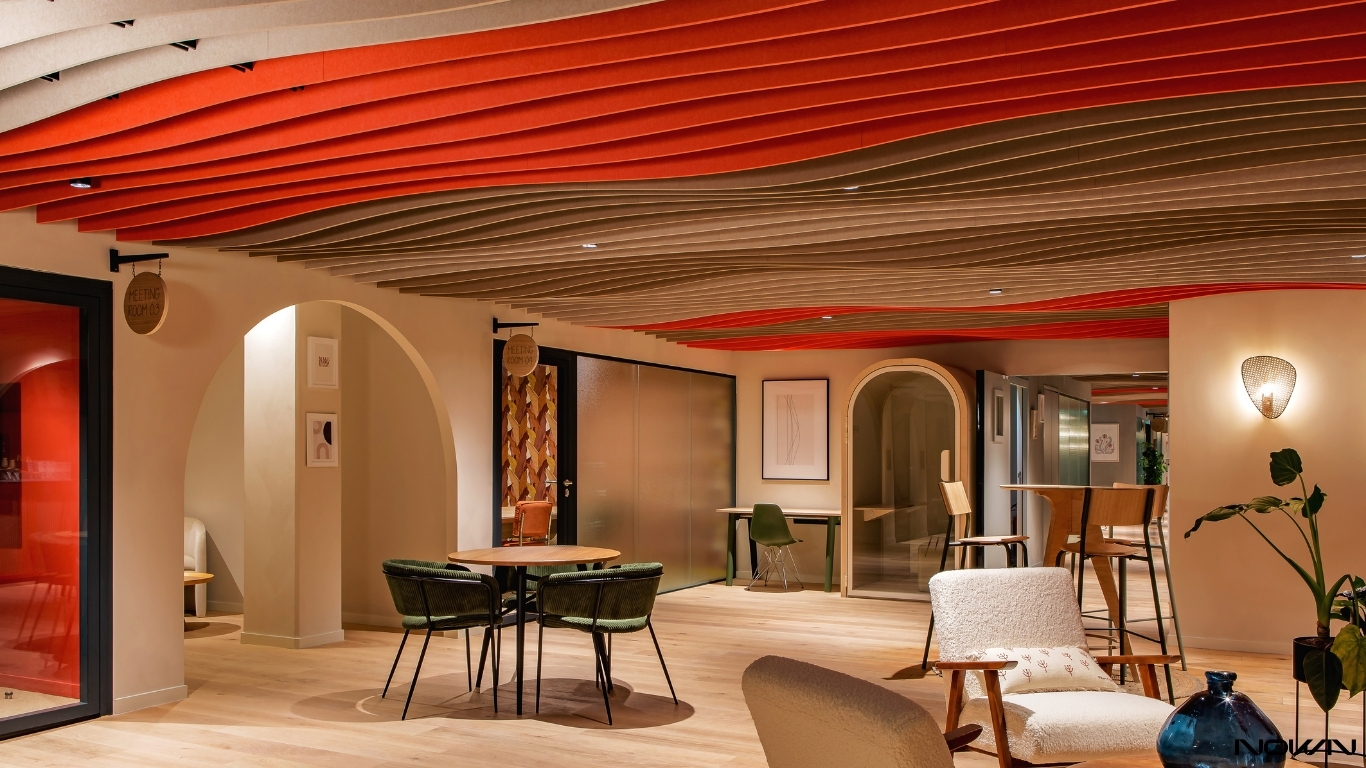
NOWN’s aSOFT™ PET-Filz, der zu 60 % aus recyceltem PET besteht, erreicht je nach Konfiguration einen effektiven NRC-Wert von bis zu 0,95. Bei Einsatz in den NOWN-Anlagen Atmosphera® Als Deckensystem sorgt es für eine gleichmäßige Schallabsorption über die gesamte Deckenfläche hinweg und fügt sich dabei optisch harmonisch in moderne Bibliotheksinterieurs ein.
Die Atmosphera® Die offene Struktur des Systems ermöglicht den Zugang über der Decke zu den für Bibliotheksumgebungen typischen Beleuchtungs-, HLK- und Dateninfrastrukturen – wo sich die Nutzungsmuster im Laufe der Zeit ändern und die Anpassung der Dienste eine wiederkehrende Wartungsmaßnahme darstellt.
Nachhaltigkeit in den Ausschreibungsunterlagen für öffentliche Bauvorhaben
Öffentliche Gebäude – darunter auch Bibliotheken – müssen sowohl bei Neubauten als auch bei Sanierungen zunehmend ihre Nachhaltigkeitsleistung nachweisen. aSOFT™ verfügt über die SCS-Zertifizierung für recycelte Inhaltsstoffe, und NOWN-Produkte tragen das „Declare“-Label und den Status „Red List Free“. Diese gelten direkt für die Nachhaltigkeitsanforderungen des öffentlichen Sektors und für BREEAM-Bewertungen.
Die Module werden gemäß den Projektspezifikationen gefertigt und in vorgefertigter Größe geliefert – ein Zuschneiden vor Ort ist bei der Installation nicht erforderlich, was die für schrittweise Sanierungen öffentlicher Gebäude typische Projektabwicklung vereinfacht.
Entdecken aSOFT™ für den Einsatz in Bibliotheken und Lernumgebungen