
Designing for Wellbeing: How Acoustic Comfort Shapes Occupant Experience
April 20, 2026
·2 min read
Acoustic comfort is a measurable component of occupant wellbeing. Here’s how ceiling specification contributes to WELL certification and the broader wellbeing design agenda.
Occupant wellbeing has moved from a design aspiration to a measurable certification standard. WELL Building Standard v2 includes a dedicated Sound Concept, with specific requirements for reverberation time, background noise levels, and sound isolation in commercial environments. For architects working on projects seeking WELL certification, acoustic performance is a compliance requirement, not a preference.
The WELL Sound Concept
The WELL Sound Concept sets performance targets across several acoustic parameters. Relevant targets for ceiling specification include maximum reverberation time (RT60) for different space types, and requirements for speech privacy in office environments. Achieving these targets in a commercial interior typically requires meaningful acoustic absorption at ceiling level — the largest exposed surface in most commercial spaces.
aSOFT™ as a WELL-Relevant Specification
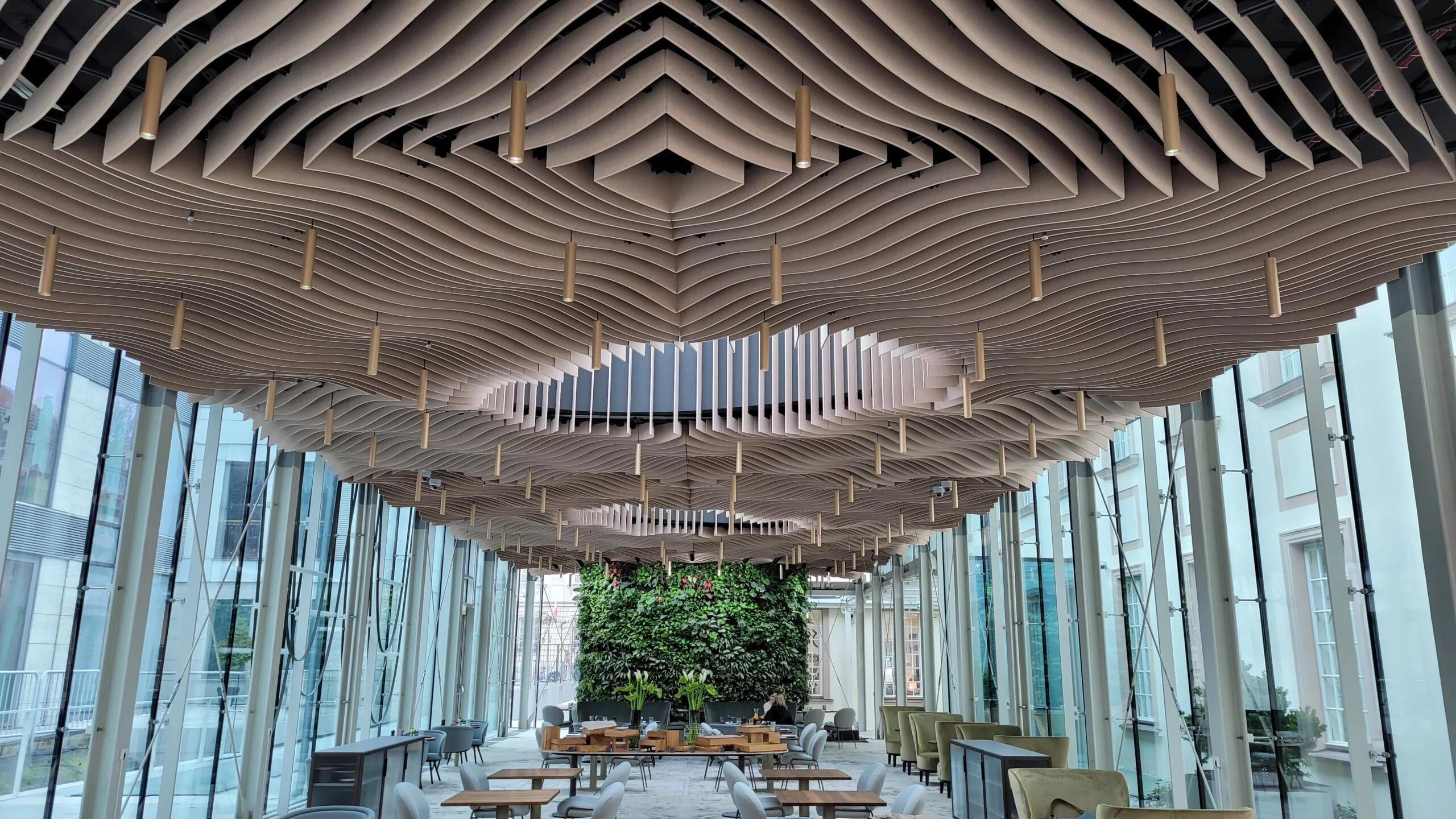
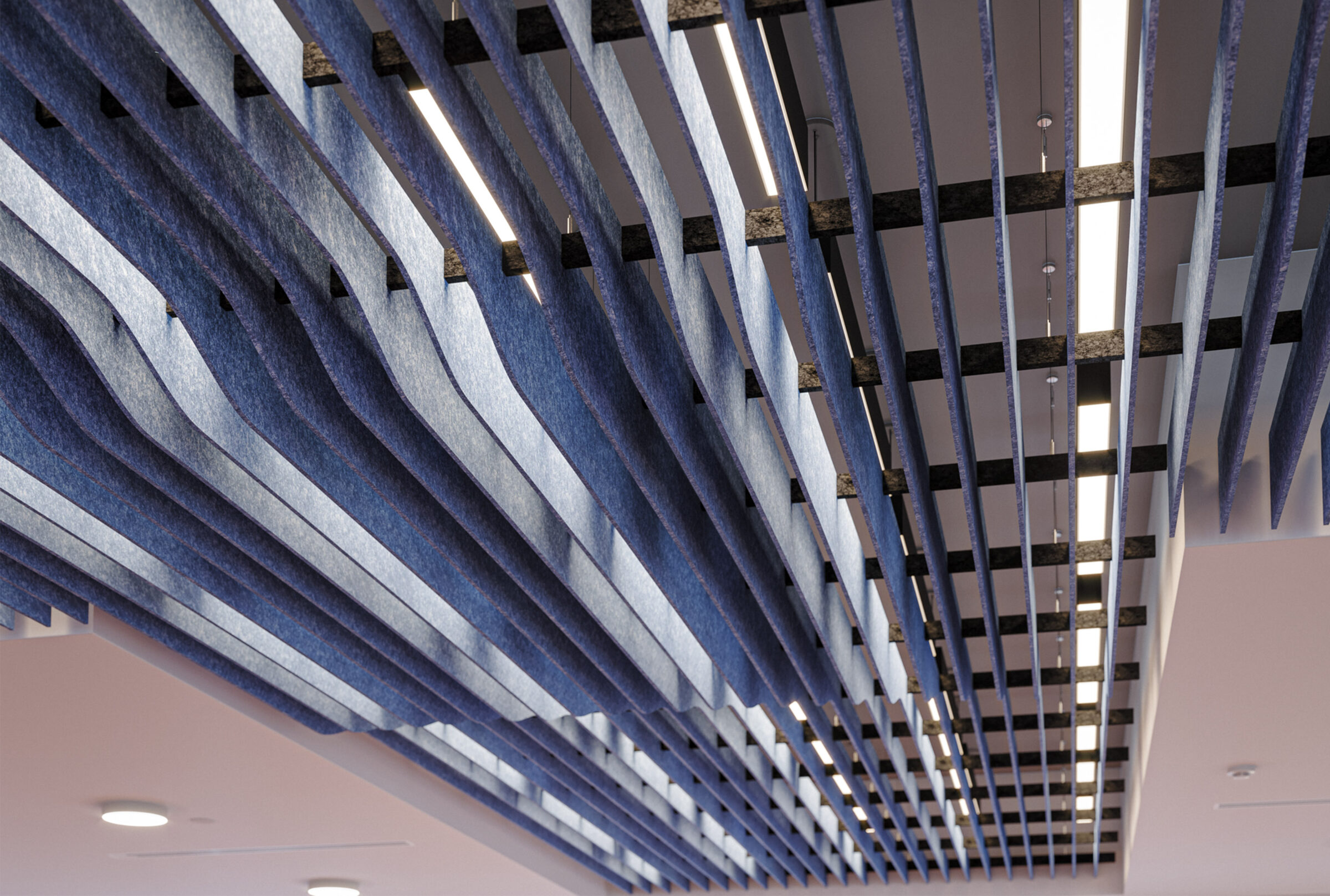
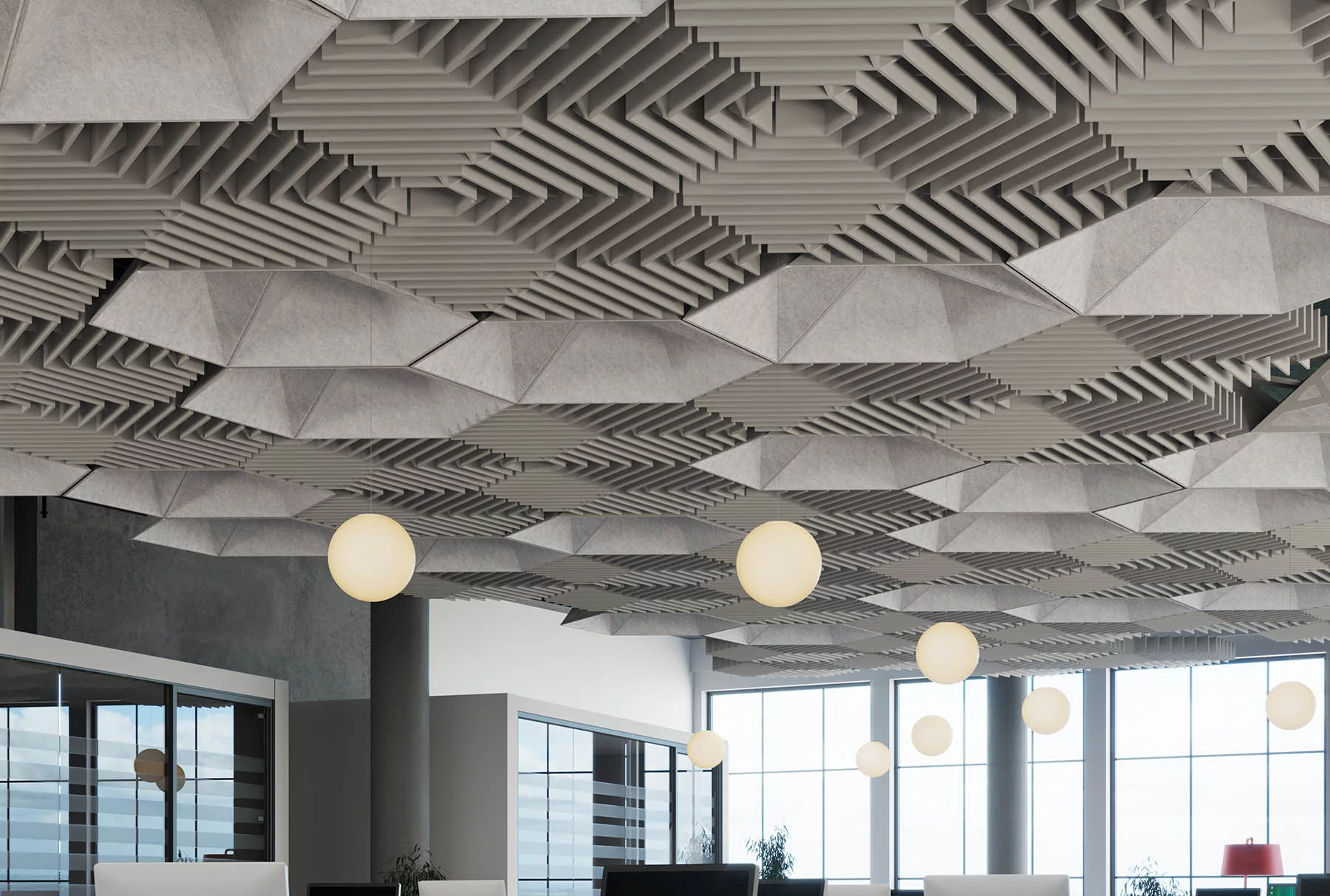
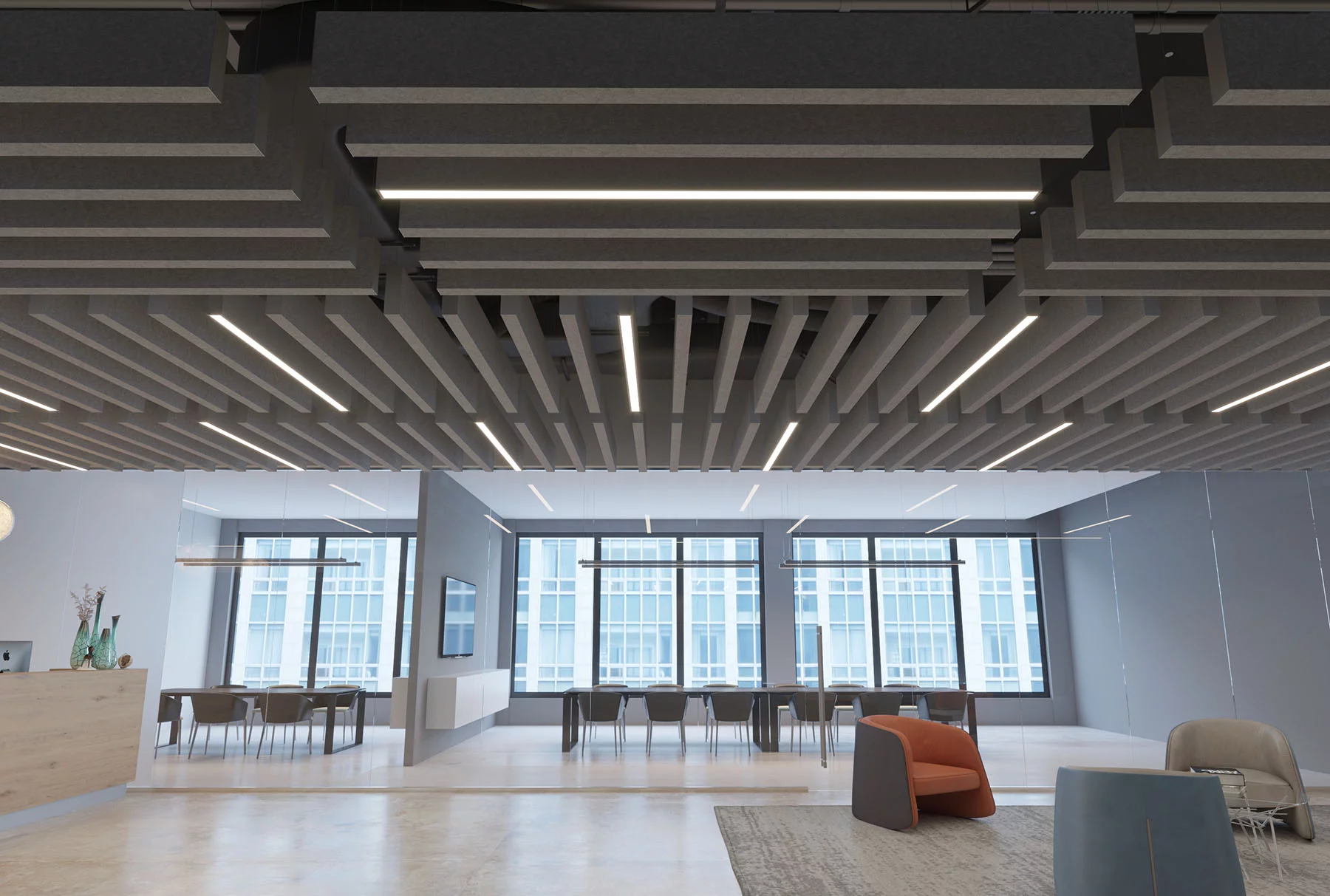
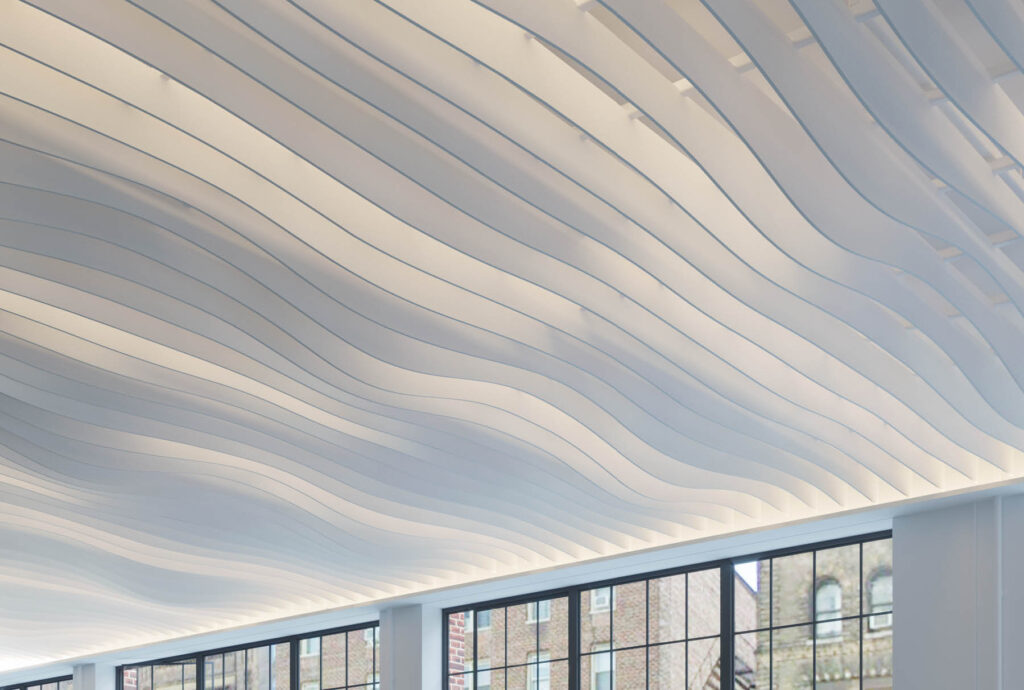
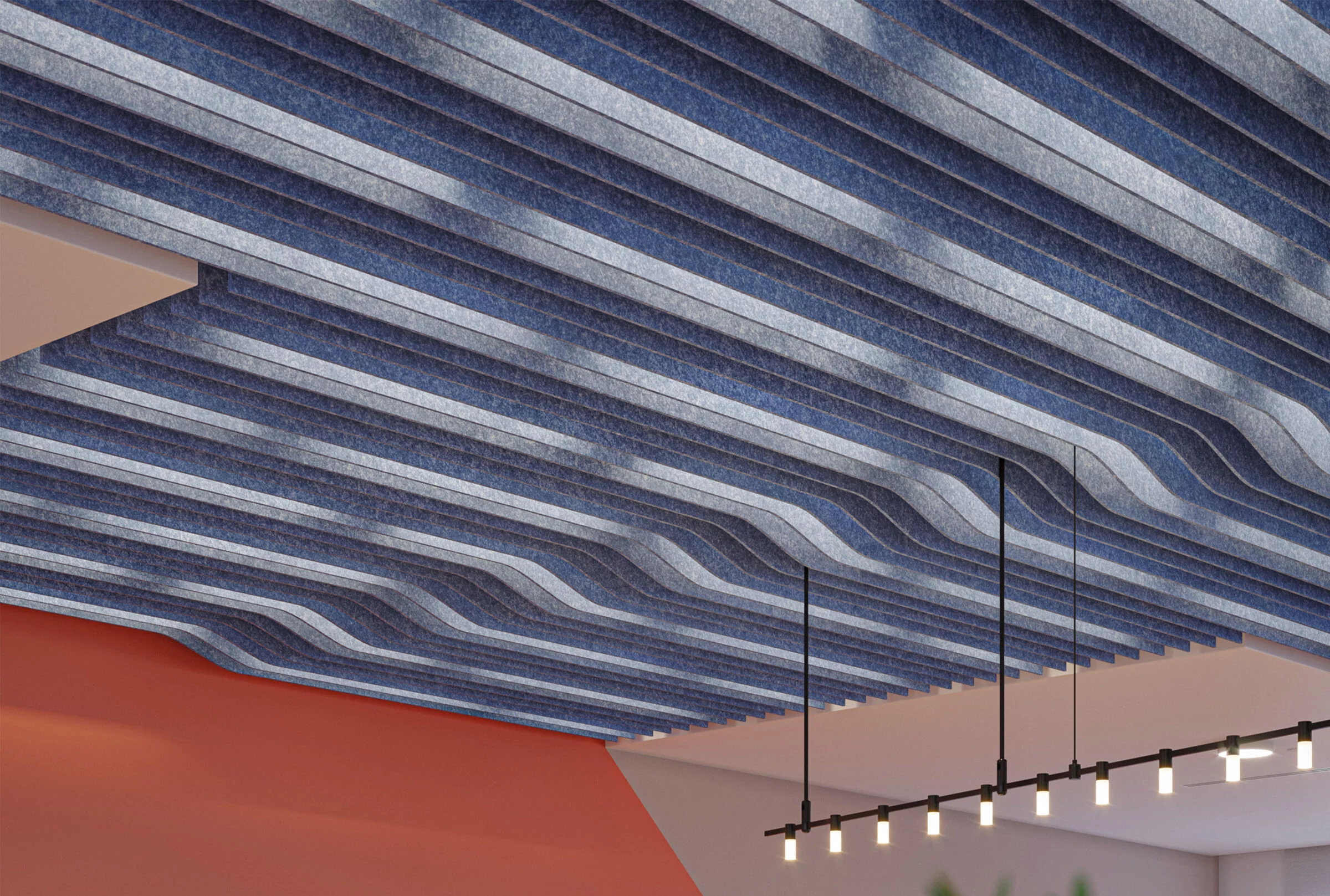
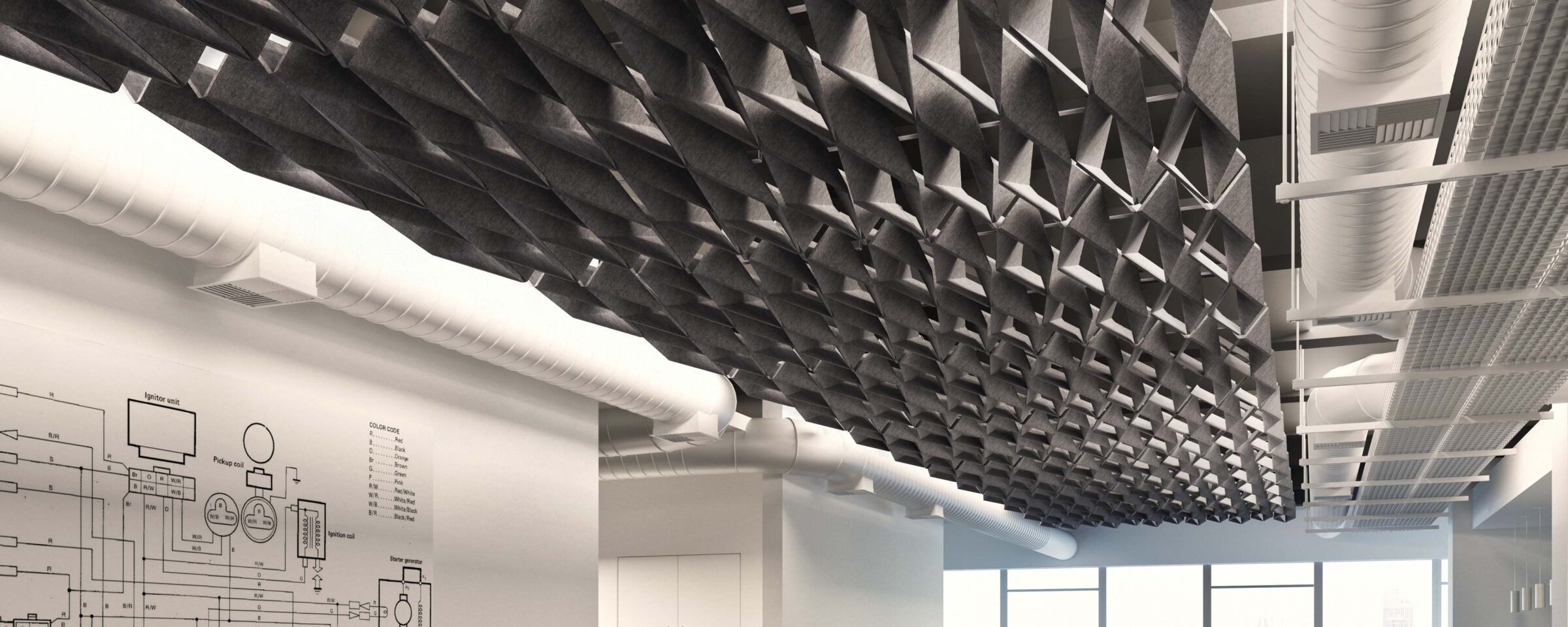
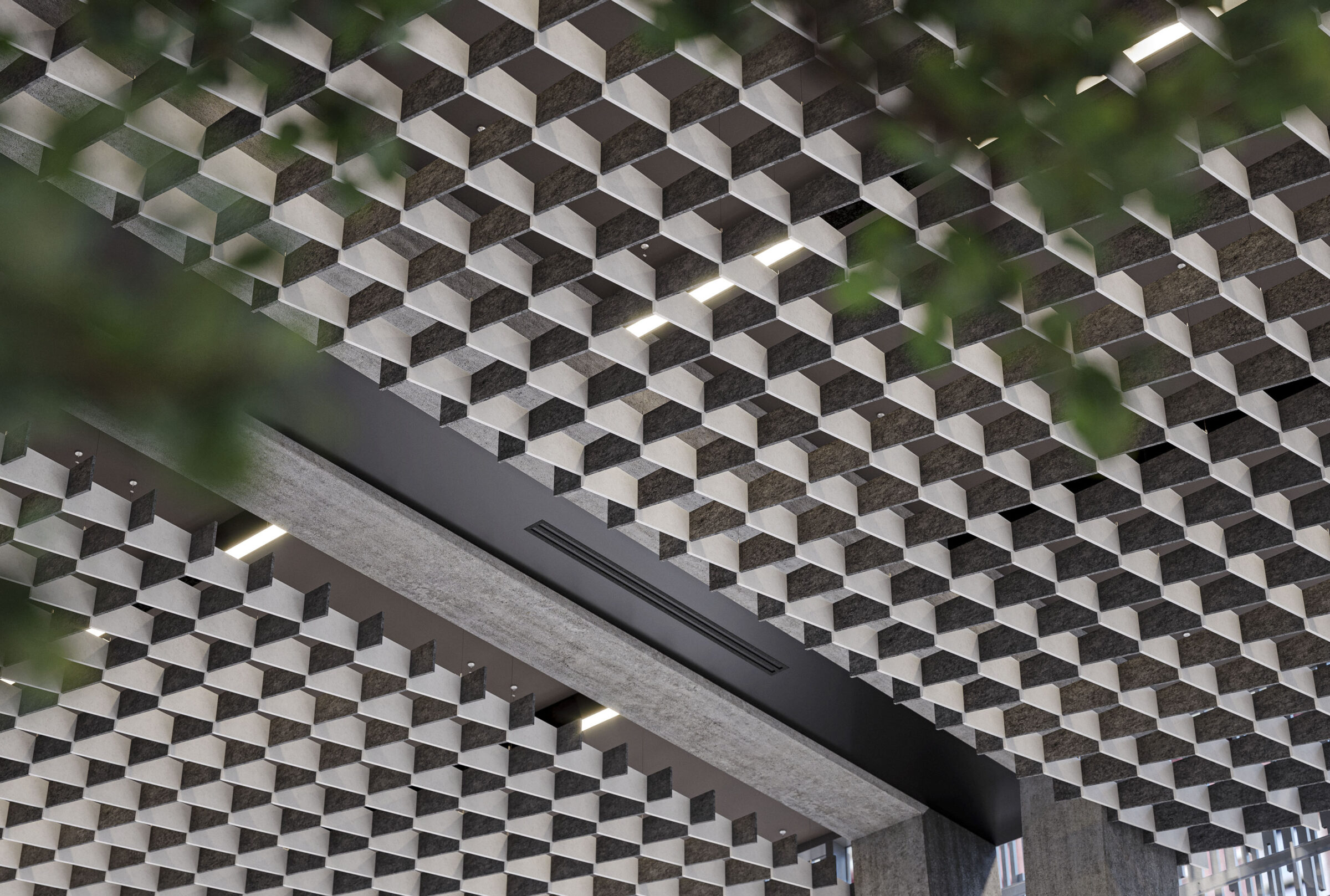
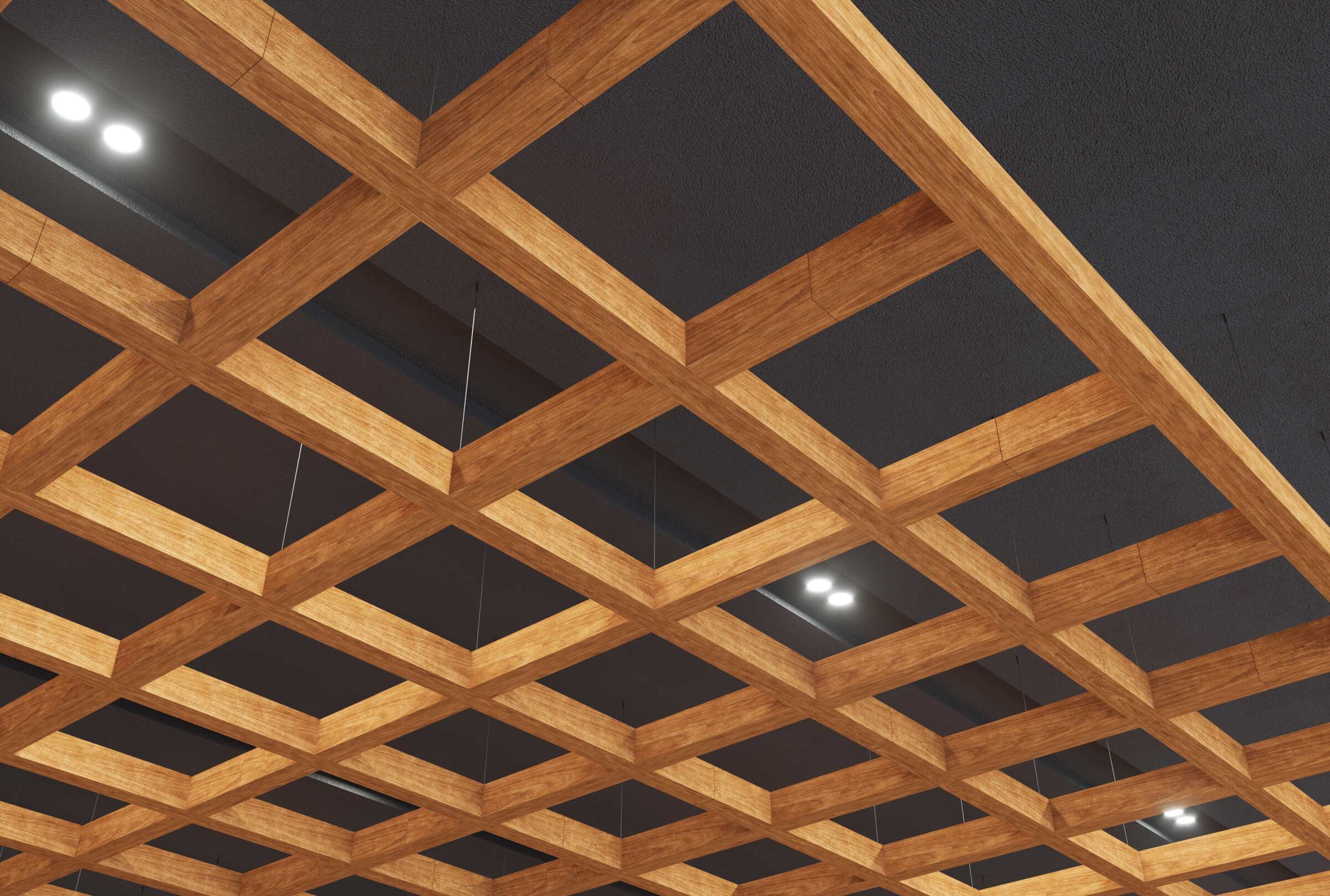
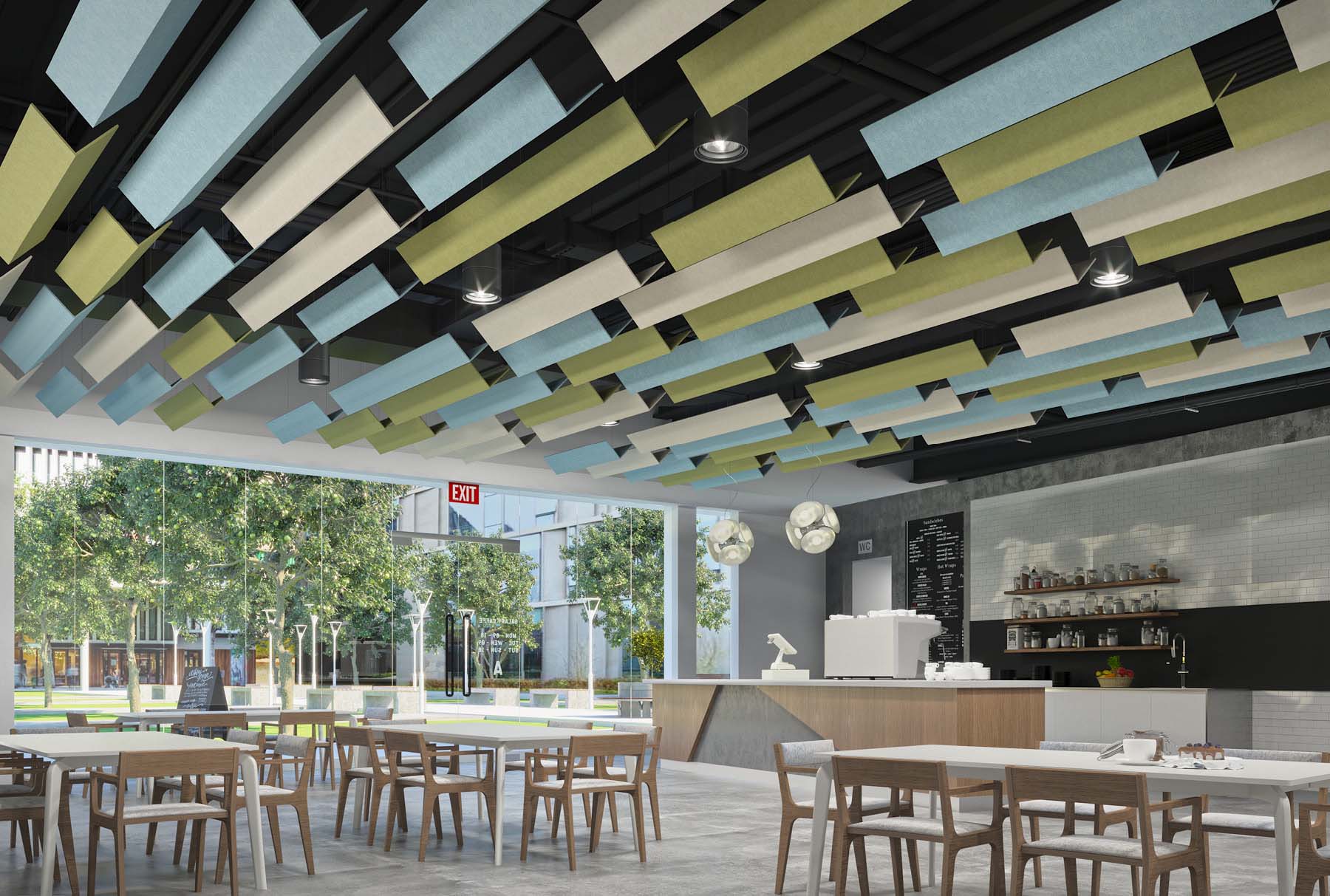
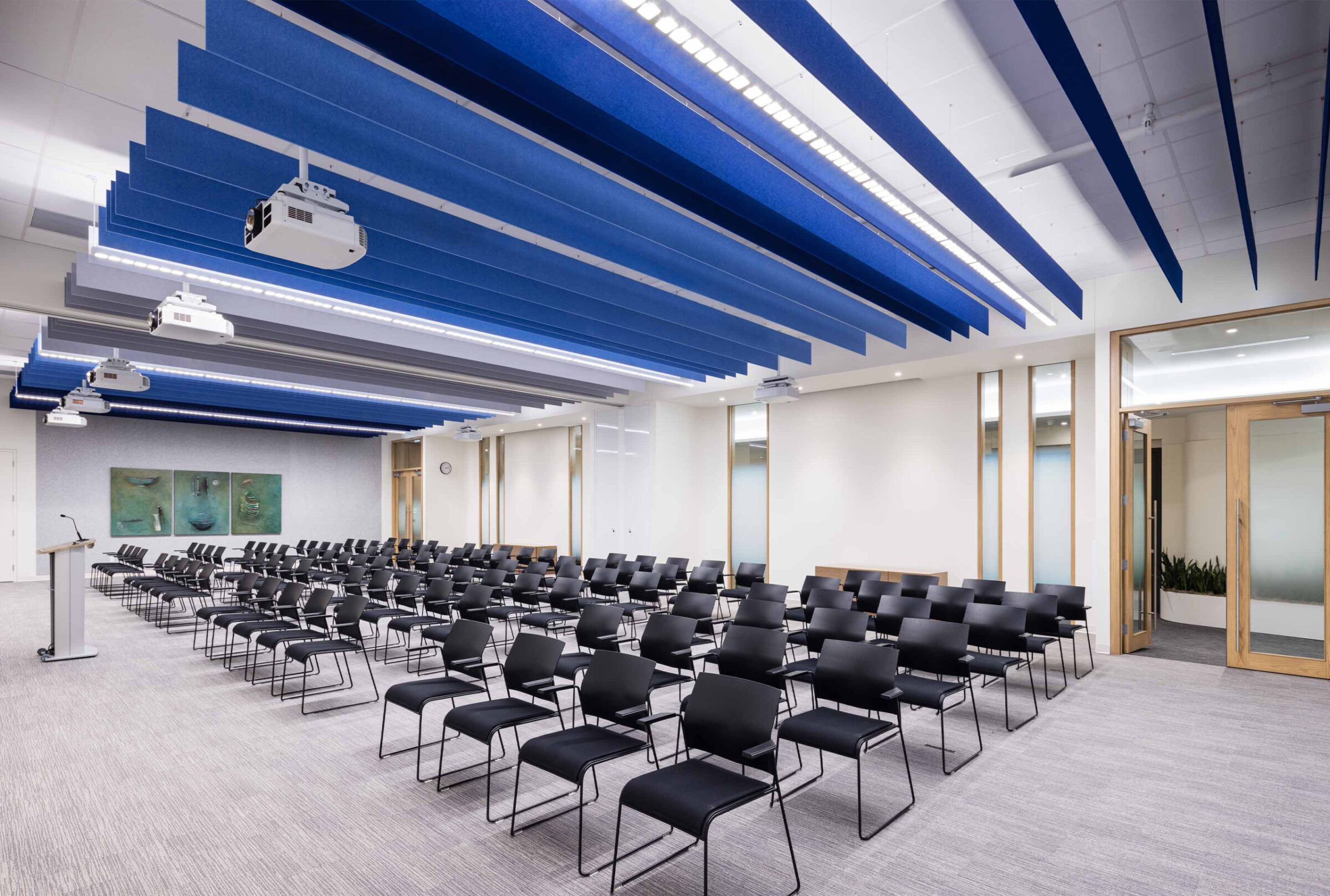
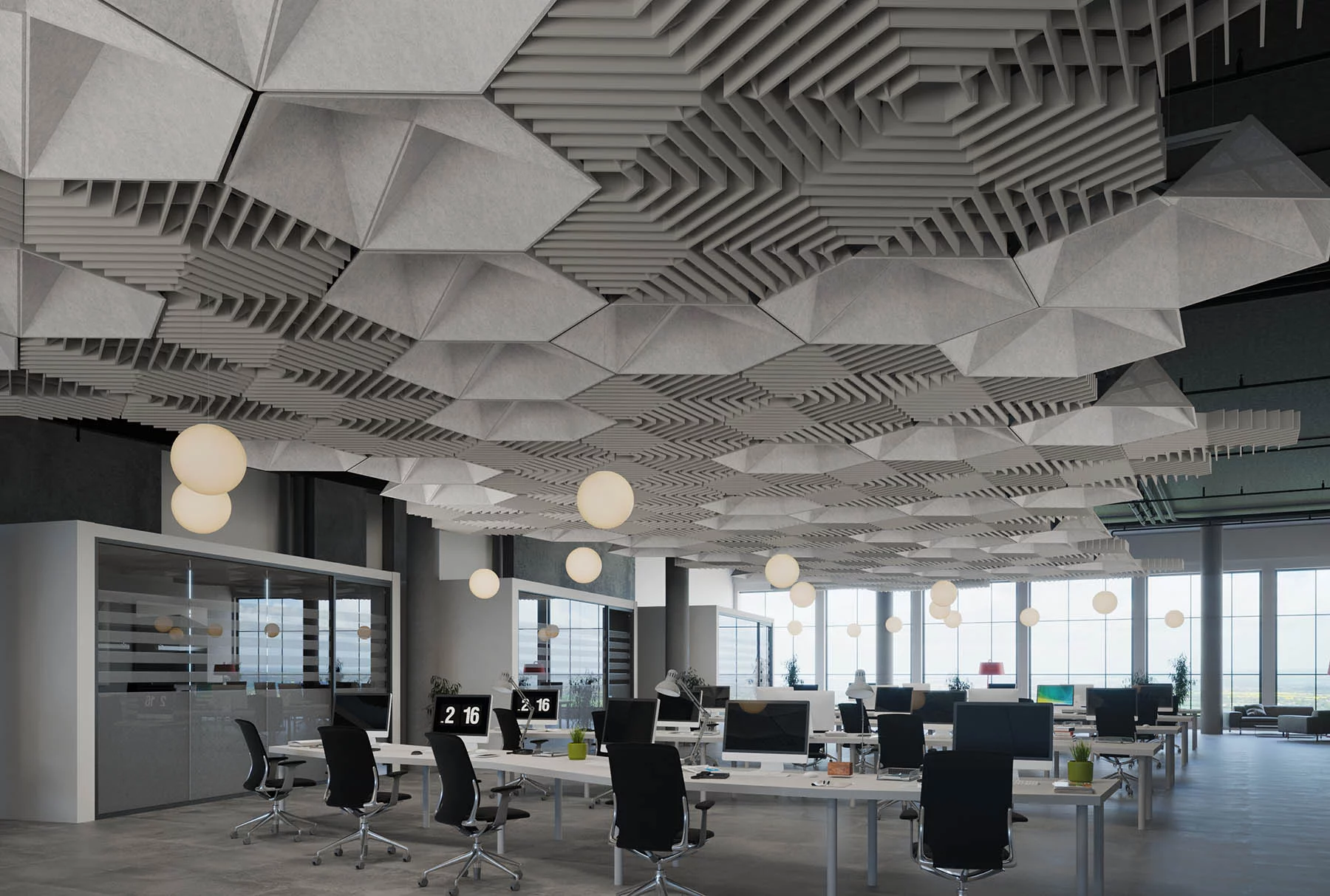
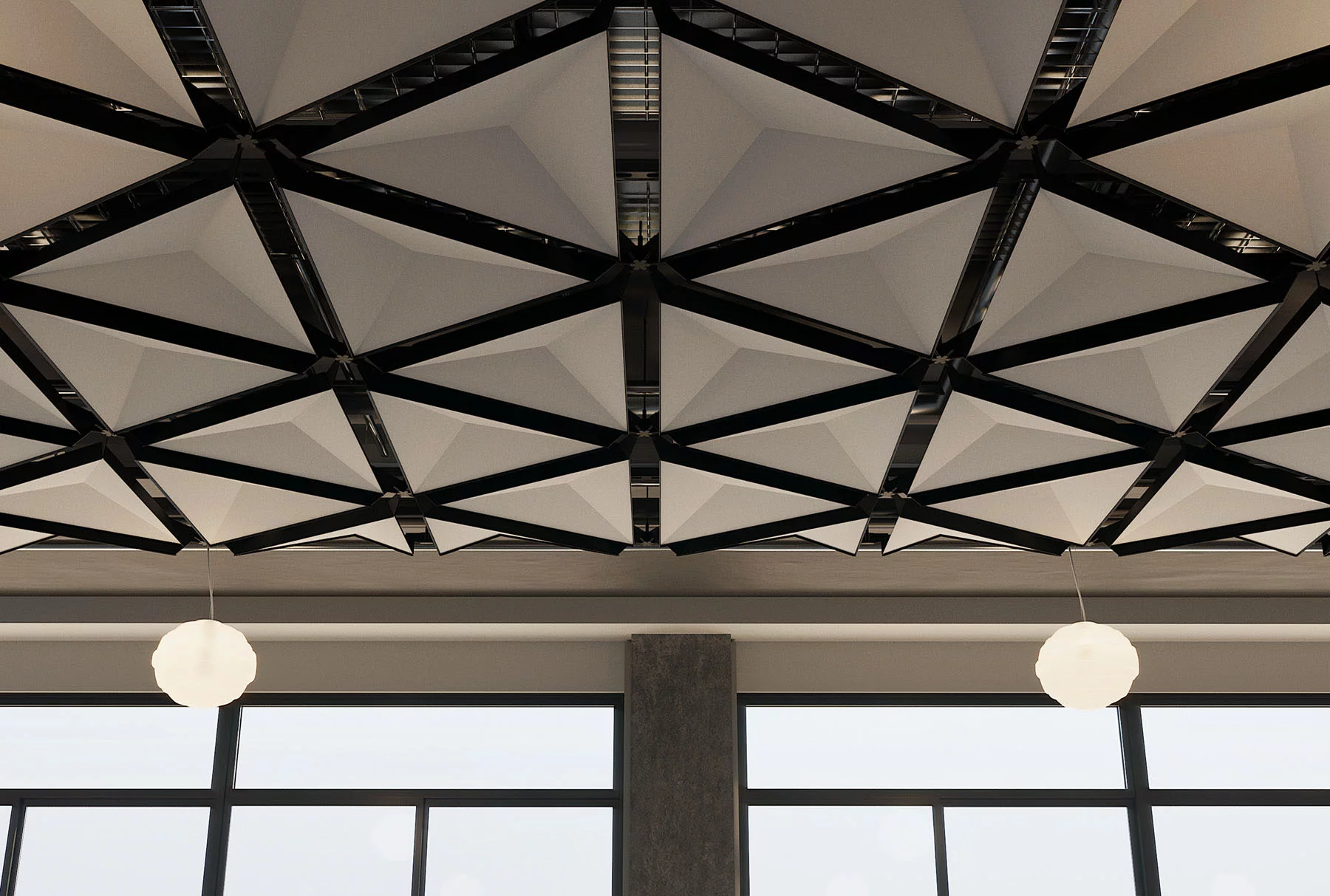
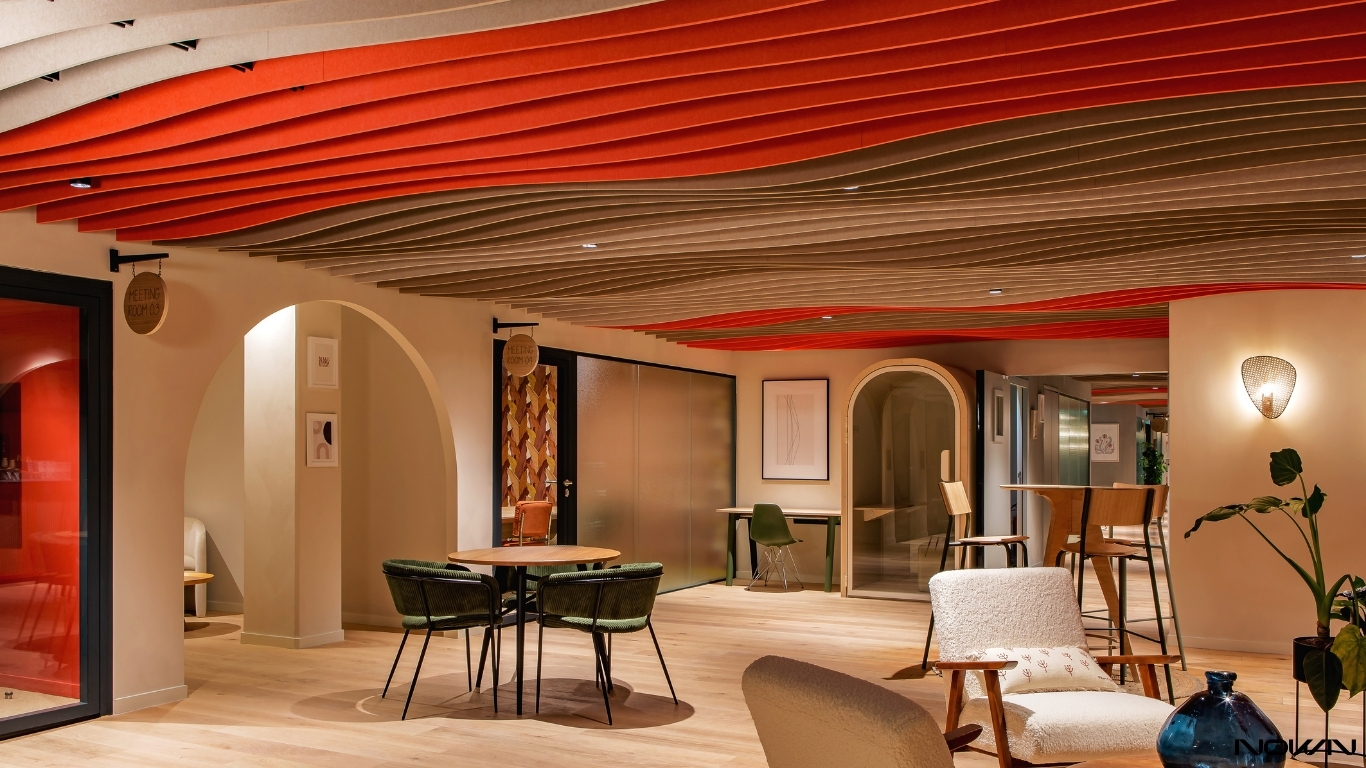
NOWN’s aSOFT™ PET felt achieves Effective NRC ratings up to 0.95, making it among the higher-performing materials available for ceiling specification. When deployed in the Atmosphera® ceiling system across a sufficient proportion of the ceiling plane, it contributes meaningfully to reverberation time reduction in line with WELL Sound targets.
aSOFT™ is manufactured from 60% recycled PET content, which simultaneously contributes to LEED MR credits for projects pursuing dual certification. The material carries SCS certification for responsible sourcing, providing documentation relevant to both LEED and WELL submissions.
Wellbeing Beyond Certification
The case for good acoustics in commercial interiors doesn’t depend on certification frameworks. Occupants in acoustically comfortable environments report lower stress levels, better concentration, and higher satisfaction with their workspace. These outcomes have direct business relevance to clients — reduced absenteeism, better retention, higher productivity — that make acoustic specification a credible investment.
The Installation Consideration
Atmosphera® modules are manufactured to project dimension and arrive ready to install. No field trimming is required. The open structure of the system maintains above-ceiling services access, which simplifies coordination with MEP trades and reduces programme risk.
Explore aSOFT™ acoustic performance for WELL projects →