
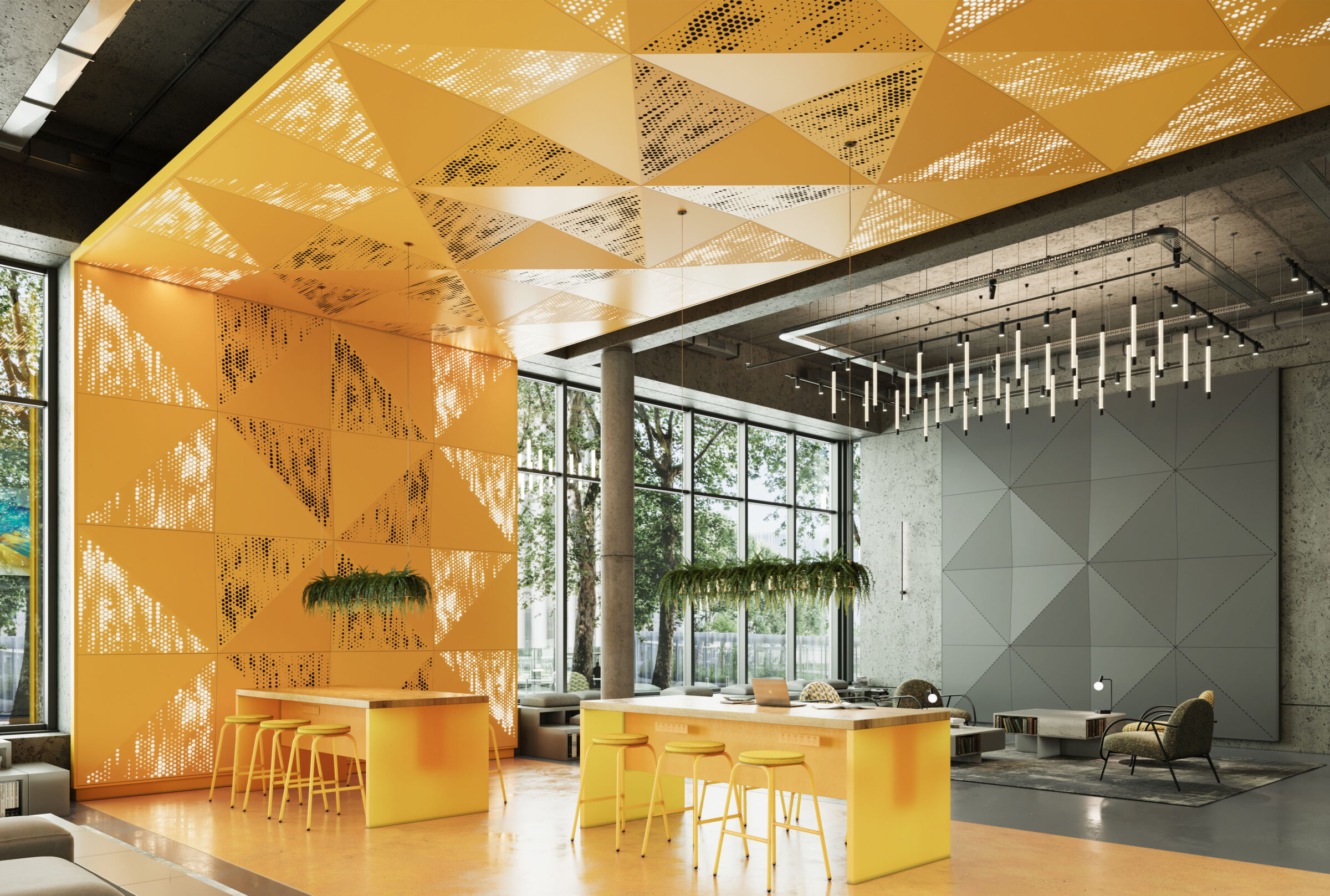

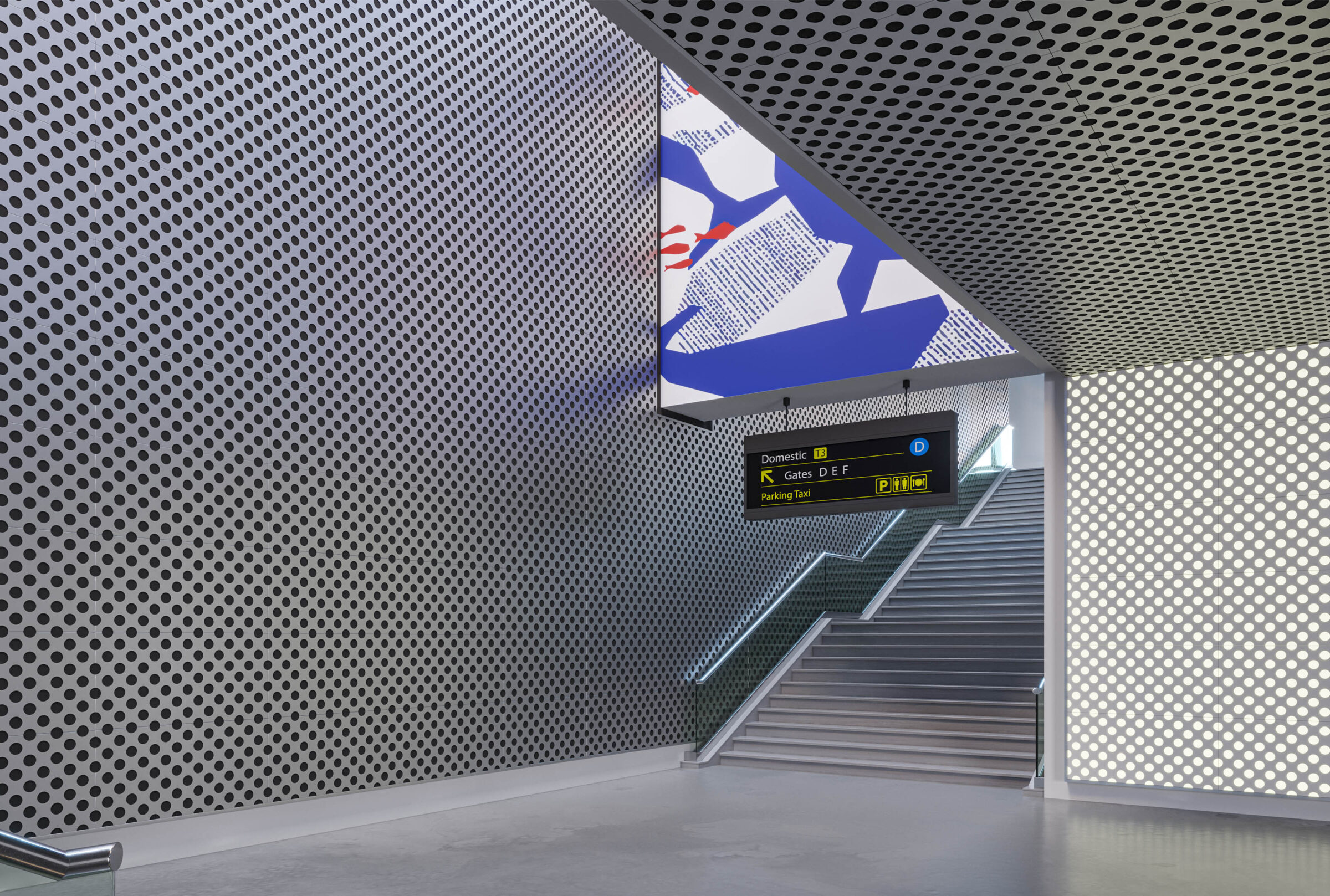
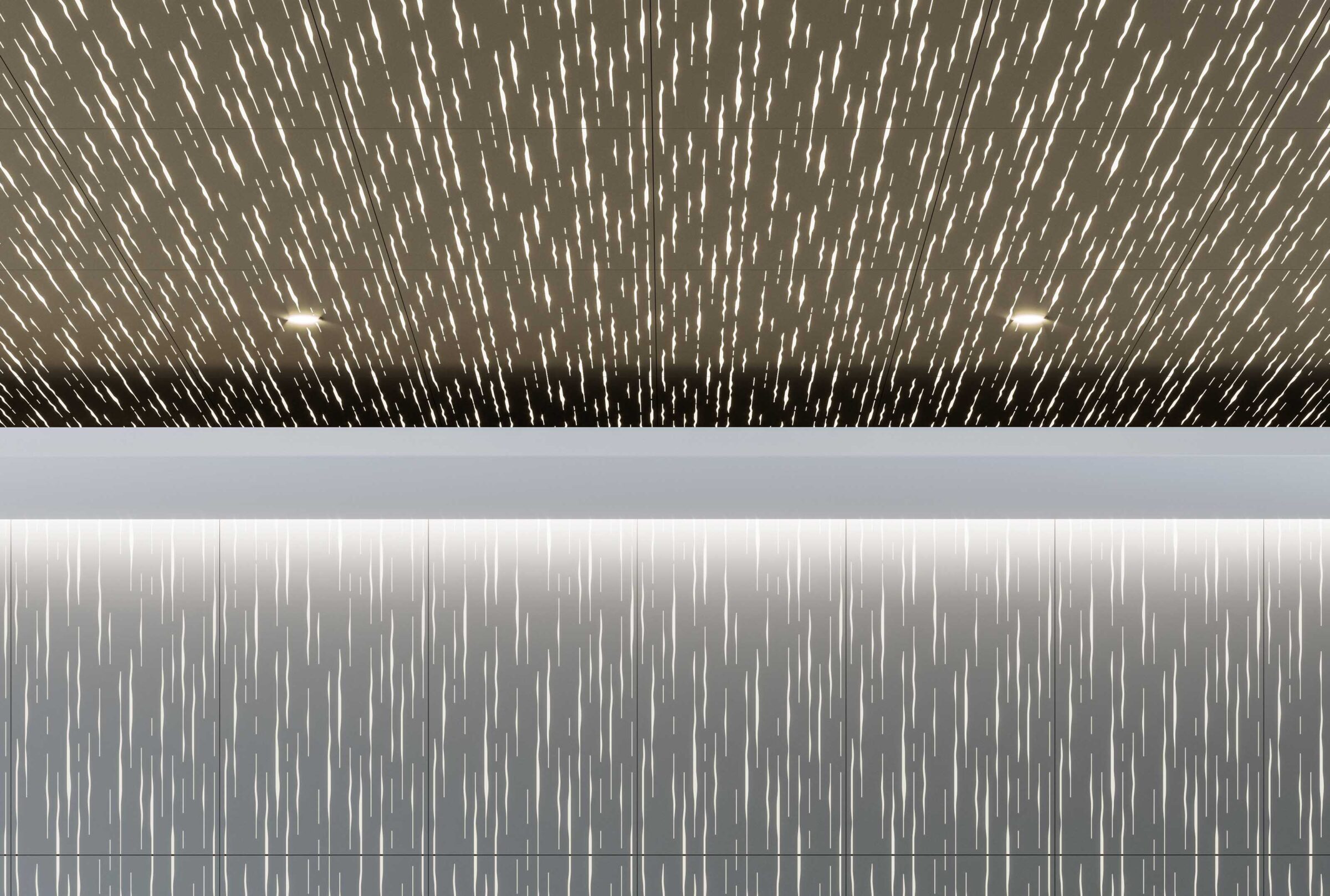
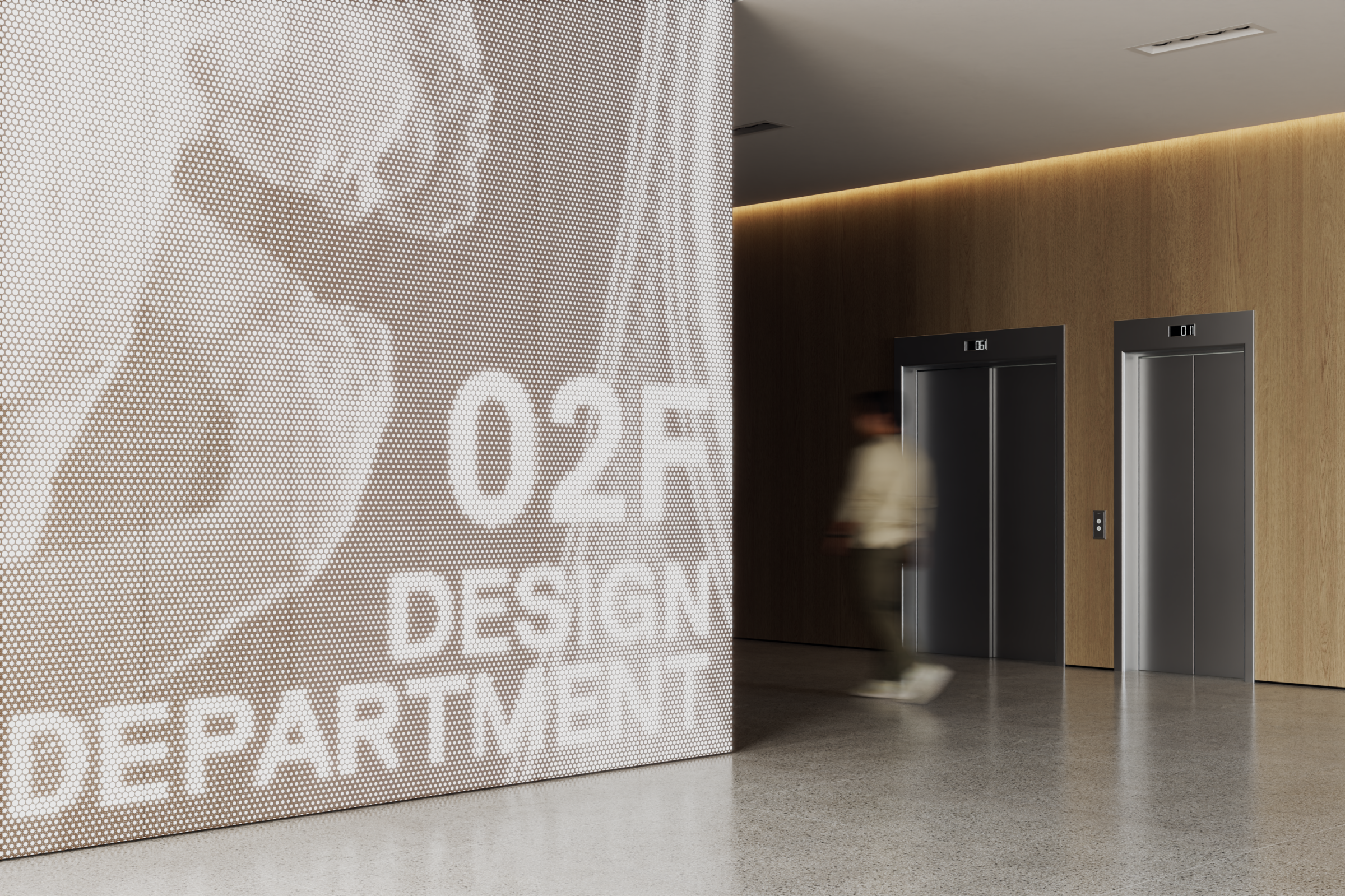
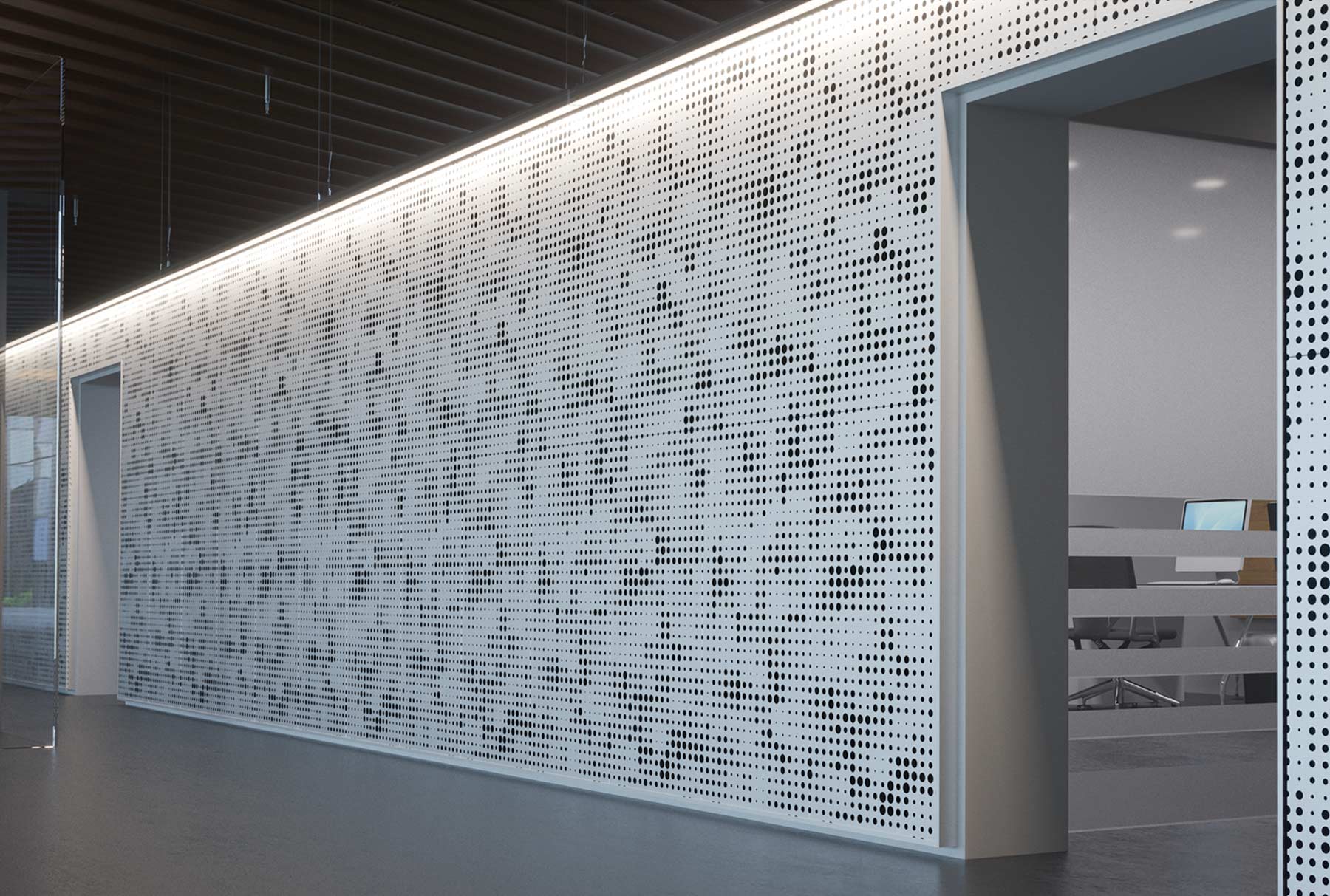
Parametric design is one of those architectural terms that sounds more complicated than it needs to be. In practice, it describes a straightforward idea: instead of drawing a pattern manually, you set the rules — and the geometry follows. VEIL Studio applies parametric logic to custom-perforated metal ceiling tiles, putting that control in a browser tool any specifier can use in minutes.
What is a parametric ceiling panel?
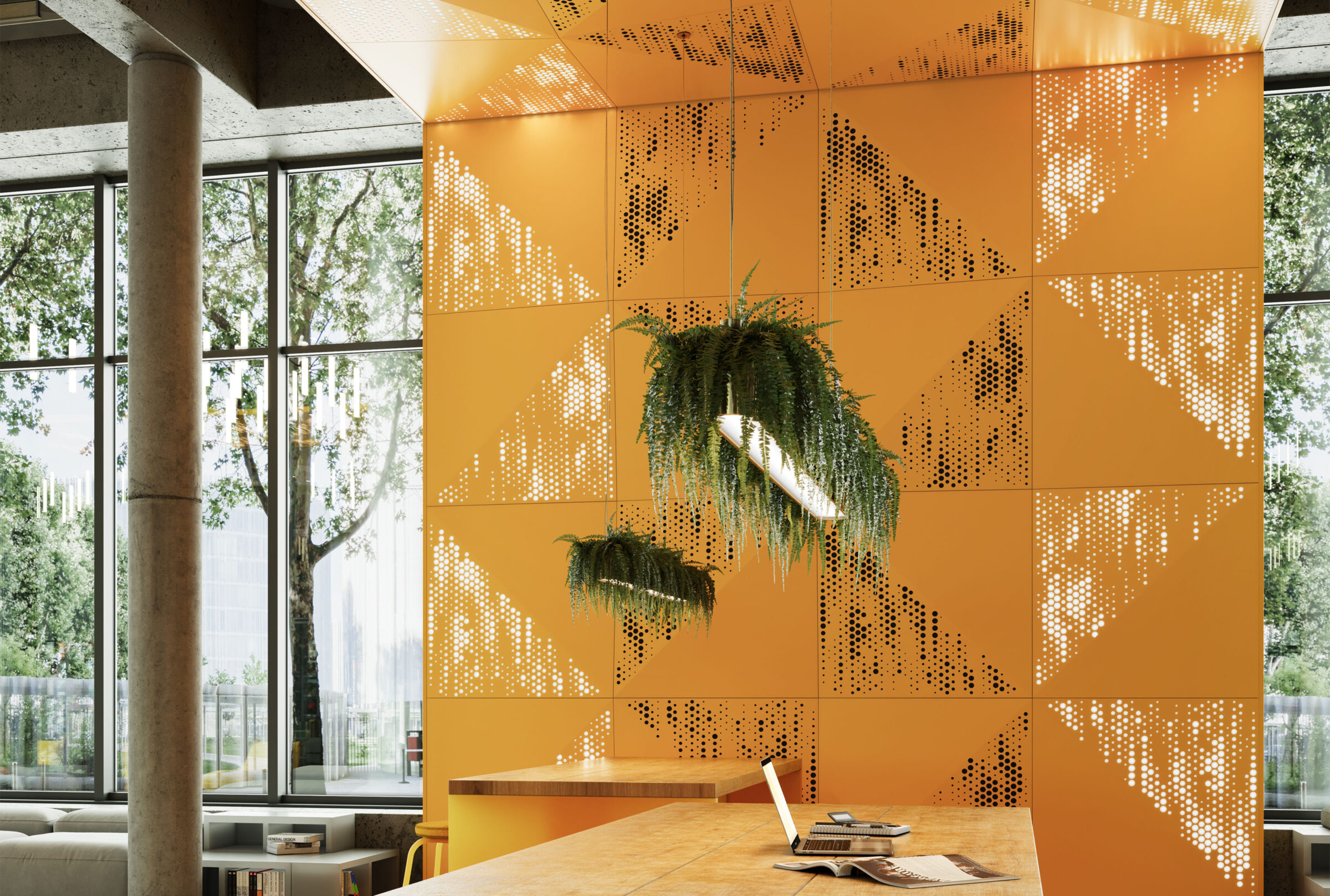
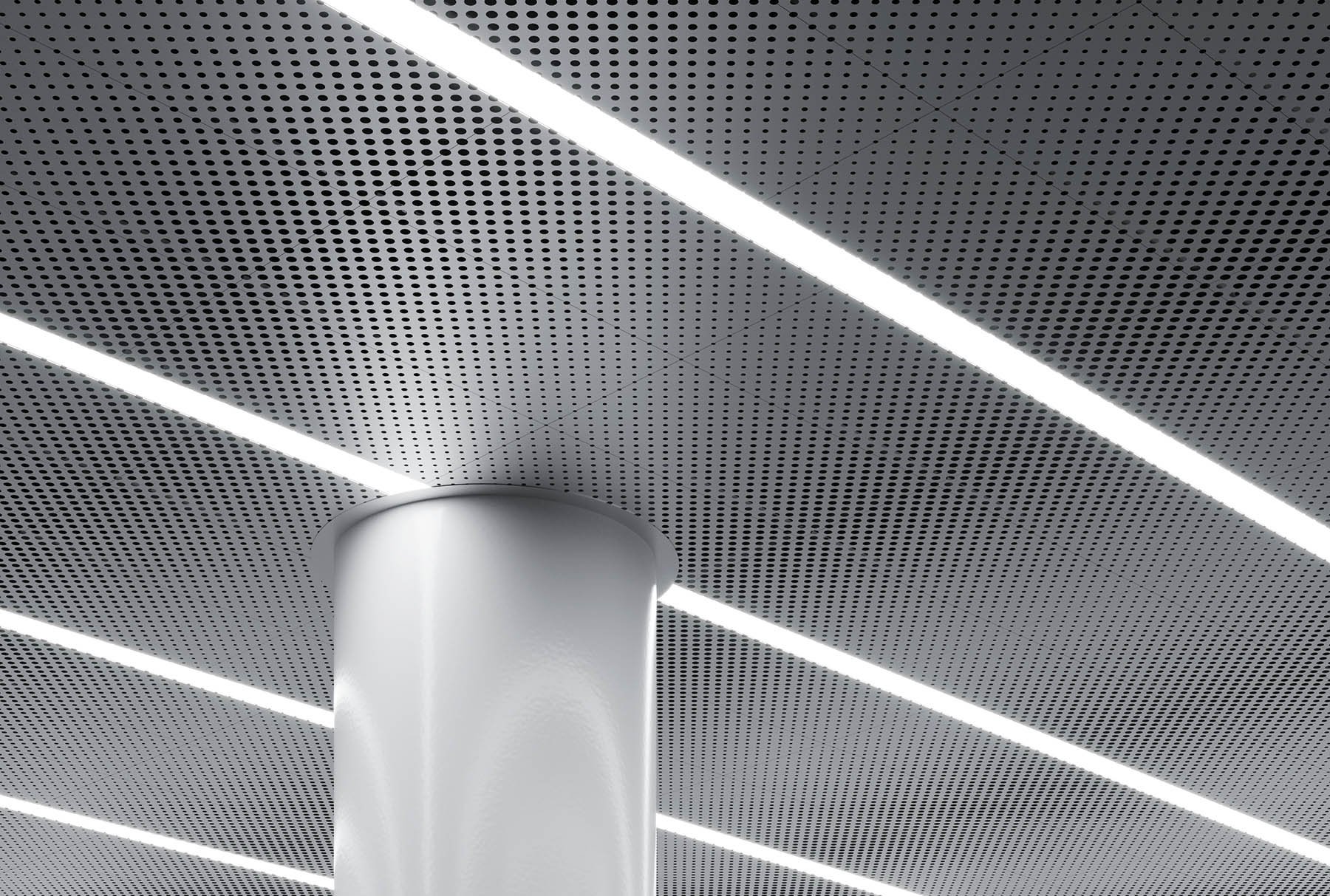
A parametric ceiling panel is one where the perforation pattern is defined by mathematical parameters rather than a fixed, pre-drawn geometry. Change a parameter — say, the density of holes near the panel edge — and the entire pattern updates accordingly. The design is responsive. The same logic produces different results depending on the values you set.
This is different from selecting a pattern from a catalogue. A catalogue pattern is fixed. A parametric pattern is generated. The distinction matters because it means every VEIL panel can be genuinely unique — one-of-one — without requiring a custom drawing for each one.
How does VEIL Studio use parametric controls?
VEIL Studio, our online design tool, exposes a set of parameters that drive the perforation geometry. The core controls are: frequency, mix, pitch, perforation size, attractors, and compression.
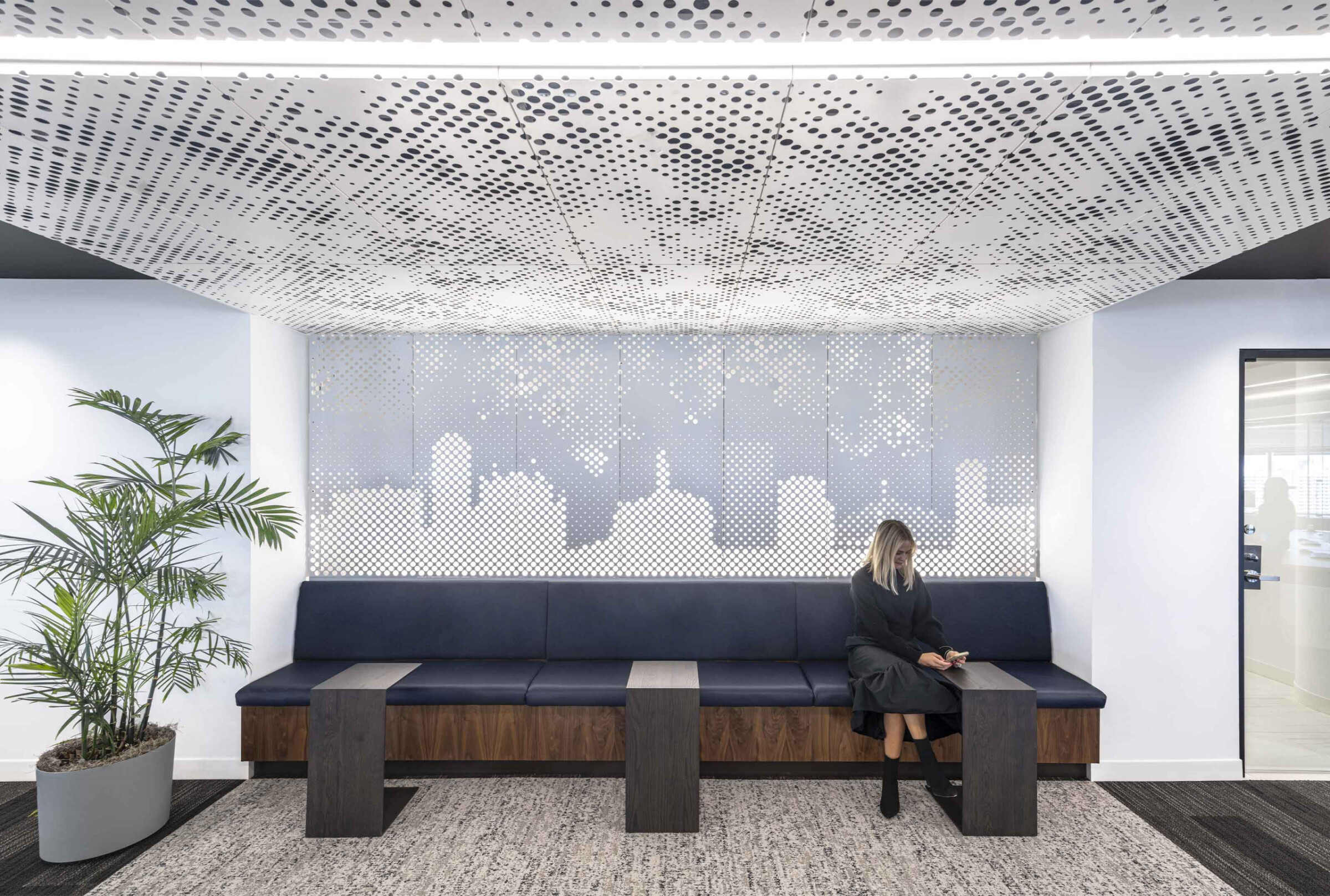
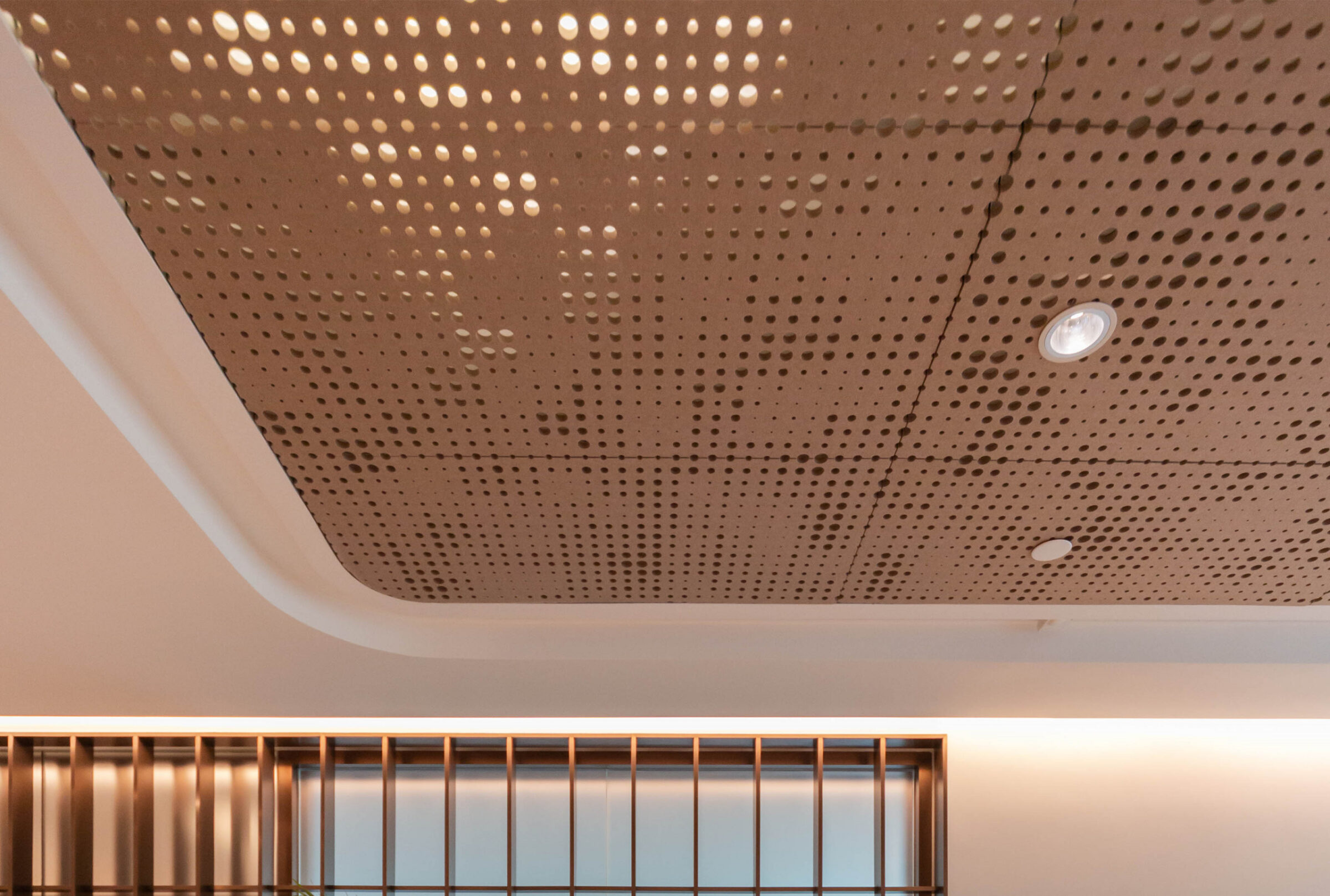
Attractors are particularly powerful. An attractor is a point (or set of points) on the panel that pulls the pattern toward it — increasing density, shifting spacing, or distorting the regular grid. By placing attractors at different positions, you can create panels where the perforation pattern flows, concentrates, or disperses in response to the geometry of the space.
Compression controls how the overall pattern density scales across the panel — useful when you want a gradient effect or a focused zone of higher or lower opacity.
Does parametric design mean every panel is different?
It can. In VEIL, every panel is one-of-one by default — no two configurations need to be the same. But parametric design also supports consistency. If you want all 200 panels in a project to share the same pattern, set the same parameters across all of them. If you want a gradual transition from dense to sparse across a run of panels, shift one parameter incrementally.
Parametric logic gives you control over both uniformity and variation. You decide the degree of difference. VEIL Studio generates the geometry. The DXF goes directly to the laser cutter — drawn in minutes, made in days.
Why does this matter for a commercial ceiling project?
Traditional custom metalwork requires a draughtsman to draw each variation. Parametric tooling removes that step. The parameter set is the brief. VEIL Studio is the draughtsman. The factory receives a production-ready file with no intermediate revision.
For architects working on large commercial ceilings with complex spatial geometry, this changes what is achievable within a normal project programme. Customised by you. Elevated by our acoustic and backlit engineering. Standardised to fit any 600×1200 or 2’×4′ grid. The simple part is yours.