

Turning a Graphic Design Into an Architectural Ceiling: How VEIL Studio Converts Images Into Metal
June 10, 2026
·2 min read
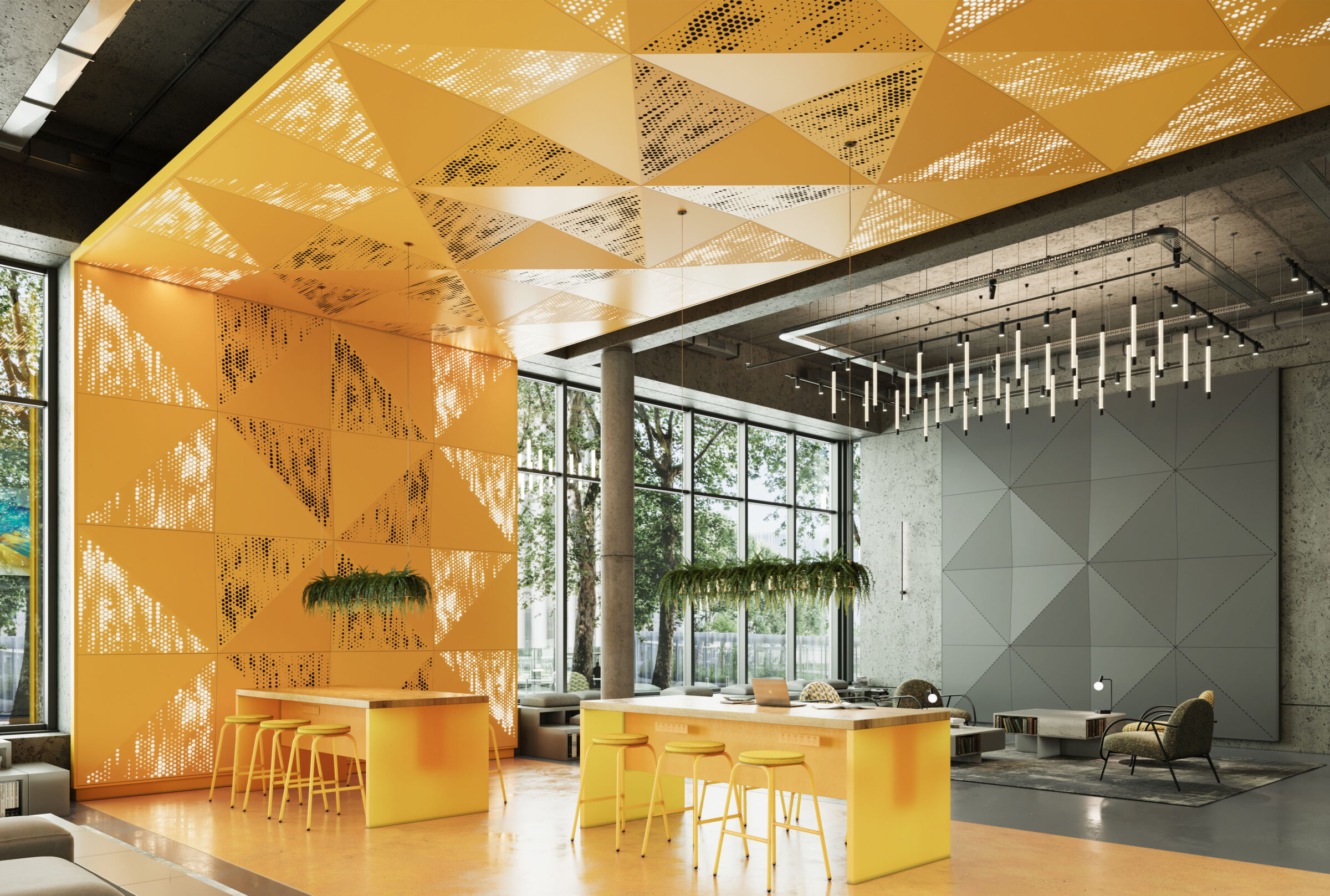
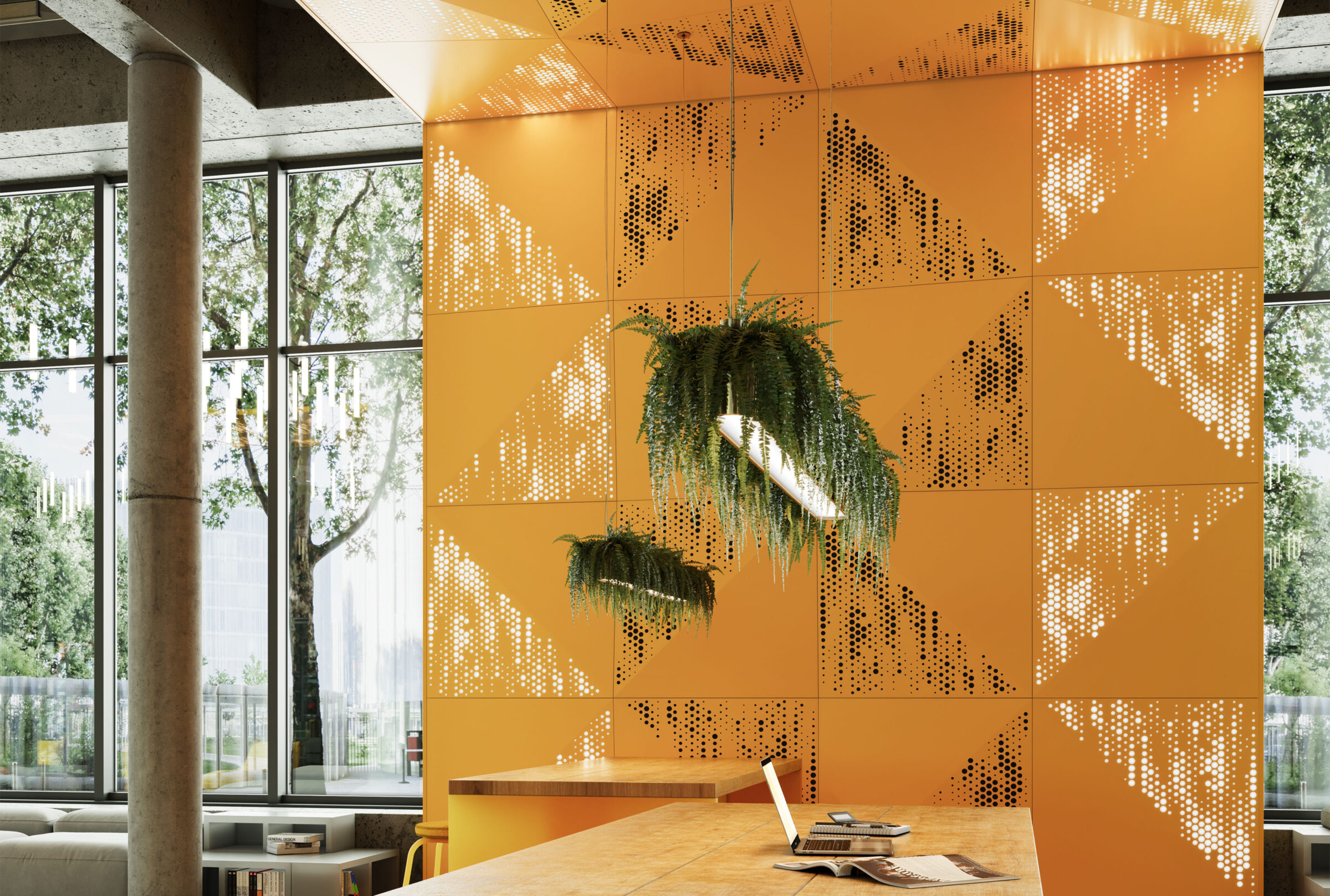
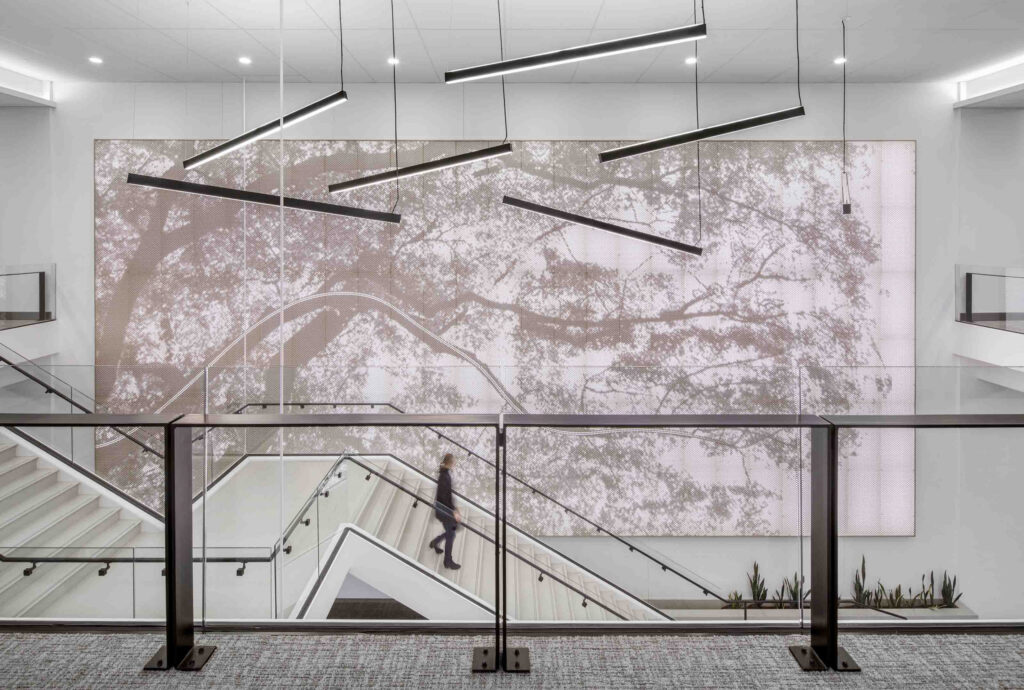
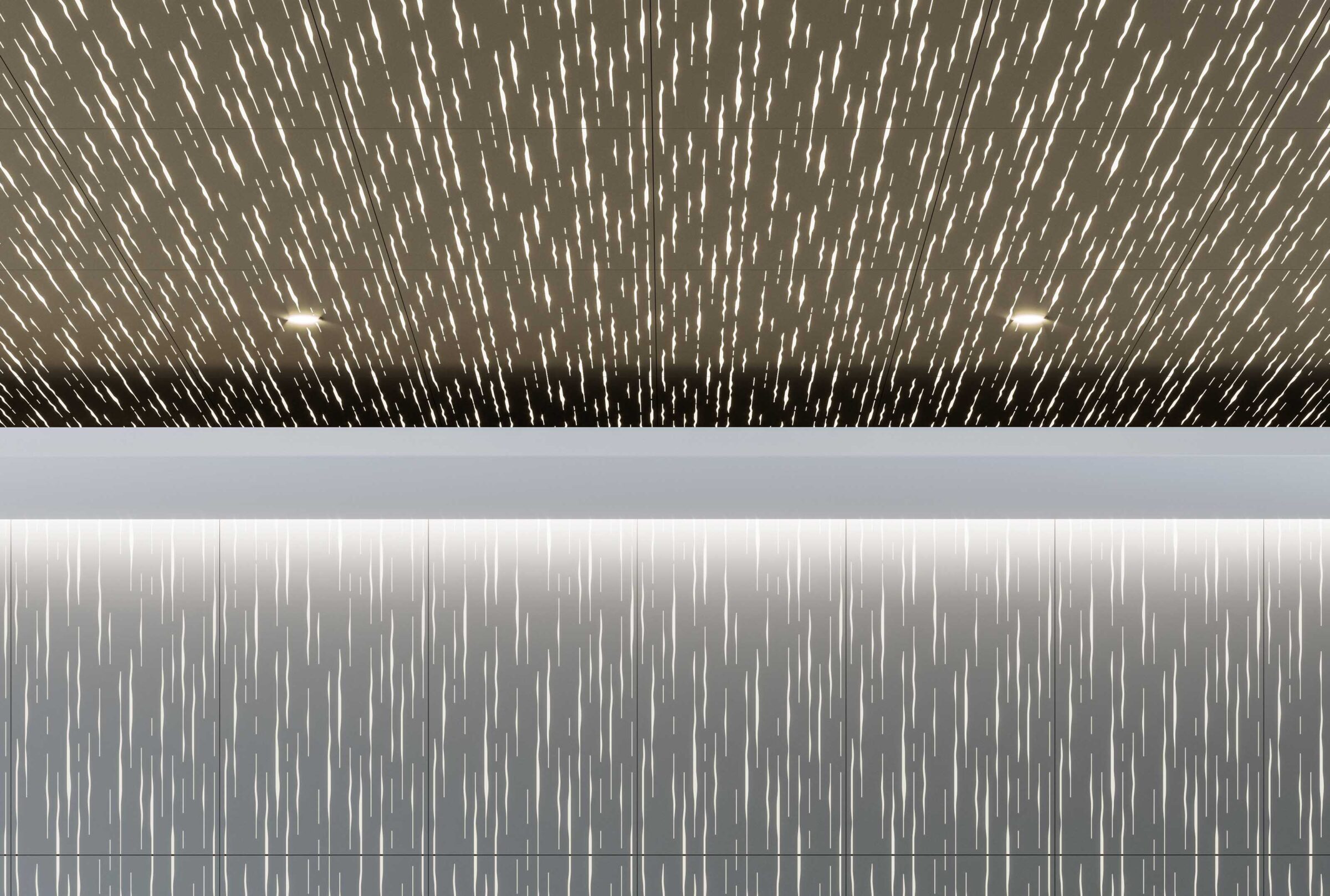
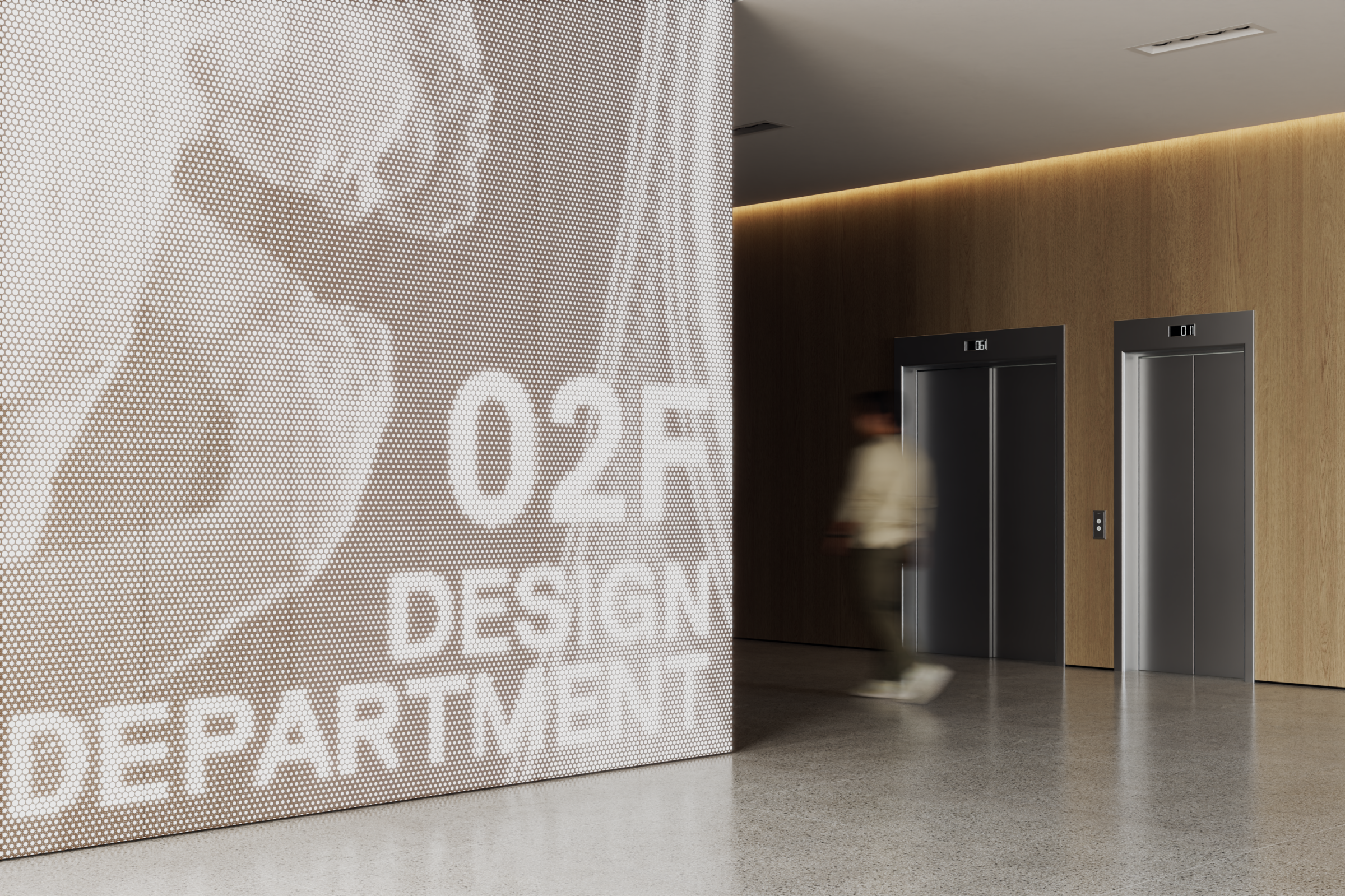
The gap between a graphic design and an architectural ceiling has always been wide — filled with translation steps, specialist fabricators, bespoke drawings, and long lead times. VEIL closes that gap to a single action. In VEIL Studio, our online design tool, you drop in any image and it becomes the perforation map for a custom-perforated metal ceiling tile. A brand mark, a photograph, an abstract graphic — drawn in minutes, cut in steel, shipped in weeks.
How does image-to-perforation work?
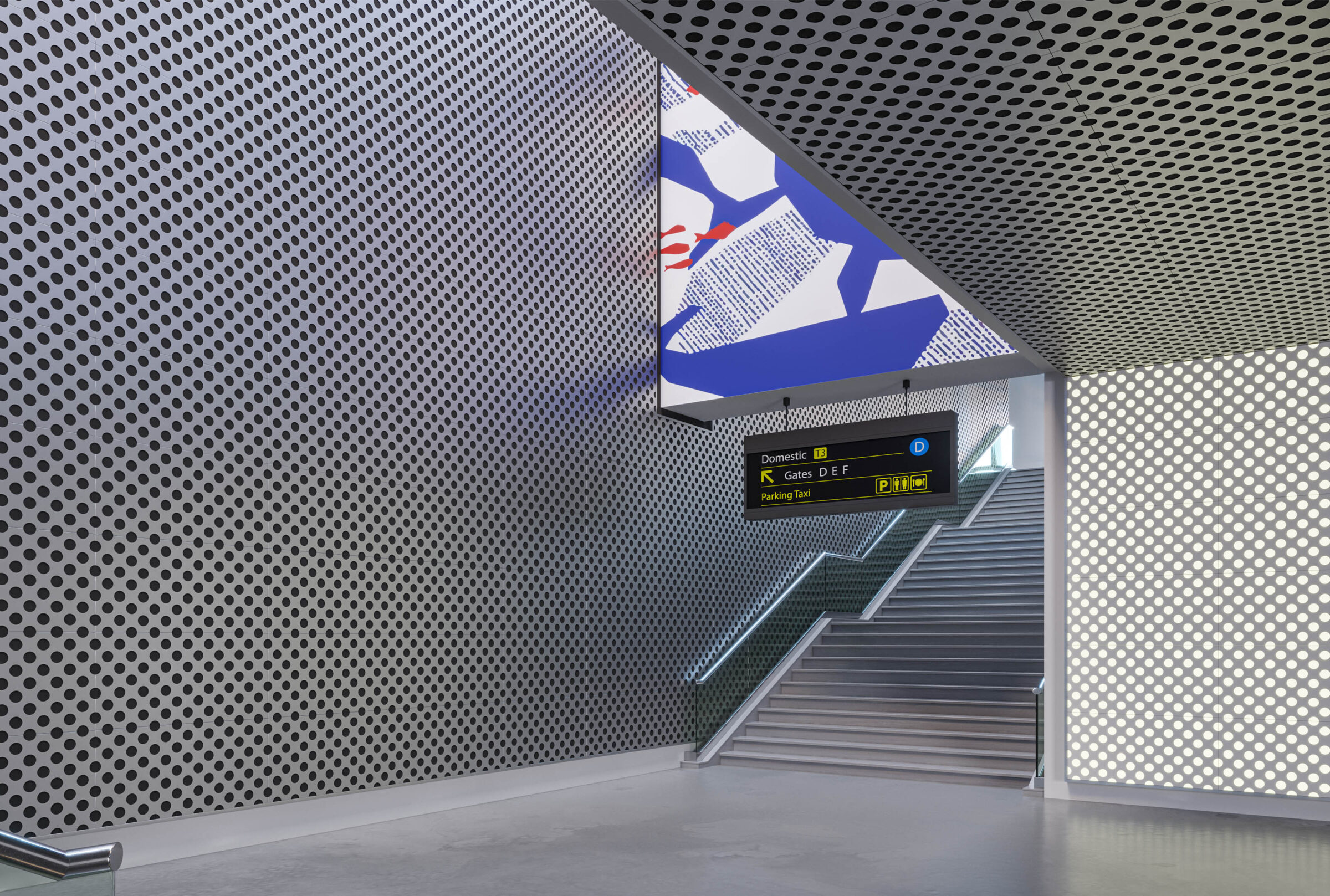
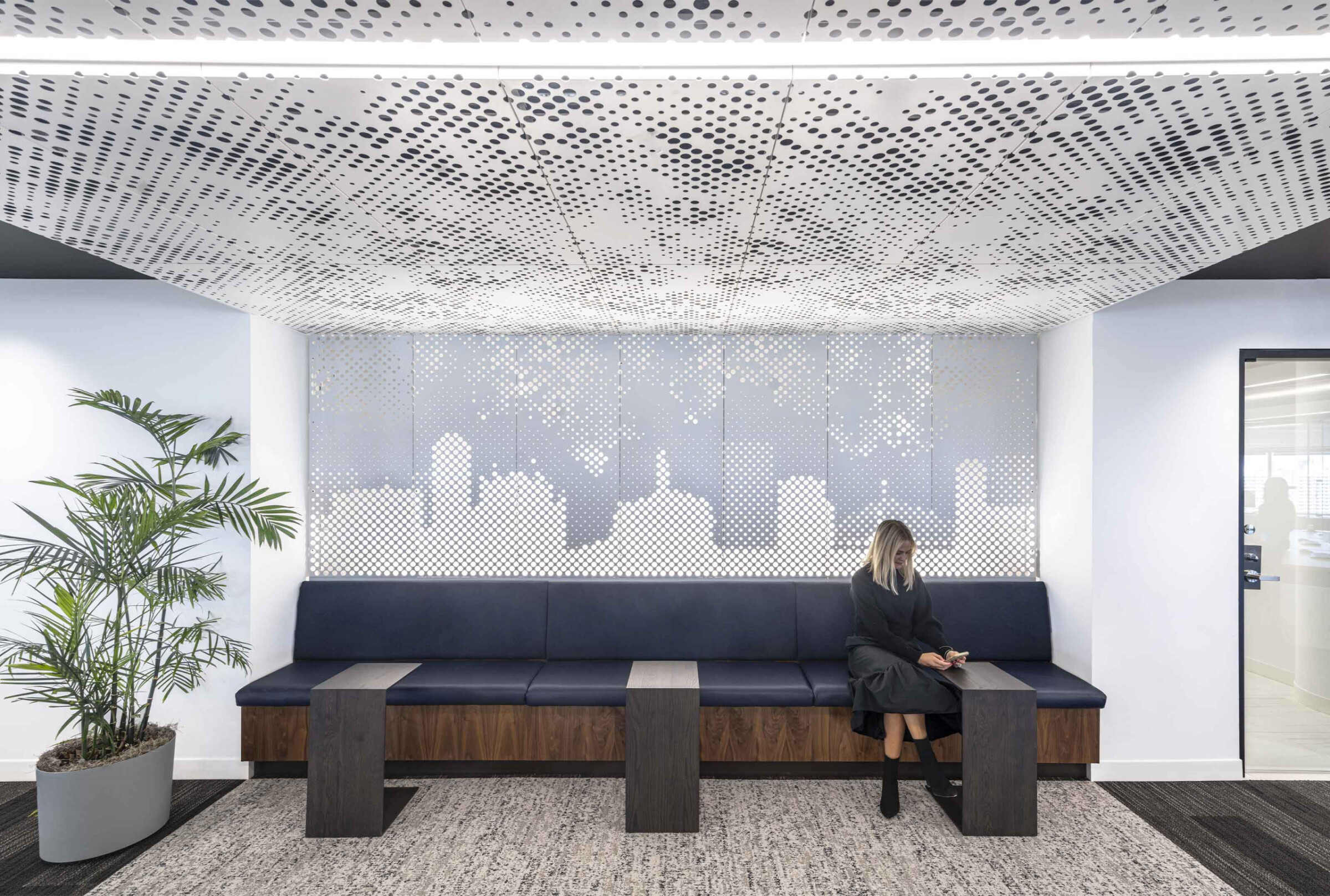
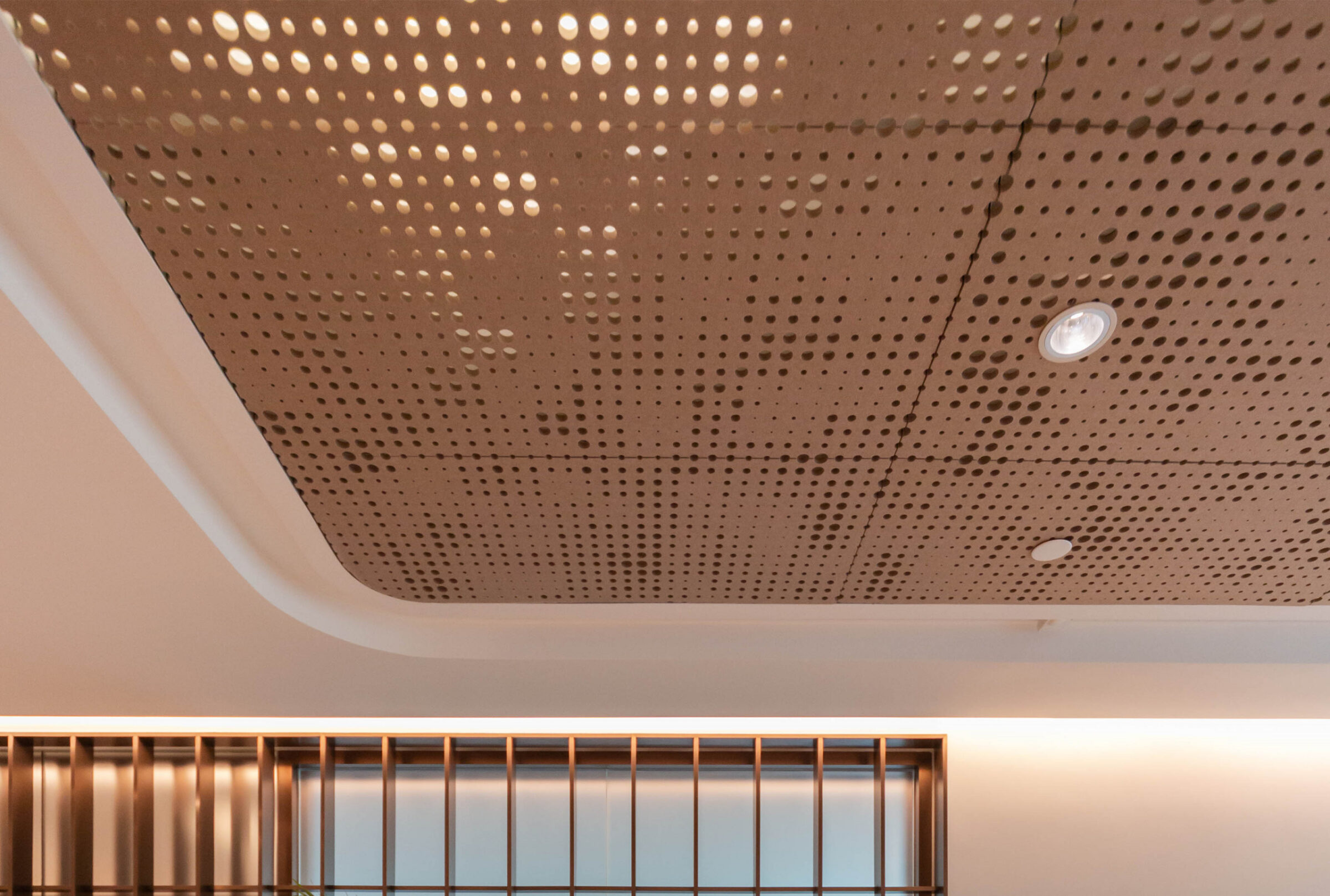
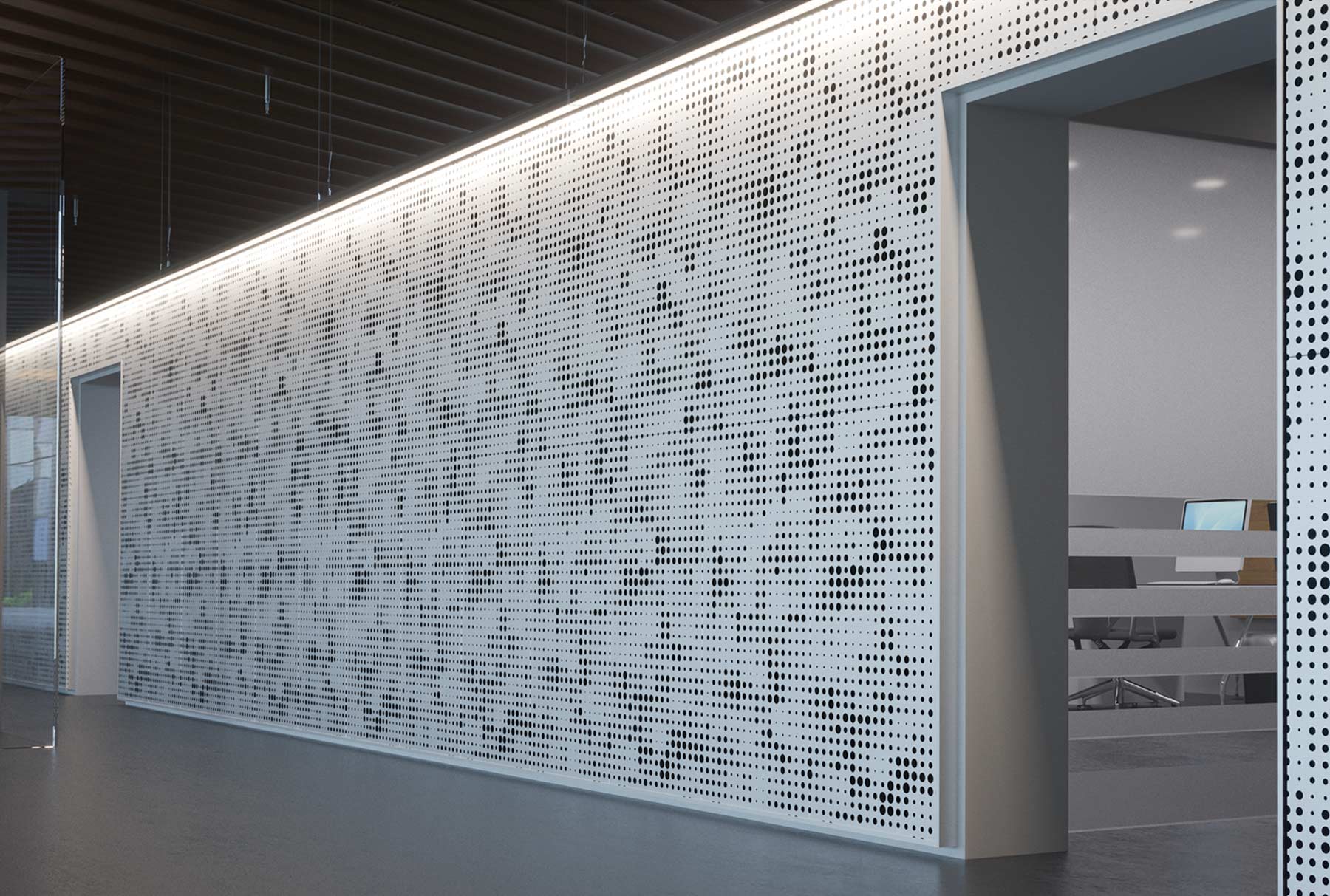
VEIL Studio reads the luminance values of the uploaded image and maps them to perforation density. Darker areas of the image produce denser perforations (more holes, closer together). Lighter areas produce sparser perforations (fewer holes, more metal). The result is a panel that reads as a tonal representation of the source image when viewed from a distance.
The conversion is not purely mechanical — you retain control over the interpretation parameters. Adjust how the density range is mapped, how fine the detail resolution is, and how the pattern behaves at the panel edges. Every panel is one-of-one.
What kinds of images work best?
High-contrast images with clear tonal structure translate most legibly into perforations. Brand marks with strong silhouettes, architectural photography, geometric graphics, and topographic patterns all produce well-defined ceiling tiles. Lower-contrast images are still usable — the density variation is subtler, which can produce a more textural result.
Images are not resized to fit the panel — they are interpreted. The relationship between the image and the panel grid is something you control in VEIL Studio before generating the DXF.
What is the output format?
VEIL Studio outputs a production-ready DXF file. That file goes directly to the laser cutter — no redrawing, no intermediate steps. The DXF defines the exact cut geometry: every hole, every edge, every dimension of the 596 × 1196mm panel.
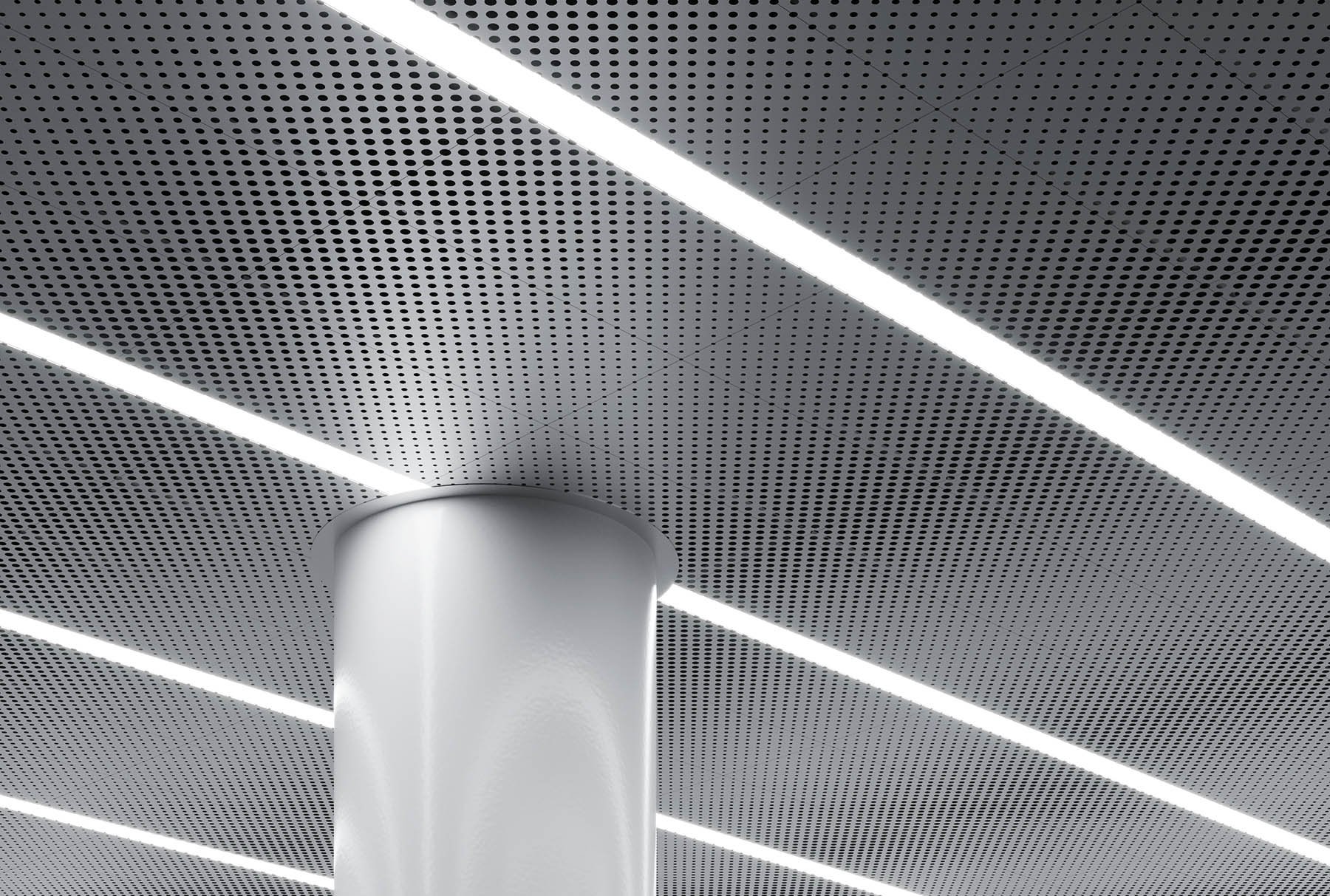
The panel is laser-cut from steel, powder-coated to your RAL K5 specification, and crated for delivery. It drops into any standard 600×1200 metric or 2’×4′ imperial ceiling grid. The image you uploaded becomes a ceiling tile you install. Custom. Made-to-order. The simple part is yours.