

What Is a Laser-Cut Steel Ceiling Panel — and Why Does It Matter for Architects?
June 13, 2026
·2 min read
Laser cutting is the manufacturing process that makes custom-perforated metal ceiling tiles viable at commercial scale. It is fast, accurate, and — crucially for VEIL — it works directly from a DXF file. No tooling. No setup press. No minimum run. For architects specifying a custom ceiling, laser-cut steel is the process that makes one-of-one feasible at the same lead time as a standard panel.
What is laser cutting, in plain terms?
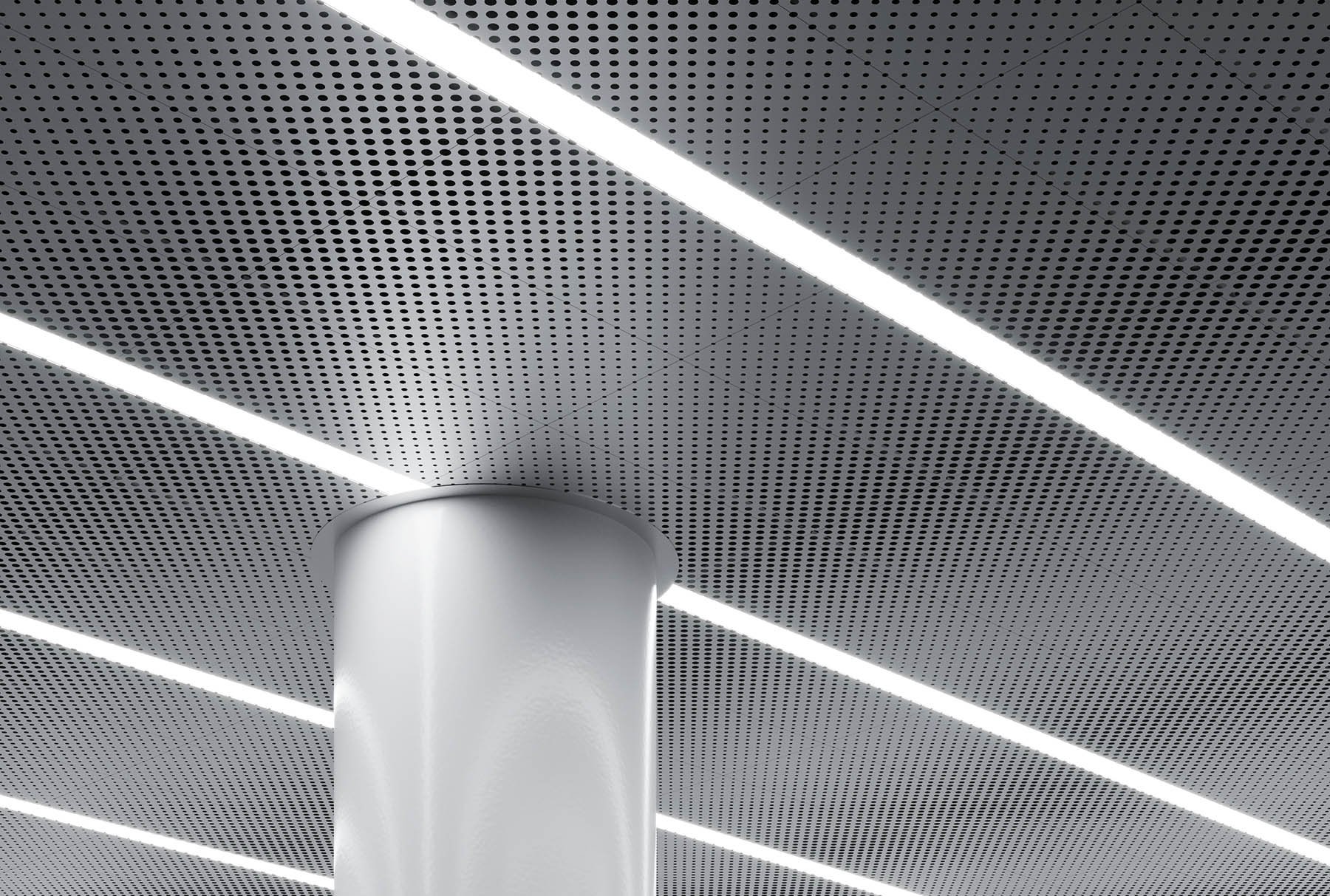
Laser cutting uses a focused, high-powered laser beam to cut through sheet metal with precision. The laser follows the geometry defined in a digital file — in VEIL’s case, the DXF generated by VEIL Studio. The cut is defined by the file, not by a physical tool or press die. This means the geometry can change from panel to panel with no additional setup cost.
Edge quality from laser cutting is clean and consistent. The cut edge of a VEIL panel does not require filing, grinding, or secondary finishing — it goes directly to powder coating.
Why does laser cutting matter for custom perforation?
Perforated metal panels have traditionally been made by punch-press — a tool with a fixed pattern of pins stamps holes through the sheet in one pass. Punch-press is fast and economical for large runs of identical panels. It is not viable for custom patterns. Each new pattern requires a new tool. Lead times are measured in months.
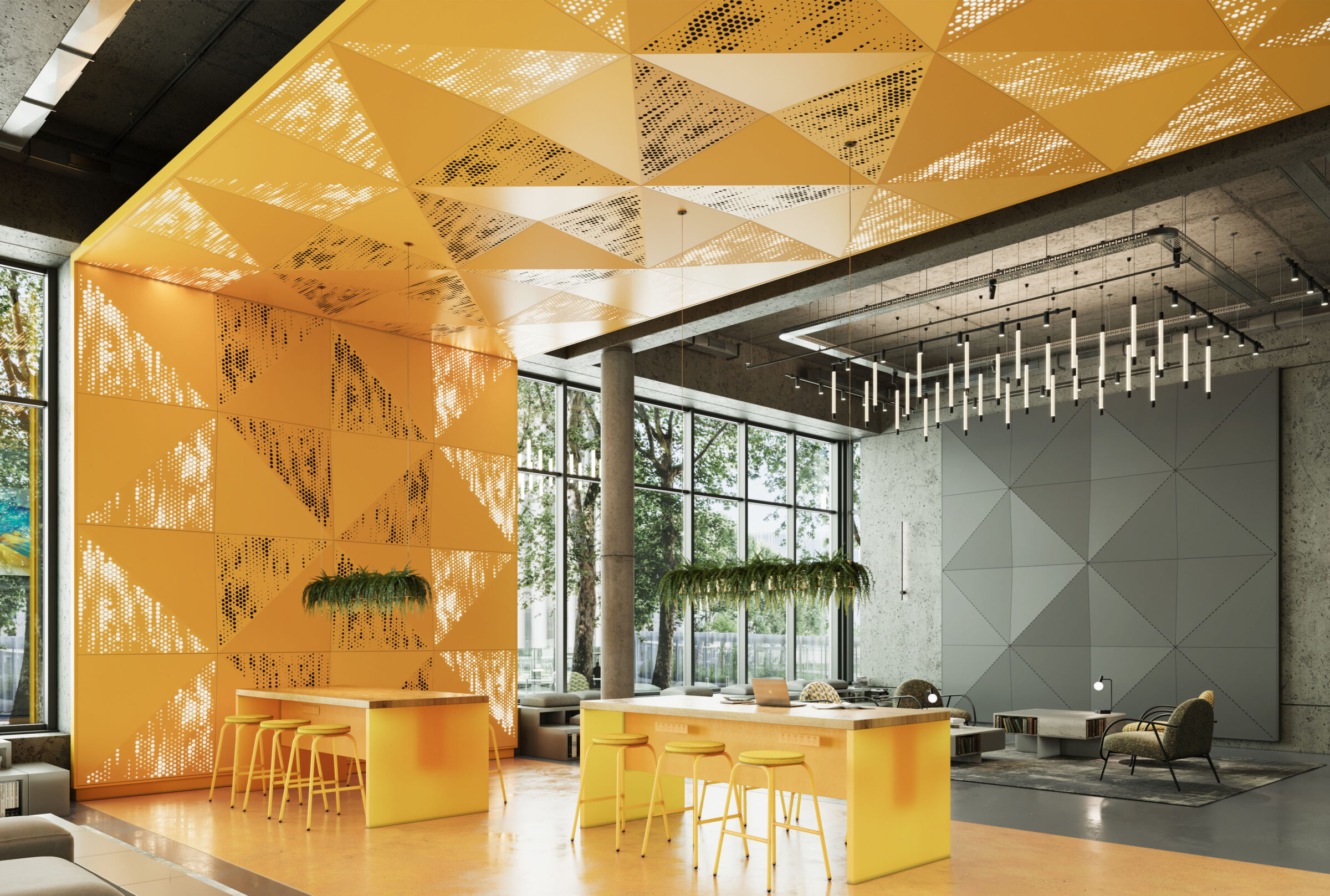
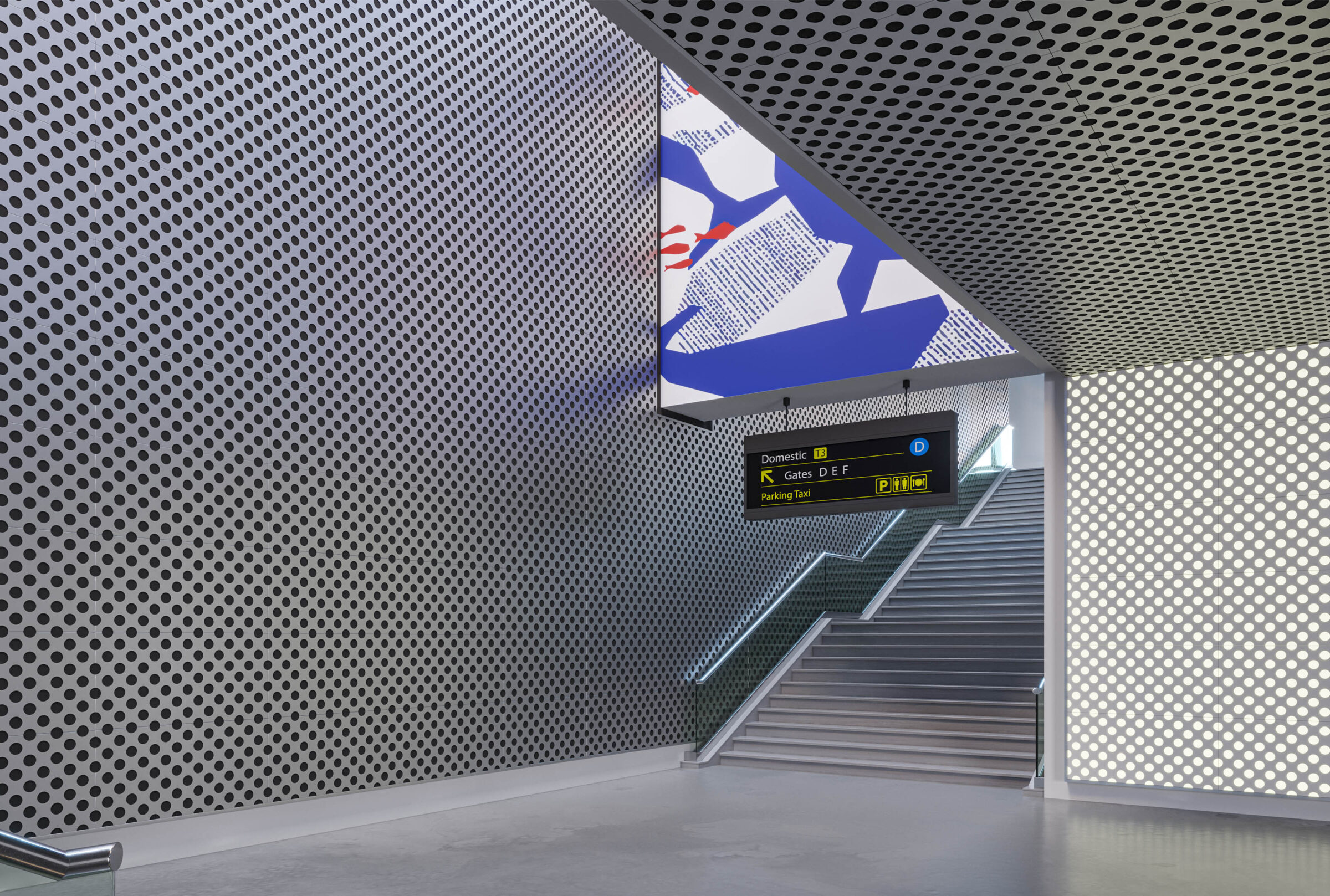
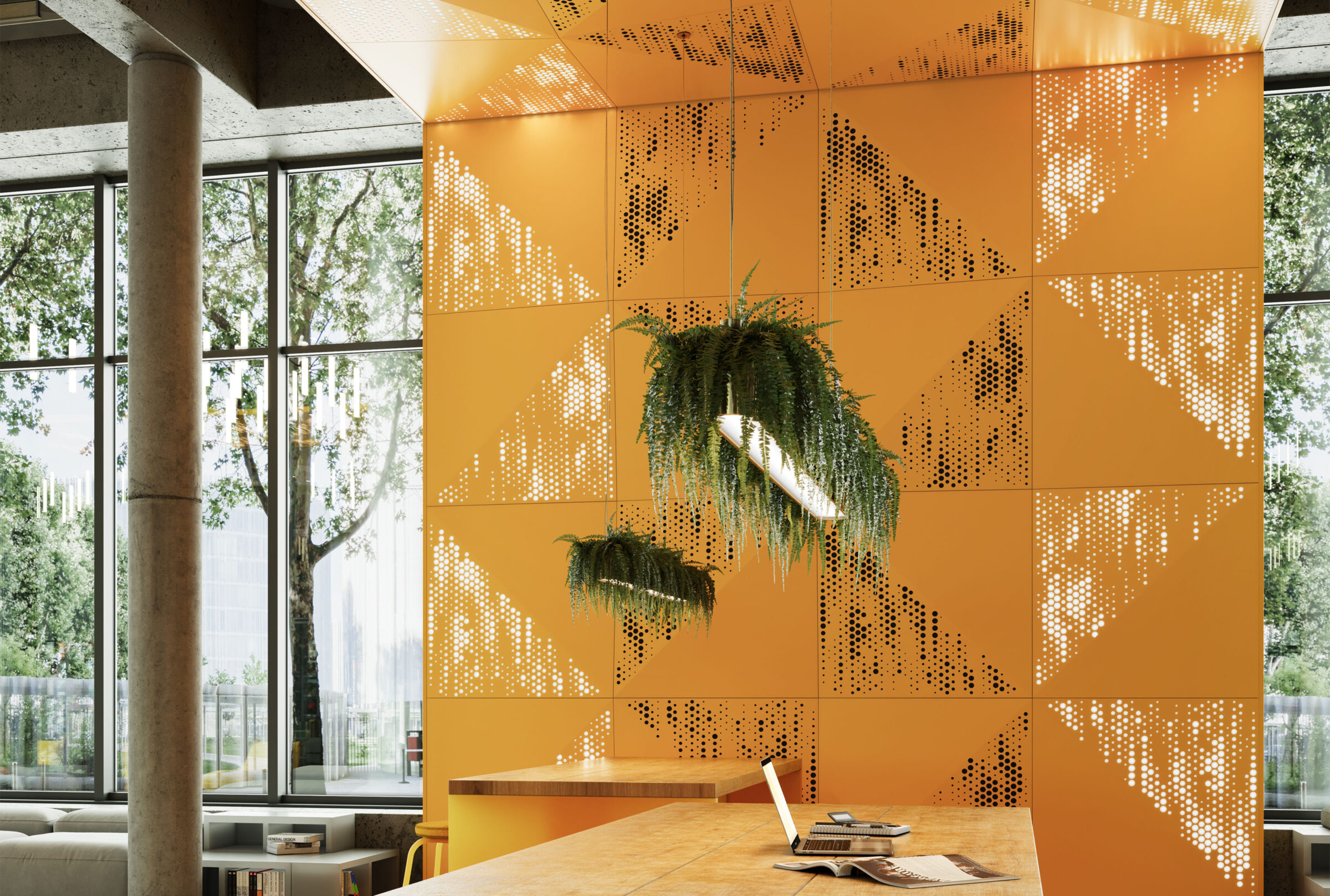
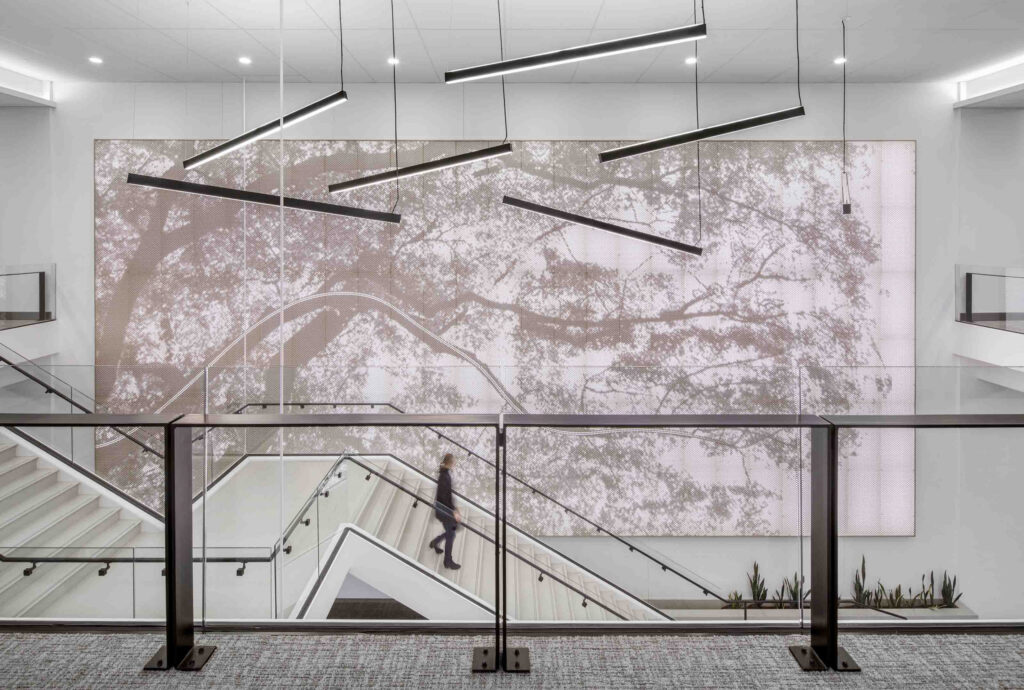
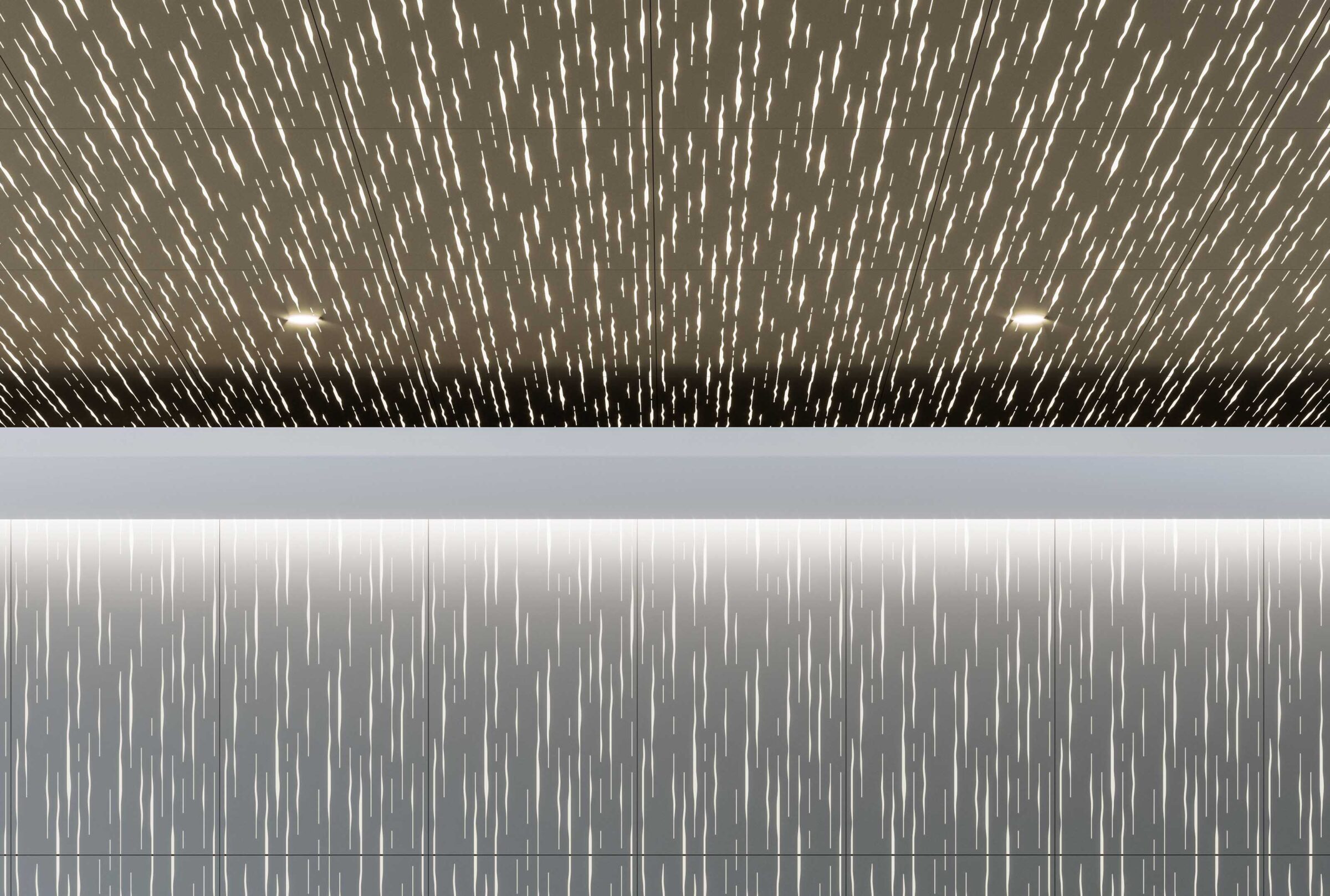
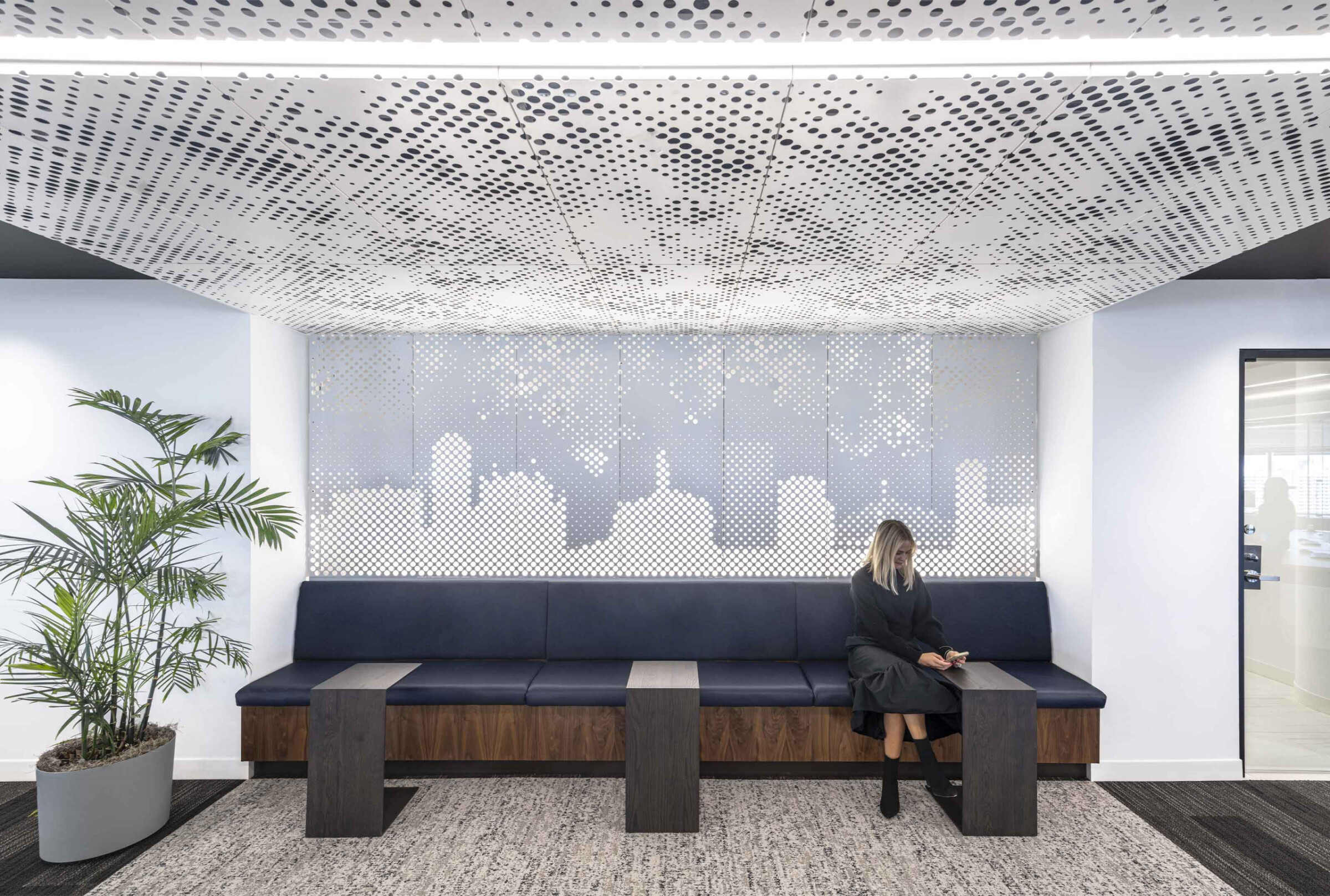
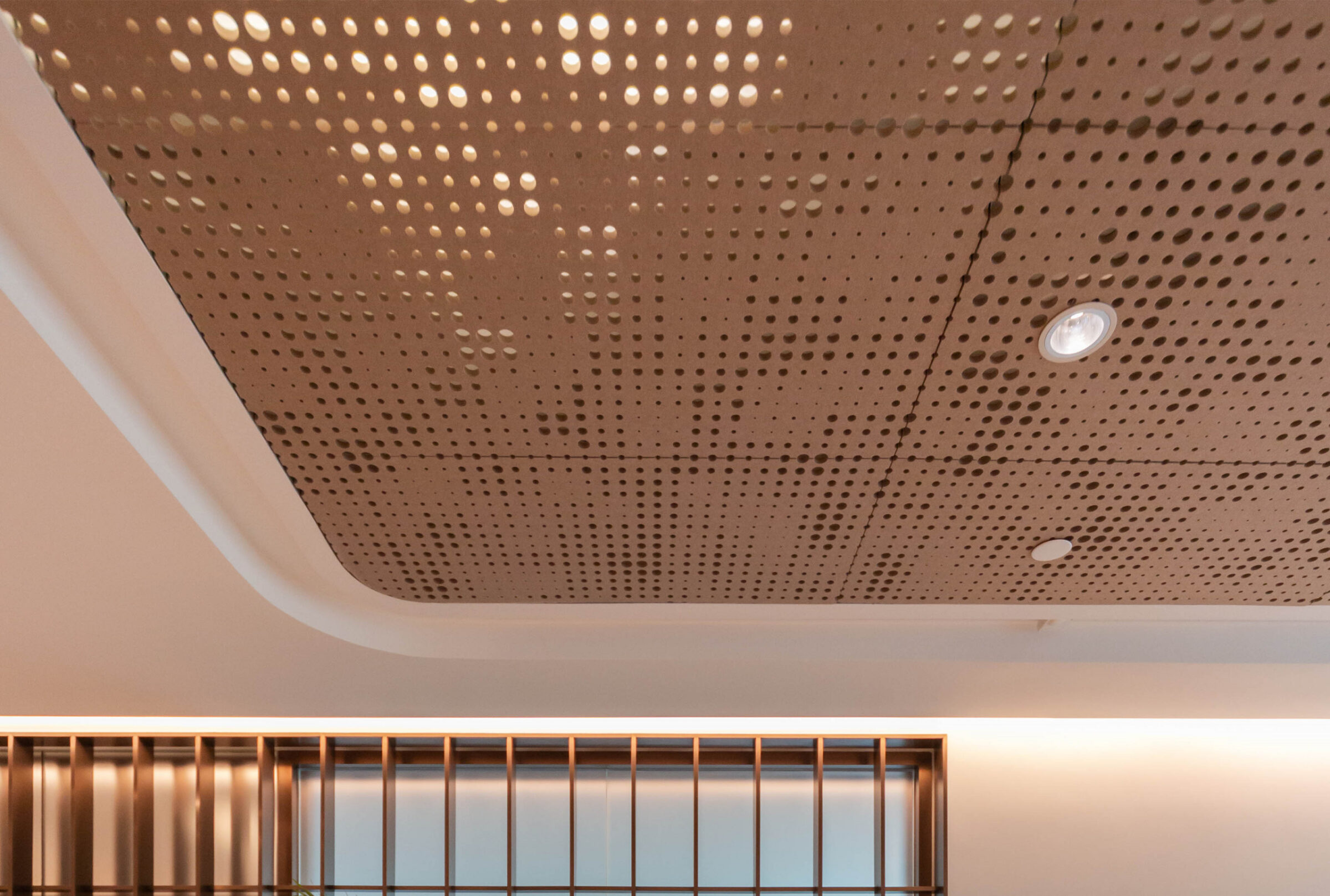
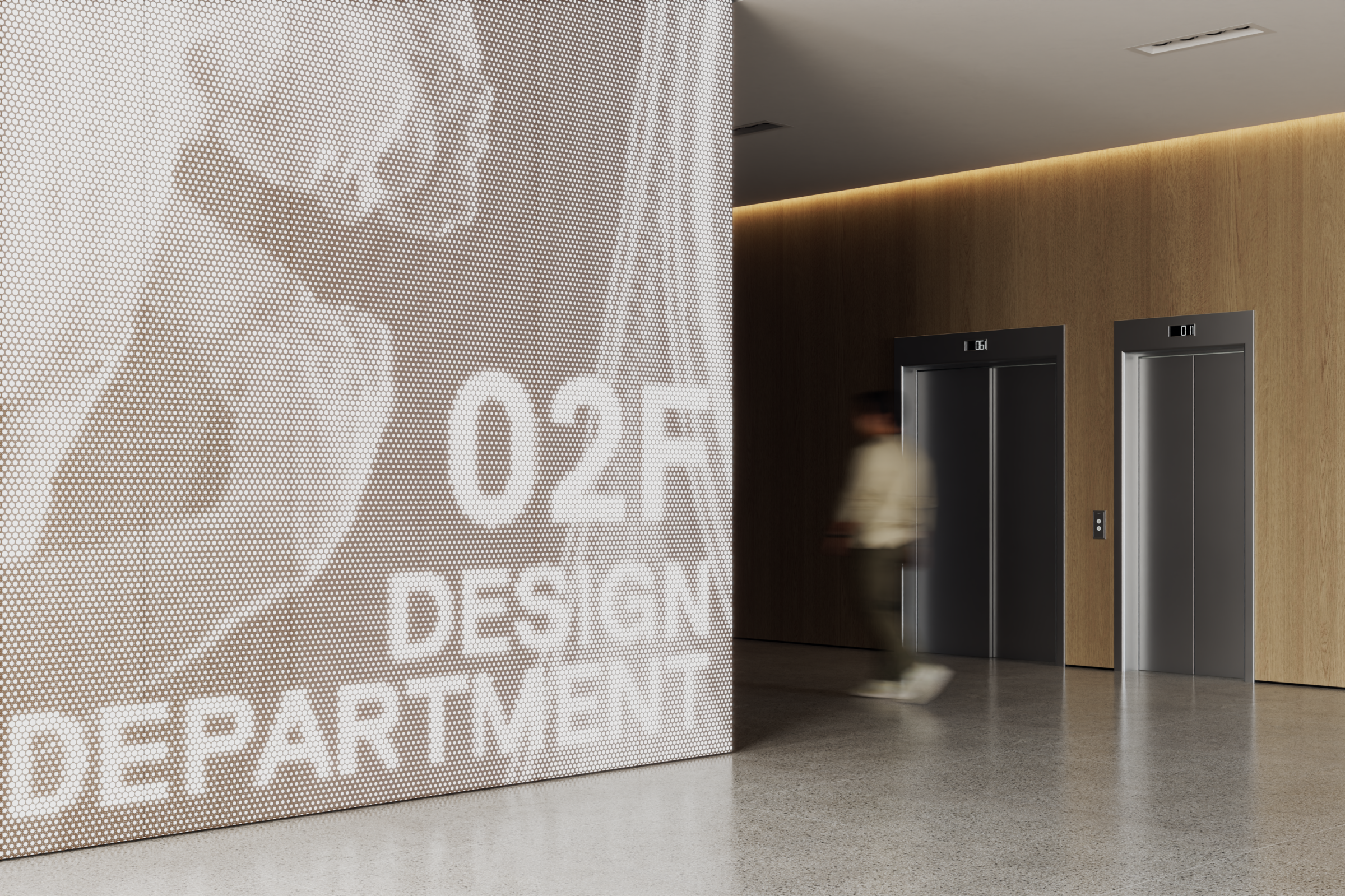
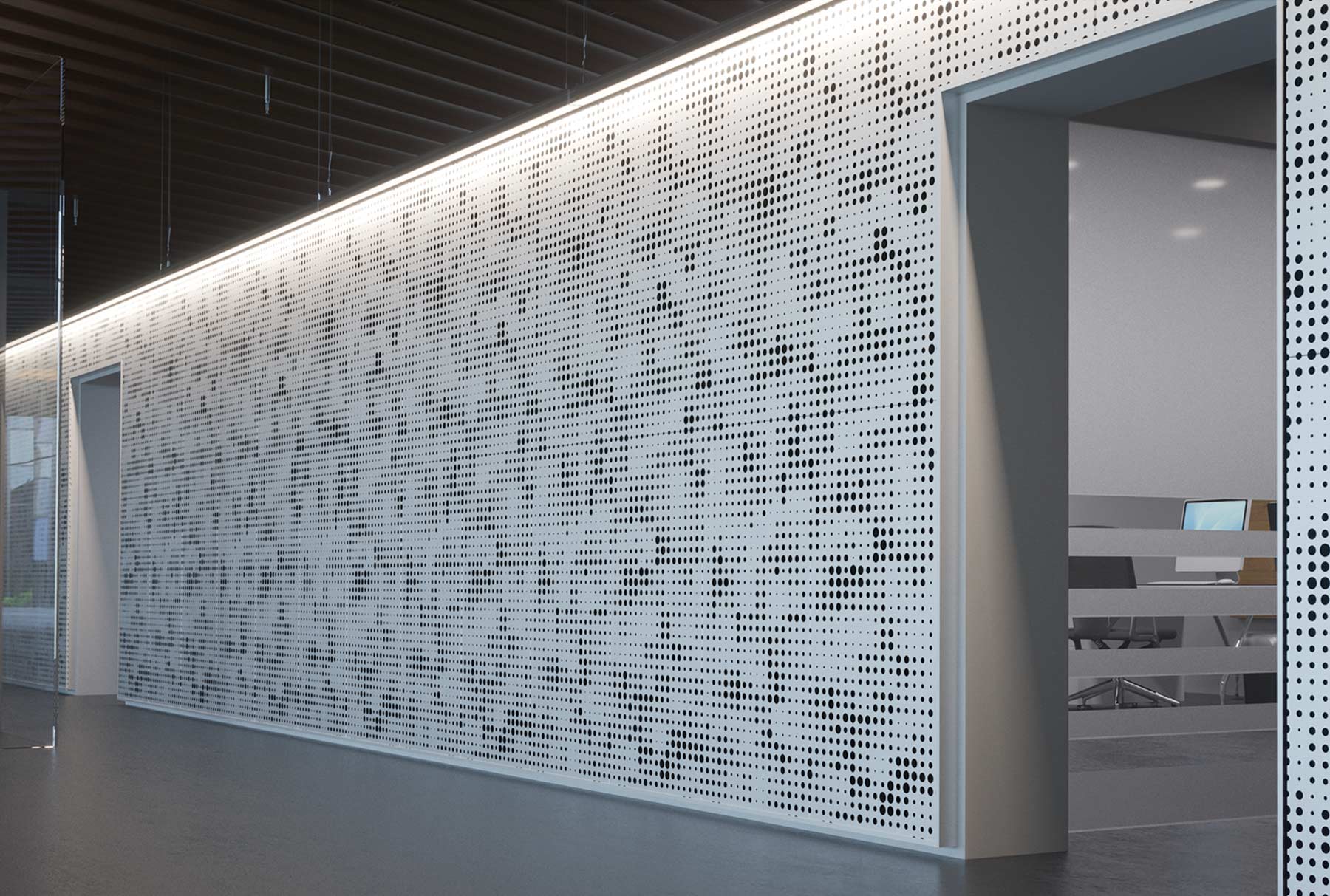
Laser cutting removes the tooling constraint entirely. Every perforation in every VEIL panel is cut individually by the laser, following the geometry in the DXF. The same machine cuts a regular grid and a photographic image-derived pattern with equal accuracy. Lead time is measured in days.
What is the material specification for a VEIL panel?
Every VEIL panel is laser-cut steel. The standardised format is 596 × 1196mm (688.5mm outer width). After cutting, each panel is powder-coated to the specified RAL K5 colour — default Anthracite Grey 7016 Semi-Matt. The same engineered frame as NOWN’s Vapor system is used, so the structural performance is well-established.
Optional aSOFT™ acoustic backing and integrated backlighting (2700K–6000K, 25W / 45W / 65W) are added at the manufacture stage. The panel arrives at site complete — laser-cut, powder-coated, acoustic-backed or backlit as specified. Crated for transit. Ready to install.